

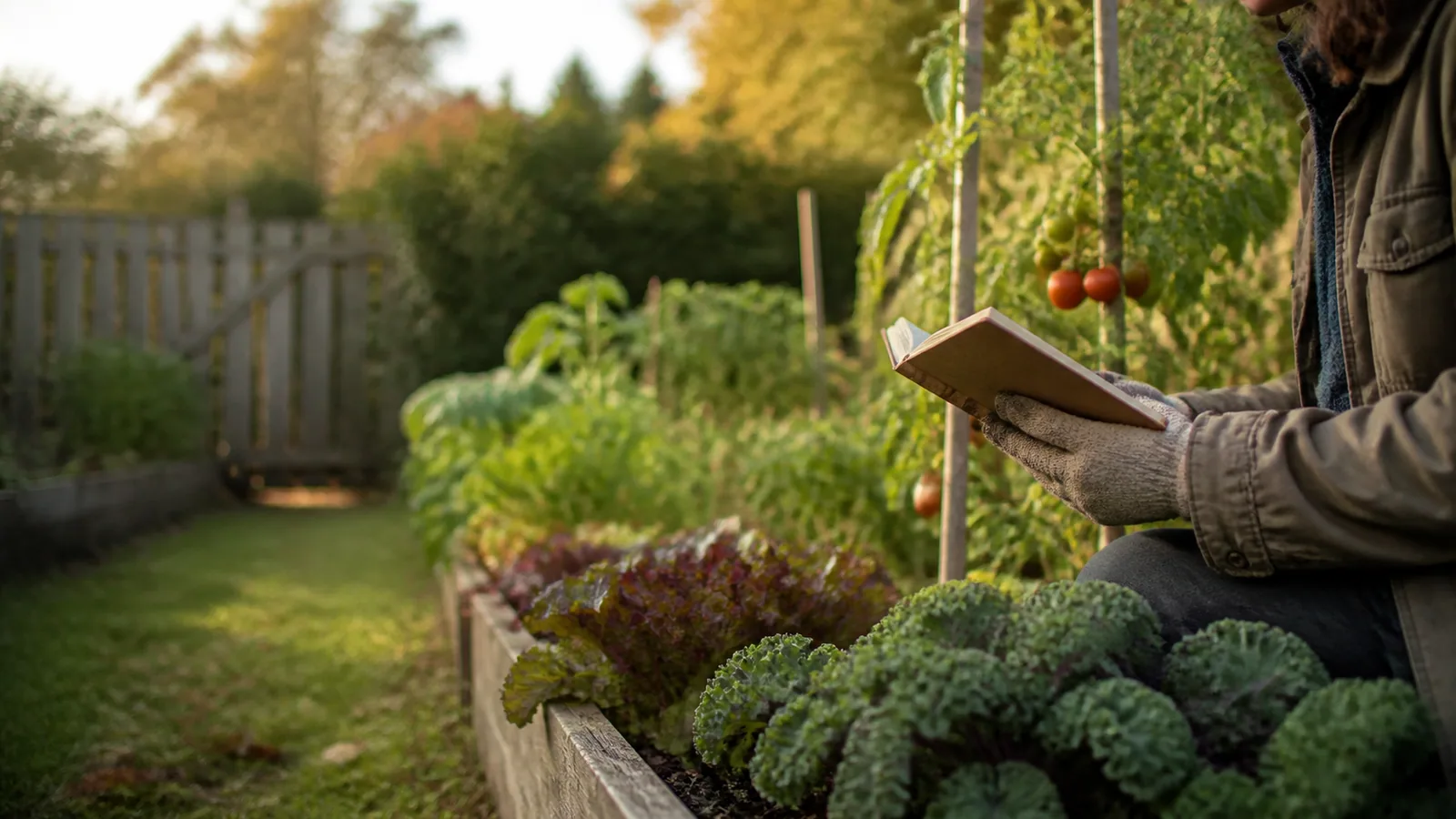
Start with your local weather and frost date
Before making a long to-do list, check the next two weeks of weather and your approximate first fall frost date. That tells you whether to protect tender vegetables, keep watering a dry landscape, start cool-season seeds or prepare a sheltered place for houseplants. A September task calendar written for one state cannot be transplanted intact to another.
Make a short inventory: what is still producing, what is clearly diseased, which beds are bare, which containers dry fastest and which plants must come indoors. That list helps you work from consequences rather than from the urge to tidy everything at once.
Vegetable garden tasks
Harvest regularly from productive summer crops, and remove plant debris that is diseased or heavily infested after harvest. Do not add visibly diseased plant material to a casual home compost pile unless you know the process reaches appropriate temperatures. Healthy residue, cover crops and mulch can protect soil from erosion and suppress late weeds, depending on the garden plan for next year.
September can still be a planting window for fast or cold-tolerant crops, but use a local calendar to choose them. Work backward from the frost date and include extra time for shortening days. For a dedicated planning process, see our fall vegetable garden guide.
Lawn tasks: match the grass and site
Early fall can be an important period for cool-season lawns, including tall fescue, fine fescue and Kentucky bluegrass. Maryland and Minnesota Extension both emphasize fall as a useful time for renovation and establishment in appropriate regions. That does not make every lawn problem a reason to add seed or fertilizer: first identify the grass type, site limitations, compaction, shade and local water rules.
If a turf area repeatedly struggles because of deep shade, poor drainage or a narrow neglected strip, consider whether another plant choice would serve the site better. A soil test and locally recommended seed cultivars are stronger starting points than a generic “fall lawn fix.”
Flowers, perennials, trees and shrubs
Keep newly planted trees, shrubs and perennials watered during dry spells so they enter winter without drought stress. Avoid turning fall care into automatic pruning. Maryland Extension advises waiting on routine pruning of many trees and shrubs, while healthy perennial stems and seed heads can provide winter habitat. Remove material that is diseased or unsafe; leave other decisions to each plant’s habit and local recommendations.
September is also a good moment to notice what worked. Mark plants that need dividing, areas that were too dry, and places where fall-blooming flowers support pollinators. Observations recorded now make next spring’s decisions more specific.
Prepare outdoor houseplants for indoors
Do not wait for a cold-night emergency. Inspect outdoor houseplants for insects, disease and damaged growth, then begin moving them toward lower light gradually before their indoor return. Minnesota Extension recommends isolating returning plants from the indoor collection for a short period so a missed pest problem does not spread.
Clean pots and remove dead leaves, but do not respond to every yellow leaf with fertilizer or repotting. A light change, lower humidity and different watering needs are already stressful. Give each plant a stable indoor position and check the potting mix before watering.
September garden checklist
- Check the local forecast and first frost estimate.
- Harvest ripe vegetables; remove diseased crop debris carefully.
- Cover or replant bare soil with a suitable mulch, cover crop or groundcover plan.
- Plan cool-season crops only when the local timing supports them.
- Assess lawns by grass type, site conditions and local recommendations.
- Water newly planted trees, shrubs and perennials during dry periods.
- Inspect and acclimate outdoor houseplants before bringing them inside.
- Record this season’s successes and problems while they are still visible.
Sources and editorial method
This is a non-commercial editorial checklist. It does not rank products or claim hands-on tests. The timing caveats and task categories are based on university Extension guidance; a local county or state Extension calendar should take priority for frost dates, turf practices, pests and planting windows.
- September Gardening Tips and Tasks — University of Maryland Extension
- September garden checklist — University of Minnesota Extension
- Making a fall gardening checklist — Illinois Extension