

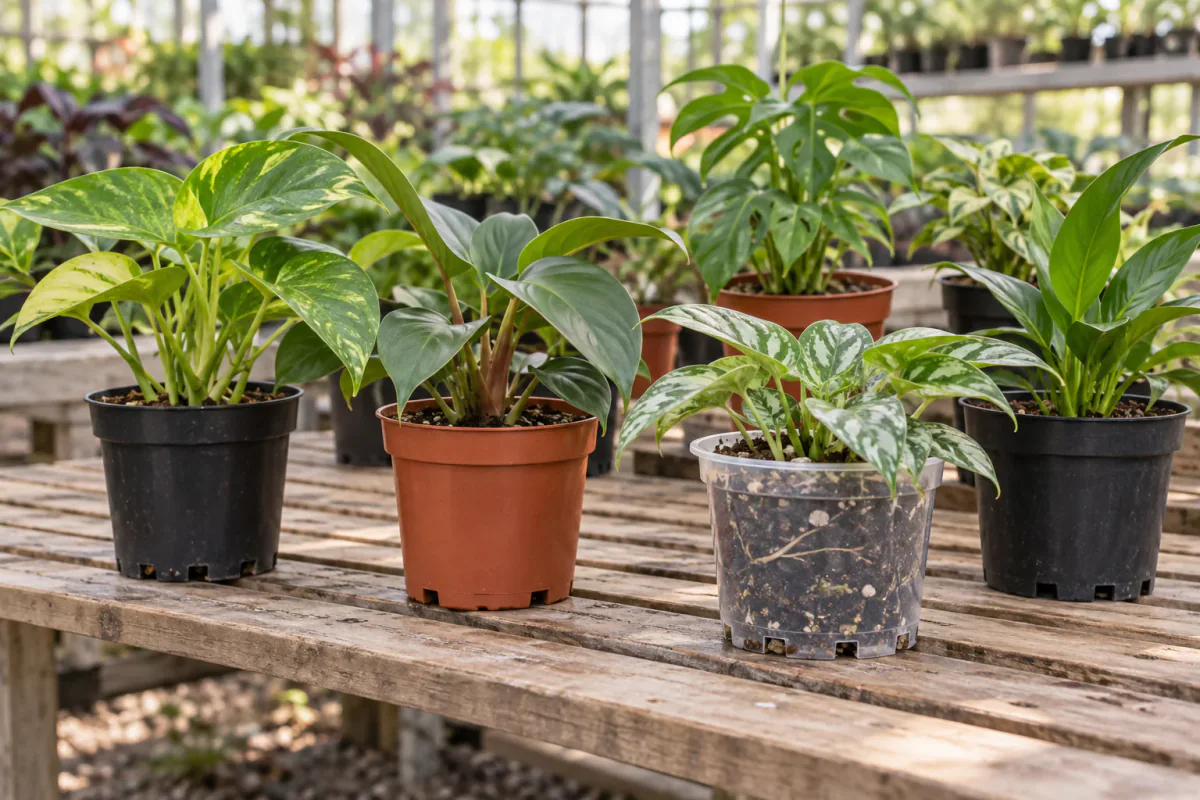
Check what the plastic pot is made for
Read the product label or technical sheet for the stated material, size, care and intended use. Terms such as recycled, UV-resistant or frost-tolerant should be checked against the exact model and the maker’s conditions. Do not assume that one specification applies to every pot made from plastic.
Compare the empty pot weight and wall shape with how you plan to use it. A nursery pot inside a decorative cover can make watering and repotting easier, while a single planted pot needs an appropriate outlet for excess water. The University of Illinois Extension guide to container material choices provides general context for comparing materials.
Match dimensions and drainage to the plant
Check interior width and depth against the root ball, not only the outside diameter. Leave room for root growth without moving a small plant into a container much larger than it needs. Penn State Extension describes container setup and drainage as part of its container gardening guidance; adjust recommendations for the plant you are growing.
Look for drainage holes before planting. If a decorative pot has none, use a removable inner pot and empty the outer container after watering. A layer of gravel does not create an outlet. Plan a saucer or tray that catches runoff without leaving roots in standing water. See the University of Illinois Extension page on container drainage for practical options.
Verify outdoor suitability
For outdoor pots, check the manufacturer’s limits for sun exposure, temperature and cleaning. Consider where water drains and whether the container needs to be secured against movement at the site. If you are placing several pots on a balcony, confirm the building’s load and installation requirements rather than estimating from an empty container.
Choose a pot that you can reach and move for watering and seasonal care. A removable inner pot can help with watering at a sink; a larger planter may need a wheeled base only if the site and product permit it. Compare with ceramic planters or fiberglass planters when weight, finish or installation is a deciding factor.
Inspect and clean pots before reuse
Reuse a pot only if it is structurally sound. Check for cracks, sharp edges, deformation, blocked drainage holes and residue that will not come off. Empty old medium and wash the pot with water and a suitable cleaning method. Follow local horticultural guidance if the previous plant had a disease or pest; do not move contaminated medium into a healthy container.
Let the pot dry and store it where it will not be crushed. Keep labels with pots when material or size is unclear, and do not use a container for food-growing purposes unless the manufacturer confirms it is intended for that use.
Use a plastic pot checklist
- What are the usable inside dimensions and empty weight?
- Does the pot have drainage holes, and can excess water be managed?
- What material, recycled-content or exposure claims are documented?
- Will it be used indoors, outdoors or as a removable inner pot?
- Can you clean, inspect and safely reuse it after the current plant?
For broader sizing and material guidance, return to the plant pots guide.
Compare nursery pots, cover pots and outdoor planters
A nursery pot is often used as a removable inner container; a decorative cover pot changes appearance but may not drain; an outdoor planter is usually expected to stay in place and needs a dependable outlet for water. Decide which role the pot has before comparing styles. Check that an inner pot can be lifted when wet and that it sits securely without blocking the drainage holes.
Plastic, resin and fiberglass are sometimes grouped together in general container guidance, but product names do not establish identical construction. The University of Illinois Extension notes that plastic and similar containers can be lighter than many alternatives, which can make a pot easier to move and may also increase tipping risk when a large plant becomes top-heavy. Check the specific model’s weight, base shape and intended placement rather than generalizing from the material label.
For a seedling or temporary nursery use, prioritize an open drainage route and a size that holds the root ball. For a decorative indoor pot, plan how runoff will be caught and emptied. For a balcony or patio, also consider the filled weight, wind exposure, access to water and local building restrictions.
Consider heat, color and stability at the site
Where a pot sits can change root-zone conditions. A dark container in direct sun can absorb more heat than a light-colored one; Illinois Extension warns that dark-colored containers can heat growing media and cause it to dry more quickly. Treat that as a reason to check the plant and actual site, not as a universal claim that a color will harm every plant.
On a bright terrace, compare shade at different times of day, the container’s exposure and the plant’s temperature requirements. A pot beside reflective paving or a wall may behave differently from one in an open garden bed. If the mix dries fast, check it at root depth and consider a more sheltered position or an appropriately sized container before changing fertilizer.
Check stability after planting. A tall plant can shift the balance, particularly in a lightweight or narrow-base pot. Place the container on a level surface and secure it only in ways allowed by the manufacturer and site rules. For a balcony, verify load and attachment requirements with the building or property manager; do not estimate safety from the empty pot.
Clean reusable plastic pots carefully
Empty used pots completely and inspect their walls, rim and drainage holes. Discard containers with cracks, sharp edges or deformation that could cause failure or prevent water from draining. Remove old roots and visible residue before washing. University of Illinois Extension recommends cleaning used containers with soapy water and disinfecting them with a diluted bleach solution; if you follow that advice, use the ratio and precautions in its container-material guidance, work with ventilation and never mix bleach with other cleaners.
Do not reuse a pot from a plant with a serious disease or pest without following crop-specific sanitation advice. Cleaning does not guarantee that every pathogen has been removed. Keep the container’s label if you need to know the material or intended use, and let it dry before storage or replanting.
For food-growing containers, use products intended for that purpose and follow the manufacturer’s directions. Avoid repurposing containers that previously held chemicals or whose material is unknown.
Solve container problems before repotting
| Problem | Check | Practical adjustment |
|---|---|---|
| Water remains in the outer pot | Whether the inner pot drains and whether standing water is emptied | Lift and drain the plant after watering |
| Medium stays wet for a long time | Open holes, container size, light and root condition | Address the cause before adding grit or changing the mix |
| Container dries quickly | Pot volume, wind, direct sun, plant size and root growth | Adjust location or watering after checking the plant’s needs |
| Pot tips or shifts | Base width, plant height and exposure to wind | Move to a stable surface or choose a suitable, wider container |
These observations do not diagnose a plant disease. Check the species’ care requirements and the pot’s drainage before replacing it. For general advice on container materials and drainage, return to the plant pots guide.
Choose a pot for the plant’s current growth stage
A seedling cell, a nursery pot and a long-term planter serve different stages. Use a small cell for germination only when it suits the seed and instructions, then move seedlings when their roots and growth call for a larger container. Do not move every small plant into the biggest pot available; excess unused medium can stay wet and make moisture management harder.
When choosing a replacement, compare the root ball with the new pot’s interior dimensions and drainage. A tight root mass, roots repeatedly emerging from holes or medium that dries very quickly can be reasons to inspect the plant more closely, but none alone proves that repotting is urgent. Penn State Extension’s repotting guide provides a more careful assessment for houseplants.
Keep the nursery pot as an inner container only if it drains freely and fits securely inside the decorative pot. After watering, remove it and empty the outer vessel. When a plant is ready for a permanent outdoor container, also account for the mature plant size, exposure and safe filled weight.