

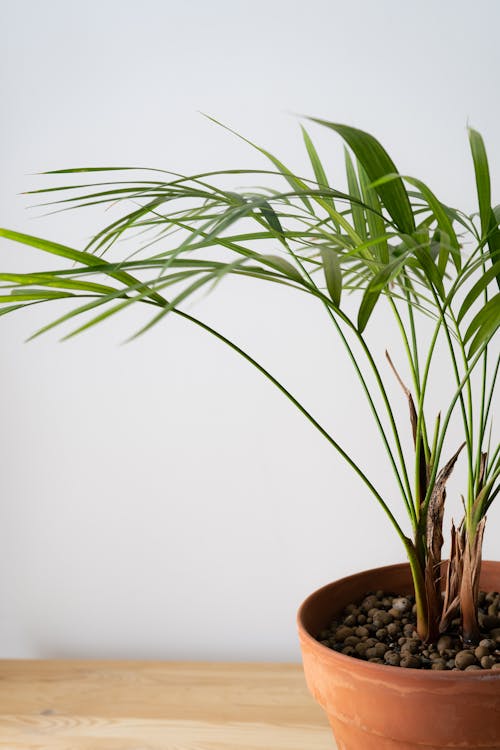
Identify the plant and assess the room
Common names can be confusing. Confirm that the label says Dypsis lutescens before applying care advice or pet-safety information. North Carolina Extension describes it as a multi-stemmed tropical palm, usually grown as a houseplant in temperate climates. Its natural form matters: a grouped set of cane-like stems is normal, while a sudden collapse of several stems is a reason to examine roots and watering conditions.
Before choosing a permanent place, watch the light in the room for a day. A window direction, neighbouring buildings, curtains and the plant's distance from glass all change the result. The goal is useful ambient light without prolonged harsh sun through a hot window. If the only available space is a dim corner, choose a more shade-tolerant plant from our low-light indoor plant guide instead of expecting an areca palm to adapt to darkness.
Light and placement
UF/IFAS notes that yellow butterfly palm can be grown indoors and in shade, while North Carolina Extension recommends a bright position in a warm, average room. In a home, bright indirect light is a sensible starting point. Place the palm near, rather than deep inside, a well-lit room and make gradual changes if it has been grown in lower light.
Read the foliage rather than relying on a fixed number of feet from a window. New growth that is weak or sparse can mean the light is insufficient. Bleached patches or a crisp area on the window-facing side can indicate excess direct sun. Rotate the pot occasionally if the light comes from one direction, but avoid moving it repeatedly between very different conditions.
| What you see | Check first | Low-risk response |
|---|---|---|
| Pale, open new growth | Light level and distance from window | Move gradually toward brighter indirect light. |
| Bleached or dry patches | Direct sun and hot glass | Filter the light or move slightly back. |
| Plant leans strongly one way | One-sided light | Turn the pot a small amount periodically. |
Watering and drainage
Watering needs change with light, temperature, pot size and growing medium, so a calendar cannot diagnose an areca palm. Feel the mix below the surface, then water thoroughly when it has started to dry rather than keeping it constantly saturated. A container needs drainage holes and a saucer should not hold standing water after watering.
If the pot stays wet for a long time, improve the diagnosis before adding more water: inspect whether the plant is receiving enough light, whether the pot drains, and whether the medium has compacted. If it dries extremely fast while the palm is growing well, it may be time to inspect for a dense root system and consider a modestly larger pot. These checks are more reliable than assigning every brown tip to “underwatering”.
Humidity and feeding
Dry indoor air can contribute to browning at leaf edges, but it is not the only possible cause. Avoid trying to solve every symptom by misting. First check light, watering and salt build-up. Grouping plants, using an appropriate humidifier and keeping the palm away from heating or cooling blasts can help where indoor air is persistently dry.
Feed only during active growth and follow the label rate for a houseplant fertilizer. University of Maryland Extension advises that many houseplants need modest, diluted feeding during the growing season and no routine fertilizer in winter. Too much fertilizer can leave salts in the growing medium; Maryland Extension recommends following the label, using a draining pot and flushing the medium with clear water where salt deposits become a problem.
A practical observation routine
Good care is mostly a short, repeatable inspection rather than a growing list of additives. Once a week, look at the new central growth, the oldest outer fronds, the soil surface and the saucer. This makes it easier to notice a change before it becomes a major decline, and it prevents the common cycle of watering, fertilizing and moving the plant all at once.
Start at the centre. The newest fronds should emerge intact and gradually open. If a new frond is distorted, stuck or covered with residue, inspect closely for pests and check whether the growing point has stayed cold or wet. A leaf that was physically damaged while opening may remain marked even after the underlying condition improves, so judge progress by the next leaf rather than expecting old damage to disappear.
Then check the outer fronds. A lower leaf that slowly changes colour as new foliage arrives can be normal ageing. Several leaves changing at once is more useful information: compare the pattern with the pot’s moisture and recent location. Uniform yellowing after a dark spell may point to low light and slow water use; spotting, soft tissue or a sour medium call for a closer drainage and root check.
Finally, check the pot. A dry top surface is not enough evidence to water a large container. Feel deeper into the medium with a finger or a clean wooden stick, and lift the pot if it is safe to do so. A noticeably light pot and a drying root zone suggest watering may be due. A heavy pot that remains wet for many days suggests the plant needs less water, better drainage, more appropriate light or a less compacted medium.
Keep a simple note of changes: move date, watering date, fertilizing date and any symptom. It is surprisingly useful when diagnosing a plant because many problems appear days or weeks after a change in placement. It also gives you a reason to wait and observe instead of escalating treatment every few days.
Managing seasonal changes indoors
Indoor conditions are seasonal even when the room looks similar year-round. In winter, shorter days and lower sun angle can reduce the light at a window; central heating can also dry the air. In summer, the same window may become much hotter and brighter, and a plant that was comfortable in January can receive intense direct sun. Recheck placement when the season changes instead of treating the location as fixed.
Water use usually follows those changes. A palm that needed regular watering in a bright summer position may use substantially less water in a cooler, darker period. Let the root zone, not the previous season’s routine, guide the next watering. This is also why feeding should be linked to visible active growth. Fertilizer that stays in a slow-growing pot can contribute to salt build-up without improving the plant.
Drafts matter too. Do not place the palm directly in the path of a heating vent, air conditioner or repeatedly opened exterior door. Sudden temperature changes can stress foliage and make diagnosis confusing. If the only practical location has a pronounced draft, buffer it by moving the plant slightly away from the airflow rather than compensating with extra water.
If you use a supplemental light in winter, introduce it gradually and keep a consistent timer. The aim is to provide useful light, not to turn a low-light room into an uncontrolled hot spot. Follow the fixture manufacturer’s instructions, observe the leaves and adjust distance or duration slowly. A grow light also changes water use, so include it in your observation notes.
How to investigate yellow or brown fronds
Older fronds eventually age, so a single lower leaf changing colour is not automatically a crisis. Widespread yellowing, however, deserves a methodical check. UF/IFAS notes that yellow butterfly palms can show yellow leaves in high-pH soil and that nutrient issues can affect older leaves. Indoors, waterlogged roots, insufficient light and salt accumulation can look similar from across a room.
- Check whether the affected frond is simply one of the oldest leaves.
- Check moisture below the surface and confirm that water exits the pot.
- Look at the light and whether the plant was recently moved.
- Inspect stems and leaf undersides for scale or other pests.
- Only then consider whether feeding, repotting or water quality is relevant.
Make one correction at a time and observe new growth. Removing a badly damaged frond can improve appearance, but it does not fix the condition that caused it. If decline is rapid or roots smell sour, seek local horticultural advice and inspect the root zone rather than increasing fertilizer.
Check pests before treating a nutrient problem
Indoor palms can attract scale and other sap-feeding pests, especially when conditions are stressful. Look along leaf ribs, where fronds join stems and on the underside of leaves. A pest is easier to manage when caught early, but the treatment depends on correct identification. Isolate a visibly infested plant from other houseplants where practical, remove heavily affected material only if it is clearly beyond recovery, and use a treatment that is labelled for the pest and the indoor setting.
Avoid diagnosing pests from a single brown tip or a dry edge. Likewise, do not use fertilizer to compensate for insect damage. Check for a recurring pattern, inspect with good light and consider asking a local extension service, nursery professional or plant clinic to identify an unfamiliar problem. A clear photograph of the whole plant, the pot and the affected area is more useful than a photo of one damaged leaf alone.
Repotting and pet safety
Repot when roots are densely filling the container, water moves through the pot unusually quickly or the medium no longer drains well. Choose a pot only modestly larger, use a suitable free-draining medium and handle the root ball gently. Repotting is a change in growing conditions, not a cure-all for yellow foliage.
The ASPCA classifies cane palm (Dypsis lutescens) as non-toxic to cats and dogs. “Non-toxic” does not mean edible: chewing any plant material can still cause digestive upset, and a plant shop label may use a different palm species under a similar name. When an animal shows symptoms after chewing a plant, contact a veterinary professional.
When to seek local help
Home observation is useful for routine care, but some problems need a closer inspection. Seek local horticultural help when the palm declines quickly, several stems soften at the base, roots smell foul, pests continue after correctly labelled treatment or the plant has been exposed to freezing temperatures. For a nursery diagnosis, bring clear photos of the whole plant and pot, a close photo of the damage, the plant label if available and a short record of watering, light and any products used.
That information helps distinguish a condition caused by roots, pests, water quality or the growing environment. It also prevents a well-meaning but unsuitable “one-size-fits-all” solution. If children or animals may have consumed an unknown plant, plant care advice is not medical or veterinary advice: contact the appropriate professional or poison service promptly.
Sources and editorial method
This guide was revised on 16 August 2026 to remove affiliate-product rankings and unsupported indoor-air claims. Care guidance is based on publicly available horticultural and animal-safety resources; it cannot diagnose an individual plant remotely.
- Dypsis lutescens: Yellow Butterfly Palm — UF/IFAS Extension
- Yellow palm profile — North Carolina Extension Plant Toolbox
- Fertilizer for indoor plants — University of Maryland Extension
- Mineral and fertilizer salt deposits on indoor plants — University of Maryland Extension
- Cane palm safety — ASPCA