

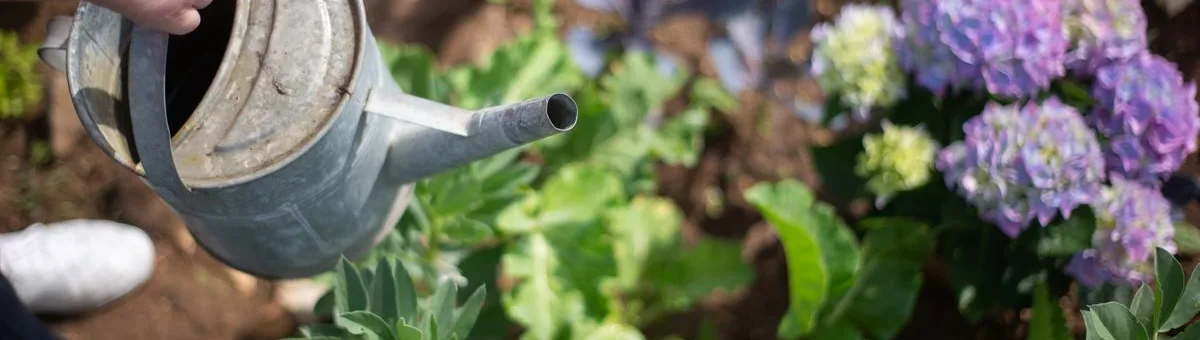
Watering cans give you direct control over where water lands, but the right shape depends on the plants, route, refill access and amount you can comfortably carry. Compare capacity, balance, spout reach, rose attachment, materials and storage. This guide explains how to choose a watering can for indoor pots, seedlings and outdoor beds; it does not rank untested models or prescribe one can size for every gardener.
Choose a watering can for the job
Start with the plants and the distance between the water source and the watering area. An indoor can may need a narrow spout that reaches the soil between leaves without splashing furniture. A garden can may need a comfortable handle, a broad opening for filling and a rose attachment for seedlings. A can used for both jobs should be manageable when full, easy to clean and suitable for the water source.
Consider where the can will be stored and whether it must fit under a tap, inside a cupboard or on a greenhouse shelf. Check whether the rose is removable, replaceable or attached permanently. A long spout can improve access to crowded pots, but it also changes balance and may need more clearance. Compare the exact dimensions and filled handling rather than choosing from appearance alone.
Match capacity to your watering route
Capacity is a trade-off between fewer refills and easier carrying. A large can may be efficient when watering many beds close to a water source, but it becomes tiring if it must be carried up stairs or across a long path. A smaller can allows more control for a small indoor collection, but repeated trips can take longer for a balcony full of pots. Estimate the total amount you normally carry and test that load with a similar container of water before choosing.
Account for the handle position and how the can pours as its water level falls. If the handle is narrow or the can is difficult to tilt, nominal capacity may not reflect practical use. A two-handle design may help some people lift or pour, but fit depends on grip and mobility. If you have wrist, shoulder or back limitations, prioritize a comfortable filled weight and consider splitting the task into several lighter trips.
For a long garden route, a hose or irrigation system may reduce carrying, but those methods require compatible fittings, monitoring and maintenance. A can remains useful for precise watering, small containers and areas that a hose cannot reach safely. See our guides to garden hoses and drip irrigation for pots when comparing alternatives.
Compare material, weight and construction
Plastic and metal cans can both work. Compare empty weight, handle comfort, body seams, spout attachment, opening size, UV exposure instructions and storage advice. A material name alone does not establish durability or a fixed lifespan. Construction quality, weather, handling and maintenance all matter.
| Feature | Why it matters | What to check |
|---|---|---|
| Body and seams | Contain water without leaks | Visible joints, finish, corrosion guidance and warranty |
| Handle and balance | Control a full can while pouring | Grip, clearance, weight distribution and comfort |
| Spout joint | Directs water and may be removable | Secure fit, compatibility and replacement availability |
| Fill opening | Allows easy filling and cleaning | Tap clearance, splash risk and access inside the can |
| Material care | Prevents avoidable weather damage | Sun, frost, impact and storage instructions from the maker |
Metal cans can corrode or be damaged by freezing water, depending on material and finish. Plastic may be affected by prolonged sun or impact. Inspect the product instructions rather than assuming galvanized, copper-colored or heavy construction guarantees a particular performance. If the can is used with fertilizer or another treatment, follow the product label and clean the can before using it for ordinary watering.
Choose a rose and spout for the plant
A watering-can rose breaks the stream into smaller flows. It can be useful for newly emerged seedlings because a strong jet may wash away seed or growing medium. The RHS recommends a rose for watering seedlings in its plant-watering guide. For an established plant, a direct spout may help place water near the root zone, provided the flow does not erode the medium or expose roots.
Roses differ in outlet pattern and flow; there is no universal standard for a “fine” or “coarse” shower across brands. Test the can over an empty pot or sink and observe whether water falls evenly. Check whether the rose can be turned, removed for cleaning or replaced if lost. A loose attachment can fall off during pouring, while a blocked rose may send an uneven spray toward foliage or the ground.
Spout length and angle affect reach and balance. A long, narrow spout may reach under leaves or into small pots, while a shorter spout can be easier to fill, store and control for broad beds. Check whether the spout lets you direct water close to the soil without striking stems. For hanging baskets or high shelves, use a safe position and avoid lifting a heavy can overhead.
Choose by indoor or outdoor setting
- Houseplants: choose a manageable capacity, controlled pour and spout that reaches the medium without spilling onto furniture.
- Seeds and seedlings: look for a suitable rose or use another gentle watering method recommended for the tray.
- Balcony containers: consider carrying distance, where excess water will drain and whether a smaller can is easier to control.
- Garden beds: compare carry weight, refill points and whether a rose is useful for recently sown areas.
- Greenhouse benches: check shelf clearance, spout reach and how easily the can can be cleaned between uses.
If you have many outdoor containers, compare hand watering with a hose or micro-drip line. A watering can does not need connectors or pressure regulation, but it depends on someone being available to carry and apply water. For travel, do not assume filling a can or placing a bottle in the pot will sustain plants for a fixed period; test a system and arrange monitoring.
Water plants evenly and check the medium
Before watering, check moisture in the root zone. A dry surface does not always mean a dry root ball, and wilt alone does not confirm drought. The RHS advises checking below the surface and watering containers slowly so the medium can absorb water. See its container watering instructions for plant-specific checks and techniques.
For containers, direct water over the growing medium in a few controlled passes. Let it soak in, then continue if the root zone remains dry. Allow excess to leave through drainage holes and empty a saucer if the plant should not remain waterlogged. If water runs down a gap at the side, moisten the mix gradually and check that roots have not pulled away from the medium.
For beds, direct water toward roots rather than spraying foliage without purpose. A rose can help with seedlings, but established plants may benefit from a stream directed at the soil. Choose the time and method according to weather, soil and plant health. Morning watering may be practical outdoors; avoid a rigid time rule where restrictions or conditions differ. Do not use the watering can’s capacity as an estimate of how much every plant needs.
Test a new rose over a sink or clear area before using it on seedlings. A fine pattern should spread water without washing compost away; a concentrated stream may be better for reaching the soil beneath dense foliage. If the rose is detachable, check that it locks securely and that the opening size suits the task. Remove debris only as the manufacturer allows, then test the flow again so a partially blocked rose does not make you compensate by pouring for longer.
When watering several pots, work in a consistent order and check each one rather than giving every container the same number of pours. The amount needed depends on pot size, root mass, medium, exposure and drainage. If you routinely carry a full can across a long route, refill closer to the beds or use a smaller can; a manageable load makes it easier to control the spout and avoid spills.
Clean and store the watering can
Empty the can after use and let it dry according to the manufacturer’s instructions. Rinse the body and rose periodically so sediment does not block the openings. If using collected rainwater, keep the storage container clean and covered; check local public-health guidance and avoid contaminated water. Do not use the same can for chemical treatments and potable water unless the labels and intended use explicitly permit it.
Before storing, inspect seams, handles, spout joints and the rose. Repair or replace a leaking or damaged can rather than carrying it when full. Store it where it will not be crushed, left in severe frost or degraded by prolonged exposure beyond the maker’s rating. For metal cans, follow care directions to reduce corrosion; for plastic, avoid heat and UV conditions the manufacturer warns against.
Avoid common watering-can mistakes
Choosing the largest capacity automatically: a full can may be difficult to lift and control. Assuming every rose is interchangeable: connection dimensions and flow vary. Using a forceful stream on seedlings: it can disturb seed and medium. Watering by a calendar: pot, plant and weather change moisture needs. Leaving water in a saucer: roots may remain saturated. Ignoring the spout joint: a loose connection can spill water while carrying.
Choose a can that makes your actual watering routine easier and safer. For broad irrigation options, visit the garden irrigation hub; for general advice on how often and how thoroughly to water, see how to water garden plants.