

Start with your local first frost date
Start by finding an approximate first fall frost date from your state Extension service or a local weather station. Then work backward. Seed packets list days to maturity, but fall growth often takes longer because daylight is decreasing and temperatures are cooling. University of Maryland Extension suggests adding a short-day factor when planning fall harvests, especially for crops that need to form a head or pod.
That calculation prevents a common mistake: sowing a crop at the same time that worked in spring and expecting the same speed. Radishes, leafy greens and baby leaves are useful for a late-season window because they mature relatively quickly. Broccoli, cabbage and cauliflower need a longer lead time and are often easier to start as transplants. Garlic follows a different rhythm: it is generally planted in fall and harvested the next summer.
Calculate a planting date instead of guessing
Use the packet’s “days to maturity” as a starting point, then check whether it counts from direct sowing or from transplanting. Pick a harvest date that leaves a sensible buffer before the first frost the crop can tolerate. A useful planning equation is:
Planting date = target harvest date − days to maturity − any local fall adjustment.
For example, Maryland Extension’s method adds a 14-day short-day factor. In its example, a beet listed at 55 days to maturity with an October 15 target harvest is planted around August 7: October 15 minus 55 days, then minus 14 more days. Treat that as a Maryland planning example, not a universal US calendar. Shorter days, heat, cultivar, transplant size and local frost patterns all affect the result; ask your county Extension office for a local calendar.
For a crop that tolerates light frost, the target harvest may be later than it would be for a tender crop. For a crop harvested for a head or pod, allow more margin than you would for baby leaves or roots. If your calculated date has already passed, switch to a faster crop or a transplant rather than assuming the original schedule will still work.
Clear space and make a simple fall plan
Walk the garden before pulling anything out. Keep a note of which beds held heavy feeders, which areas stayed wet and where pest or disease problems occurred. Remove finished plants, weeds and visibly diseased material so the new crop has space and air movement. If a tomato, cucumber or squash plant is still healthy and producing, it may be worth keeping while you reserve another bed or a container for fall sowing.
Choose no more crops than you can water and inspect. A small bed with lettuce, radishes and kale is a better first fall garden than six varieties planted too late. Containers are useful when the ground bed is still occupied: they can be moved out of extreme late-summer heat and closer to a sheltered wall when nights become cold.
Choose crops by season and speed
| Crop group | Why it fits fall | Planning note |
|---|---|---|
| Leafy greens | Often grow quickly and tolerate cool conditions. | Protect seedlings from late-summer heat; succession sow for a longer harvest. |
| Roots | Radishes, beets, carrots and turnips suit cool weather. | Keep the seedbed evenly moist while germinating. |
| Brassicas | Kale, cabbage and broccoli tolerate cool temperatures. | Plan earlier; many need more time than quick greens. |
| Garlic and alliums | Garlic is planted for next year’s harvest. | Use local timing and protect the root zone with mulch where appropriate. |
Use this table to narrow the choices, not to replace local guidance. A crop that is ideal in Maryland may be planted much earlier in Minnesota or later in a mild coastal climate. The US Garden Calendar is a starting point, but a county Extension planting calendar is the more precise source for your location.
Prepare the bed without overworking the soil
Once the old crop is removed, add finished compost if the bed needs organic matter and level the surface for seed-to-soil contact. Maryland Extension recommends a light compost top-dressing before fall planting. Avoid adding a new layer of fertilizer simply because a bed is empty: a soil test and the crop’s needs are more reliable than a blanket dose.
Do not work a wet bed until it becomes powdery. Heavy digging can damage soil structure and bring buried weed seed to the surface. For a compacted or weedy site, choose a deliberate preparation method rather than repeatedly turning the soil. The goal is a clean, level planting area that absorbs water and gives seedlings a stable start.
Water, mulch and protect young crops
Seeds do not benefit from a schedule written in advance. Check the surface and the root zone, especially during a warm dry spell. The seedbed should not dry out during germination; after plants establish, water deeply enough to reach roots and adjust for rainfall, heat and wind. Containers dry faster than in-ground beds and may need a daily check.
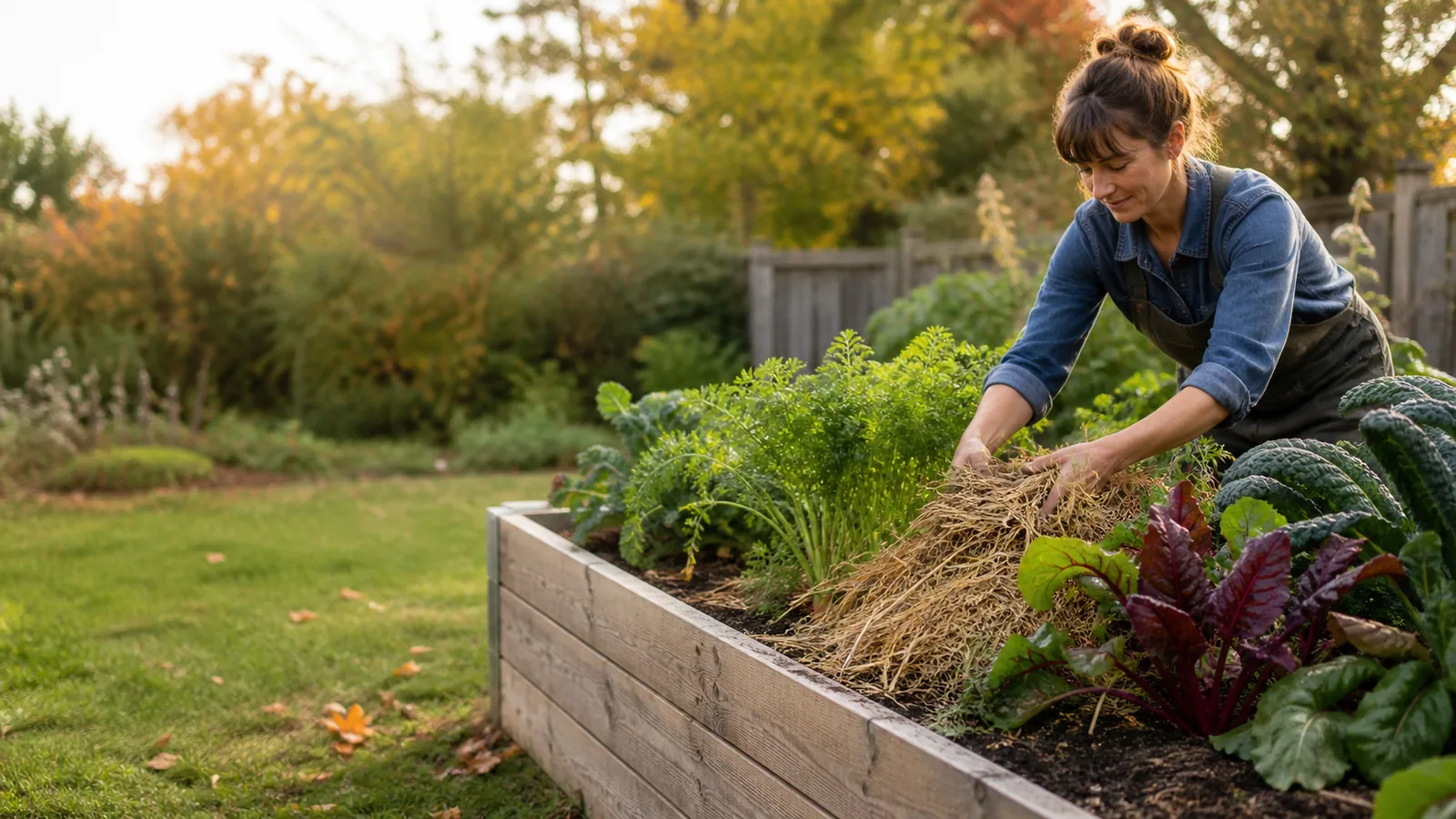
Mulch bare soil once seedlings are established, leaving room around stems. It moderates soil temperature, reduces evaporation and slows weeds. Row cover can protect certain crops from early cold and insects, but it also changes the growing environment. Lift it periodically to inspect plants, control weeds and make sure water is reaching the soil.
Fall vegetable garden checklist
- Find a local first frost date and choose a target harvest window.
- Check days to maturity and allow extra time for shorter days.
- Clear finished or diseased plants and make space for the new crop.
- Choose a small set of cool-season crops suited to the available time.
- Level the bed, add finished compost if needed and sow or transplant.
- Check moisture frequently; protect young plants from heat, wind or cold as conditions require.
Sources and editorial method
This is a non-commercial planning guide. It does not rank products, make hands-on testing claims or use affiliate product boxes. Its seasonal planning, crop-selection and protection advice is based on university Extension guidance; local Extension resources should take precedence over a national rule of thumb.
- Fall Vegetable Gardening and Season Extension — University of Maryland Extension
- When to Plant Vegetables — University of Maryland Extension
- Vegetable Garden Weather and Pest Protection — University of Maryland Extension