

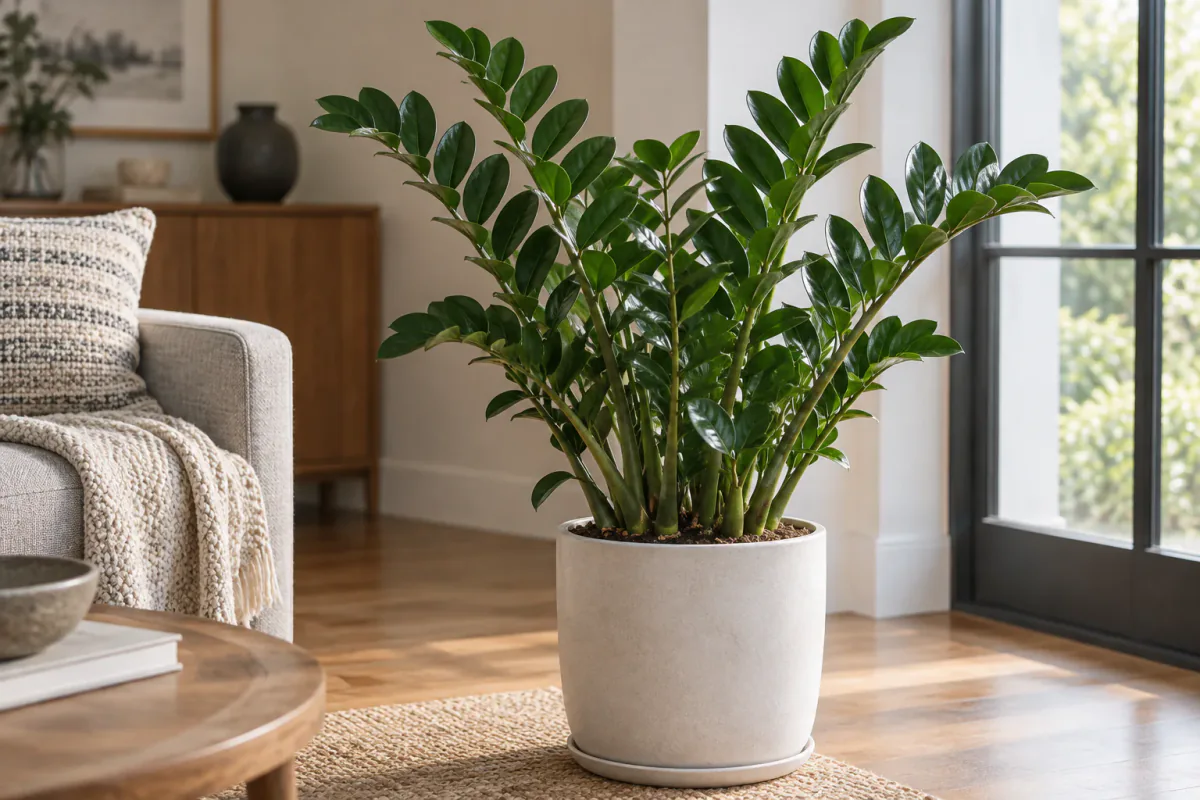
Choose a stable light location
Place the plant in bright indirect light for steadier growth; it can tolerate lower light, including many office settings. Avoid strong direct sun that can scorch leaves. If moving it from a dim location, increase light gradually. NC State Extension’s ZZ plant profile describes its rhizomes, low-light tolerance, and preference for bright indirect light.
Let the mix dry between waterings
Use well-drained potting soil and a pot with drainage holes. Water thoroughly, then let the mix dry before watering again. Rhizomes store water, so the plant is more vulnerable to persistent wetness than a short dry spell. Check moisture with a finger or wooden stick rather than following a monthly schedule.
Repot and propagate slowly
Repot when rhizomes fill the pot or the mix becomes compacted. Choose a container only modestly larger, since excess mix can stay wet longer. Divide rhizomes with a clean tool or try leaf cuttings; new growth can take time, so avoid repeatedly disturbing the plant.
Read leaf changes and keep away from pets
Yellowing stems or soft rhizomes can indicate excess moisture; scorched patches can follow strong direct sun. Check roots, drainage, and recent changes before adding fertilizer. Keep ZZ plants away from pets and children who may chew them. Check the exact plant in the ASPCA’s toxic and non-toxic plant database, and contact a veterinarian after a suspected exposure.
For related examples, see our resilient indoor plants guide and snake plant care.
Select a ZZ plant and plan the room position
ZZ plants are grown for their upright, glossy leaf stems and tolerance of a range of indoor light. Check the plant label for the species and cultivar, especially if you are comparing green and variegated forms. A newly purchased plant may have been grown under greenhouse light, so give it time to adapt to a home before placing it in the darkest corner.
Bright indirect light is a good starting point for steady growth. The plant can tolerate lower light, but “low-light tolerant” does not mean no light. Growth may be slower and new stems may be less frequent in a dim location. Keep the pot away from intense afternoon sun through glass, which can scorch leaves, and avoid cold drafts or hot air vents.
Choose a position where the plant has space to grow upright and will not be knocked over. A heavy pot helps balance tall stems, but it must still have drainage. Keep it clear of narrow walkways where stems can be bent or broken. If you rotate the pot for even growth, do it occasionally rather than moving the plant to different light levels every week.
The glossy leaves collect dust, which can make the plant look dull and complicate pest checks. Wipe them gently with a damp cloth and support each stem while cleaning. Do not use leaf-shine products or household polish. This gives you a chance to inspect for scale, mealybugs, or other pests before they spread.
Check the whole pot before watering
ZZ plant rhizomes store water, so the plant is better equipped to cope with a dry interval than with constantly wet soil. Do not water because the surface looks dry: check farther down in the pot or lift it to compare its weight with a recently watered container. If the mix is cool and damp, wait. If it has dried through and the rhizomes are firm, water thoroughly and let all excess leave the pot.
Make sure water can pass through the drainage holes. Empty the saucer and remove the inner pot from a cachepot after watering. A decorative pot that traps runoff can keep the base wet even when the visible soil appears dry. If the mix remains wet for a long time, inspect the pot size, soil structure, room temperature, and light rather than merely spacing waterings by a preset number of days.
In a cool room or during a low-light season, the plant may use water slowly. Reduce watering accordingly. In brighter, warmer conditions, inspect more often but still wait for the mix to dry between waterings. A schedule that works in summer can cause root rot in winter. Use a small care note if you tend to forget when the plant was last watered, but let soil condition override the calendar.
When repotting into fresh mix, monitor the drying rate again. A peat-free houseplant mix amended for drainage can work if water runs freely and the plant remains stable. Avoid burying the rhizomes much deeper than before. A deep layer of wet mix over the rhizomes can keep them damp and hide early rot.
Use a simple seasonal maintenance routine
Check the plant every week for soil moisture, new growth, and pests, but do not water or feed at every check. Remove fully yellow stems near the soil line with clean scissors after checking that yellowing is not widespread. Dust leaves occasionally and rotate the pot if growth leans heavily toward a window. Keep the plant in a stable room and avoid frequent location changes.
During active growth, use fertilizer only as directed on a houseplant product label. Do not try to speed up a naturally slow ZZ plant with extra feed. If no new stems appear, first review light, season, root health, and whether the pot is overcrowded. Fertilizer cannot compensate for darkness or damaged rhizomes.
Repot when roots or rhizomes crowd the container, the plant becomes unstable, or the mix has degraded. Choose a pot only modestly larger. If the plant is healthy and simply has not grown recently, leave it in place. Frequent repotting can disrupt the root system and may lead to more watering errors.
If moving the plant outdoors for summer, choose a sheltered position in shade or filtered light and acclimate gradually. Keep it away from cold rain and return it indoors before conditions fall below what the species tolerates. The plant is commonly grown as a houseplant in regions with cold winters and should not be left outside through frost.
Diagnose yellow stems and weak growth
| What you see | Questions to ask | Next step |
|---|---|---|
| Several yellow stems | Has the soil stayed wet? Is there a sour smell or soft rhizome? | Stop watering and inspect drainage and roots before adding anything. |
| One older stem turns yellow | Is the rest of the plant firm and healthy? | Remove it if fully yellow and monitor for a wider pattern. |
| Scorched or pale patches | Was the plant moved into stronger direct light? | Return it to bright indirect light and acclimate gradually. |
| Very slow growth | Is it a cool or dim season, or is the plant recently repotted? | Keep conditions stable and wait for active growth rather than overfeeding. |
| Drooping stems | Are roots healthy, or is the mix either bone dry or waterlogged? | Check the rhizome and root zone; do not diagnose by leaf angle alone. |
Change one condition at a time and watch new growth; damaged leaves may not recover their original appearance. If rhizomes are soft, remove decayed material with a clean tool and repot any firm sections in fresh draining mix. If the plant continues to decline, photograph the roots and contact a local plant diagnostic service. For species-specific culture, see NC State Extension’s ZZ plant profile.
Choose between rhizome division and leaf cuttings
Rhizome division produces a new plant more directly than leaf propagation. Remove the plant from its pot when the medium is dry enough to handle, then separate a rhizome section that has roots and a growing point. Use a clean sharp tool and avoid cutting through healthy tissue unnecessarily. Place each section in a small container with drainage, at its previous depth.
Let any cut surface dry before watering if practical. Keep the division in bright indirect light and avoid saturated mix while roots settle. New stems may take time to appear, so resist repeatedly unpotting the plant. Label the cultivar if known. A small division in an oversized pot can remain wet for too long, so match container size to the root section.
Leaf cuttings are possible but slow. Use a healthy leaflet and a suitable propagation medium; keep it lightly moist rather than soaked. Rooting and new rhizome growth may take a long time, and a single leaf may not show visible progress quickly. Treat this as a patient propagation project, not a fast way to fill a large planter.
If the parent plant is variegated, ask whether leaf cuttings will preserve the pattern; cultivar characteristics may not be identical in every offspring. For reliable division, wait until the plant is mature enough and make the split only when there is a reason to repot. Clean tools and pots between plants to reduce the chance of carrying pests or disease.
Respond to overwatering before decline spreads
If several stems turn yellow and the soil remains wet, remove the pot from any outer container and check the drainage holes. Empty standing water and give the mix time to dry. If the stems are firm and there is no odor, wait before unpotting; unnecessary disturbance can add stress. If the rhizome is soft, mushy, or has a sour smell, inspect it and remove only sections that are clearly decayed.
Use a clean blade to separate firm rhizomes from rotten tissue. Discard diseased material and do not reuse the wet, compacted mix. Pot sound sections in fresh, porous medium in a small container with drainage. Set the rhizome near the surface at its former depth; burying it deeply in damp soil can prolong the problem.
Keep the plant in bright indirect light while it recovers. Wait until the medium has dried before watering again, and do not add fertilizer while roots are damaged. A ZZ plant stores water and may take time to show new growth; a quiet recovery period is not proof that the plant has failed. Avoid moving it repeatedly to chase warmer or brighter conditions.
Before returning to normal care, consider why the pot stayed wet. Was the container too large for the root mass? Did it lack drainage? Was the plant in a cool, dim spot or watered on a calendar? Correct the cause and then track the new pot’s drying rate. A moisture meter can support observation, but test more than one spot and do not let a device replace checking the mix and plant.
Soft stems can also follow physical damage or cold stress, so compare the symptom with recent events. If yellowing continues after drainage is corrected, photograph the rhizome and contact a local horticulture diagnostic service. For the species’ normal rhizome and growing habit, use NC State Extension’s ZZ plant profile.
Inspect and acclimate a newly purchased ZZ plant
Choose a plant with firm stems and a stable base, and inspect the soil for standing water before bringing it home. A few older yellow leaves do not necessarily mean the plant is failing, but multiple soft stems, a sour smell, or visible pests deserve attention. Remove any plastic sleeve that traps moisture and keep the pot upright during transport.
Place the ZZ plant in bright indirect light and let it adjust to the room before changing pots or fertilizer. If it was grown under strong greenhouse light, avoid moving it immediately into harsh sun. If the final location is a dim office, expect slower growth and check soil dryness less often than you would beside a bright window.
Keep the plant label or take a photo so you can confirm its identity later. Common names overlap, and new cultivars can have different leaf color or growth forms. If the plant will be near pets or children, place it where stems and leaves cannot be chewed or pulled. If ingestion is suspected, contact a veterinarian or poison-control service with the plant name rather than relying on a visual guess.