

Diagnose before you try to rescue it
Start with the growing medium, not the leaves. Push a finger, chopstick or moisture probe below the surface; with a pot, compare its weight with how it feels after a thorough watering. University of Minnesota Extension notes that heat alone can cause wilting even when moisture is available. A plant may firm up in the evening once evaporation slows.
Dry mix, a very light pot, crisp leaf edges and a plant that stays limp into the evening point toward water stress. Constantly wet mix, poor drainage or a container without a drainage outlet point toward a different risk: roots deprived of oxygen can also make a plant wilt. When you are unsure, do not keep adding water until the answer appears. Check the root zone and drainage instead.
Match the root-zone check to what you see
Use the visible symptom to decide what to inspect, not as a diagnosis by itself. Check more than one sign before changing watering or pruning.
| What you notice | Check next | Safer first response |
|---|---|---|
| Leaves droop in afternoon heat | Is the root zone dry, moist or saturated? Does the plant recover after temperatures fall? | If soil is moist, wait for cooler hours and reassess before adding water. |
| Dry soil and a light container | Does water reach the full root zone, and can excess drain away? | Water slowly at the soil surface, then check that the root zone is re-moistened. |
| Wilt with persistently wet soil | Check drainage holes, standing water and whether the medium stays wet between checks. | Pause before watering again; correct drainage and observe the plant. |
| Bleached or scorched foliage after intense sun | Look for a pattern on exposed leaves and reflected-heat surfaces. | Reduce peak exposure temporarily; wait to prune until the plant is stable. |
What to do today
- Water dry root zones thoroughly. Apply water at the soil surface until the root zone is re-moistened and excess can drain from a container. Do not assume a quick surface sprinkle reaches the roots.
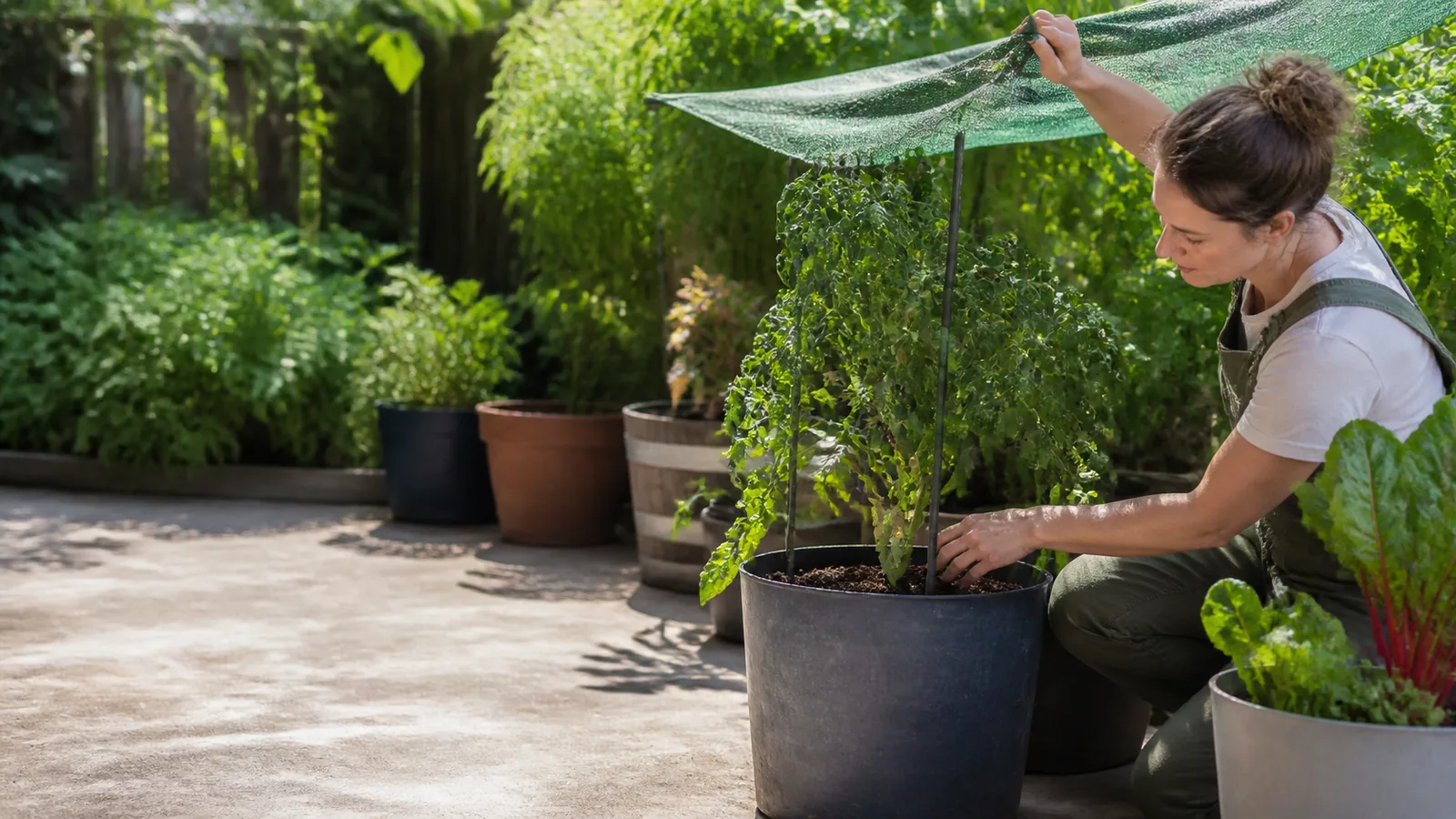
- Reduce peak exposure. Give tender plants temporary afternoon shade with breathable cloth, a patio umbrella or a movable screen. Keep air moving; do not wrap plants in plastic.
- Move containers when practical. Shift pots to morning sun and afternoon shade, out of hot reflected walls and drying wind. Move them gradually if they are adapted to full sun.
- Mulch bare soil. A light layer of suitable organic mulch helps slow evaporation and moderates temperature around the root zone. Keep it back from stems.
- Observe after temperatures drop. Recovery overnight is a useful clue that the plant experienced temporary heat stress rather than irreversible damage.
Containers, vegetables and houseplants need different checks
Containers need the closest monitoring. Their limited growing medium dries faster than an in-ground bed, and dark or thin-walled pots can heat up quickly. University of Maryland Extension recommends checking containers daily in summer rather than watering on autopilot. Larger pots, wind shelter and a surface mulch buy time, but they do not remove the need to check.
Vegetables can show heat stress as leaf curl, stalled growth or flower drop. Tomatoes, peppers and cucumbers may pause production during very hot weather. Keep water focused on the soil, maintain mulch and avoid heavy pruning until the weather eases. A stressed plant needs functioning leaves to recover; removing healthy foliage exposes it to more sun.
Houseplants can suffer from hot glass, dry indoor air and abrupt moves between air conditioning and outdoor heat. Move them back from a sun-baked window if leaves bleach or scorch, but do not place a shade-tolerant plant into outdoor sun as a rescue measure. Maryland Extension advises that both prolonged dryness and excess moisture can cause leaf damage, so the potting mix still decides the next step.
Avoid these common heat-wave mistakes
- Watering by the clock: plant size, wind, pot material, rain and temperature all change how quickly the root zone dries.
- Fertilizing as a rescue: fertilizer does not repair heat damage overnight and can add stress if roots are dry or compromised.
- Pruning hard during the hottest week: wait until the plant is stable before removing anything beyond clearly dead tissue.
- Assuming wilt always equals drought: test the growing medium before watering again.
- Leaving pots on hot pavement or beside reflective walls: move vulnerable containers to a less extreme microclimate if you can.
Prepare for the next heat wave
Preparation is less dramatic and more effective than emergency treatment. Group containers where they can shelter one another from wind, keep a mulch supply ready and know which plants can tolerate afternoon shade. If you use drip irrigation, inspect the system before the forecast changes, then verify that it actually moistens each root zone. For a lawn or garden bed, water low and slowly enough for the soil to absorb it rather than sending water into the street.
Keep a short note after each heat event: which containers dried first, which plants wilted only temporarily and where shade was most useful. That record helps you adjust placement and watering before the next hot week instead of treating each event as a new mystery.
Sources and editorial method
This page is an editorial diagnosis and care guide, not a product review. It does not claim direct testing or sell a heat-wave solution. Its observations about heat stress, watering and containers are grounded in university Extension guidance; local restrictions and local Extension advice take priority.
- Keep gardens thriving through the heat — University of Minnesota Extension
- Watering the vegetable garden — University of Minnesota Extension
- Growing Vegetables in Containers and Salad Tables — University of Maryland Extension
- Drought Stress to Indoor Plants — University of Maryland Extension