

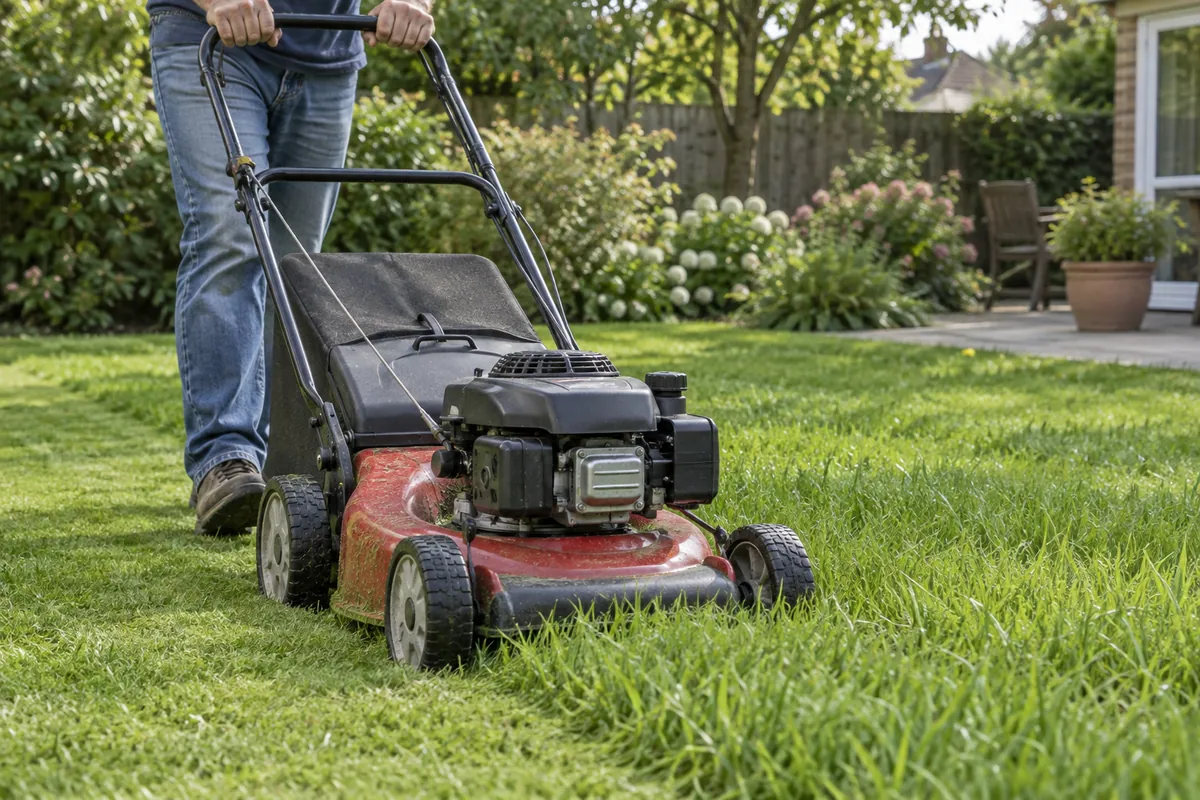
When a gas lawn mower fits the job
Map the lawn and the route between the storage area and grass. Note slopes, narrow gates, trees, beds, separate sections and places where the machine must turn. A gas mower may suit a larger or less accessible area, but it is not automatically the right choice for every large lawn: deck size, traction, operator comfort, service availability and storage space all matter.
Decide whether you need a walk-behind mower or a riding machine. A walk-behind is easier to store and maneuver around obstacles; riding models add a seat and larger cutting deck but require safe access, maintenance space and a plan for transport or winter storage. Keep the riding-mower guide separate when comparing tractors and zero-turns.
Identify the engine and fuel system
Before buying a gas mower, record the engine manufacturer and model number. Read the manual for the exact fuel type, minimum octane, ethanol allowance, oil grade, oil capacity and starting instructions. Do not assume the same rules apply to every mower with a gasoline engine.
Four-stroke mower engines typically have separate fuel and oil systems; two-stroke machines may specify a premixed fuel ratio. Verify which engine is fitted before adding fuel. Husqvarna’s U.S. support guidance, for example, sets a particular gasoline recommendation for its products; the relevant mower’s own manual and fuel label remain the controlling reference for the engine you own.
Compare deck, drive and discharge options
Compare cutting width against access and storage, not just advertised coverage. Check the cutting-height range, adjustment points, wheel size, handle controls, catcher and whether the model supports mulching or side discharge. A self-propelled drive can reduce pushing effort on a larger or sloped lawn, but the speed control and slope limits are model-specific.
Choose a discharge method that fits the lawn routine. Bagging collects clippings but adds emptying time; mulching returns finely cut clippings when conditions and equipment allow; side discharge can help when grass is tall, if the maker permits it. Keep guards and discharge shields in place. Minnesota Extension recommends sharp blades and removing objects from the lawn before mowing.
Plan for routine engine maintenance
Maintenance depends on the engine, hours of use and operating conditions. Use the manual’s schedule for oil changes, air-filter cleaning, spark-plug checks, blade inspection and seasonal service. Keep a simple record of operating hours and service dates. Do not copy an interval from another model or assume that a product listing’s “low maintenance” claim overrides the service schedule.
Before any blade, deck or clog work, stop the mower, let hot parts cool and follow the maker’s procedure for disconnecting the spark plug or battery. Never put a hand beneath a deck to clear grass. If a repair requires fuel-system or engine work outside your experience, contact an authorized service provider.
Plan the full cost and storage routine
Estimate ownership using the tasks and service the exact mower requires rather than a generic “gas mower” maintenance list. Before purchase, download the engine and mower manuals and note each scheduled item, the parts needed and whether the service can be done safely at home. Some service intervals depend on operating hours, while others are seasonal; use the manufacturer schedule and keep a record of both.
| Ownership check | Question to answer |
|---|---|
| Fuel | What fuel grade and ethanol limit does this engine allow, and how much will a typical season require? |
| Oil and filters | What type, quantity and change interval does the manual specify? |
| Blade and drive parts | Can you source the correct blade, belt and air filter locally? |
| Storage | Can the mower and approved fuel container be stored separately and safely? |
| Service | Is an authorized repair shop accessible for work beyond routine care? |
Make room for the machine before buying it. Measure the mower’s overall width and length, the shed opening and the route across any step or ramp. Leave access for cleaning and scheduled service instead of parking the mower in a way that traps fuel containers or blocks an exit. Keep gasoline in an approved, sealed container according to its label and local rules; never store it near a pilot light, furnace, water heater or other ignition source.
Seasonal storage is model-specific. Manuals may differ on fuel stabilization, draining, oil service, battery removal and indoor storage. Do not mix storage instructions from a different engine or follow an old online forum answer without checking the current manual. If you cannot provide safe fuel storage or engine service, compare the full routine with a battery or corded mower before deciding.
Use the engine label and manual to identify the correct oil type and capacity before the first start. Do not overfill or run the engine with an unknown oil level; check it using the procedure and surface conditions in the manual. If the mower was delivered without the operator information, obtain the correct documentation using the engine and mower model numbers before fueling or operating it.
Plan for the noise and exhaust as well as the maintenance. Check local quiet hours, the distance from neighbors and whether the mowing route passes windows or seating areas. Never run a gasoline mower in a garage, shed, greenhouse or other enclosed space, even with a door open; exhaust can create a carbon-monoxide hazard. If a mower has been stored with fuel, follow its startup instructions and inspect for leaks before use.
These checks can change the comparison with electric options. A gas mower may remove the need to plan around a cord or charge, but it introduces fuel, oil, filters, spark components and exhaust. Include those tasks in the total cost and decide whether you can carry them out safely or have a service provider handle them.
Ask the seller for the engine model number before comparing fuel or service advice. The mower brand and deck model may not identify the engine’s requirements on their own, especially on an older or used machine. Use the engine manufacturer’s documentation for the installed unit and keep a copy with the mower.
On a used mower, check the tank, fuel lines and cap for leaks or cracks before adding fuel. Look for corrosion around the deck, damaged guards, missing fasteners, a bent blade and controls that do not return or stop as intended. Inspect only with the engine off and cool; never reach beneath the deck. If you cannot safely inspect a machine, ask a qualified service provider to do it before purchase.
Ask for the seller’s service records and compare them with the manual’s schedule. A recent oil change does not establish that the air filter, blade, spark plug or fuel system is in good condition. A cold start and brief supervised operation can help identify obvious problems, but it is not a substitute for a mechanical inspection or proof of remaining engine life.
For a used mower, request a cold start and observe the machine from a safe position. Check for fuel or oil leaks, unusual smoke, unstable idle, damaged guards and controls that fail to stop the blade as intended. Do not test a mower with missing safety parts or an unclear service history; ask a qualified repair shop to inspect it first.
Identify the mower and engine before using it
Retailer titles often shorten a mower name or combine a deck model with an engine description. Record the mower product number and the engine’s own model or family code from its data labels. Use those identifiers to find the operator manual, engine manual, spare-parts diagram and service network. A mower can be sold with different engines or cutting decks under a similar name, and the correct maintenance schedule follows the installed unit.
Check that the listing or seller specifies whether the mower is push or self-propelled, which drive system it uses, the cutting width, the collection bag and any mulching or side-discharge parts. Confirm the kit content by part number rather than by a stock photo. If the model is imported or second-hand, verify the correct manual and parts support for that region before assuming that an identically named domestic model has the same engine, controls or warranty.
Ask the dealer who handles warranty work, where routine service is available and which parts normally need replacement. A mower that is mechanically suitable can still be difficult to own if the correct blade, belt, air filter or engine components are unavailable locally. For a used machine, compare the serial number with the manual and parts listing, and confirm that safety parts have not been removed or substituted.
Set a safe operating and storage routine
Before each mowing session, move fuel containers away from the work area, inspect the mower for leaks or loose guards, clear debris from the lawn and confirm that the discharge equipment is fitted. Start and operate the mower outdoors. If it will not start, follow the troubleshooting procedure rather than repeatedly pouring fuel or bypassing a safety control.
After cutting, let hot parts cool before refuelling or cleaning. Follow the engine’s instructions for disconnecting the spark plug or battery before blade work. Keep hands outside the deck and use the method in the manual to clear grass. If the blade is damaged or the mower vibrates, stop using it until the problem is inspected; a sharpened blade must also be balanced and installed as the manufacturer specifies.
For the end of the season, check the exact manual before deciding whether to stabilize fuel, drain the tank, replace oil, remove the battery or service the air filter. Fuel blends and storage guidance can differ by engine and country. Use an approved container, keep it closed and away from heat or ignition sources, and follow the label and local rules for handling old fuel. Do not use a general online “winterizing” list when the engine manual describes a different procedure.
Make a simple service log with the date, operating hours, fuel used, oil service and blade or filter changes. This helps distinguish scheduled maintenance from a fault and makes a used mower easier to assess later. Keep the engine and mower manuals together so the fuel and oil instructions can be checked without relying on memory.
Fuel handling and mowing safety
Refuel outdoors and only when the engine is off and cool, following the machine’s instructions. Store fuel in an approved container away from ignition sources and living areas. Keep the cap secure, clean spills as directed by the product guidance and never run an engine in an enclosed garage or shed because exhaust can build up.
Clear rocks, wire and branches before mowing; keep bystanders away from the discharge area; wear sturdy footwear and eye protection; and leave guards in place. For riding mowers, slope direction and safe limits differ from walk-behind guidance. CPSC and Penn State emphasize following the operator manual and stopping operation when control or footing is uncertain.
Compare gas with battery and corded mowers
Choose battery power when a compatible pack can cover the lawn and lower routine engine upkeep matters. Choose corded electric when the area is close to an outlet and cable routing is safe. Gas can suit longer sessions away from electricity, provided you can manage fuel, service and storage. Compare the total setup—mower, fuel or batteries, charger, parts and service—rather than purchase price alone.
Frequently asked questions
Frequently Asked Questions
Manufacturer and safety sources
Fuel type, oil grade, maintenance interval, slope limit and storage steps depend on the exact mower and engine. The manufacturer guidance below illustrates model-level support; it does not replace the manual for a different engine.
- Gasoline recommendations for petrol lawn mowers — Husqvarna US Support
- Maintaining a lawn mower — Husqvarna UK Support
- Carbon monoxide fact sheet — U.S. Consumer Product Safety Commission
- Mowers and mowing safety — University of Minnesota Extension
- Riding lawn mower safety practices — Penn State Extension