

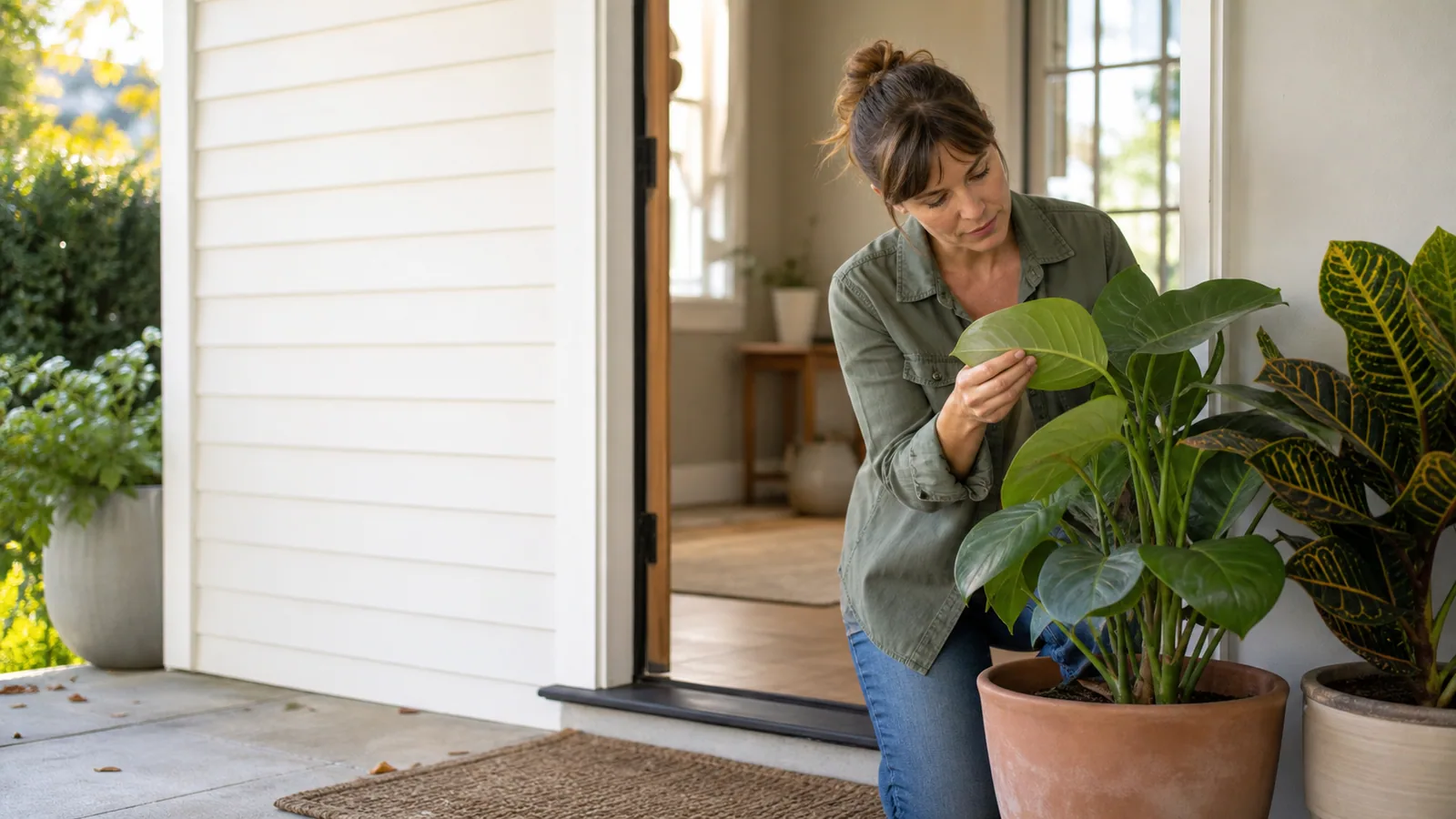
Start before the first cold-night scramble
Identify each plant and check the forecast before nighttime temperatures become risky. Tropical foliage plants, succulents and herbs do not all have the same cold tolerance, so one calendar date cannot cover every home. Minnesota Extension notes that temperatures around 45–50°F can damage some common houseplants; use this as a prompt to check the species, not as a universal threshold. Maryland Extension recommends preparing plants before moving them back indoors; starting early gives you time to inspect and acclimate them instead of reacting to one cold forecast.
Choose the indoor place first. Look for the brightest suitable window, a stable temperature and space away from heating or cooling vents. Do not assume a sunny outdoor plant will thrive at any indoor window; even a bright window delivers less light than an open patio. The goal is to provide the most appropriate available location and then leave it stable.
Use a simple move-in inspection
- Check the forecast and the plant’s cold tolerance before moving it.
- Inspect the top and underside of leaves, new growth, stems, pot rim, saucer and drainage holes.
- Look for webbing, sticky residue, scale-like bumps, eggs, chewed leaves and insects in the pot or saucer.
- Clean the outside of the pot and remove dead leaves or weeds from the surface.
- Keep returning plants apart from the indoor collection for about one to two weeks and inspect them again when watering.
The observation period is a practical pest-control step, not a guarantee that a plant is pest-free. If you find insects, identify them before treating the plant, and use only a product labeled for that plant and indoor setting. Some treatments can damage sensitive foliage.
Inspect and clean plants outdoors
Check leaf undersides, new growth, stems, pot rims and the surface of the growing medium. Look for sticky residue, webbing, scale-like bumps, chewed leaves and hiding insects. It is easier to spot and address a problem outside than to discover it after it reaches your indoor collection.
Remove dead leaves and weeds from the pot. Rinse sturdy foliage only when that suits the species, and follow the label of any registered plant-protection product. Fuzzy-leaved plants are a special case: Maryland Extension cautions that wet foliage can spot, so do not treat every houseplant with the same hose-down routine. If an infestation is heavy, isolate the plant and address the problem before bringing it near others.
Acclimate plants to lower indoor light
A move from outdoor shade or filtered sun to an indoor window is still a light reduction. Over several days, place plants in a more sheltered outdoor spot or a covered porch before moving them to their permanent indoor location. This transition does not eliminate all leaf drop, but it helps avoid a dramatic all-at-once change.
Do not compensate for lower light with more water or fertilizer. When light falls, many plants use water more slowly. Yellowing and dropped leaves can be part of adjustment, but soggy potting mix turns a normal transition into root stress. Let the growing medium guide the next watering rather than continuing the outdoor schedule.
Set up a stable indoor recovery period
Keep returned plants separate from the indoor collection for a short observation period whenever possible. University of Minnesota Extension recommends isolation to reduce the chance that a missed pest or disease spreads. Use this time to check the potting mix, watch new growth and learn how quickly the plant dries in its new place.
Clean containers before setting them on indoor surfaces and use saucers that you can empty. Standing water below a pot can invite pest and root problems. If the plant needs a humidity adjustment, group compatible plants or use a more suitable room rather than misting indiscriminately. Good air movement and a consistent location are usually more useful than repeated interventions.
Watch water, pests and leaf drop
- Check before watering: assess moisture below the surface or compare the pot’s weight to a freshly watered baseline.
- Expect some change: yellowing or leaf drop can follow a light and humidity change, especially in the first weeks.
- Keep scouting: look again for spider mites, scale, mealybugs and fungus gnats after the plant is indoors.
- Avoid emergency feeding: wait for stable, active growth before applying a plant-appropriate fertilizer plan.
- Adjust placement deliberately: move a plant only when observations show the current light or temperature is unsuitable.
Sources and editorial method
This is a non-commercial care guide. It does not claim direct tests or recommend products. Its temperature, pest-inspection, quarantine, adjustment and watering guidance is based on university Extension sources; identify individual plants and use local weather conditions for the final move-in timing.
- September Gardening Tips and Tasks — University of Maryland Extension
- September garden checklist — University of Minnesota Extension
- When to bring houseplants inside for the winter — University of Minnesota Extension
- Managing insects on indoor plants — University of Minnesota Extension
- Drought Stress to Indoor Plants — University of Maryland Extension