

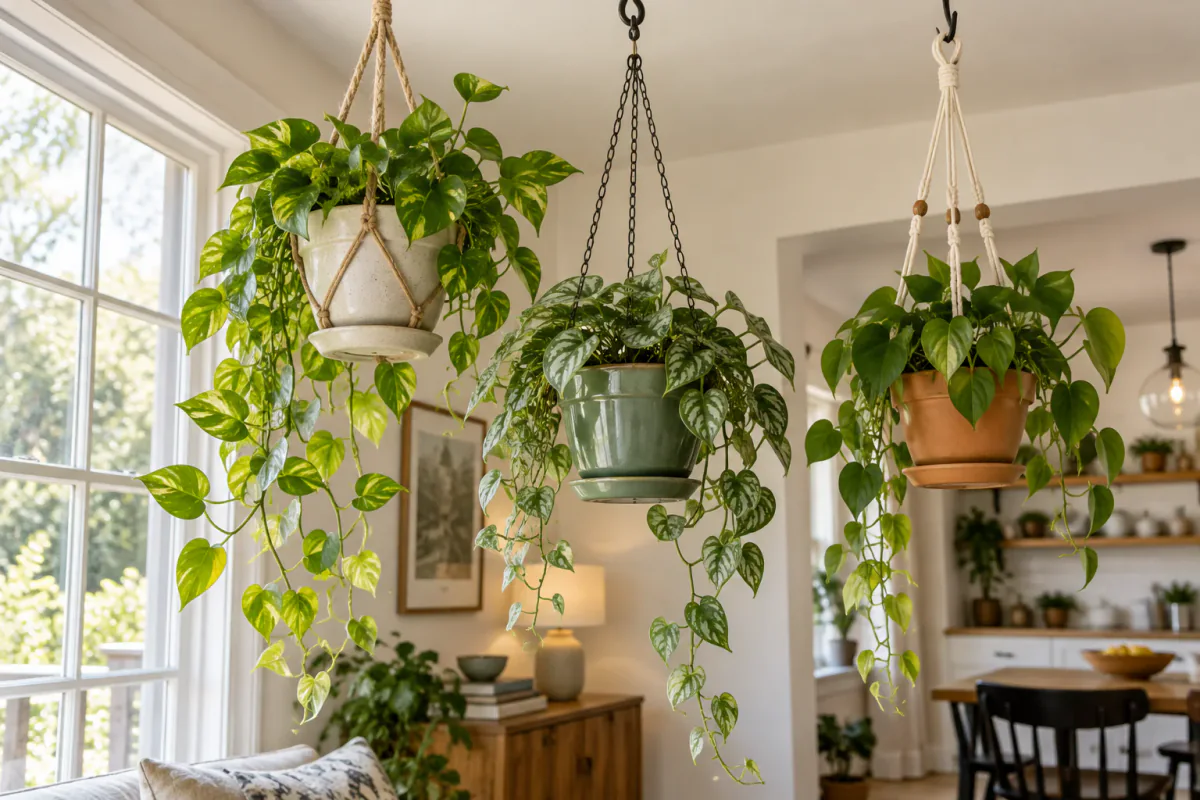
Match a trailing plant to the room
Observe the actual light at the proposed position, including seasonal changes and any shade from buildings or curtains. A plant may tolerate a dimmer room without growing vigorously. Direct sun through glass can also be stronger than expected. Match the species label to the site and move plants gradually if you change their light exposure.
Measure both pot height and the expected vine or leaf drop. Keep foliage clear of doors, fans, heaters, candles, walkways and fixtures. A reachable location matters: if you cannot inspect, water and lower the plant without climbing on unstable furniture, a shelf or plant stand may be a better choice.
Compare common hanging houseplants
Common names cover many cultivars, so use this table to decide what to verify on the nursery label rather than as a ranking.
| Plant | Check before choosing | Placement question |
|---|---|---|
| Pothos (Epipremnum aureum) | Light requirements, mature vine length and pet-safety information | Will the vines stay clear of children, pets and walkways? |
| Heartleaf philodendron | Botanical name, moisture needs and toxicity details | Can you trim and inspect it at a safe height? |
| Spider plant (Chlorophytum comosum) | Mature size and room for arching leaves or plantlets | Is there clearance beneath and around the pot? |
| Hoya | Exact species; light and watering needs vary | Does this variety trail, or would it need a support? |
Mount the pot safely
Estimate the load of the plant, pot, hanger and growing medium after watering. Use a fixing rated for that load and anchored to an appropriate structural support; drywall anchors are not interchangeable with structural fixings. Follow the hardware maker’s installation and load instructions. If you cannot confirm the ceiling or wall support, choose a sturdy freestanding stand or ask a qualified installer.
Before hanging the arrangement, test its balance and drainage at floor level. Keep it away from places where a swinging pot could strike someone, and recheck the fixing after moving or repotting. The University of Illinois Extension’s guide to hanging baskets covers container setup; for hardware and planter options, see our hanging pot guide.
Make watering and care practical
Watering frequency depends on the plant, pot, medium, season and room. Check the root-zone moisture rather than watering by calendar. Air moving around a basket can change how quickly it dries, but a liner or cachepot may also trap water. Use drainage holes and empty collected water after watering.
A removable inner pot makes care easier: take it to a sink, let excess water drain, then return it when dripping stops. Inspect leaves and stems while watering so you can notice pests or changes early. Keep a short note of watering and growth until you understand how the plant responds in that room. See the indoor plants guide for broader light and care advice.
Check pet safety by botanical name
Do not assume a plant is safe because it is sold as a houseplant or because its pot is out of reach. Vines grow, leaves fall and baskets can be pulled down. Check the exact botanical name in the ASPCA toxic and non-toxic plant database. The database is a starting point, not a substitute for veterinary advice; contact a veterinarian or poison-control service if an animal may have chewed a plant. For a plant whose care depends on low light, compare the options in our low-light plants guide.
Choose the pot, hanger and watering method together
Think of the hanging arrangement as one system: plant, inner pot, outer basket, hanger, fixing point and catch tray. Check the container has a drainage route and that water will not drip on a floor, electrical equipment or another person. A removable nursery pot can make watering easier, but it must sit securely inside the decorative basket and be easy to lift when wet.
Match the pot to the plant’s growth habit. A spider plant can produce arching foliage and plantlets that need clearance; a trailing vine can lengthen far below its basket and may need trimming. A species that grows slowly may suit a fixed, high location better than one that needs frequent pruning or inspection. Read the plant label and plan for the mature growth rather than the small plant in the shop.
Hanging baskets exposed to air movement or reflected heat can dry differently from pots on a shelf. The University of Illinois Extension’s hanging-basket guidance notes that exposure can affect moisture and that drainage can drip below. Bring the pot down or water it over a sink when the location makes safe irrigation difficult.
Measure the hanging position before installation
Before drilling or attaching hardware, map the full space occupied by the pot and expected foliage. Measure the total drop from the ceiling to the lowest vine or leaf, and check clearance from doors, fans, heaters, windows, lighting and walkways. A basket that swings into a door or hangs over a frequently used seat can become a nuisance even when the plant itself is healthy.
Estimate the complete load after watering, including the pot, plant, mix, hanger and any retained water. Follow the hardware manufacturer’s instructions and verify that the fixing is suitable for the actual ceiling or wall material. If you cannot confirm the support or the load rating, use a stable stand or shelf instead of guessing. A removable pulley or hook also needs to be rated for the complete load and installed correctly.
Test the watering arrangement at floor level. Fill the pot, water it as you intend to later and confirm that runoff is caught. If the saucer is too small or the inner pot cannot be lifted safely, change the setup before installation. Recheck the fixings after repotting, since a larger container and wet medium can change the load.
Troubleshoot common hanging-plant problems
| Symptom | Check | Next step |
|---|---|---|
| Long, sparse growth | Light and cultivar requirements | Move gradually toward a more suitable light level and rotate if growth leans |
| Wilting or dry mix | Moisture at root depth, pot size, air movement and season | Water thoroughly where runoff can be caught; recheck the next day |
| Yellow leaves or wet medium | Drainage, a liner holding water and watering frequency | Empty collected water and check roots before watering again |
| Leaves are hard to inspect | Whether the height still allows safe maintenance | Lower or relocate the plant rather than ignoring possible pests |
Change one care factor at a time, and identify the plant before treating a pest or leaf problem. Penn State Extension’s pothos guide describes how this particular vine responds to light, watering and pruning; do not apply those details to every trailing species.
Set a simple inspection routine
When watering, look at both sides of the leaves, stems and the hanger. Check for webbing, sticky residue, new growth and loose or frayed hardware. The interval depends on the plant and room; a calendar reminder can prompt an inspection, but it should not automatically trigger watering.
Every few weeks, confirm the basket remains level and that new growth has not reached a fan, candle, heater or walking route. Trim only when the species can tolerate it and use clean tools. If growth or roots make the pot difficult to manage, lower it and repot or propagate only after consulting species-specific guidance. Keep the arrangement reachable enough to maintain without unsafe climbing.
Adjust placement as indoor light changes
Window light changes with day length, sun angle, curtains and nearby growth outside. A hanging plant that receives enough indirect light in spring may be shaded later, while direct summer sun can become stronger at the glass. Observe leaves and new growth over time instead of assuming that the room’s label—bright, medium or low light—stays constant throughout the year.
If growth leans toward a window, rotate the pot only when the hanger allows it without twisting the cord or loosening the fixing. A plant that becomes sparse may need a brighter position, but move it gradually and check the species’ requirements. University of Minnesota Extension’s indoor lighting guidance explains how to assess light before moving a plant.
Heating, air conditioning and open windows also change temperature and airflow. Keep foliage away from hot air outlets and avoid placing a basket where a draft makes it swing. When the light or room changes, reassess watering: do not increase it automatically when a plant grows more slowly in winter.