

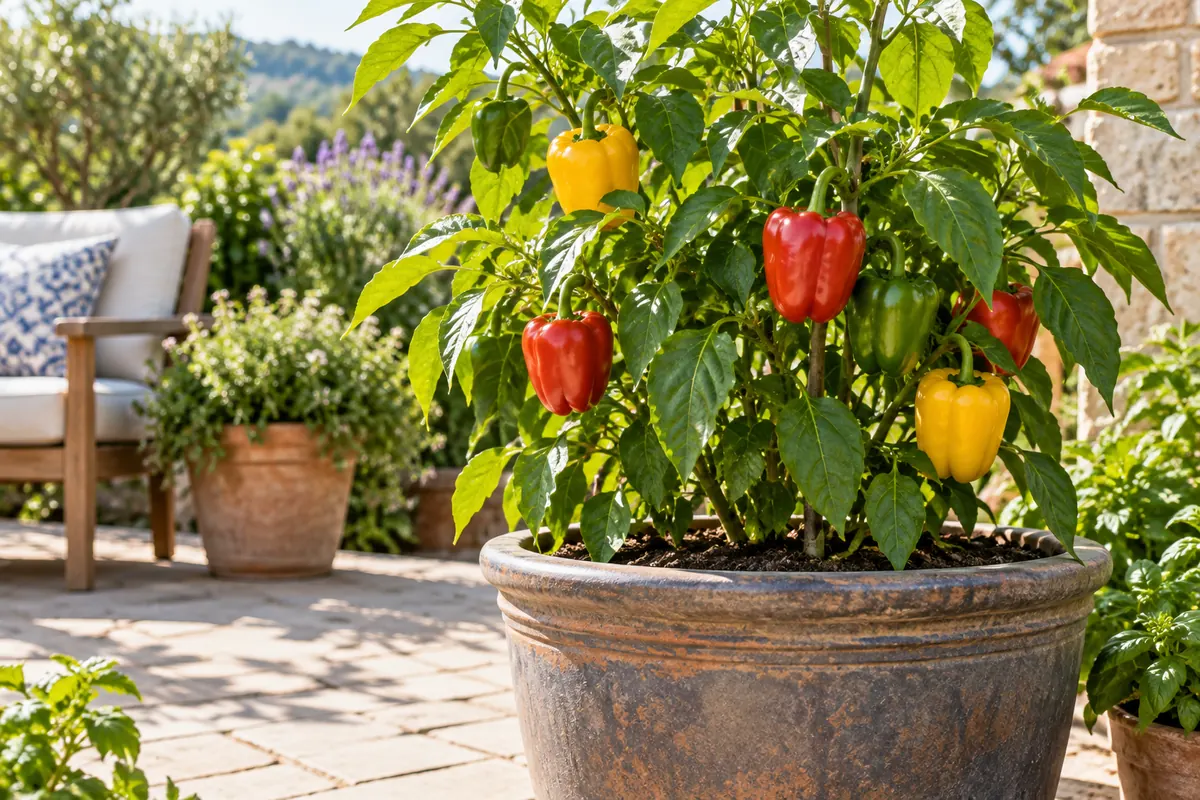
Growing peppers in pots works when the cultivar, root volume, light, support and frost-free season fit the site. Use a regional planting calendar and the seed packet or nursery label for the named cultivar.
Container size and watering needs vary by plant size and conditions. Check the container medium regularly and avoid relying on one schedule for every pepper.
Choose a pepper cultivar by mature size and season
Choose by space and fruit. Compact bell, sweet and hot cultivars differ in mature spread, fruit weight, heat tolerance and time to ripen. A short plant can still need support when loaded with large peppers. Check cultivar name, height, spacing, maturity estimate and disease information on the packet. In a short season, prefer regional recommendations rather than assuming “early” means the same thing across seed suppliers.
If you grow sweet and hot types, label them clearly and keep tools and hands clean at harvest. The UMN Extension pepper guide offers regional advice on starting and transplanting; its dates and temperature examples are specific to Minnesota and should not be treated as universal.
Compare compact, dwarf, chile and bell pepper cultivars by mature height, fruit type, support needs and days to maturity. Use the seed packet to confirm the named variety’s requirements; a short plant is not automatically suited to a small pot if its roots or fruit load need more space.
Illinois Extension’s container crop table provides regional size examples. Check local frost and heat guidance before planting.
Select a pot and medium for the named cultivar
Choose pot color and placement based on observed heat rather than appearance alone. On a hot paved balcony, a dark container against a reflective wall may expose roots to more heat than a shaded garden pot. Move the planter only if it can be moved safely and still receives suitable light, or use a temporary screen that does not block airflow. The same site can be ideal in spring and too hot in midsummer, so observe plant response over the season.
Check drainage after the first watering. If the container drains onto a balcony, use a stable tray only as a catchment and empty it rather than leaving roots in water. Confirm that the tray and pot remain stable in wind.
Choose a stable pot with usable medium volume for the cultivar and drainage holes that remain open on the surface below. If using a reservoir, check how it fills and drains and whether the selected pepper suits that system. A small pot may need closer moisture checks in heat, but a larger one does not correct poor drainage or inadequate light. Place the container where it receives suitable sun and remains accessible for watering and harvest.
Heat-reflecting walls and paving can change exposure, and balcony railings may shade part of the canopy. Install a stake or cage before the plant and fruit become heavy. On a deck, include wet medium, mature plant and support when checking permitted load. Leave enough space around foliage for inspection and airflow as the plant grows.
Use a stable container with drainage and enough root volume for the selected variety. Pot-size recommendations differ by cultivar and source; consult the Extension table and plant label rather than treating one gallon figure as universal. Choose a container medium intended for vegetables and install support before the plant becomes heavy if the cultivar needs it.
Compare packet and local Extension details
For hot peppers, read the seed supplier’s description of heat and use this as a preference guide, not a precise promise across growing conditions. Fruit heat can vary with cultivar, maturity and environment. Keep sweet and hot types labeled from seedling stage through harvest so they are not confused after the plants look similar. If saving seed, check whether the plant is open-pollinated or hybrid and how nearby pepper varieties may affect seed characteristics.
Do not compare one plant grown in full sun with another in shade and attribute the difference to cultivar alone. Keep container, watering and fertilizer similar when running a small side-by-side trial.
Compare cultivar and fruit type, mature height and width, maturity estimate, spacing, support, disease resistance and regional planting window. Check whether the days listed begin at sowing or transplanting. If a resistance code appears, look it up in the supplier’s glossary and confirm that the disease is relevant locally. Keep the exact packet because a cultivar name may cover several selections.
Record whether you used seed or a transplant, when it moved outside, and when flowers and fruit appeared. That is useful where the season is short and late fruit may not ripen before autumn weather. Local seed suppliers or Extension services can help when packet guidance does not explain temperature and disease needs.
Record cultivar, mature size, fruit type, spacing, expected maturity, support needs and local planting window. Days to maturity are estimates and may start at different stages; compare only when the source definitions match. Check regional disease resistance and frost guidance.
Plant after local frost risk and harden off
Start with fresh seed or a labeled healthy transplant. If starting indoors, follow packet timing and provide adequate light after emergence. Harden plants gradually so outdoor sun, wind and temperature changes do not shock them. Wait until regional conditions suit the crop instead of using one universal date; protect or delay planting if nights remain too cold for the named cultivar.
Handle the root ball gently and set it at the depth recommended by the label. Water to settle the medium without compacting it, then check that the whole root zone is moist and drains. Install support before roots fill the pot. Label sweet and hot cultivars separately. Watch for transplant stress during the first days outdoors, and do not feed immediately unless the crop or medium directions call for it.
- Choose the named cultivar and container together using regional crop guidance.
- Use clean container medium and a pot with drainage.
- Harden transplants gradually before outdoor placement, following Extension or nursery instructions.
- Set the plant at the depth recommended on its label and provide support if needed.
- Check root-zone moisture and protect the plant from conditions outside its temperature range.
Adjust moisture and nutrients to plant response
Peppers need moisture for steady growth, but roots also need air. Check below the surface and water when the root zone is beginning to dry rather than reacting to one wilted leaf. Leaves may droop temporarily in heat even when the pot is moist; check again as the plant cools. Persistent wetness and yellowing may indicate poor drainage. Adjust how often you check after weather shifts and as fruit load increases.
Use fertilizer according to the label and crop guidance. Excess nitrogen can encourage foliage without fixing low light, cold stress or waterlogging. Do not diagnose a nutrient deficiency by leaf color alone; consider medium history and testing where available. Empty saucers after drainage, and review automatic irrigation after rain rather than assuming its schedule remains right.
Container peppers need regular checks, but no fixed schedule applies across pot sizes and climates. Check moisture below the surface, confirm drainage and adjust for heat, wind and plant growth. Use fertilizer only according to the product label and crop guidance; avoid treating poor fruiting as a nutrient deficiency without checking light, temperature and plant stage.
Overwintering is an optional, site-dependent project
Keep an overwintered plant away from kitchens and food-preparation surfaces while inspecting for pests. If you prune, remove dead or diseased material and disinfect tools between plants. New indoor growth may be elongated when light is weak; do not compensate with extra feed. A grow light’s distance and duration should follow its manufacturer instructions and crop guidance, with attention to heat and electrical safety. Reacclimate the plant gradually when returning it outdoors.
Decide whether overwintering is practical before bringing a pepper indoors. A plant may carry aphids, whiteflies or mites and may not fruit well without strong light. Inspect both leaf surfaces and isolate it from houseplants before moving it. Clean the pot exterior, remove fallen debris and identify pests before treatment; use only products suitable for the crop and indoor conditions.
Light and temperature change water use. A slow plant in a cool, bright room needs different care from one kept warm under a lamp. Check the root zone and drain excess rather than using a fixed weekly interval. Pruning is optional and depends on size and condition. If you prune, use clean tools and preserve enough healthy structure for regrowth. If suitable light and pest isolation are unavailable, starting again next season may be simpler.
Peppers can be perennial in suitable climates, but carrying a plant indoors can introduce pests and may not produce a better crop. Before moving a plant inside, inspect and isolate it, confirm available light and adjust care to its growth. Pruning and watering decisions depend on the cultivar and indoor conditions; do not use a fixed cutback or interval without local guidance.
Troubleshoot common container issues
At harvest, use clean scissors or a gentle cut so the branch does not split under the fruit. Do not leave fallen peppers or plant debris in the pot if they are diseased or rotting. After the season, remove old roots and inspect the container before reuse. Clean and disinfect it according to local disease guidance, especially if a persistent root or leaf disease affected the crop.
Inspect leaves for aphids, mites, whiteflies and chewing damage before treating. Look at new growth and the underside of leaves, and check whether ants or honeydew are present. A rinse or physical removal may help small infestations, but the right response depends on pest identity and plant condition. Do not apply a household insecticide to edible peppers. Follow integrated pest-management guidance and observe any label interval before harvest.
For fruit sunscald, consider whether foliage was removed or a plant was moved into stronger sun. Maintain healthy leaf cover and use gradual acclimation when changing exposure. If a plant has repeated disease symptoms, isolate it and ask local Extension for diagnosis rather than reusing the same potting mix without cleaning.
Flower drop may follow temperature stress, water fluctuation, plant immaturity or other conditions. Review weather and transplant timing before changing fertilizer. If flowers form but fruit stays small, consider light, water, cultivar and plant load instead of assuming the pot is too small. Wilting requires a check of both medium moisture and drainage; dry and saturated roots can look similar above the surface.
Yellow leaves can result from aging, nutrient issues, waterlogging, pests or disease. Inspect carefully and seek local diagnosis if uncertain. Handle hot fruit carefully, avoid touching eyes, and wash hands and tools after harvest. Use pesticide or fungicide only after identifying the issue and confirming the label permits use on edible peppers.
Flowers without fruit: review temperature, plant stage, light and pollination conditions. Wilting: check moisture and drainage before watering. Yellow leaves: inspect roots and pests and consider nutrient or pH testing before fertilizing. Small fruit: check cultivar, light, plant load and water consistency.