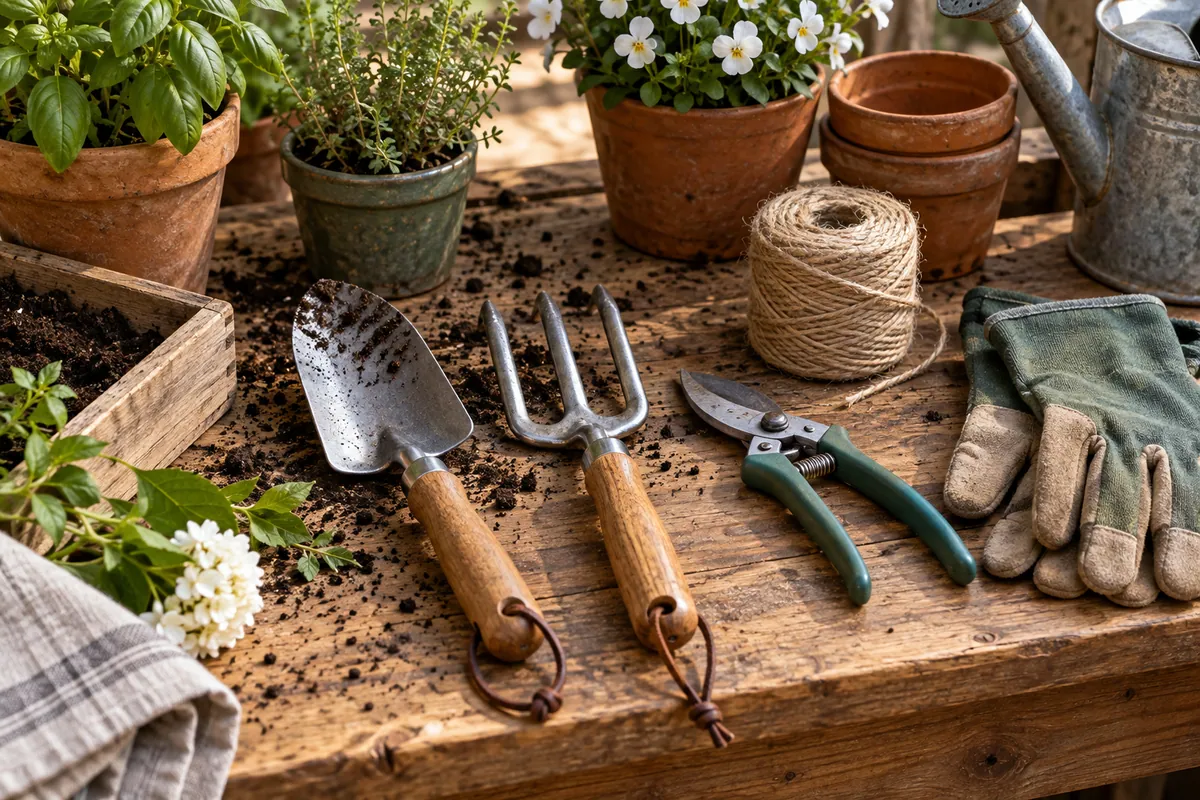
You're starting your first garden and feeling overwhelmed by all the tool options. Or you need a gift for someone passionate about gardening but aren't sure what tools they need. This comparison covers the best garden tool kits of 2026 — what makes a good starter set, which brands offer real value, and how kits compare to buying tools individually.
▷ Best garden tool kits of 2026
Radius Garden 3-Piece Stainless Steel Kit
- ✓ Stainless steel for durability
- ✓ Includes: folding spade, hand fork, weeder
- ✓ Beautiful ergonomic handles
- ✓ Premium quality at great value
- ✓ Perfect beginner kit
- ✓ Lifetime warranty
Price from Amazon.com · ships within US
Bond Mfg 4-Piece Garden Tool Set
- ✓ Durable carbon steel tools
- ✓ Includes: shovel, hoe, rake, cultivator
- ✓ Perfect for soil work and beds
- ✓ Color-coded handles for organization
- ✓ Great value bundle
- ✓ Lifetime warranty
Price from Amazon.com · ships within US
Tierra Garden 3-Piece Tool Set with Storage
- ✓ Includes ergonomic trowel, cultivator, weeder
- ✓ Comes with convenient wall-mounted storage rack
- ✓ Lightweight and easy to use
- ✓ Perfect for containers and small gardens
- ✓ Beautiful garden design
- ✓ Organized storage solution
Price from Amazon.com · ships within US
Comparison: tools included and quality
| Kit | Pieces | Main Tools | Price | Best For |
|---|---|---|---|---|
| Radius Garden 3pc | 3 | Spade, fork, weeder | $85–100 | Premium quality starters |
| Bond Mfg 4pc | 4 | Shovel, hoe, rake, cultivator | $45–60 | Soil work and beds |
| Tierra Garden 3pc | 3 | Trowel, cultivator, weeder + storage | $25–35 | Containers and small gardens |
Best beginner garden tool kits
A good beginner kit should include 4–6 essential tools, not 50 decorative pieces. The Radius Garden 3-piece kit with a spade, hand fork, and weeder is the gold standard for quality and design. The Bond Mfg 4-piece kit offers better value if you need soil-working tools specifically. For balcony or container gardeners, the Tierra Garden 3-piece with storage is ideal.
What to avoid: Large "50-piece" kits sold for $30–50 on Amazon. These bundles include mostly cheap tools you'll never use and lack the essentials. A focused smaller kit from a quality brand beats a huge junk bundle every time.
Budget beginner kits ($20–40)
In this price range, you're looking at no-frills 3-piece kits with basic hand tools. The Tierra Garden 3-piece set with storage hits this sweet spot perfectly — you get a lightweight trowel, cultivator, and weeder plus a wall-mounted storage rack. Quality isn't premium, but it's solid: the metal is stainless steel (won't rust), and the handles are ergonomic enough for casual gardening. These kits are ideal if you're a complete beginner and aren't sure how serious you'll be about gardening — they're low risk financially if the hobby doesn't stick. However, don't expect tools to handle heavy clay soil or intensive landscape work. Budget kits are best for container gardening, raised beds, and light flower or vegetable work.
Mid-range starter kits ($50–80)
This is where value really starts to show up. The Bond Mfg 4-piece kit sits in this range and includes serious soil-working tools: a full-size shovel, hoe, rake, and cultivator. These aren't lightweight plastic-handled toys — they're carbon steel with sturdy wood or fiberglass handles designed to handle real work. The color-coded handles (blue, red, green, yellow) make it easy to grab the right tool at a glance. At this price point, you're getting tools that will last 5–10 years with proper care. Mid-range kits make sense if you have a traditional garden bed, vegetable garden, or lawn work ahead. You're still not getting premium brands like Felco or Fiskars individually, but the bundle offers genuine value.
Premium kits ($80–120)
The Radius Garden 3-piece stainless steel kit represents the premium tier. Higher price reflects superior materials: every component is quality stainless steel that won't rust even in coastal climates, handles are ergonomically designed to reduce hand fatigue, and the warranty is lifetime (not just 1 year). Premium kits usually contain fewer pieces — 3–5 tools instead of 8–10 — because quality trumps quantity. These kits appeal to serious gardeners, people with difficult soil conditions, or anyone who appreciates beautiful, durable tools. The Radius tools have Scandinavian-inspired design, so they look attractive enough to display. Premium kits are an investment that typically pays for itself within 2–3 years through longevity and performance.
What tools should a starter kit include?
Absolutely essential tools
Garden Spade: A spade (not a shovel — they're different) is your workhorse for digging planting holes, turning soil, and edging beds. A spade has a flat blade for clean cuts; a shovel has a curved blade for scooping. Most beginner kits include a spade, which is correct. You'll use this tool weekly during active gardening seasons. Look for stainless steel or carbon steel — both resist rust equally well, though stainless steel doesn't require oiling.
Hand Fork: Also called a cultivator or garden fork, this 3–4 tined hand tool loosens soil around plants without disturbing roots, breaks up compacted earth, and removes weeds cleanly. It's lighter and more precise than a full-size hoe, making it perfect for container gardens and raised beds. Every beginner kit should include this — it's genuinely useful.
Pruning Shears: Essential for deadheading flowers, cutting back dead growth, and light pruning tasks. Hand pruners come in two styles: bypass (scissor-like action, cleaner cuts) or anvil (blade against flat surface, better for dry/dead wood). Bypass is more versatile for beginners. Quality matters here — dull shears crush stems instead of cutting cleanly, damaging plants. Fiskars and Radius make excellent hand pruners.
Garden Gloves: Protect hands from thorns, splinters, soil, and dirt. Leather gloves offer better grip and protection but require drying between uses. Nitrile-coated fabric gloves are lighter and dry quickly, making them better for frequent watering. Every kit should include gloves — never garden bare-handed.
Highly recommended additions
Trowel: A small shovel-like tool for planting bulbs, seeds, and transplants. You'll reach for this dozens of times per season. Choose a trowel with a rounded bowl (scoops easier) rather than a square blade. Stainless steel trowels cost slightly more but won't leave rust stains on hands or clothes.
Garden Hoe: The classic tool for weeding rows, breaking up soil clumps, and making furrows for planting seeds. A standard hoe (rectangular blade, long handle) requires space to swing safely but covers ground quickly. A warren hoe (triangular blade) is more precise for seed rows. Hoes require more technique than spades, so they matter more if you're doing vegetable gardening.
Garden Rake: Used for smoothing soil, removing debris, and spreading mulch. Two types: leaf rakes (flexible tines, light) for cleanup, and garden rakes (rigid tines, heavier) for soil work. A leaf rake is more versatile for most gardeners. Rakes are essential if you have lawn areas or need to clear leaves.
Nice-to-have specialized tools
Weeding Fork: A long-handled forked tool specifically designed to pop out dandelions and deep-rooted weeds by the root. Incredibly satisfying to use if you have persistent weeds, but not essential — most weeds respond to digging with a hand fork. Worth adding if you have a lot of lawn area or clay soil with stubborn weeds.
Cultivator: Similar to a hoe but lighter, with multiple tines instead of a flat blade. Used to break up soil clumps and remove small weeds around delicate plants. Many 4–6 piece kits include a cultivator because it fills space and looks useful, but in reality it overlaps with the hand fork — you won't use both. Skip this unless you specifically need it.
Corner Trowel: A narrow, flat-edged trowel for edging beds and getting into tight corners. Very specialized — skip unless you're doing a lot of edging work or have precise raised bed designs.
Kit vs buying tools individually
When a kit makes sense
A focused 4–6 piece kit from a quality brand (Fiskars, Radius Garden) offers 20–30% savings compared to buying the same tools individually. The Radius Garden 3-piece kit, for example, costs $85–100 total; buying a Radius spade, hand fork, and weeder separately would cost $110–130. The discount applies because kit bundles get manufacturer discounts passed to consumers. However, this math only works for genuine quality kits — large cheap bundles offer no real savings because the tools are low-quality to begin with. A "50-piece kit" for $35 isn't a bargain; it's money wasted on tools you'll never use made from materials that fail after one season.
Kits save decision fatigue. If you're new to gardening, you don't know which brand to trust, what quality matters, or which tools actually work together. A curated beginner kit from a reputable brand (Fiskars, Radius, Bond Mfg) pre-solves these questions. The kit designer has tested each tool, verified compatibility, and ensured nothing is redundant. This saves hours of research.
When buying individually is better
If you already have some tools and only need replacements or additions, buying individually makes sense. You aren't paying for redundancy — only the tools you actually need. Similarly, if you have specific preferences (e.g., you hate wooden handles and want only fiberglass, or you prefer bypass shears over anvil), you can't get that exact combination from a kit. Individual purchases let you customize entirely.
Buying individually also allows you to upgrade quality over time. Start with a mid-range trowel, and if you use it constantly, upgrade to a Radius stainless steel version later. With kits, you're stuck with whatever quality level the kit designer chose.
The hybrid approach for experienced gardeners
The smartest strategy: start with a quality 3–4 piece kit (Radius Garden or Bond Mfg, around $70–90) that covers the absolute essentials. Use these tools for a full season and learn what you actually need based on your specific garden. Then add specialized tools (pruning shears, loppers, soil knife) individually based on real experience, not guesses. This way you avoid the trap of buying a 50-piece "complete kit" with tools you'll never use, while ensuring every tool you own has been personally vetted for your garden style. Over 2–3 years, you'll build a customized toolkit that's 100% useful and all quality-selected.
Garden tool kits as gifts
Garden tool kits make excellent gifts for new homeowners, first-time gardeners, and anyone passionate about plants. Look for kits with attractive storage or presentation — many now come with wall-mounted racks or color-coded handles that look great in a shed. The Radius Garden kits have beautiful Scandinavian-inspired design that makes them worthy of display. For gift-giving, spend $80–100 on a quality small kit rather than $30 on a huge cheap bundle.
Best garden kit gifts under $50
In this budget, look for the Tierra Garden 3-piece kit ($25–35) with its included wall-mounted storage rack, or the Fiskars Pruning and Planting set ($30–40). These are lightweight, visually appealing, and perfect for apartment gardeners, balcony gardeners, or someone with small container plants. The storage rack makes the gift presentation special — it's not just tools, it's a complete mini-garden setup. This price range works best for casual plant lovers or someone starting their first herb garden. The gift feels generous without breaking the budget.
Best garden kit gifts under $100
Jump to the Radius Garden 3-piece stainless steel kit ($85–100) and you're giving a genuine heirloom-quality gift. The Scandinavian design, beautiful metalwork, and lifetime warranty make this feel premium. These tools will literally outlast the recipient — they're frequently passed down. This tier is perfect for serious gardeners, newlyweds starting a house together, or someone moving to their first home with yard space. A Radius kit says "I invested in something that will genuinely make your gardening easier for decades." Pair it with a thank-you card mentioning the lifetime warranty, and the gift story extends far beyond opening day.
Presentation and gift wrapping tips
Tool kits need smart presentation to feel like a gift rather than a practical purchase. Request gift wrap from Amazon (many brands offer this), or wrap the kit yourself in kraft paper with a natural twine bow — it looks handmade and appeals to gardeners' appreciation of natural materials. Include a handwritten card mentioning a specific tool inside and why you picked this kit for them (e.g., "The pruning shears are perfect for your rose garden"). Consider adding a small add-on: a pair of quality garden gloves, a small bag of premium potting soil, or seeds for something they've mentioned wanting to grow. These additions turn a toolkit into a "garden starter package" that feels thoughtfully curated.
For presentation, if the kit doesn't include storage, consider pairing it with an inexpensive wall-mounted storage rack (around $15–20) so they can display the tools beautifully. This transforms the gift from "here are tools" into "here's everything you need to start gardening plus a place to display them beautifully."
How to evaluate the quality of a garden tool kit
Not all kits are created equal. When comparing options, look beyond the number of pieces and price point. A few specific indicators separate quality kits from value traps.
Steel quality and rust resistance
Two main types of steel appear in garden tools: stainless steel and carbon steel. Stainless steel costs more but never rusts, making it ideal for humid climates or coastal areas. Carbon steel is stronger and cheaper, but requires light oiling to prevent rust (which is actually easy — 30 seconds with a dry cloth). Most beginner kits use carbon steel. Either is fine; the key is checking reviews to see if buyers report rust. If reviews mention rust issues within 1–2 years, the steel quality is poor or finishes are flawed. Quality kits rarely have rust complaints even in harsh climates.
Handle materials: wood vs fiberglass vs aluminum
Wooden handles (typically ash or hickory) are traditional, comfortable, and beautiful but require annual maintenance — oiling with boiled linseed oil prevents cracking. Fiberglass handles are lightweight, durable, and maintenance-free but can feel plastic-like. Aluminum handles are light and durable but can conduct heat in full sun. Premium kits (Radius Garden) use wood. Budget kits use fiberglass. All three work; it comes down to preference and maintenance willingness. Check reviews for comments about handle durability and comfort — a wooden handle that cracks after one season is poor quality, while fiberglass that lasts 10 years is excellent regardless of material.
Warranty coverage
Lifetime warranty (like Radius Garden and Bond Mfg offer) signals confidence in quality. 1-year limited warranty is standard for budget kits. No warranty at all is a red flag — it suggests the manufacturer knows the tools might fail. Read the warranty fine print: does it cover manufacturing defects only, or does it include breakage from normal use? Radius Garden's lifetime warranty covers everything, which is why it justifies premium pricing.
Red flags in cheap kits
Avoid kits with more than 20 pieces unless you actually need them all — excess pieces usually signal padding, not value. If reviews mention bent blades, broken handles, or rust within the first month, skip it. Kits from unknown brands with no brand website or customer service contact are risky; if something breaks, there's no one to contact. Finally, if the kit price seems impossibly low (like a 50-piece kit for $20), it's because the tools are nearly worthless — too weak to handle real gardening, too numerous to be useful.