

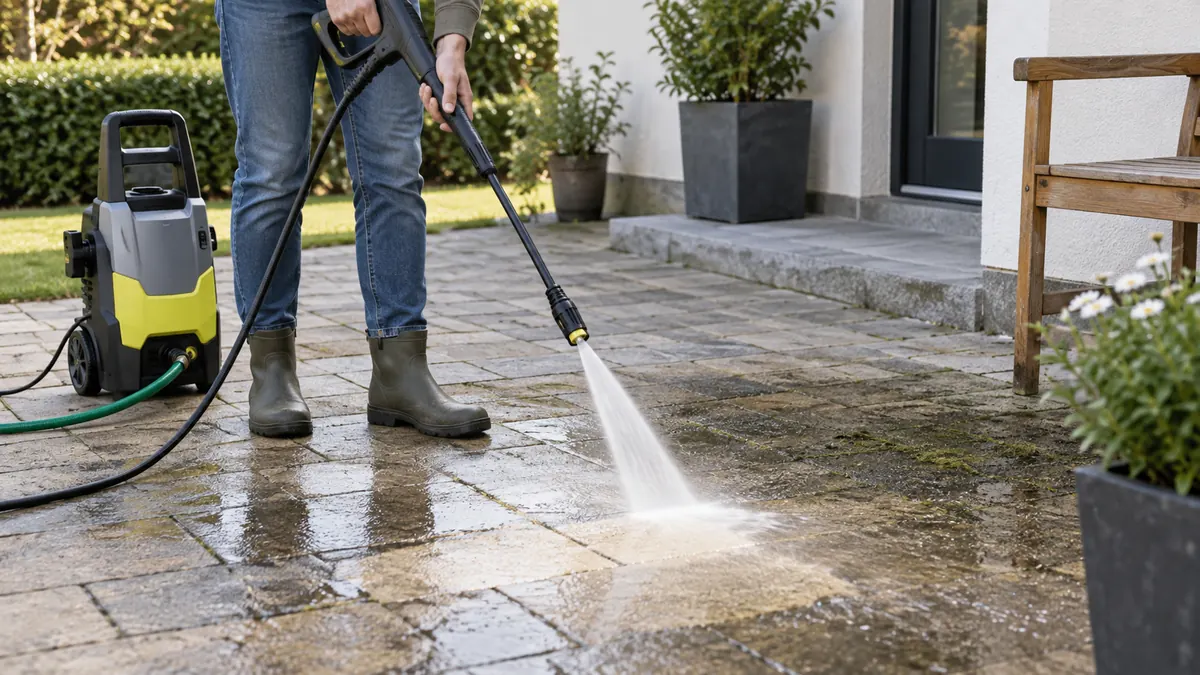
Budget pressure washer: compare the whole setup
- Compare maximum pressure with water flow and the nozzle used for the stated rating; maximum PSI alone does not describe cleaning performance.
- Include hose length, detergent system, included nozzles, replacement parts, warranty and extension-cord requirements in the total setup.
- Check exact model code and region: Kärcher K2 and Bosch EasyAquatak versions differ by market and package.
What the CMEPW1700 example illustrates
CRAFTSMAN's US product page identifies the CMEPW1700 as a corded cold-water washer rated up to 1,700 max PSI and 1.2 GPM. It is a useful specification example, not proof that this model is currently offered at a low price or deliverable to every US address. The maximum pressure and maximum flow are separate headline figures; check the manual's operating data and included nozzle before predicting cleaning speed.
Do not reuse an Amazon.es listing or a European model's euro price to support an American budget ranking. The same model name can have a different electrical plug, hose, nozzle set, warranty and region-specific compliance. For a fair comparison, start with the exact SKU, then check the retailer's package and destination at the time of purchase.
Choose flow, nozzle and included accessories
For a car, patio furniture or small area, prioritize a controllable spray, appropriate nozzle and hose reach over the largest PSI number. For concrete or larger areas, compare flow rate, pump service information and expected work sessions. A light-duty unit can be a poor value if its hose is too short or the desired accessory is a separate purchase; a more capable machine can also be wasteful if it is difficult to store or too aggressive for the surfaces you clean.
Set a budget after sizing the task
- Compare maximum pressure and water flow together, checking the nozzle and measurement conditions for each rating.
- Review the included spray tips, hose length, detergent system, pump and replacement-part availability.
- Match the washer to the surface and begin with a wider nozzle at a safe distance.
- Use outdoor-rated electrical protection and keep plug connections away from water.
Calculate the total ownership cost
Compare more than the advertised machine price. Add the required extension cord or hose, suitable water connector, detergent if the manual permits it, replacement nozzles, storage space and likely service parts. Check how the pump is lubricated or maintained and whether the manufacturer lists replacement hoses, seals and spray-gun parts. A low initial price can be offset by a package that lacks a usable nozzle or has no practical service path.
For corded machines, the correct outdoor-rated extension cord matters. The manual's gauge and maximum length should guide the selection; using a thinner or longer cable than specified can reduce voltage at the machine and overheat the cord. Keep the connection dry and use GFCI protection. For gas machines, compare fuel, engine oil, maintenance time and outdoor storage. Battery washers add the cost of compatible packs and chargers if the listing is tool-only.
Check the return window and shipping weight before ordering. A pressure washer that arrives without the fittings you need may be expensive to return. Save the exact model number and package description, and verify that it matches the manual and seller listing.
Match the spray to the surface
Pressure can strip paint, etch soft stone, cut wood fibers, damage window seals or force water behind siding. Start with the widest suitable nozzle, keep the wand moving and begin farther from the surface than you think you need. Test on a small hidden area and increase intensity only if the material tolerates it. Do not use a zero-degree jet for ordinary broad cleaning simply because it appears powerful.
Use a surface cleaner only when the washer manual permits its pressure and flow. A rotating surface-cleaner attachment depends on adequate water delivery; if the washer's flow is low, the head may not clean evenly. Detergent compatibility also matters: use only products and injection methods approved for the machine and rinse according to the label. Never add bleach or another chemical unless the washer and detergent instructions explicitly allow it.
Verify a listing before paying
Record the manufacturer product number, not just the retailer's short title. Match it to the official manual and confirm the supplied nozzle set, high-pressure hose, spray gun, detergent tank, cord and quick-connect fittings. A listing may combine reviews from several bundles or show accessories that are sold separately. Ask the seller which exact variant ships if the package code is missing.
Check the return policy, warranty territory and availability of consumable parts such as O-rings, filters, spray tips and replacement hose. If a machine's manual is not available online or the retailer cannot provide the model code, the low price is not enough to judge whether it suits your task. Avoid buying an unbranded high-pressure hose or quick-connect that lacks a pressure rating.
When a current offer cannot be confirmed, compare specifications only and avoid a “best under $X” claim. A low price recorded from an earlier visit can expire, exclude shipping or refer to a different bundle. Review the live destination, stock status and included items at checkout before treating an offer as available.
No current price or under-$100 claim
No exact product offer is retained because the earlier queries did not identify variant, package or delivery. The guide does not claim any product under a set price.
GFCI and spray-distance safety
CDC says always read the manual, test the GFCI and keep electrical connections away from standing water. Never aim the spray at people or use a gasoline washer indoors or within 20 feet of openings. High-pressure wounds need prompt medical assessment.
To judge whether an entry-level washer fits the task, record the surface, dirt type, cleaning interval and water access. A short patio rinse is different from removing embedded moss or stripping a coating. Start with a wide-fan nozzle, hold the distance specified by the manual and test a hidden area. A rotating nozzle concentrates impact and should not be used on delicate timber, paint, soft stone, seals or vehicle sensors unless the manufacturer explicitly allows it.
Pressure and flow are separate measurements. Maximum pressure may be a peak value and maximum flow may occur under different conditions. A larger number in one field does not establish faster cleaning. If a product page omits working pressure or does not explain the test condition, state that limitation rather than estimating a value. Compare the hose, pump, nozzle set, detergent connection and service parts as part of the whole setup.
The CRAFTSMAN CMEPW1700 is a US 120 V example documented by its manufacturer at 1,700 max PSI and 1.2 GPM. The Amazon.com ASIN snapshot identified the model but showed no featured offer, so it is not a current purchase recommendation. Do not present it as a 230 V European washer. If comparing an imported model, verify the nameplate, plug, electrical safety, warranty and spare parts for the destination market before purchase.
Budget also includes connectors, hose extensions, replacement filters and storage. Check whether the exact SKU includes a gun, wand, detergent bottle, inlet filter and the nozzles you need. Avoid buying a third-party fitting based only on a photograph: thread type and pressure rating must match. If a hose needs repair or leaks, use an approved replacement rather than tape or a low-pressure garden connector.
After use, follow the manual to shut down, relieve pressure, disconnect the water and store the pump away from frost. Never leave a running unit unattended or draw water from a source the manufacturer does not approve. For persistent grime or large areas, compare a higher-capacity machine or hire a qualified cleaner; forcing an entry-level unit beyond its rated duty can shorten its service life and damage the surface.
For a practical comparison, create a small specification sheet before looking at prices: maximum pressure, rated or maximum flow, hose length, cord length, motor rating, water inlet, nozzle set and included detergent accessory. Mark unavailable values as “not stated”; do not fill them from a different model in the same product family. A compact washer with shorter hose may be less convenient than one with slightly lower pressure but a longer working reach.
Decide whether the job needs a pressure washer at all. A hose-end brush or bucket can be enough for light dust on a car, while delicate surfaces may be safer with low-pressure cleaning. For embedded growth, the pressure washer still needs time, detergent approved by the manufacturer and the correct nozzle. Avoid moving closer to force a result; if the surface begins to etch, splinter or lose coating, stop immediately.
The CRAFTSMAN CMEPW1700 is useful as a US specification example only. It is rated at 120 V and cannot be represented as a European 230 V purchase. The exact Amazon.com identifier had no active featured offer in the snapshot, so no affiliate box is retained. Review offers by checking model number and electrical plate rather than trusting a broad title such as “1700 PSI electric washer.”
Confirm that the water supply meets the manual’s minimum flow and pressure. A small or kinked garden hose can starve the pump, causing pulsing or overheating. Clean the inlet filter and check every connection for leaks before starting. If the washer pulses with a clear nozzle and steady supply, shut it down and consult service instead of running it dry.