

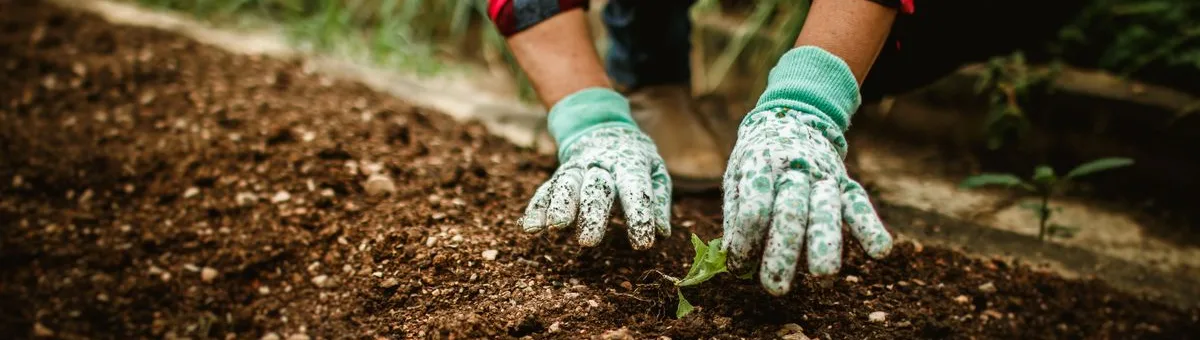
Choose garden gloves by the task
Gloves for planting seedlings need more dexterity than gloves used to carry rough materials. For everyday gardening, consider grip, breathability, fit, and whether the glove stays comfortable when damp. If you regularly handle thorny or sharp stems, use tools to keep hands away from the hazard and check that the glove maker explicitly describes the intended protection. A thick appearance alone does not establish puncture resistance.
For cleanup, harvesting, or moving soil, a washable glove may be easier to maintain. Check care instructions before washing because coatings, liners, and leather can respond differently. If the work involves sharp blades, powered tools, or chemicals, follow the equipment manual or product label instead of relying on general gardening advice.
Compare glove needs across common garden tasks
| Task | What to prioritize | What not to assume |
|---|---|---|
| Planting and sowing | Fit, fingertip control, and a grip that works with small tools | That a thick glove will make precise tasks easier |
| Moving rough material | Secure seams, palm coverage, and the maker’s stated use | That a fabric or leather glove prevents every cut or puncture |
| Working near thorns | A tool to keep hands away, plus gloves explicitly designed for the task | That thickness alone means thorn-proof |
| Mixing or applying pesticides | The exact glove material and PPE stated on the product label | That ordinary gardening gloves or any nitrile glove are interchangeable |
One pair may work well for planting and another for heavy cleanup. Keep tools in the same task group as their gloves, and do not reuse a contaminated protective glove for ordinary gardening. If you are unsure what a product description means by “waterproof,” “chemical resistant,” or “thorn resistant,” ask the maker for the test or rating behind that claim.
Check fit, grip, and dexterity
Measure your hand and use the manufacturer’s sizing chart. A glove that is too tight can restrict movement and wear quickly; loose fingers can reduce control or catch on equipment. Test a natural grip with a trowel or hand pruner if possible. Check whether the fingertips let you handle small seeds or ties when that precision matters.
Look at the seams, palm, fingertips, cuff, and any coating. Reinforcement can be useful for a recurring task, but product descriptions should say what it is designed to do. Compare the glove’s weight and flexibility with the hours you will wear it. For hot conditions, a breathable fabric may feel more comfortable; for wet work, choose a product whose maker describes it for that use.
Measure your hand before choosing a size
Penn State Extension recommends measuring around the widest part of the palm and comparing that measurement with the glove maker’s size chart. Size labels vary between brands, so do not assume a medium in one range will fit like a medium in another. If the glove is too tight, finger movement and comfort can suffer; if it is too loose, the fingers may catch on a tool or equipment.
Check the cuff length as well as the palm. A short cuff may leave the wrist exposed during ordinary cleanup, while a longer cuff may be useful for a task involving splashes only when the glove is designed and labeled for that exposure. For pesticide handling, rely on the label’s PPE instructions and chemical-resistance requirements rather than ordinary garden-glove sizing guidance.
Compare materials without assuming protection
Garden gloves may use knit fabric, coated fabric, leather, or synthetic materials. Those names alone do not tell you how well a glove resists water, abrasion, punctures, or chemicals. Inspect the maker’s stated use, care instructions, and any protection standard or rating the product provides.
Gloves that feel protective for routine planting may not be appropriate for pesticide application. Penn State Extension explains that pesticide labels can specify particular glove materials and thicknesses. Leather, cloth, and lined gloves can absorb some formulations and may be difficult to decontaminate. Do not substitute a general-purpose garden glove when a label names required personal protective equipment.
Use label-specified gloves for pesticides
Read the pesticide label before mixing, loading, applying, cleaning equipment, or handling treated materials. Wear the required protective equipment exactly as described. Penn State Extension lists nitrile, butyl, and neoprene among materials used for chemical-resistant gloves, but no single material protects against every formulation. The product label determines what is required.
Inspect gloves before use and follow instructions for cleaning, removal, and disposal. Replace damaged or contaminated gloves as directed. Keep chemical-resistant gloves separate from ordinary garden gloves so they are not accidentally used for the wrong purpose. This guide does not replace the label or local pesticide guidance.
Penn State Extension notes that chemical resistance depends on the pesticide formulation, concentration, temperature, exposure time, material, and thickness. A glove that resists one product may not give the same protection against another. Some labels specify a minimum thickness or prohibit lined gloves; follow the actual label and dispose of gloves as it directs. Never wash contaminated gloves together with household laundry unless the label and manufacturer explicitly allow it.
Check what protection claims actually mean
Product wording such as “thorn resistant,” “waterproof,” “cut resistant” or “chemical resistant” is not enough to compare two pairs. Look for the intended task, the test standard or protection rating, the part of the glove covered, and any limits or care instructions. If a seller cannot identify what was tested, treat the claim as unverified and choose a tool or work method that keeps your hands away from the hazard.
For thorny plants, first use pruners or loppers to move and cut stems instead of pushing a gloved hand through the plant. Check whether the glove covers the wrist and whether the palm and fingers have protection where contact is likely. For sharp tools, follow their manuals and do not wear gloves if the manufacturer warns that fabric could catch in moving parts. Protective equipment needs to match both the hazard and the tool.
For wet tasks, distinguish resistance to splashes from a waterproof construction. A coated palm can improve grip on a damp handle without keeping the cuff or fabric dry. For repeated work in heat, a thick or impermeable glove can become uncomfortable; take breaks, remove gloves safely and let hands dry. Choose more than one pair if your work ranges from careful seed sowing to rough cleanup, and keep pesticide PPE clearly separate from ordinary garden gloves.
A simple fit check helps: close your hand around a trowel, pinch a seed packet, tie a plant label and remove the glove without pulling at the fingertips. If the fabric bunches, the palm slips or your fingers cannot perform the task, try another size or design. This practical check complements—not replaces—the manufacturer’s sizing chart and any PPE requirements on a product label.
Clean, inspect, and replace gloves
After routine garden work, remove soil and plant debris and let washable gloves dry fully before storage. Check for holes, torn seams, cracked coatings, or stiff material. Store gloves in a clean, dry place away from sharp tools and pesticides. Follow the label and manufacturer instructions for protective gloves; ordinary washing directions may not be adequate for contaminated PPE.
Replace a glove that no longer fits or has damage in the area that protects your hand. Keep a spare pair available if you regularly work in wet conditions, but do not assume that wearing two pairs provides a certified level of protection.
For reusable routine gardening gloves, follow the maker’s washing and drying guidance and let them dry completely before putting them away. Inspect coated surfaces for peeling or cracks and check that seams remain intact. For pesticide PPE, cleaning and reuse depend on the label and glove instructions; a glove may need to be discarded even when damage is not visible.