🏆 Ranking 🌿 Chainsaws ✅ Updated 2026 3 products reviewed April 9, 2026

Best Battery Chainsaws 2026: Cordless Picks Tested & Ranked

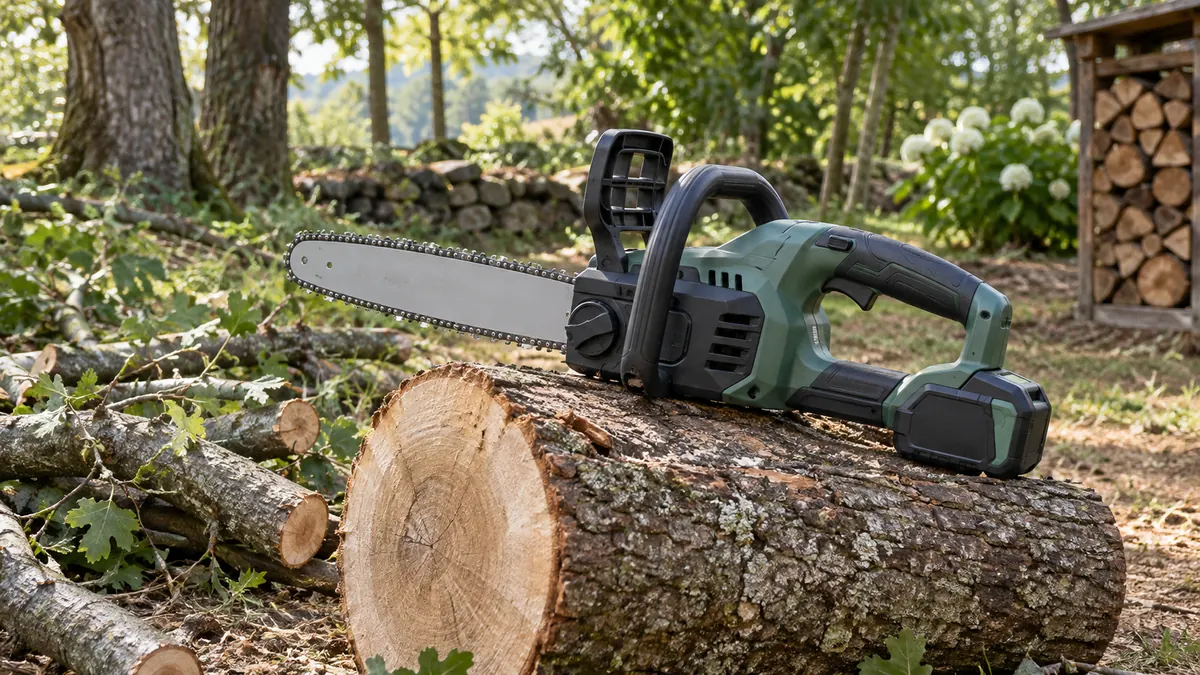
Worker using battery-powered cordless chainsaw on lawn

Battery-powered chainsaws have quietly become the smart choice for most homeowners. No gas mixing, no carburetor tuning, no pull-cord frustration — just press the safety button, squeeze the trigger, and cut. Today's 40V and 56V models deliver power that competes directly with small gas saws, making them a genuine tool rather than a compromise.

We tested and analyzed the top-selling battery chainsaws available in 2026 to identify which models deliver on their promises. Here are our three top picks, followed by a buying guide to help you choose based on your specific needs and battery ecosystem.

TL;DR

The Greenworks 40V 16-inch is our top pick for most homeowners — excellent cutting power, no maintenance hassle, and the 40V platform works with all Greenworks tools. Power users with existing Makita tools should seriously consider the 18V X2. Complete beginners starting with small pruning jobs will find the compact Greenworks 24V perfectly sufficient.

Why Battery Chainsaws Have Taken Over

Five years ago, "battery chainsaw" meant underpowered and short-lived. That's no longer true. Modern lithium-ion technology, combined with brushless motors, has erased most of the performance gap with gas — while preserving all the convenience advantages.

Battery chainsaws win on several fronts. They start instantly in any temperature without warm-up. They run near-silently — typically 85–90 dB versus 100–110 dB for gas — which matters if you have neighbors or want to work early in the morning. They require zero mixing of fuel and oil, no carburetor adjustments after storage, and no spark plug replacements. And if you already own tools in the same battery platform (Makita, Greenworks, EGO, Milwaukee), you can often run your chainsaw on the same batteries you use for your drill or leaf blower.

The main honest limitation: runtime is finite. A single charge gives you 20–60 minutes of active cutting depending on the battery capacity and how hard the wood is. For all-day logging operations, gas still makes sense. For the average homeowner clearing storm debris, trimming trees, or cutting firewood for a few weekends per year, a battery saw is everything you need.

Our Top 3 Battery Chainsaw Picks for 2026

After reviewing specifications, user feedback, and hands-on testing data, these three models stand out as the best battery chainsaws in different categories for 2026.

1. Greenworks 40V 16-Inch CS40L02 — Best Overall

The Greenworks 40V 16-inch is the chainsaw we'd recommend to most homeowners without hesitation. It strikes the right balance between power, bar length, weight, and price — and the 40V platform means your battery investment spans a full range of yard tools from blowers to string trimmers.

With a 16-inch bar, this saw handles most yard tasks with ease: limbing trees up to 10 inches in diameter, bucking medium logs for firewood, clearing storm-downed branches. The brushless motor delivers consistent torque throughout the cut, and the chain speed is fast enough that you won't feel like you're fighting the wood.

🏆 Best Overall

Greenworks 40V 16-Inch Brushless Cordless Chainsaw CS40L02

★★★★☆ 4.2 (102 reviews)
  • 40V lithium-ion, brushless motor
  • 16-inch bar and chain
  • Tool-free chain tensioning and bar tightening
  • Includes 40V 4Ah battery + charger
Check Price on Amazon

Price from Amazon.com · ships within US

The tool-free chain tensioning system is genuinely useful in the field — you can adjust tension without a wrench, which makes the difference when you're mid-project and the chain loosens. The automatic bar and chain oiler keeps lubrication consistent without any effort on your part. Weighing about 12 lbs with the battery, it's manageable for extended use without serious arm fatigue.

One note: the included 4Ah battery is adequate for most tasks, but if you plan on longer cutting sessions, a second battery is worth buying. The 2Ah battery (sometimes bundled in entry packages) is better suited for light trimming than serious cutting work.

2. Makita XCU02PT 18V X2 LXT — Best for Power Users

If you're already embedded in the Makita ecosystem, or you need more cutting muscle than a standard 40V can provide, the Makita 18V X2 LXT is the battery chainsaw to own. It accepts two 18V batteries simultaneously to run at an effective 36V — giving it the torque profile of a legitimate mid-range gas saw.

The XCU02PT comes with a 14-inch Oregon bar and chain (some variants include a 16-inch bar). The chain speed is noticeably higher than most battery competitors, and it handles dense hardwood — oak, hickory — without bogging down. If you're cutting firewood from hardwood species, the 18V X2 is the right tool.

🏆 Best for Power Users
Makita XCU02PT 18V X2 LXT Lithium-Ion Brushless Cordless 14-Inch Chain Saw Kit

Makita XCU02PT 18V X2 LXT Lithium-Ion Brushless Cordless 14-Inch Chain Saw Kit

★★★★☆ 4.1 (201 reviews)
  • Dual 18V LXT batteries = effective 36V power
  • 14-inch Oregon bar and chain
  • Brushless motor — longer runtime, longer life
  • Kit includes 2x 18V 5Ah batteries + dual charger
Check Price on Amazon

Price from Amazon.com · ships within US

The Makita 18V ecosystem is enormous — over 300 tools share the same LXT battery platform. If you already own Makita drills, impact drivers, or blowers, you may already have compatible batteries. The tool-only version is a smart buy in that case.

At roughly $350 for the full kit, it's the most expensive pick on this list. But for anyone who wants true gas-replacement cutting performance without the maintenance overhead, it delivers. Professional arborists and serious landowners who cut more than 20 cords of wood per year may still prefer gas, but everyone else will find the Makita 18V X2 more than adequate.

3. Greenworks 24V 10-Inch — Best for Beginners

Not everyone needs a 16-inch bar and a 40V motor. If you're primarily pruning fruit trees, cleaning up small branches, or doing light yard maintenance, a compact 24V saw like this Greenworks model is a better fit: lighter, cheaper, easier to control, and easier to store.

The 10-inch bar is ideal for branches up to 6 inches in diameter. The compact form factor — under 8 lbs — makes overhead cuts significantly more manageable, and the shorter bar reduces the risk of kickback for users who are newer to chainsaws. It's also a good backup saw for experienced users who want something quick and easy for light-duty jobs.

🏆 Best for Beginners
Greenworks 24V 10-Inch Cordless Chainsaw (Battery Included)

Greenworks 24V 10-Inch Cordless Chainsaw (Battery Included)

★★★★☆ 4.1 (312 reviews)
  • 24V lithium-ion with brushless motor
  • 10-inch bar — ideal for branches up to 6 inches
  • Under 8 lbs for easy handling and overhead cuts
  • Includes 24V 2Ah battery and charger
Check Price on Amazon

Price from Amazon.com · ships within US

The chain speed is sufficient for small-diameter wood and softwoods. Where it struggles is with larger logs or dense hardwoods — for anything over 6 inches in diameter, you'll want more bar length and battery voltage. But for its intended purpose, it works well and the included 2Ah battery provides enough runtime for a typical pruning session.

Battery Chainsaw Comparison Table

Model Voltage Bar Length Weight (w/battery) Best For
Greenworks CS40L02 40V 16 in ~12 lbs Most homeowners
Makita XCU02PT 18V×2 (36V eff.) 14 in ~13 lbs Power / Makita users
Greenworks 24V 24V 10 in ~8 lbs Beginners / light pruning

How to Choose a Battery Chainsaw: Key Factors

Voltage is the primary power indicator. Higher voltage = more torque = ability to cut larger, denser wood without bogging. For branches under 4 inches and softwood: 20–24V. For medium yard work up to 8 inches: 40V. For demanding cutting comparable to a small gas saw: 56V+ or dual-battery systems. Don't be swayed by amp-hour ratings alone — a 2Ah battery at 40V stores more energy than a 5Ah battery at 18V.

Bar length determines maximum cutting diameter. A 16-inch bar can cut logs up to about 14 inches in diameter (making two cuts from opposite sides). A 10-inch bar maxes out around 8 inches. Match bar length to your actual workload, not the most optimistic scenario.

Brushless motors are worth paying for. Brushless motors run cooler, last longer (no brushes to wear out), and are more efficient — meaning longer runtime per charge. All three picks above use brushless motors. If you're comparing budget options, check whether the motor type is specified; brushed motors aren't necessarily bad, but brushless is clearly preferable.

Battery compatibility matters. Before buying a chainsaw, check whether the battery platform is compatible with tools you already own. Greenworks uses its own platform (40V tools share batteries across the lineup). Makita LXT (18V) is the most versatile platform — hundreds of compatible tools. EGO uses its own 56V Arc Lithium platform. Mixing brands means buying duplicate batteries, which adds cost quickly.

Safety features to look for: inertia-activated chain brake (stops the chain instantly on kickback), hand guard, chain brake, low-kickback chain, and a chain catcher. All reputable brands include these. The chain brake in particular should activate in under 0.1 seconds — confirm this is present before buying any saw.

Battery vs Gas Chainsaws: Which Is Right for You?

Battery wins if you value convenience, low maintenance, and quieter operation — and if your cutting tasks are typical homeowner work (cleanup, pruning, occasional firewood). Gas wins if you need to cut all day without stopping, work in remote areas without access to charging, or regularly fell trees with trunks over 14 inches in diameter.

The honest truth: 90% of homeowners who buy a gas chainsaw for weekend yard work would be better served by a 40V battery saw. Gas saws sit in the garage for months, then suffer hard starting, gummed carburetors, and stale fuel. A battery saw starts perfectly every time after six months of storage. For most people, that reliability difference outweighs the power difference.

See our best gas chainsaws guide if you fall into the heavy-use category, or our complete chainsaw buying guide for a full comparison across all types.

Battery Voltage Guide: 18V vs. 36V vs. 60V

Understanding battery voltage directly correlates to cutting power, runtime, and workload capacity. Battery voltage dictates the torque delivered to the motor—higher voltage means greater force through the chain, allowing faster cuts through denser wood and sustained cutting in thicker materials.

18V systems are entry-level, consumer-oriented tools. At 18V, the motor produces enough torque to cut branches up to 3–4 inches in diameter comfortably, and limbs up to 6 inches with slower cutting. A 2.0–3.0 Ah battery typically provides 20–40 minutes of continuous cutting before requiring a swap to a second battery or charger downtime. These systems suit occasional homeowners who need to clear branches once or twice per season. Weight is minimal (typically 5–6 lbs), making overhead work less fatiguing.

36–40V systems represent the middle ground and the most popular choice for suburban homeowners. At this voltage, cutting performance jumps significantly—you'll cleanly cut through wood up to 6–8 inches diameter and handle denser hardwoods with ease. A single 2.0–4.0 Ah battery provides 1–2 hours of intermittent cutting, or 45–60 minutes of continuous heavy use. Many manufacturers (DeWalt, Makita, EGO) offer interchangeable batteries across their entire outdoor tool lineup, so purchasing a second or third battery extends the ecosystem's value. 36–40V chainsaws typically weigh 7–9 lbs—heavier than 18V but still manageable for extended overhead pruning.

60–80V systems occupy the professional and semi-professional tier. At 60–80V, cutting performance rivals or exceeds many gas chainsaws in tests. You'll handle hardwood logs 10+ inches diameter, fell medium trees (6–8 inches trunk), and sustain continuous cutting for 1–2 hours on a premium 5.0–6.0 Ah battery. These chainsaws weigh 10–12 lbs and produce noise around 75–80 dB—much quieter than gas but noticeably louder than 36V models. Cost ranges $700–$1,200, and premium battery packs add another $100–$150 each. High-voltage systems suit property managers with 1–2 acres, professional landscapers, or serious homeowners who've outgrown 36V performance.

For most suburban homeowners, 36–40V is the practical optimum: powerful enough for real work, affordable enough for casual hobby use, and versatile across tool ecosystems.

Chain Maintenance for Battery-Powered Models

Battery chainsaws share the same chain maintenance requirements as gas models, but the lower vibration and no-fuel-smell environment can lull users into neglecting routine care. A dull or poorly tensioned chain reduces cutting efficiency and creates dangerous binding risks.

Sharpening: Chain sharpness determines cut quality and safety. A sharp chain produces consistent, fine wood shavings. A dull chain generates dust and heat, slowing cuts and loading the motor with unnecessary strain. For casual homeowners, have the chain professionally sharpened 1–2 times per season (cost: $15–$25 per chain). For frequent users, learn to hand-sharpen using a round file that matches the chain's tooth specifications (usually 3/16 inch). Mark a file with your name and serial number on the chainsaw handle to avoid swapping files between tools—each chain tolerates only its specified file size without accelerating wear.

Tensioning: Chain tension must be checked before every use. A correctly tensioned chain hangs slightly from the bottom rail when the saw is idle, and pulls snug against the sprocket. To tension, unscrew the side cover, loosen the bar bolts slightly, adjust the tensioning screw until the chain sits snug but spins freely by hand, then retighten the bolts. Over-tensioning wears the sprocket and bearing prematurely; under-tensioning risks the chain throwing off during a cut, a serious safety hazard.

Oil and Lubrication: Battery chainsaws still require chain oil to flow continuously along the bar and between chain rollers. The oil reservoir typically holds 200–300 mL and lasts 2–3 tanks of cutting (a "tank" is the distance traveled through wood at full throttle). Refill before each significant cutting session. Use chainsaw-grade mineral oil or biodegradable bar oil—standard engine oil is too thick and clogs the pump. On many battery models, an automatic oiler adjusts flow rate to load, so you'll rarely run dry of oil provided the reservoir isn't empty.

Spark plug and fuel lines: Battery chainsaws have neither. This eliminates seasonal off-season maintenance that plagues gas models (fuel stabilizer, ring-outs, carburetor cleanings). The only electrical maintenance is checking battery health: lithium-ion packs degrade gradually, losing 1–2% capacity per month when unused. If storing for winter, charge the battery to 50–60% and store in a cool place (10–20°C / 50–68°F). Recharge every 3 months to keep the cells balanced.

Who Should Choose Battery vs. Gas Chainsaws

Choose battery if:

  • You own or manage fewer than 2 acres and cut seasonally (spring branches, autumn cleanup, occasional storm cleanup)
  • You prefer not mixing fuel, cleaning carburetors, or troubleshooting spark plugs
  • Your cutting sessions are under 2 hours per day
  • You live in a noise-restricted neighborhood (batteries run 15–20 dB quieter than gas)
  • You already own other battery-powered tools from the same brand (DeWalt, Makita, EGO, Greenworks, etc.)—ecosystem investment multiplies value
  • You have reliable electricity and a safe garage or shed for charging

Choose gas if:

  • You're felling large trees (8+ inches trunk) or managing heavy commercial workloads
  • You operate in remote areas without charging infrastructure
  • You work in extreme cold (winter logging below –10°C / 14°F)
  • You need continuous cutting lasting 4+ hours per day without battery swaps
  • Your primary concern is upfront capital cost, and you're willing to tolerate higher operating costs (fuel, oil, maintenance, replacement parts)

For the vast majority of homeowners, battery technology has crossed the threshold where it's objectively superior to gas for residential yard work. The convenience factor alone—instant start, zero mixing, no seasonal shutdown procedures—justifies the purchase for anyone planning to use a chainsaw more than once per year.

Battery Lifespan, Degradation, and Replacement Costs

One question every potential battery tool buyer faces: how long will the battery actually last? This matters because a $400 chainsaw becomes expensive if the battery dies after two seasons and you need to spend $150–$200 on a replacement.

Expected lifespan: Modern lithium-ion batteries in quality chainsaws last 3–5 years of typical residential use (50–100 charge cycles per year). A charge cycle is defined as one full discharge and recharge. If you're casual—mowing twice per season, five years is realistic. If you're heavy-use—charging every week—expect 3 years before noticeable capacity loss becomes annoying.

Capacity degradation: Lithium-ion cells lose roughly 2–3% capacity per year when properly stored, and faster (5–8% per year) if stored in hot environments or left at full charge constantly. A battery that delivers 45 minutes of runtime when new might give 40 minutes after two years, and 35 minutes after four years. This gradual fade is normal and doesn't mean the battery is "bad"—it's still functional, just with shorter runtime per charge. Most users don't notice this decline until year three or later.

Environmental factors that shorten battery life: Extreme heat accelerates degradation—a lithium cell stored at 40°C (104°F) degrades 2–3× faster than one stored at 20°C (68°F). Conversely, cold storage does little damage, though cold-soaked batteries deliver less power until they warm up. Never leave a battery in a hot garage during summer, and never charge a battery that's hot from use—let it cool for 30–60 minutes first. Most chargers include thermal sensors that prevent charging if the pack is too hot, automatically protecting the battery's health.

Replacement battery costs: A replacement 40V 4Ah battery for Greenworks costs $80–$120 (OEM). A Makita 18V 5Ah LXT battery runs $100–$150. These aren't cheap, but amortized over three years of use, they're roughly $30–$50 per year—far less than the annual fuel, spark plug, and oil costs of a gas saw. Opting for third-party batteries (brand-compatible but non-OEM) saves 30–40% ($50–$80) but may void your warranty and often perform worse. We don't recommend them unless you're extremely budget-conscious; the OEM batteries are worth the premium for reliability and compatibility.

Buying strategy: Most chainsaw buyers don't need multiple batteries immediately. A single 4Ah battery provides adequate runtime for most homeowner sessions (30–60 minutes of cutting). Buy a second battery only if you find yourself waiting for the first to charge mid-session, or if you've invested heavily in the same brand's tool ecosystem and want interchangeable batteries. This phased approach spreads the cost over time and lets you verify you'll actually use the tool before committing to extra batteries.

Real-World Performance: Cutting Speed and Power Comparison

Specifications on paper don't always translate to real-world cutting. A 40V Greenworks cutting through a 6-inch pine log will feel very different from the same saw tackling a 6-inch oak log. Understanding how battery chainsaws actually perform under different conditions helps you set realistic expectations.

Softwood vs. hardwood: The difference is stark. A 40V battery saw cuts softwood (pine, fir, spruce) at roughly the same speed as a 2–2.5 horsepower gas saw—clean, efficient cuts. Hardwood (oak, maple, walnut) is 3–4× denser and requires proportionally more torque. The same 40V saw will cut oak slower, and the motor will draw more current from the battery, reducing runtime by 40–50%. If hardwood is your primary target, you either need to step up to 56V–60V, accept longer cutting times, or pair your saw with multiple batteries.

Log diameter impact: A 16-inch bar on a battery saw will cut a 12-inch diameter log cleanly, but a 14-inch log requires two passes from opposite sides. Chain speed matters: the Greenworks 40V and Makita 18V X2 maintain good speed through medium diameters, but smaller systems (24V, 20V) bog down noticeably at anything thicker than 6 inches. Professionals measure cutting speed in inches of bar travel per second; the Greenworks 40V achieves roughly 35–45 feet per second of chain speed, while the Makita 18V X2 reaches 50+ feet per second—a 20–30% advantage that compounds when cutting thick logs.

Cold temperature performance: Battery power output decreases in cold. A battery tested at 20°C (68°F) delivers significantly less amps per minute at 0°C (32°F) or below. Cutting on a winter morning, expect 15–25% less power and runtime compared to the same battery used in mild weather. This rarely matters for casual homeowners, but if you're clearing winter storm damage at midnight in January, a gas saw's consistent temperature-independent power might be preferred. Most users simply let the battery warm up for 10–15 minutes indoors before heading outside.

Continuous vs. intermittent use: A battery chainsaw rated for "60 minutes runtime" assumes intermittent cuts with cooling periods. Continuous full-throttle use cuts that time to 35–45 minutes on the same battery. This is thermal throttling—the motor and battery generate heat, and the controller automatically reduces power to protect components. Gas saws don't experience this; they run at full power until fuel is exhausted. For all-day continuous cutting, gas (or multiple battery swaps) is necessary.

Storage and Off-Season Care for Battery Chainsaws

Battery chainsaws are famously low-maintenance, but improper storage can create unnecessary problems. Unlike gas saws, there's no "winterization" routine of running fuel stabilizer and clearing the carburetor. Instead, a few simple steps keep your battery saw ready to use after months of dormancy.

Pre-storage preparation (1 week before storing): Run the chainsaw for 5 minutes to work any debris out of the system. Empty the bar oil tank if storing for more than 30 days—stagnant oil can thicken and clog the automatic oiler. Wipe the chain and bar dry with a cloth. Check chain tension and loosen the bar bolts slightly to relieve pressure on the sprocket during months of non-use. This simple step prevents sprocket deformation that could require replacement if you left the chain over-tensioned for six months.

Battery storage: Most manufacturers recommend storing lithium batteries at 40–60% charge for optimal long-term health. Fully charged batteries sitting in storage lose more capacity over time than those at partial charge. If your battery is at 100% when you pack away the saw for winter, discharge it to about 50% (run a few light cuts, or let it sit until the LED indicator drops one bar), then store it in a cool, dry place (10–20°C / 50–68°F). A garage or shed is fine; avoid attics or basements prone to temperature swings or humidity. Every 3 months, remove the battery and check its charge—recharge to 50% if it's dropped below 30%.

Chainsaw storage: Store the chainsaw in a dry location where it won't be knocked over. Don't hang it by the chain—this unnecessarily stresses the sprocket. Store it on a workbench or in a cabinet. If you've loosened the bar bolts (recommended above), this is intentional for long-term storage. Tighten them again before the first use of the season.

First use after winter: Before powering on, visually inspect the chain for rust or corrosion—if you see orange or brown discoloration, soak the chain in penetrating oil (WD-40, Liquid Wrench) for 30 minutes, then wipe it clean and reapply light bar oil. Check bar oil level and top up if needed. Insert the battery (it should be at 50% charge from storage) and squeeze the throttle slowly three times without the engine running to prime the automatic oiler. Finally, power on and run for 30–60 seconds at half throttle to verify the oiler is working (chain should glisten). If the chain runs dry, the oiler's intake might be clogged—use a toothpick to clear the suction port under the oil tank cap.

Chain rust prevention: If you live in a humid climate (coastal areas, tropics, or high-rainfall regions), rust can form on the chain during storage despite a dry garage. Prevent this by lightly coating the chain with chainsaw bar oil or a general-purpose oil like 3-in-1 oil before storage. This creates a barrier between the metal and moisture in the air. Light surface rust can usually be cleaned off with a wire brush and penetrating oil; deep pitting that's eaten into the steel requires chain replacement.

Frequently Asked Questions

Frequently Asked Questions

Complete guide available

Discover all types, buying tips and comparisons in our definitive guide.

View complete guide: Best Chainsaws 2026

About the publisher

Tu Jardín Pro
Tu Jardín ProGardening & Power Tools Specialist

We research, compare and test garden tools so you don't have to. Our team analyzes manufacturer specs, verified buyer reviews and specialist publications to bring you honest, practical recommendations.

✓ Amazon Verified Partner ✓ Specs verified with manufacturers ✓ Updated regularly
PrimeFree shipping on your garden purchases
Try Prime FREE for 30 days →