

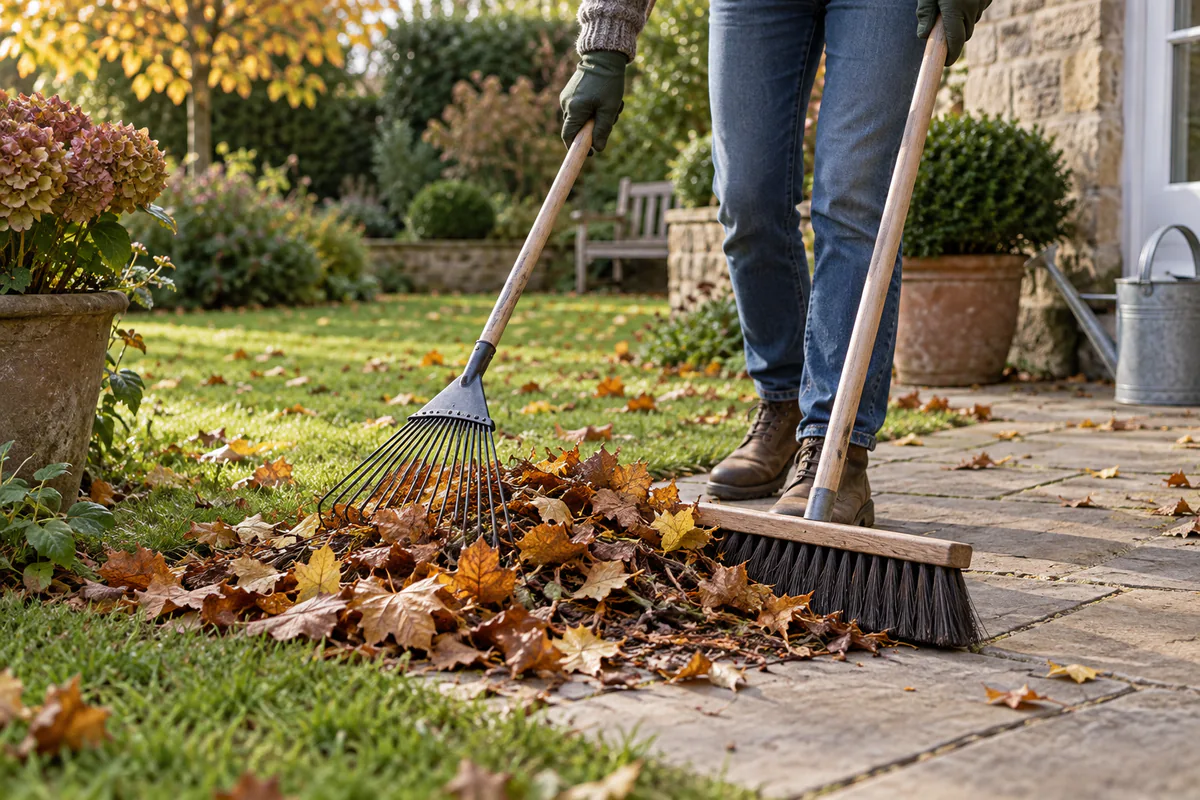
Clean by condition and site need
Walk the garden before starting. Note blocked paths, leaves covering turf or drains, damaged branches, diseased plants and places where wildlife may be overwintering. Avoid clearing every bed to bare soil: leaves and hollow stems can support insects in some settings, while diseased debris may need removal.
Penn State Extension explains that a heavy leaf mat can smother grass, while some leaf litter can stay in beds. UMN Extension describes leaving leaves and stems for nesting insects. Compare the Penn State fall garden advice with UMN pollinator guidance; both are regional, so use local advice for your climate.
Choose garden cleanup tools by surface
A rake is useful around plants and gives control over what is moved. A blower can move leaves from hard surfaces or open areas, but use a low setting near beds so it does not scatter soil, mulch or habitat. A mower can shred leaves on a lawn only when the layer is light enough that grass remains visible; stop if leaves collect into a mat.
Gloves, a hand fork, pruning tool or tarp may help with specific tasks. Use sharp cutting tools only on plants and at times when pruning is appropriate. There is no single tool set that fits every site.
Use a leaf blower selectively
Check noise rules, avoid blowing debris into roads or drains, and keep distance from loose soil, seedlings and wildlife. A blower is best used on suitable hard surfaces and open ground; rake around sensitive plants and garden beds.
Use a rake where precision matters
Choose a rake that lets you move leaves without damaging stems or surface roots. Flexible tines can help with leaves on lawns; a hand rake or gloved hand can be more precise in a planted bed. Check handle fit and working width rather than assuming one head size is best.
Follow a site-aware cleanup sequence
- Inspect plants and identify whether the material is healthy, diseased or part of a habitat area.
- Clear hazards and access routes first, keeping debris away from storm drains.
- Remove diseased leaves or stems using local Extension and municipal disposal advice; clean tools before moving to healthy plants where relevant.
- Move heavy leaves off turf and small plants. Shred healthy leaves for compost or mulch only where the material and site are suitable.
- Leave some healthy stems or leaf litter in appropriate beds, and postpone pruning until you know the plant’s flowering and wildlife requirements.
- Clean, dry and store the tools according to their maker’s instructions.
Prioritize cleanup by risk and material
A useful garden-cleaning checklist separates urgent hazards from optional tidying. Start with anything that creates a fall or access risk: slippery leaves on steps, branches across a path, blocked drains, damaged irrigation or debris near a fire-sensitive area. Next, check for material that may spread a confirmed pest or disease. Routine cosmetic cleanup comes last. This order keeps effort focused and avoids disturbing every bed simply because it looks untidy.
Before collecting a pile of leaves, decide where it came from and what was growing there. A thin layer of sound leaves under shrubs is different from a dense wet layer over grass, and both differ from foliage carrying a disease that can survive in debris. If you do not know the cause of a leaf spot or dieback, photograph it and seek a local diagnostic resource before composting the affected material. Plant debris that looks brown is not automatically safe for every home compost system.
Clear turf, drains and walking surfaces
On lawns, work in passes and stop once the grass blades are visible through the remaining shredded leaves. If a mower cannot chop the layer without leaving clumps, rake or blow only the excess into a collection area. Leaving clumps can shade turf and slow recovery. On pavement, collect rather than push leaves toward the street: street gutters often drain to waterways, and the next rain can carry leaf nutrients and other debris into storm systems.
Check drain inlets and downspouts after storms, but do not reach into a drain or lift a heavy grate without the right equipment. Clear loose material from the surface and follow municipal guidance for a blockage. Wet leaves, algae and fine plant debris can make patios and steps slippery; use a broom or rake first and choose any pressure-washing or cleaning product for the surface, runoff destination and manufacturer’s directions.
Protect beds, roots and overwintering habitat
Use a hand rake or gloved hands around perennial crowns, bulbs, seedlings and shallow-rooted plants. Pulling a compacted mat away in small amounts is safer than aggressively scraping the soil. Keep mulch from pressing against stems and trunks, and do not cultivate when soil is wet enough to smear or compact. In suitable beds, leaf litter and hollow stems can remain until spring temperatures and local pollinator guidance indicate that a gradual cleanup is appropriate. Leave the soil surface covered where practical instead of exposing every square inch to erosion and drying.
When pruning, first identify the plant and when it forms flower buds. Spring-blooming shrubs may set next year’s buds on growth made after flowering, so a general spring-cleanup cut can remove those buds. Remove broken, dead or diseased material only when you can identify it and use a clean, sharp tool appropriate to the branch. For an unknown shrub or a large limb, pause for identification or professional advice rather than making a shaping cut by habit.
Plan spring, summer, autumn and winter cleanup
Spring: wait until beds are workable, then inspect before cutting back stems. Remove leaf layers that block emerging bulbs or smother small plants, leaving suitable habitat in a designated area. Check paths, tools, irrigation heads and winter damage. Do not rake wet soil or apply fertilizer merely because the growing season has begun; use a soil test and the plant’s needs.
Summer: focus on access, storm debris, weeds before seed set and material that is clearly diseased. Remove only the leaves or branches necessary for air movement or sanitation; avoid pruning drought-stressed plants unless safety or disease management requires it. Empty plant debris from paths and drains, and return healthy cuttings to a compost stream only if the system can handle them.
Autumn: use leaves as a resource where conditions allow. Shred a light lawn layer, keep dense mats away from grass, and save dry leaves as brown compost material. In perennial beds, retain some litter and standing stems when they do not cover crowns or create a local safety concern. Inspect gutters, steps and drains more often where leaves accumulate. Penn State Extension’s fall task guidance and UMN Extension’s pollinator-nest page explain why cleanup needs vary by site and region.
Winter: clear ice hazards and broken limbs after storms, keep paths open, and avoid repeated foot traffic over frozen or waterlogged beds. Store tools dry and address repairs before the next active work period. In fire-prone locations, follow local defensible-space requirements around buildings; habitat-retention advice does not override local fire codes or a specific site-safety need.
These are decision prompts, not fixed dates. A coastal garden, a cold northern yard and a dry inland landscape reach seasonal stages at different times. Use plant identity, local weather, habitat guidance and municipal disposal rules to decide when to act.
Clean and maintain garden tools
Remove soil and plant residue after use, dry metal parts and check handles, fasteners and cutting edges for damage. When disease may have spread between plants, use local Extension advice to select an appropriate cleaning method for the tool and pathogen. Avoid applying the same solvent or oil to every tool; follow the manufacturer’s instructions for sharpening, lubrication and storage.
Store tools clean and dry
Keep tools out of standing water and protect them from weather. Sharpen cutting tools only as their maker recommends, and replace damaged handles or guards before use. A simple end-of-season inspection can identify repairs, but no fixed maintenance interval suits all equipment.
Seasonal cleanup depends on climate and habitat
In autumn, decide whether leaves can remain, be shredded, composted or need removal. In spring, check soil conditions before entering beds and cut back stems only after considering the plant and wildlife using them. During the growing season, clear diseased material promptly and keep paths, drains and irrigation access unobstructed. Local weather, species and municipal rules determine the timing.
Reuse healthy debris; handle diseased material carefully
Healthy leaves can be shredded, composted or retained as mulch in suitable areas. Illinois Extension notes that some diseased leaves should be removed because pathogens can survive in unmanaged compost. Check the material and your compost process before adding it; when unsure, follow municipal green-waste guidance. Keep leaves out of drains and waterways.
See Illinois Extension’s leaf-recycling options and its advice on diseased foliage.
Plan cleanup by material before you start
Before moving debris, sort the work into four streams: material that blocks access or drains, plant tissue that may carry a known disease, healthy leaves or stems that can stay or be reused, and bulky material that needs municipal collection. This prevents a single “clear everything” pass from removing useful cover or mixing diseased cuttings into a pile that cannot manage them.
Work from hard surfaces toward planting beds so you do not drag wet leaves back across a path you have just cleared. Use a tarp for a manageable amount of material, but avoid pulling it over delicate crowns or seedlings. If debris is wet, heavy or moldy, wear gloves and avoid shaking it near people with respiratory sensitivities. Do not use a blower to move dust, dry diseased foliage or debris toward a neighbor, street or storm drain.
For suspected disease, identify the host and problem before choosing disposal. Some plant pathogens survive in unmanaged home compost, while a properly managed municipal process may accept material that a backyard pile should not. Bagging, curbside collection and burning rules vary by municipality; never burn garden waste where it is prohibited or unsafe. If the plant diagnosis is uncertain, keep the material separate and ask a local Extension office or waste service how to handle it.
A final walk-through catches work that a rake cannot solve: blocked irrigation heads, loose edging, a slippery step, branches hanging over a path and tools left in the weather. Record the plant or location that needs follow-up rather than cutting or spraying during cleanup without a clear reason. A short inspection and a few targeted actions usually produce a safer, healthier garden than a full reset.
Set safe limits for garden cleanup
Choose the order of work around safety as well as plant health. Wear gloves and sturdy footwear when handling thorny, wet or sharp debris, and use eye protection where branches may spring back. Keep children and pets away from tools and collected material. Read the tool manual before clearing a jam, changing a blade or working near an electrical cord; switch off or disconnect equipment as directed before maintenance.
After a storm, look up before looking down. Do not cut hanging branches, work near downed wires or climb a ladder to clear a roof or gutter beside power lines. Contact the utility or a qualified tree professional for hazardous limbs. For a small broken branch, identify the plant and make a clean cut only where you can reach it safely. Large limbs, split trunks and branches over buildings need professional assessment.
Make the route through the garden manageable: carry small loads, use a tarp only on stable ground and avoid dragging heavy wet piles across steps. Stop if the ground is slippery or the task requires lifting beyond your capacity. Cleaning is complete when the specific hazard or obstruction is addressed; it does not require removing every leaf, stem or seed head from the landscape.
Frequently asked questions about garden cleaning
A useful rule is to clear what threatens turf, plant health, access or safety while retaining suitable habitat. Penn State’s fall garden tasks and UMN’s pollinator nesting advice explain why garden cleanup varies by location and material.