

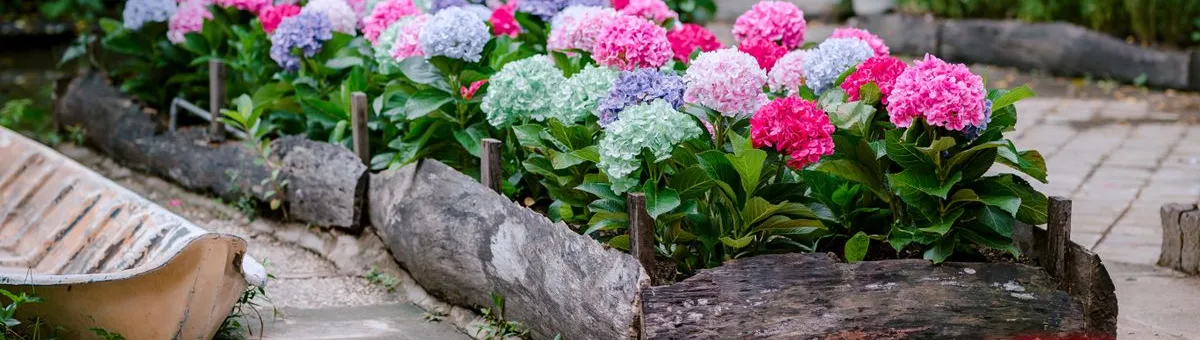
Flower groups and seasonal roles
Annuals provide a one-season display, biennials generally flower in their second growing season, and perennials live through multiple seasons. Bulbs and related storage organs have their own planting and dormancy cycles. These groups can overlap with growth forms such as shrubs and climbers. Use our flowering plant selection guide to compare them by garden role and site, then visit the relevant specialist page for planting and care details.
Flowers by season: color all year
A well-designed garden has flowers in every season. The key is combining plants with different bloom times so color never stops:
Spring flowers (Feb–May)
Spring blooms (Feb–May) are the most eagerly anticipated after winter: spring bulbs (daffodils starting Feb, tulips Mar–Apr, hyacinths Apr), ornamental cherry and almond trees in bloom, forsythia, spirea, and lilac. Among spring-blooming perennials: epimedium, hellebore (actually winter–spring), bergenia, and pulmonaria. Spring is the most generous season for floral color with zero effort if you planted bulbs in autumn.
Summer flowers (Jun–Sep)
Summer (June–Sep) is peak flower season: roses (repeat bloomers with multiple flushes), lavender, agapanthus, echinacea, rudbeckia, sage, phlox, daylily, verbena, zinnia, petunia, and geranium in containers. Annual flowers reach peak abundance here. Summer combinations of cool blues and purples (lavender, agapanthus, verbena, sage) paired with warm yellows and oranges (rudbeckia, daylilies) create dynamic energy in borders.
Fall & winter flowers (Oct–Jan)
Autumn (Oct–Dec) has its own stars: aster and chrysanthemum dominate in purples, pinks, and whites. Sedum spectabile produces flat flower heads that turn orange-red in fall. Outdoor cyclamen blooms Oct–Nov. Winter brings hellebores (blooming Dec onward) and sarcococca (tiny intensely fragrant white flowers). These quiet heroes keep the winter garden from looking bare.
Flowers for sun and shade
Best flowers for full sun
In full sun areas (6+ hours direct sun), the best choices are: lavender, agapanthus, rudbeckia, echinacea, zinnia, marigold, gazania, portulaca, verbena, and pelargonium (geranium). All tolerate summer heat, and many are drought-tolerant once established. In extremely hot regions (Southwest, hot Mediterranean zones), add succulent flowers (Sedum, Echeveria, Lewisia) that bloom spectacularly in spring.
Flowers for shade & partial shade
Shady garden areas aren't condemned to boring: impatiens (the shade queen, blooming all summer), begonia tuberosa, hosta (striking foliage + lilac summer flowers), astilbe (feathery pink and red flower plumes in summer), primrose (spectacular spring blooms), hellebore and pulmonaria (winter–spring). The key in shade: maintain soil moisture—shade plants lack direct heat but may suffer dry conditions.
Best flowers for containers & patios
For containers and patios, choose flowers with abundant continuous bloom and tolerance to heat and wind stress: geranium (pelargonium), petunia, trailing begonia, impatiens (for shade), gazania, and portulaca grandiflora (for hot full sun). Use large containers (12 inches minimum diameter) and fill them with quality potting soil enriched with slow-release fertilizer. Summer container watering is essential — containers dry much faster than garden soil, sometimes requiring daily watering in heat. Feed containers every 2 weeks with liquid fertilizer during the bloom season.
Growing cut flowers for indoor arrangements
Many flowers are excellent for cutting and last a week or more in a vase: zinnia (lasts weeks), cosmos (airy and elegant), sunflower (dramatic impact), calendula, nigella, and scabiosa are the longest-lasting. Always cut early in the morning when stems are most turgid (hydrated), use sharp scissors, cut on a diagonal to maximize water absorption, and remove all leaves that would sit underwater to prevent bacterial bloom in the vase. Changing water every 2–3 days extends vase life.
Flowers that attract bees & butterflies
A pollinator garden (bees, butterflies, hummingbirds) supports biodiversity and improves vegetable production in nearby gardens. The most attractive flowers are those with accessible nectar and pollen — especially simple, single-petaled blooms rather than heavily double-petaled varieties that insects cannot access. The best pollinator plants are: lavender, rosemary, thyme, sage, verbena, agastache, echinacea, rudbeckia, phacelia, borage, alyssum, and alliums. Planting a dedicated pollinator zone with a mix of these species is surprisingly easy and creates visual interest while supporting local insects.
Feeding flowering plants for maximum blooms
Blooming flowers are nutrient-hungry, especially phosphorus (P) and potassium (K), which drive flower production and color intensity. A balanced or high-P/K fertilizer (like 5-10-10 or 10-20-20) applied every 2–3 weeks during the bloom season makes a dramatic difference versus no fertilization. For container flowers, liquid fertilizer dissolved in irrigation water is most practical — nutrients reach roots immediately without delay. For garden flowers, granular slow-release fertilizer applied once in spring feeds for 3–6 months. Avoid excess nitrogen in mature plantings: too much promotes leafy growth at the expense of flowers.
Top-rated flower products on Amazon 2026
Espoma Organic Bloom-tone 3-5-4 Flower Fertilizer
- ✓ 3-5-4 NPK — high phosphorus for abundant blooms
- ✓ Organic slow-release granules — feeds for 2–3 months
- ✓ Safe for all flowering annuals and perennials
- ✓ 4 lb bag — enough for a full season in most gardens
No verified direct Amazon.com listing is linked for this exact model.
Spring Bulb Mix — Tulips, Daffodils & Hyacinths
- ✓ 50+ mixed bulbs — multiple bloom times Feb–May
- ✓ Includes tulip, daffodil, hyacinth and muscari
- ✓ Plant Oct–Dec for a spring color explosion
- ✓ Naturalizes — daffodils multiply year over year
No verified direct Amazon.com listing is linked for this exact model.
American Meadows Wildflower Seed Mix — Pollinator Garden
- ✓ 25 species — echinacea, rudbeckia, cosmos, zinnia & more
- ✓ Attracts bees, butterflies and hummingbirds
- ✓ Direct sow after last frost — no indoor start needed
- ✓ 1 oz covers 50–75 sq ft of garden bed
No verified direct Amazon.com listing is linked for this exact model.
* As an Amazon Associate we earn from qualifying purchases. Prices subject to change.
Choose flower groups for your garden site
Start with light, drainage, available space and maintenance time, then shortlist flower groups that fit those conditions. For a step-by-step site checklist and a comparison of annuals, perennials, bulbs, shrubs and climbers, continue to flowering plants for gardens. Use the links above for detailed care of a particular species or group.
Starting flowers from seed: economical and rewarding
Growing flowers from seed is 10x cheaper than buying transplants and gives you access to rare and heirloom varieties. Success depends on matching the seed's requirements to your timeline and conditions:
Easy annuals for direct sowing — Plant seeds directly outdoors after the last frost: cosmos, poppy, sunflower, zinnia, borage, nigella, alyssum, and bachelor's button. No indoor starting needed. Simply prepare soil, scatter seeds, cover lightly, and water. Germination occurs in 1-3 weeks. This method creates the most natural-looking drifts and is ideal for beginners.
Easy annuals for indoor starting — Start indoors 6-8 weeks before the last frost: petunia, impatiens, begonia, and marigold. Sow into moist seed-starting mix, cover with plastic dome or humidity tray, and place under grow lights. Transplant outdoors after all frost danger. Indoor starting extends the growing season in cool climates.
Harder seeds requiring special techniques — Some seeds need stratification (cold period), scarification (seed coat soaking or light abrasion), or bottom heat to germinate: delphiniums (stratification), morning glories (seed coat scarification), and gaillardia (light exposure). Follow packet instructions carefully; failures usually stem from ignoring these species-specific requirements.
Bulbs and bulblets from seed — True bulb seed (from daffodils, lilies, alliums) takes 2-3 years to produce flowering-size bulbs. These are for patient gardeners; commercial bulbs are faster. Tuber crops like dahlias multiply naturally underground but rarely produce viable seeds.
Buying vs growing: cost-benefit — A pack of zinnia seed ($2) produces 50-100 plants vs a flat of 6 transplants ($8-12). Seed is economical for quantity and variety. Transplants are worthwhile for difficult-to-germinate seeds, short-season climates, and when you need blooms immediately.
Creating a cut-flower garden: fresh blooms at your doorstep
A dedicated cutting garden produces fresh flowers for indoor arrangements year-round. The best cutting flowers share traits: long stems, long vase life, and continuous flowering if harvested regularly:
Best cutting flowers — Roses (longest stems, many varieties), dahlias (prolific, large showy blooms), sunflowers (bold and cheerful), zinnias (come in dozens of colors, continuous bloom), cosmos (airy and long-lasting), celosia (unique texture, 2-3 week vase life), gladiolus (tall stems for arrangements), and lavender (fragrant, dries well). Perennial options: peonies (spectacular for 2-3 weeks in spring), daylilies (daily blooms), and statice/limonium (excellent for dried arrangements).
Cutting technique — Cut in early morning or late evening when stems are fully hydrated. Use sharp shears to make clean cuts at 45-degree angles. Remove leaves that would sit below the waterline (they rot and shorten vase life). Immediately place cut stems in cool water. Re-cut the stem base indoors at a 45-degree angle before arranging. Change water every 2-3 days and remove spent flowers.
Lasting arrangements — Condition stems for 2-3 hours in cool water before arranging (allows maximum hydration). Use cool water with flower preservative (or a DIY mix: 1 tablespoon lemon juice + 1 tablespoon sugar + a few drops of bleach per quart of water). Keep arrangements in indirect light and cool rooms (away from ripening fruit, direct sun, and heat sources). Most cut arrangements last 7-10 days with proper care.
Rotation planning — To ensure continuous harvest, succession-plant cutting flowers every 2-3 weeks. Sow zinnias and cosmos in early May, then again in late May and mid-June for blooms from July through October. Deadhead religiously — every cut flower extended is one more week of blooms from that plant.