

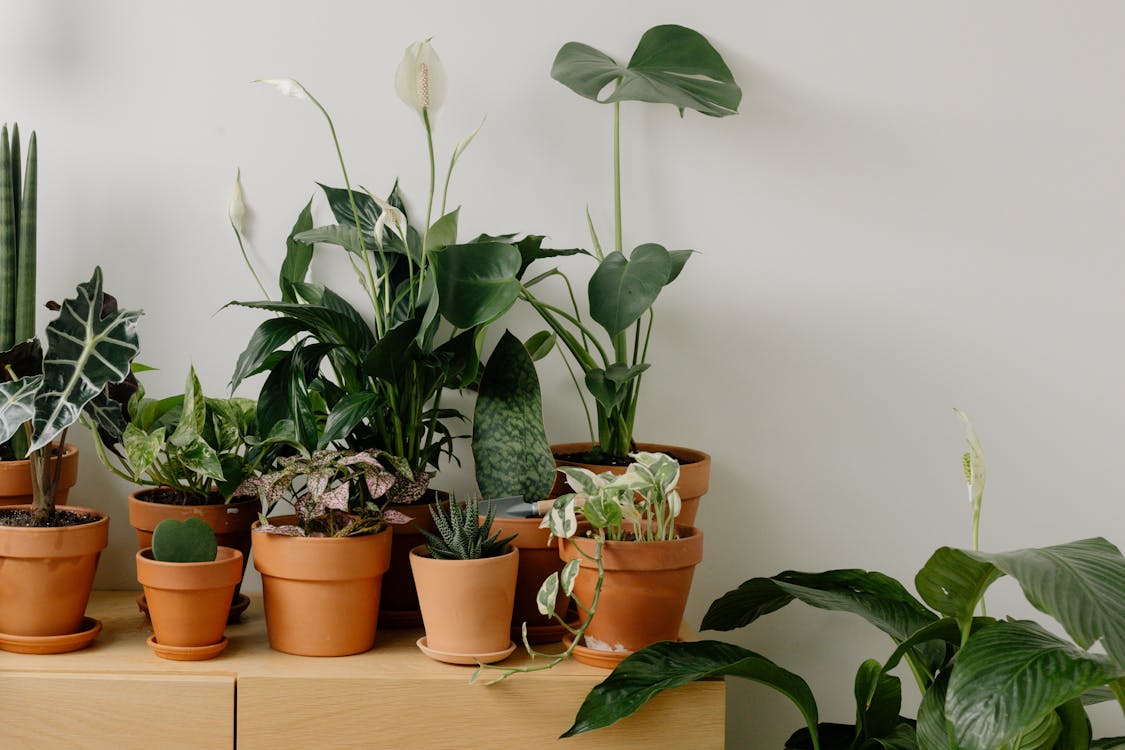
Understand glazed and unglazed terracotta
People often use “terracotta” to mean an unglazed clay pot, but clay containers may have a glaze on the inside, outside or both. Unglazed surfaces allow more moisture exchange through the wall; glaze changes that behavior and can make the pot act more like another hard-sided container. Decorative finishes, clay composition and firing also differ by maker. Do not assume two pots with the same color or shape will have identical water retention or frost resistance.
Inspect the interior and exterior rather than relying on the product photo. Look for a drainage opening, the thickness of the walls, chips around the rim, a stable base and any manufacturer information on indoor or outdoor use. A decorative pot without a hole can still be useful as a cachepot: grow the plant in a smaller draining container and set that inside the terracotta cover. Remove the inner pot to water and empty any water collected in the outer pot.
Know what porous clay changes
In an unglazed clay pot, evaporation through the walls can contribute to faster drying and may reduce the chance that the mix stays saturated for a long period, provided the pot has a working drainage hole and the growing medium is suitable. It does not make overwatering impossible and it does not provide nutrients. Roots still need appropriate moisture, air and a medium suited to the species.
Penn State Extension explains that unglazed clay can draw water and soluble salts from potting mix, which is one reason plants in clay may need more frequent watering than plants in plastic. The same guidance describes terracotta as a possible fit for succulents and plastic as easier for plants that prefer to stay moist. Treat that as a general material comparison, not a rule that every succulent belongs in clay. Plant species, indoor climate, pot size, light and watering method all matter. See the university’s guide to repotting houseplants for further detail.
Clay is heavier and more breakable than many plastic pots. That weight may help a top-heavy plant remain steady on a stable floor, but it makes a filled pot harder to move. A terracotta container can also absorb water and be vulnerable to damage in freezing conditions, depending on its construction. Decide whether the pot will remain in one place and whether you can protect it when needed.
Match a clay pot to the plant
Choose the growing medium and pot together. A plant that prefers a drying cycle may be easier to manage in unglazed clay, especially in a humid room or a location where plastic remains wet for too long. A moisture-loving foliage plant may need closer checks in clay during warm weather. Neither material fixes a mismatch between the plant’s needs and the watering routine.
Check the plant label or a reliable botanical reference for light, moisture and root requirements. Succulents and cacti often need an airy medium and a drainage opening; a clay wall alone does not create those conditions. Ferns, tropical foliage and other plants that prefer steady moisture may dry faster in small, shallow unglazed pots. If the plant’s requirements are unknown, observe a small number of moisture cycles before changing the watering schedule.
For a mixed planting, select species with compatible moisture needs. In a large arrangement, different root balls may experience different moisture levels, and plants next to the porous wall can dry before the center. Avoid combining a plant that prefers a dry cycle with one that requires constant moisture just because the colors complement each other. Use the same species-specific guidance when deciding whether a pot is suitable indoors or outside.
Choose size, depth and shape
Measure the inside of the pot and compare it with the root ball. The rim diameter can be misleading if the walls taper sharply toward the base. A plant being moved into a new pot usually needs a sensible increase in root room, not the biggest vessel available. Excess mix around a small root system may stay wet, especially in cool or low-light conditions. A pot that is too tight can dry rapidly and restrict root growth.
Match depth to the plant’s roots and the room available for watering. A wide, shallow bowl may suit a compact succulent grouping but not a plant with deep roots. A narrow neck can make it hard to remove a root-bound plant later. Check that the pot has enough headroom for watering without overflow and that the base is wide enough for the mature plant to remain stable.
For a windowsill or shelf, confirm the weight limit of the surface and use a saucer that is wider than the drainage outlet. A large clay pot can be difficult to carry after watering. Move the empty pot to its final position first, then plant it there. If a plant needs regular rotation or seasonal relocation, plastic or a removable inner pot may be more practical.
Check drainage instead of adding gravel
A drainage hole gives excess water a route out of the root zone. Keep it open and use a potting mix suitable for the plant. If the opening is large, a small piece of mesh can limit media loss while allowing water to flow; do not pack the hole with material that blocks it. Place a saucer underneath to protect the surface, then empty it after watering.
A layer of stones, broken pottery or gravel at the bottom does not substitute for drainage and is not a general solution to waterlogged roots. Penn State Extension’s review of container-gardening myths explains that a coarse layer under finer medium can impede water movement. If a decorative terracotta pot has no opening, use it as a cover for a separate draining pot rather than planting directly into it, and remove the inner container to water.
Check the drainage setup after placing the pot. A saucer should not hold water indefinitely, and a pot sitting in a permanently attached tray can keep the base wet. Indoors, consider a waterproof mat or a removable tray beneath clay because salts and moisture can mark timber and stone surfaces. Outdoors, ensure water will not collect under the pot or drain into a place where it can damage a building.
Adjust watering for clay
Do not water terracotta plants by a fixed calendar. Check the mix at root depth and account for the pot’s weight, plant condition, season and location. A small unglazed pot in direct sun or wind can dry quickly; a large pot in a cool, shaded room may remain damp. Learn how the pot feels after thorough watering and again as it dries. Combine that observation with a moisture check rather than relying on color alone.
Water slowly until the root zone is evenly moist and the excess has drained. A very dry mix can pull away from the sides or allow water to run down the gap without soaking the root ball. In that case, water in several passes or briefly soak a removable pot, then let it drain completely. Do not leave the container standing in water unless the plant and growing system are designed for that condition.
After repotting, recheck moisture more often because fresh mix and a changed pot size alter drying. In warm weather, a plant may use more water as it grows; in winter or during reduced light, its demand may fall. If the pot has a white crust or the plant’s growth changes, inspect watering and fertilizer use before adjusting nutrients. Terracotta can absorb soluble salts from the medium, so cleaning may be needed between plantings.
Read white marks and clean used pots
A pale ring or crust on the outside of an unglazed pot can come from minerals or soluble salts moving with water through the clay. The mark is not by itself a diagnosis of plant disease. Check the potting mix, water source, fertilizer rate and how often water drains through the container. If the plant is otherwise healthy, the issue may be cosmetic; if growth is poor, inspect roots and growing conditions rather than treating the mark alone.
Before reusing a pot, remove loose media and wash away visible deposits with a brush and water. If a previous plant had a serious pest or disease problem, clean and disinfect the container using an appropriate horticultural method and follow the product’s instructions. Rinse and dry it fully before reuse. Do not mix cleaning chemicals, and do not use a damaged pot that may break under the weight of wet media.
Salt accumulation can be reduced by avoiding excess fertilizer and allowing drainage water to leave the pot. A cover pot can conceal marks, but it does not solve water standing around the inner container. Check the saucer and the base after each watering, especially on wood floors or outdoor decks.
Protect terracotta in cold weather
Freeze resistance depends on the specific pot, its porosity, how wet it is and the conditions it experiences. Do not assume every terracotta planter can remain outside through a freeze. Read the maker’s care information and consider the local climate. Penn State Extension recommends storing terracotta containers for winter arrangements to reduce the chance of breakage in freezing temperatures; its advice is a useful precaution, while product-specific instructions should guide an individual pot.
If a pot is not rated for winter exposure, move it to a dry sheltered place before severe cold, if it can be lifted safely. Emptying or protecting the container may be easier before it is saturated. Do not drag a heavy pot across paving because the base can crack. Raise outdoor pots only on stable supports and make sure the drainage remains open during wet weather.
Plants also have different winter requirements. A container may expose roots to colder air than garden soil, even when the plant species grows outdoors in the region. Check local advice for the plant and protect the root zone as directed. If the pot must stay outside, use a container specifically marketed for that use and inspect it after winter for hairline cracks or a loose base.
Repot a plant into terracotta
- Select a terracotta pot with internal dimensions suited to the existing root ball and a clear drainage opening.
- Move the empty pot to its intended location and place a protective saucer or mat underneath.
- For a new porous pot, follow the maker’s preparation advice; Penn State Extension describes soaking a new unglazed clay pot before repotting.
- Moisten fresh container mix lightly so it can accept water evenly.
- Remove the plant carefully, inspect the roots and loosen only tightly circling or matted roots where appropriate.
- Add mix so the top of the root ball sits at the proper height below the rim.
- Fill around the roots without compressing the medium hard or burying the crown.
- Water thoroughly, let the pot drain, and remove water from the saucer or cachepot.
- Place the plant in suitable light and monitor the moisture before resuming its usual routine.
If the plant is ill, recently purchased or has damaged roots, do not assume repotting will cure the underlying problem. Check pests, light, watering and temperature first. Use a clean container and fresh mix, and avoid increasing the pot size more than the root system needs. Penn State’s repotting instructions also cover root-bound plants, cleaning containers and selecting potting media.
Troubleshoot common terracotta-pot problems
The mix dries very quickly: compare the pot size with the root ball, check whether the container is in direct sun or wind, and consider whether the plant would be easier to manage in a glazed or plastic inner pot. The mix stays wet: verify the hole is open, empty the saucer and check that the medium is not compacted. Clay walls do not overcome a blocked outlet or an unsuitable growing mix.
Water runs straight through: check whether the root ball has become very dry or hydrophobic and wet the mix in slower passes. The pot has white marks: clean the exterior and review fertilizer and water quality; do not diagnose a nutrient deficiency from the mark alone. The pot cracks outdoors: inspect the maker’s winter guidance and relocate or replace it if it is not intended for freezing conditions. The plant is unstable: check pot shape, base width, root-ball placement and whether a stake is appropriate for the species.
Decide if terracotta suits your space
Choose unglazed clay when its porous character, natural appearance and weight suit the plant and location, and you can monitor moisture. Consider glazed ceramic or plastic when the plant needs a steadier moisture reserve or the pot needs to be moved often. A decorative terracotta cover can provide the look while a removable inner container handles drainage and watering. The choice is not a contest between materials; it is a match between roots, routine and setting.
Before buying, check the internal size, hole, saucer, filled weight, surface protection and outdoor instructions. Think through watering on an ordinary weekday, not just how the pot looks at planting. For comparisons with other container styles and a broader selection guide, see our complete guide to plant pots and the related advice on large terrace planters.