

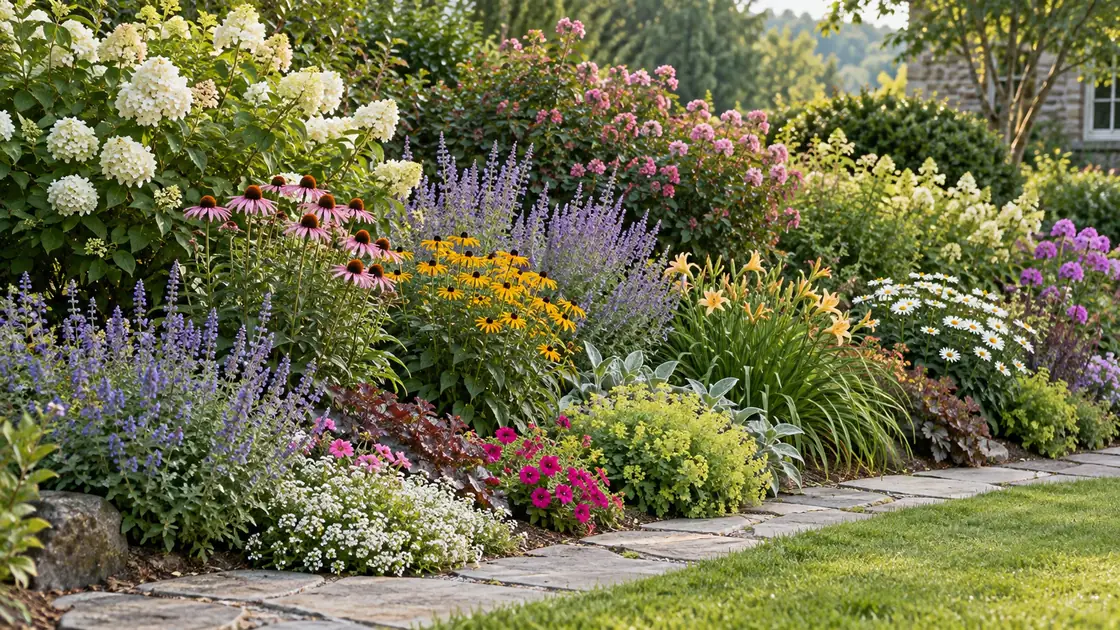
Compare flowering plant groups by garden role
Flowering plants differ in how long they live, how they grow and what they contribute to a bed. These groups are practical planning tools, not mutually exclusive botanical categories. A flowering shrub, for example, can be deciduous or evergreen and can also provide a screen or wildlife habitat.
| Plant group | Useful garden role | Check before planting |
|---|---|---|
| Annuals and biennials | Seasonal color, quick gaps and displays that can change each year. | Sowing or planting season, frost tolerance and whether you want to replant. |
| Herbaceous perennials | A recurring layer of flowers or foliage with seasonal growth above ground. | Winter behavior, mature spread, staking or division needs and local hardiness. |
| Bulbs and other storage organs | A defined flowering window, often followed by a dormant or fading phase. | Planting depth and season, drainage, and where leaves can remain while they die back. |
| Flowering shrubs | Woody structure, flowers and sometimes fruit or foliage interest across seasons. | Mature width, flowering wood and pruning timing. See our flowering shrub guide. |
| Flowering climbers | Vertical coverage for a suitable wall, fence or pergola. | Support strength, attachment method, root space and future pruning access. |
Illinois Extension’s gardening terms guide defines annual, biennial and perennial by life cycle. For exact varieties, follow the plant label and a regional growing guide rather than assuming that every member of a broad group behaves the same way.
Map the site before choosing flowers
Observe the intended bed or container at different times of day. Note direct sun, shade from buildings or trees, wind, reflected heat, drainage and access to water. A sunny border beside a south-facing wall can be hotter and drier than an open bed even when both receive similar direct light. In a container, the smaller volume of medium may dry faster and the position may be more exposed to wind.
Measure the space and write down mature plant height and width before buying. Use the final dimensions rather than the size of a nursery pot. Keep clear routes for pruning and watering, and do not place vigorous shrubs or climbers where they will block a path or window as they grow.
Use a simple constraint table before comparing named plants:
- Light: record whether the location is sunny, partly shaded or shaded during the growing season.
- Soil and drainage: note where water stands after rain and whether the area dries quickly.
- Space: allow for mature height, spread and any support a climbing plant needs.
- Care: be realistic about watering, deadheading, seasonal cleanup and pruning.
Start with the conditions you cannot change. Flower color and fragrance can narrow the shortlist later, but neither makes an unsuitable plant thrive.
Plan bloom sequence without promising year-round flowers
Write down when you would like flowers and check the likely bloom window of each candidate in a local reference. Combine plants whose displays overlap or follow one another, and include foliage, seed heads or woody structure where there may be a gap. Flowering dates shift with climate, cultivar and weather; a calendar from another region is only a starting point.
Annuals can add a seasonal layer that is easy to change. Perennials and bulbs can return in suitable conditions, though they may be dormant or unattractive for part of the year. Shrubs add a persistent framework even when they are not flowering. Penn State Extension’s pollinator garden guidance recommends providing flowers across the season and varying flower forms, while its examples are specific to local growing conditions.
Keep bloom sequence separate from maintenance sequence. A bed may flower for a long period but still need regular deadheading, watering or seasonal pruning. Decide what care is realistic and leave plant labels in a garden notebook for future reference.
Arrange a border for height, access and mature spread
For a border viewed mainly from one side, taller plants often fit at the back and low forms near the front. In an island bed seen from all sides, taller forms can sit closer to the middle. Treat this as a layout prompt, not a fixed rule: wind, pathways, sight lines and the intended garden style may justify another arrangement.
Place temporary pots on the ground before planting and step back to view the bed from the main paths and windows. Check whether mature foliage will hide lower flowers, whether a shrub will crowd a neighboring plant and whether you can reach the back of the border. Read spacing instructions on the label and leave room for air circulation and maintenance.
Use repeated shapes or a limited color palette to create a coherent display, then vary flower form and height so the planting is not one flat block. If a bulb’s foliage needs time to fade after flowering, place it where that temporary change will not obstruct a path or spoil the view from a key window.
Choose pollinator plants with local evidence
If pollinators are part of the goal, select plants suited to the local area and aim for a range of flower shapes and bloom periods. A plant’s wildlife value depends on the species, region and pollinator; a general “bee-friendly” label is not a guarantee. Check a local Extension, native plant society or conservation resource using the plant’s botanical name.
Penn State Extension’s pollinator garden guide recommends a variety of flowering plants and season-long resources. It describes Pennsylvania conditions, so use regional advice when choosing species elsewhere. Avoid routine pesticide applications on open flowers and always follow local regulations and product labels when treatment is needed.
Some flowers also provide seed heads, fruit or host plants for insects. Decide whether to leave spent stems for a time or cut them back; the right practice depends on the species, local wildlife, safety and the appearance you want.
Build a simple flowering-plant plan
For a narrow border, begin by marking the path, the available planting width and any access route. If a flowering shrub fits the site, use its label dimensions to reserve space for its mature canopy. Add a small number of herbaceous perennial groups in the remaining bed, with gaps for seasonal annuals if you want to change the color each year. Add bulbs only where their foliage can remain until it has naturally declined.
For a balcony, choose plants with similar light and watering needs, verify each mature size and make sure the container is stable and drains. Do not combine a dry-loving plant with a moisture-loving one just because their colors work together; separate inner pots may be easier to manage. For any elevated or shared building space, check load and runoff requirements before installation.
Write down the plant name, label dimensions, source of care advice, planting date and what you observe. The record helps distinguish a poor plant-site match from a temporary weather problem and makes it easier to adjust the design next season.
When you are ready to compare individual flowers, use our garden flowers hub and its specialist guides for annual flowers, spring bulbs and roses. The plant hub also covers broader plant groups and growing spaces.
Review the display and adjust care
At the end of a flowering period, note which plants established, when they flowered and whether their mature size matched the label. Record watering problems, damage from wind or heat and gaps in the planned sequence. Remove or relocate a plant only after checking whether the issue came from the site, watering, pests or a temporary establishment period.
Deadhead, prune or leave seed heads according to the individual plant and your goals. Some varieties may flower again after spent blooms are removed; others are grown for fruit or seed. Do not cut back bulbs, shrubs or perennials using one rule for all. Refer to the plant-specific guide before pruning or removing foliage.
Frequently asked questions about flowering plants
For species-level flower choices and care, continue with the garden flowers hub.