

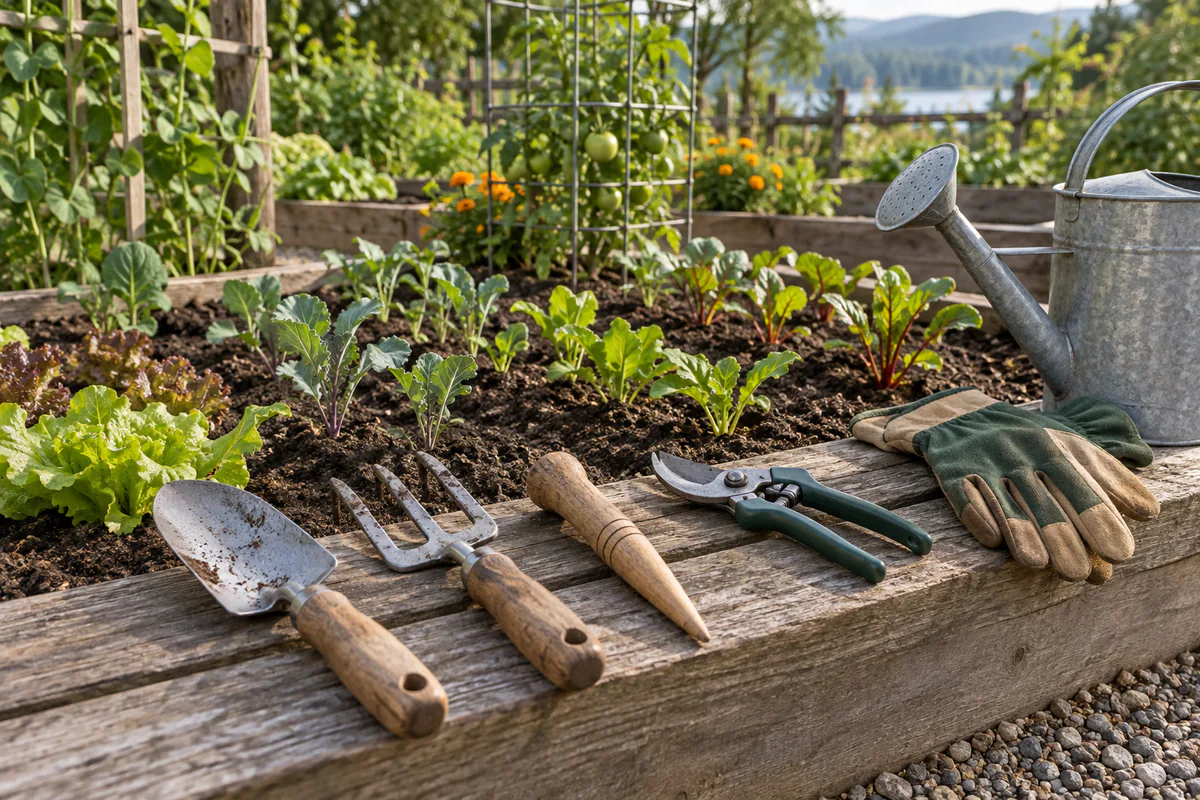
Vegetable garden tools by task
| Task | Tool type | What to check |
|---|---|---|
| Planting or potting up | Hand trowel or dibber | Comfortable grip, blade shape, edge finish and fit for container depth |
| Shallow weed removal | Hand hoe or cultivator | Head shape, reach and control near crop roots |
| Moving leaves or leveling beds | Small rake | Head width, tine spacing and whether it fits the bed |
| Harvesting or pruning | Pruners or harvest snips | Cut capacity, hand fit, locking mechanism and safe storage |
| Watering | Watering can or hose attachment | Reach, filled weight, flow control and water source |
| Tracking sowings | Plant labels and marker | Weather resistance and readable crop/date information |
Hoe or cultivator for shallow work
Use a hoe or cultivator for the job its head is designed to do. Work near crops carefully and avoid deep disturbance that could damage roots. Compare handle length and bed access before buying; a short hand tool and a long-handled tool serve different working positions.
Trowel and dibber for planting
A hand trowel moves small amounts of growing medium and helps make planting holes. A dibber makes holes for seeds or plugs. Inspect the handle, blade-to-handle joint and any depth scale; a scale is useful only if it is legible and fits the crop’s sowing instructions.
Rakes for bed preparation
Choose a rake head that reaches across the bed without striking nearby stems. Use it to level loose material or gather debris as appropriate; a large lawn rake can be awkward in a raised bed or container area.
Watering tools for containers and beds
A watering can can give controlled flow to small plots, while a hose attachment can serve larger areas. Select by source access, filled weight, reach and the crop’s watering method. Check container moisture rather than using a universal schedule.
Pruners and snips
Choose a cutting tool with a capacity suited to the stem and a handle that fits your hand. Do not force small snips through stems beyond their intended size. Clean sap and debris from blades and disinfect when disease guidance calls for it.
Gloves and labels
Gloves are optional and depend on comfort, task and plant material. Labels help track variety, sowing date and treatment; use a marker or label material that remains legible in the site’s weather.
Compare tools for containers, raised beds and in-ground rows
Try holding a tool before buying when possible. Compare total weight, balance, grip circumference, handle length and whether you can operate its lock comfortably. A tool that feels light in a shop may become tiring after repeated use. For limited grip strength or wrist mobility, prioritize a secure hold and manageable operating force; stop if garden work causes pain and seek suitable professional guidance.
For raised beds and pots, short tools offer control but can require more bending; longer handles improve reach but reduce precision. Head width should fit the bed and gaps between crops. Check replacement parts and cleaning instructions. Avoid paying for a large kit when most pieces duplicate tools already owned.
Try to hold a tool before buying when possible. Compare total weight, balance, grip circumference, handle length and whether you can operate its lock or trigger comfortably. A tool that feels light in a shop may become tiring after repeated work. For limited grip strength or wrist mobility, prioritize a secure hold and low operating force, and consult a clinician or occupational therapist if garden work causes pain.
For raised beds and containers, a short tool can offer control but may require more bending; a long handle can improve reach while reducing precision. Head width should fit the bed and the spaces between crops. Check whether replacement blades, springs or handles are available and whether the product instructions explain cleaning and maintenance. Avoid paying for a large kit when most pieces duplicate tools already owned.
In containers and raised beds, reach and head width matter because working space is limited. For in-ground rows, longer handles can reduce bending and cover more soil. Test weight and grip where possible, and check for sharp edges, pinch points, replacement parts and safety locks.
See our raised-bed guide and seed-starting guide to match tools to the growing setup.
Compare a tool kit with individual tools
A kit is useful when its contents match several real tasks and the handle sizes fit. Check the exact listing for piece count, tool names, materials, tote or case, replacement availability and return terms. A stated piece count does not establish quality, fit or durability.
WORKPRO 8-Piece Garden Tool Kit
- ✓ Seller identifies an eight-piece garden tool kit
- ✓ Check the exact listing for included tool names and materials
- ✓ Compare handle fit, weight and return terms before purchase
Check current price and availability on Amazon.com.
Build a starter set around current tasks
For a few containers, a trowel, labels and a controlled watering tool may be enough. A raised bed may also need a small cultivator or hoe and a pruner for crops that require cutting. A larger in-ground plot can justify a long-handled tool. Make the list after deciding which crops and bed type you will use; prices and tool quality change by market.
Choose reach and grip for raised beds
Raised beds reduce some bending but can make the center difficult to reach. Pick tools that let you work within a comfortable range without leaning on the bed or compacting soil. Keep blades and pruners where children cannot reach them, and use eye or hand protection when the tool maker recommends it.
Keep hand tools suited to their task
Do not use a hand trowel as a lever for hard soil or a small pruner for branches above its rated capacity. Use the maker’s instructions, keep cutting tools sharp and inspect handles before work. Replace damaged tools rather than relying on a loose joint or cracked grip.
Clean and maintain garden tools
Separate routine cleaning from disinfection. Remove soil and plant residue, then wash and dry tools. If a particular disease is suspected, follow Extension advice for an appropriate disinfectant, concentration and contact time. Incorrect use can injure people, corrode metal or fail to control a pathogen. Keep chemicals in labeled containers away from children and food.
Inspect handles, fasteners, blade edges and locks before use. A loose joint or cracked grip can fail under pressure. Sharpen only cutting tools and follow the maker’s instructions. Store tools dry with sharp edges covered and handles easy to find.
Separate routine cleaning from disinfection. Remove soil and plant residue first, then wash and dry tools. When a specific disease is suspected, follow Extension advice for an appropriate disinfectant, concentration and contact time. A disinfectant used incorrectly can injure people, corrode metal or fail to control the pathogen. Keep chemicals in their original labeled containers and away from children and food.
Inspect handles, rivets, blade edges and locking mechanisms before use. A loose joint or cracked handle can fail under pressure. Sharpen only cutting tools and follow the maker’s method; do not sharpen a digging edge unless its instructions call for it. Store tools dry, with sharp edges covered and handles easy to find.
Brush off soil and plant debris, wash when needed, dry metal parts and store tools safely. If disease may be present, clean tools before disinfecting because dirt can reduce disinfectant effectiveness. Use only a labeled disinfectant in the stated way; some products can corrode metal or injure people and plants. UMN Extension’s tool cleaning guidance explains the differences among methods.
Sharpen only tools with a cutting edge and follow the manufacturer’s method. Store sharp tools with blades protected and handles secure.
Frequently asked questions
For crop and container planning, see the vegetable garden guide, plus our guides to raised beds, seed trays and watering cans.