

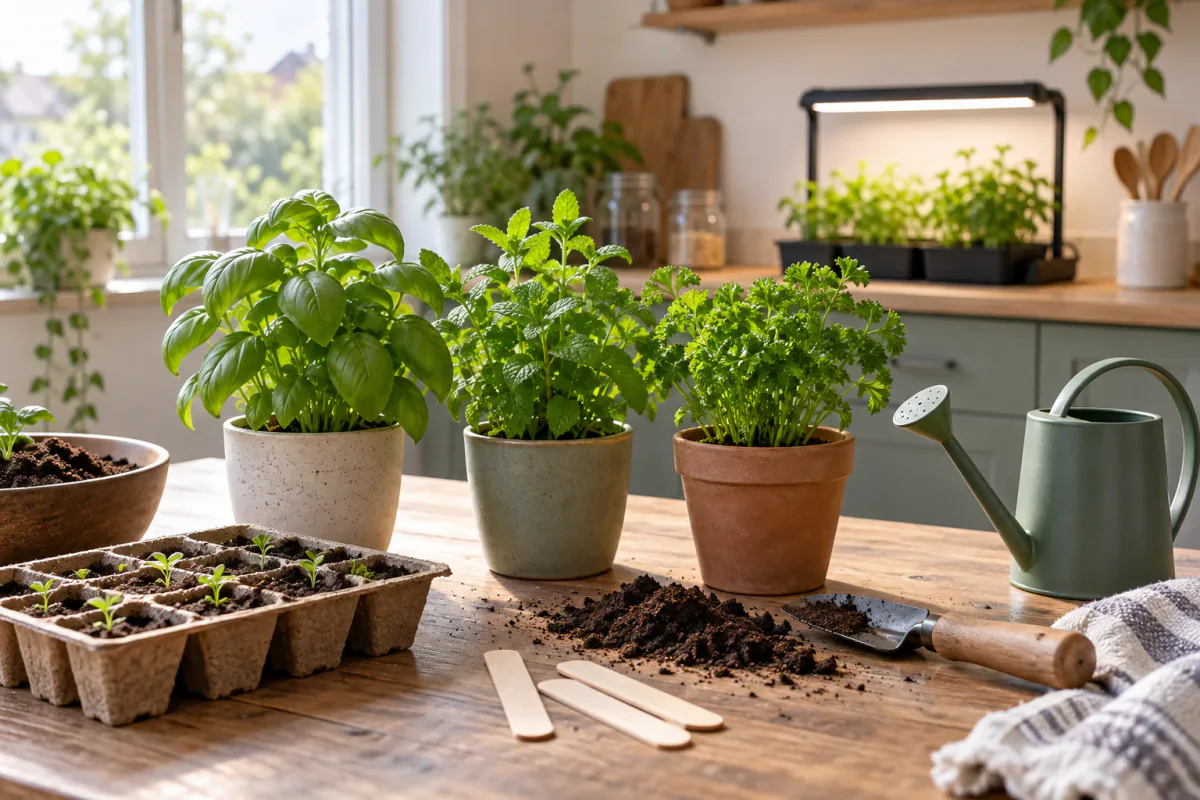
Choose culinary herbs for container growing
Group herbs by how the medium should behave, not only because they are culinary plants. Rosemary, thyme, oregano and sage generally need strong drainage; basil or parsley may prefer more consistent moisture; mint spreads quickly and is simpler to manage alone. A shared planter forces species into one watering and root environment. Combine herbs only when light, moisture and winter needs are similar, and allow room for mature growth.
Check mature size before using a decorative pot. Woody herbs may need a deeper, stable container, while leafy annuals can be harvested more often. Confirm drainage and whether the pot can be moved safely for winter protection. A saucer catches water but should not leave roots standing in it.
Group herbs by how the medium should behave, not by the fact that they are all culinary plants. Rosemary, thyme, oregano and sage generally need stronger drainage than basil or parsley, while mint spreads quickly and is simpler to manage alone. A shared planter forces every plant into the same watering and root space. If you combine species, choose ones with similar light, moisture and winter needs and leave enough room for mature growth.
Check the herb’s mature size before using a small decorative pot. Woody herbs may need a deeper, stable container and room for roots, while leafy annuals can be harvested more frequently. Confirm that the pot has drainage and can be moved safely if winter protection is needed. A saucer catches water but should not leave roots standing in it.
Containers work well for herbs that need free drainage, for plants whose spread should be contained and for herbs that may need to move indoors in cold weather. Select varieties by intended use and local growing conditions. Illinois Extension’s guide to herbs in containers lists suitable examples and stresses drainage and species-specific water needs.
Match herb type to the site
- Basil: a tender leafy herb that needs warmth and suitable light; check the cultivar and local planting window.
- Rosemary, thyme and oregano: Mediterranean herbs generally prefer strong light and well-drained medium. Avoid keeping the pot persistently wet.
- Parsley and chives: useful leafy herbs for containers; give each enough space and follow its light and moisture guidance.
- Mint: grows vigorously and can spread. Keep it in a separate pot or otherwise contain it.
For care requirements, use regional Extension sources and the plant label. See Penn State’s indoor herb guidance for container drainage and watering differences between herb types.
Basil: warmth, moisture and regular picking
Grow basil only when the site is warm enough for the selected cultivar. Keep the medium from drying completely, but allow excess water to drain. Pinch or harvest leafy growth as it develops, following seed-packet and regional guidance.
Rosemary: light and drainage
Rosemary is a woody perennial that needs a container suited to its mature size and well-drained medium. Its winter requirements vary by climate and cultivar; protect or move the plant according to local guidance rather than promising that it will remain outdoors everywhere.
Mint: keep spreading growth contained
Grow mint in a pot with drainage and monitor it as it spreads. Do not combine it with slower-growing herbs unless the container and pruning plan prevent competition.
Compare light, water and growth habits
Decide whether you want quick leaves, a perennial shrub or a spreading herb. Basil and parsley are often grown for leafy harvest; rosemary and thyme become woody and need room for air movement; mint can overtake a mixed pot. Check whether the label describes an annual, tender perennial or hardy perennial in your region. That classification can change by climate.
Use separate containers when care needs conflict. It is easier to water dry-loving rosemary separately from a moisture-loving leafy herb than to compromise both. Grouped pots are fine only when each drains independently and roots are not sharing a saturated reservoir.
Before sowing or buying a plant, decide whether you want quick leaves, a perennial shrub or a spreading herb. Basil and parsley are often grown for leafy harvest; rosemary and thyme become woody and need space for air movement; mint can overtake a mixed pot. Check whether the label describes an annual, tender perennial or hardy perennial in your climate. That classification may change by region.
Use separate containers when care needs conflict. It is easier to water a dry-loving rosemary separately from a moisture-loving leafy herb than to compromise both. Grouping pots on one tray is fine only if each can drain independently and their roots are not sharing a saturated reservoir.
| Herb group | Container priority | Grouping note |
|---|---|---|
| Basil and tender leafy herbs | Suitable warmth, light and consistent moisture without waterlogging | Group only with herbs needing similar conditions |
| Rosemary, thyme, oregano and sage | Strong light and a medium that drains freely | Check species and winter requirements before combining |
| Mint | A separate pot or plan to contain spreading growth | Avoid crowding slower herbs |
| Parsley and chives | Pot size, light and moisture suited to the species | Do not assume a shared watering schedule fits all plants |
Choose a pot and growing medium with drainage
Choose a medium labeled for containers and check its drainage in the actual pot. Wet the mix before planting if it is very dry, then confirm that water drains freely. If the mix shrinks from the wall or stays saturated, diagnose the product and watering method before adding amendments. Gravel beneath potting mix does not replace drainage holes and can leave the root zone wet.
When repotting a woody herb, select a container suited to the root ball and expected growth; excess wet medium may stay damp longer than roots use. Refresh the mix when its structure breaks down, and clean an old pot before reuse if disease or pests were present.
Choose a medium labeled for container growing and verify its drainage in the actual pot. Wet the mix before planting if it is very dry, then check that water drains freely. If a mix shrinks away from the pot wall or remains saturated, diagnose the product and watering method before adding sand or gravel. A layer of gravel under potting mix does not replace drainage holes and can leave the root zone wetter than intended.
When repotting a woody herb, select a container only as large as the root ball and expected growth require; excess wet medium can stay damp longer than roots use it. Refresh the medium when its structure breaks down, and clean the old pot before reuse if disease or pests were present.
Use a container with drainage holes and a lightweight potting medium suitable for containers. Select enough root volume for the plant and make sure excess water can escape. Avoid leaving roots in trapped water; Illinois Extension explains why drainage holes and emptying standing water matter in its container drainage guide.
Water, feed and harvest according to the plant
Water when the species and medium need it. Check below the surface rather than judging by a dry crust, and remember that clay, plastic and fabric pots dry at different rates. Apply water to the root zone and let it drain; empty the saucer. Drooping alone does not diagnose drought because waterlogged roots can also wilt.
Harvest leafy herbs in a way that leaves enough growth to recover. For woody perennials, avoid cutting into bare old wood unless a regional source says the species will regrow there. Use clean scissors and follow the plant label for feeding instead of a blanket monthly schedule.
Water when the species and medium need it. Check below the surface rather than judging by a dry crust, and note that clay, plastic and fabric pots dry at different rates. Apply water to the root zone and let it drain; empty the saucer. Do not treat drooping as a diagnosis by itself because both drought and waterlogged roots can cause it.
Harvest little and often from leafy herbs when that matches the plant’s growth habit. For woody perennials, avoid cutting back into old bare wood unless a regional guide says the species will regrow from it. Use clean scissors, leave enough foliage for continued growth and stop heavy harvesting before dormancy where local guidance advises. Follow the seed or nursery label for feeding rather than using a blanket monthly schedule.
Check the medium before watering because pot material, weather, location and species change drying rate. Apply water until it drains when the plant needs a full watering, then empty excess water from the saucer. Do not fertilize on a universal schedule; follow the product label and plant guidance, and avoid overfeeding herbs.
Harvest leafy annuals and perennials differently. Illinois Extension recommends lighter harvesting for perennials so they retain growth for later seasons. Use clean scissors or pruning shears and allow the plant to regrow between heavier cuts.
Bring outdoor pots inside only when conditions suit the plant
Moving herbs indoors requires pest inspection and acclimation. Check leaf undersides, stems and the medium surface, then isolate the pot from houseplants while monitoring it. Increase indoor exposure gradually and provide species-appropriate light. A bright windowsill can still be dim in winter or shaded by nearby buildings; weak, stretched growth calls for reassessing light rather than adding fertilizer alone.
Before returning plants outside, acclimate them again to stronger light and wind. Keep woody and tender herbs separate if winter needs differ. If pests appear indoors, identify them first and use only a treatment labeled for the plant and indoor setting.
Moving herbs indoors requires pest inspection and acclimation. Check leaf undersides, stems and the surface of the medium, then isolate the pot from houseplants while you monitor it. Increase indoor exposure gradually where possible and provide light appropriate to the species. A bright windowsill can still be dim in winter or shaded by nearby buildings; weak, stretched growth is a sign to reassess light rather than simply adding fertilizer.
Before returning plants outside, acclimate them to stronger light and wind again. Keep woody and tender types separate if their winter needs differ. If the plant develops pests indoors, identify them first and use a treatment labeled for the plant and indoor setting.
Some tender herbs can be moved indoors, but they need suitable light and an acclimation period. Inspect plants for pests before bringing them inside and gradually adjust them to the indoor environment. Supplemental lighting may be needed in darker rooms or winter conditions.
Example products to compare
These listings are examples of different categories, not tested recommendations. Confirm exact contents, dimensions, seed varieties, drainage and current availability before purchase.
Indoor Herb Starter Kit, 10 Varieties
- ✓ Seller lists a ten-variety herb seed starter kit
- ✓ Check exact included contents and seed selection
- ✓ Follow packet instructions and local growing guidance
Check current price and availability on Amazon.com.
volila Herb Pots with Tray, Set of 3
- ✓ Seller lists a set of three herb pots with tray
- ✓ Check dimensions and drainage details in the exact listing
- ✓ Choose a container volume suited to the plant
Check current price and availability on Amazon.com.
Organo Republic Culinary Herb Seed Variety Pack
- ✓ Seller lists a variety pack of culinary herb seeds
- ✓ Check exact varieties and packet details in the listing
- ✓ Use crop-specific sowing instructions
Check current price and availability on Amazon.com.
Frequently asked questions
For crop-specific container guidance, explore the vegetable garden hub, seed starting guide and tomatoes in pots.