

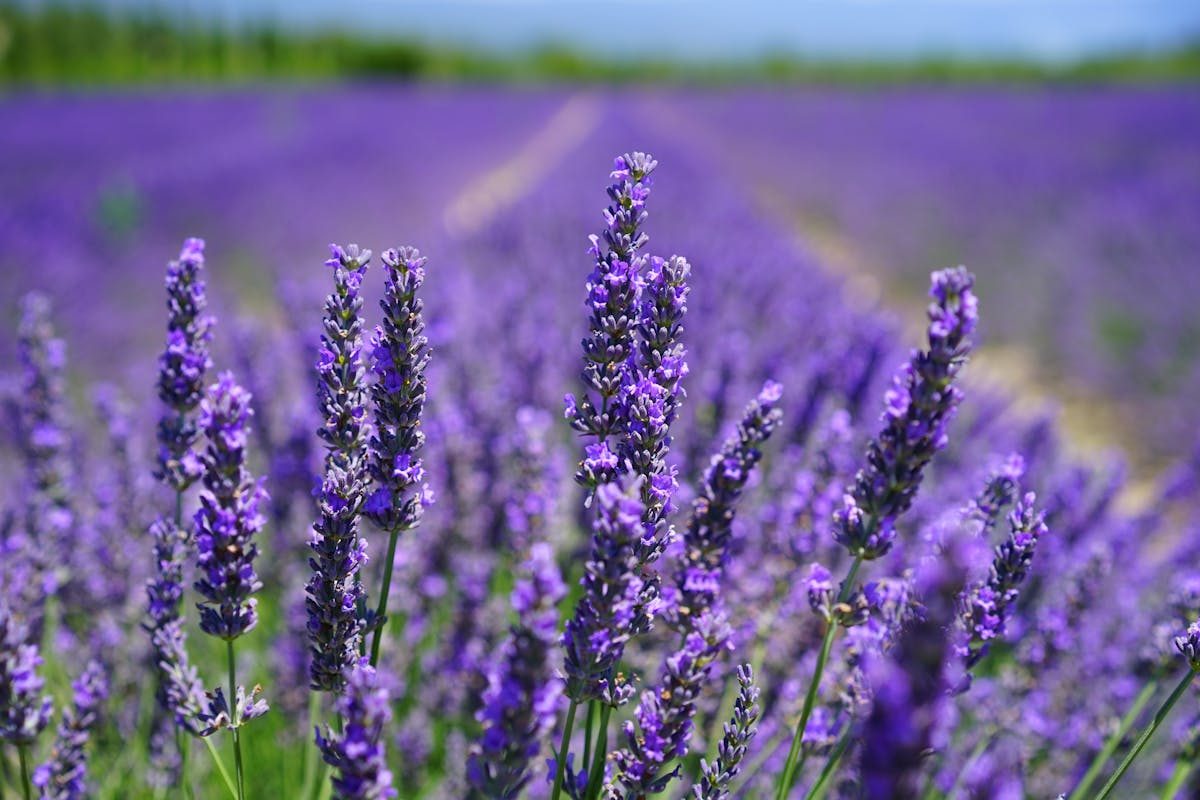
Choose lavender for your climate
English lavender (Lavandula angustifolia) is a common garden choice in colder regions, while Spanish lavender (L. stoechas) is more tender and often grown where winters are mild or in protected containers. Lavandin hybrids can grow larger than many English varieties. Check the exact name and hardiness on the plant tag; zone labels do not account for every microclimate or winter wetness.
Plant for drainage and airflow
Give lavender a sunny site in soil that drains freely. Avoid low spots where water collects and frequent irrigation once plants are established. For a container, choose drainage holes and a free-draining mix. Utah State University Extension recommends full sun and well-drained soil, and warns that lavender performs poorly in waterlogged ground. Its cultivar and watering details are specific to its regional growing context.
Prune lightly and harvest at the right stage
After flowering, trim spent flower stems and shape lightly while keeping cuts in leafy growth. Avoid cutting deep into bare, woody stems, where lavender may not resprout reliably. For dried bunches, harvest when flowers are beginning to open; timing depends on cultivar and intended use. Keep harvest claims focused on fragrance and garden use—this page does not evaluate medical uses or treatments.
When a plant becomes woody or sparse, check whether the cultivar suits the climate and whether shade or wet soil is stressing it. Replacing a declining plant with a locally recommended variety may be more successful than hard pruning.
Growing lavender in containers
Containers make it easier to protect tender lavender in winter and to move a plant away from prolonged rain. Choose a pot with drainage holes and a mix that does not stay soggy. A larger pot buffers moisture and temperature changes better than a tiny one, but avoid an oversized container that remains wet around a small root system. In cold weather, follow local nursery or extension guidance for the selected species; a hardiness zone alone does not describe winter moisture or exposure.
Diagnose sparse or dying plants
Lavender often declines in heavy, persistently wet soil. Check whether water drains after rain, whether nearby irrigation is reaching the crown, and whether the plant receives enough sun. Do not try to solve a woody, declining plant with a severe cut into old stems. Replace it with a locally suitable cultivar or move future plants to a raised, well-drained site. Utah State’s guide includes regional watering and pruning context.
Compare lavender types before choosing a cultivar
Decide first whether the planting must survive a cold winter, cope with a humid summer, fit in a pot, or provide long flower stems. Lavender labels can refer to distinct species and hybrids, and their cold tolerance and size are not interchangeable. The table below is a screening guide, not a substitute for the nursery’s cultivar information or local extension advice.
| Type often encountered | What it is commonly chosen for | Check before planting |
|---|---|---|
| English lavender (Lavandula angustifolia) | Compact aromatic plants and a range of garden cultivars | Named-cultivar hardiness, mature width, and performance in your soil. |
| Spanish lavender (L. stoechas) | Distinctive flower bracts and a display in milder conditions | Winter protection needs; do not assume it tolerates the same cold as English lavender. |
| Lavandin (L. × intermedia) | Larger plants and long flower stems in suitable climates | Space, height, and whether your growing season suits the hybrid. |
| Other named species or hybrids | Specific foliage, fragrance, or flower traits | Use the exact botanical and cultivar name because common names can overlap. |
When comparing plants at a nursery, look for compact growth with foliage typical of the cultivar, no soft blackened stems, and a root ball that is not saturated. A large top in a tiny, dense pot may be root-bound, but do not judge plant health from flower count alone. Check that the label explains mature size and local suitability. If you are replacing a plant that failed, choose a different type or correct the site issue rather than buying the same name again without understanding what went wrong.
Establish new lavender plants successfully
Choose the final position before planting; lavender resents repeated moves more than many shallow-rooted annuals. Give it full sun and leave the mature spacing shown on the plant tag so air can circulate around each crown. Dig a hole no deeper than the root ball, loosen the surrounding soil, and backfill without burying the stems. In heavy soil, use a raised planting area or a more suitable site rather than creating a small pocket of gravel inside clay.
Water at planting and during the establishment period, then check soil moisture rather than continuing the same irrigation pattern indefinitely. Newly rooted plants need water to form roots, while established lavender in a suitable site often needs less frequent irrigation than surrounding flowers. Do not let a new plant wilt repeatedly, but also do not keep the root zone continually wet. Adjust based on rainfall, soil texture, heat, and the container or bed.
Lavender can be propagated from seed or cuttings, but a seed-grown plant may not match a named cultivar for flower color, scent, or habit. If preserving a specific selection matters, ask the grower about cuttings. Use clean tools, label each cutting, and keep it in a bright sheltered location while roots form. Avoid taking so much material from a young or stressed plant that you compromise its shape and recovery.
Do not expect a small nursery plant to form a full hedge in one season. Plant spacing based on mature width reduces the temptation to crowd them now, then relocate them later. For a low edging, choose a compact named selection and confirm its width. For a taller informal row, check the mature spread and leave enough access to prune each plant without stepping into the bed.
Follow a light seasonal maintenance routine
Spring: inspect the crown and remove stems killed by winter only after you can distinguish dead growth from healthy new shoots. Check drainage before adding fertilizer. If a plant suffered winter loss, assess whether it was caused by cold, wet soil, or an unsuitable cultivar; replace it with a locally proven type rather than assuming every lavender needs identical protection.
During flowering: remove selected flower stems for fresh or dried arrangements, using clean shears. Cut into leafy growth and leave enough foliage to maintain the plant’s shape. If you harvest for fragrance, keep the bunches small enough to dry with airflow. This horticultural guidance makes no medical claim about lavender and does not recommend consuming the plant or using it to treat a condition.
After flowering: trim spent stems and lightly shape the outer growth, stopping before the cut reaches bare old wood. A modest annual trim is easier on the plant than an infrequent severe renovation. Remove weeds around the crown and keep irrigation aimed away from the foliage. In humid climates, avoid leaving a dense layer of plant debris where it traps moisture.
Before winter: use the named cultivar’s hardiness and regional advice to choose whether it can remain outdoors, needs a sheltered container position, or should be replaced. Do not cover the crown with a wet, compact mulch. Container plants are more exposed to cold and drying wind than plants in the ground; protect them according to the actual species and local conditions, while keeping drainage open.
Use symptoms to check growing conditions
| Symptom | Likely conditions to investigate | Useful action |
|---|---|---|
| Yellowing stems or a soft crown | Persistently wet soil, buried stems, or a pot without clear drainage | Stop unnecessary irrigation, uncover the crown, and inspect drainage before pruning. |
| Long, open growth and fewer flowers | Insufficient sun, over-fertility, or excess moisture | Assess light and soil first; do not try to force a dense plant with a hard cut. |
| Brown tips after moving outdoors | Sudden sun or wind exposure, drought, or cold injury | Acclimate container plants gradually and compare the timing with weather changes. |
| Plant splits or becomes woody | Age, missed light pruning, or a cultivar too large for the space | Prune lightly within leafy growth; replace a badly woody plant if it cannot be reshaped safely. |
| Few or no flowers | Shade, recent transplant stress, wrong cultivar, or pruning at the wrong time | Review the plant label and site before changing water or nutrients. |
These checks help separate a site mismatch from a symptom that needs diagnosis. If decline progresses despite improved drainage and light, photograph the whole plant and crown and consult a regional extension service. Do not assume all brown foliage is fungal disease or apply a pesticide without a confirmed target. For species-specific growing detail, Utah State University Extension’s English lavender guide is useful, but its recommendations reflect the climate and cultivars discussed in that publication.
Design a lavender bed around mature width
Lavender often looks compact in a nursery pot but can broaden as it matures. Use the named cultivar’s expected width when spacing plants, and leave a path or open edge so you can prune without stepping on crowns. A continuous hedge needs enough room for each plant to retain airflow. If the site is narrow, use fewer compact cultivars rather than planting large types too close and shearing them heavily later.
Group plants by water and soil needs. Lavender is a poor neighbor for plants that require frequent irrigation if that water keeps the lavender crown wet. It can pair visually with other sun-loving plants, but compare mature size and watering requirements before choosing companions. Avoid dense groundcovers immediately around the crown, which can trap moisture and make inspection difficult.
In a sloped garden, consider whether runoff is washing soil away or exposing roots. A gentle raised mound can improve drainage on a flat site, but do not pile soil over the woody base of an established plant. For containers, select a pot proportionate to the root ball and stable enough for outdoor wind. Large decorative pots may look attractive but can hold too much damp mix if the medium and drainage are unsuitable.
Mulch choices should not create a wet collar around the stems. A thin gravel mulch can limit soil splash in some settings, but it does not replace drainage beneath the plant. Organic mulch may be appropriate around neighboring perennials; keep it clear of lavender’s crown. Watch the bed after irrigation and rain instead of assuming a particular material will solve waterlogging.
If a planting is being redesigned because plants repeatedly fail, change the site or selection before adding more. Note where sunlight reaches the bed, how long water remains after rain, and whether irrigation lines are close to the roots. Select a locally recommended cultivar and test a small group first. This avoids replacing an entire hedge with the same unsuitable plant.
Keep irrigation away from lavender crowns
When lavender shares a garden bed with higher-water plants, separate irrigation zones if possible. A sprinkler that wets the foliage and crown every evening can stress lavender even if neighboring plants appear healthy. Direct water to the root area of newly planted lavender, then adjust as roots establish and local rainfall changes. Do not use drought tolerance as a reason to leave a new plant dry until it wilts.
If the bed is watered by drip lines, check that emitters do not sit against the woody base and that the soil drains between cycles. A short irrigation time does not guarantee that the root zone is dry; soil texture and emitter rate matter. Observe after watering and after rain before changing the timer. This is particularly useful for lavender in a pot, where the container’s size and material affect how quickly moisture is lost.
Keep a small gap between lavender crowns and plants that need frequent overhead watering. That space improves access for pruning and makes it easier to see early signs of decline. If irrigation cannot be separated, choose a different dry-site plant for that location rather than trying to prune away the effects of persistently wet conditions.