

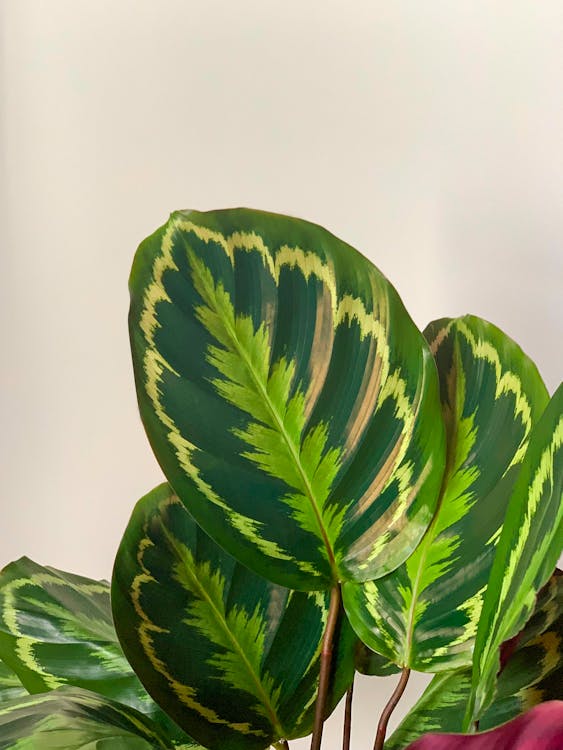
Identify the plant on its label
Check the botanical name when buying or troubleshooting. NC State Extension profiles several plants sold as calathea, including rattlesnake calathea (Goeppertia insignis) and pinstripe calathea (G. ornata). Requirements can differ, so avoid applying a single watering interval or humidity target to every plant in this group.
Choose filtered light
Place the plant where it gets bright, indirect light or filtered shade. Strong afternoon sun can fade or scorch leaves, while a very dim position may slow growth. Rotate the pot occasionally if the plant grows toward a window. Keep it away from hot radiators, air-conditioning vents, and sudden temperature changes.
Keep moisture even, not stagnant
Use a loose potting mix that retains some moisture but drains freely. Water when the surface begins to dry, then allow excess to leave the pot; do not leave the roots standing in a cachepot full of water. Brown tips may have several causes, including dry air, mineral buildup, inconsistent watering, or damaged roots. Change one condition at a time rather than adding water or fertilizer automatically.
Repot and respond to stress
Repot when roots have filled the container or the mix has compacted. Choose a pot with drainage and only a modest size increase. Inspect leaf undersides and stems for pests when leaves curl or become stippled. Remove dead leaves with clean scissors and avoid routine pesticide use without identifying the pest. For a cultivar-specific example, see NC State Extension’s rattlesnake calathea profile.
Choose a stable room and suitable position
Calathea and Goeppertia are grown mainly for patterned foliage. Place the plant where bright daylight reaches it without intense direct sun on the leaves. A shaded east-facing window or a position set back from a brighter window can work, but the right distance depends on glass, season, and the room. Watch how leaves respond over time instead of moving the pot every few days.
Keep the plant away from cold drafts, heating vents, and doors that open frequently in winter. Sudden temperature changes can stress leaves even when the room’s average temperature seems comfortable. A bathroom may be suitable if it has enough light and a stable temperature; humidity alone does not compensate for a dark room or waterlogged soil. Avoid placing the pot directly on a cold windowsill during winter nights.
Dust broad leaves gently with a damp cloth so the surface remains easy to inspect and receives light. Support each leaf with one hand while wiping to avoid tearing the petiole. Do not apply leaf-shine products or household cleaners. If you move a calathea outdoors in warm weather, make the transition gradual and keep it in filtered shade; these plants prefer stable indoor conditions in many non-tropical regions.
Several plants marketed under the old genus name have different mature size and leaf patterns. Goeppertia orbifolia, for example, has broad round leaves, while rattlesnake calathea has narrower patterned leaves. Compare the label and the actual form before choosing a location or container. NC State Extension’s Goeppertia orbifolia profile gives care information for that species specifically; do not treat its precise growing conditions as universal for every plant sold as calathea.
Check water quality when leaf tips brown
Brown edges can follow several stresses: dry air, inconsistent soil moisture, mineral accumulation, cold drafts, or root damage. A brown tip by itself does not identify the cause. First check whether the mix is dry, saturated, or compacted, and whether the plant has recently moved. Compare new leaves with older ones; a condition that has been corrected may still leave existing edges brown.
Some Goeppertia species are sensitive to fluoride or minerals in tap water. NC State Extension’s orbifolia profile notes brown tips associated with fluoride-containing tap water and suggests rain or distilled water for that species. If you try a different water source, change only that variable and observe new growth over time. Use clean collected rainwater and avoid water that may be contaminated by roof treatments or storage containers.
Do not respond to every brown tip by increasing watering. Calatheas need moisture but not stagnant roots. Water thoroughly when the mix begins to dry at the surface, then let excess drain from both the inner pot and cachepot. In cooler or darker months, the mix may dry more slowly. Keep a simple note of watering and room conditions so you can tell whether symptoms track a move, dry spell, or change in water source.
Misting is not a dependable way to raise room humidity and can leave water on foliage. If the air is persistently dry, a clean room humidifier can raise humidity for nearby plants; measure and maintain it without making the soil wet. Grouping plants may change the immediate microclimate slightly, but air still needs to move around foliage. Avoid placing a calathea on a tray where its pot base sits in water.
Build a low-stress weekly care routine
Once a week, look at the plant as a whole before doing anything: check new growth, leaf undersides, soil moisture, and drainage. Remove only fully dead leaves with clean scissors. Turn the pot a little if growth is strongly leaning toward the window, but avoid repeatedly relocating it. A stable light and watering pattern makes it easier to understand which conditions suit the species.
Water only when the mix is beginning to dry, and use enough water to wet the root zone before allowing it to drain. Do not leave a cachepot full of runoff. If the pot is too heavy to lift, use a finger or moisture probe near the root zone, but do not rely on a shallow surface reading. A dry surface can sit above moist soil, especially in a large container or cool room.
Feed conservatively during active growth according to a balanced houseplant fertilizer label. Avoid feeding a stressed plant, a recently divided clump, or a plant whose roots are staying wet. Fertilizer buildup can contribute to leaf-edge problems; if you see a crust on the mix, consider whether water quality or repeated feeding is involved before adding more nutrients.
When cleaning leaves, check for small moving insects, webbing, or sticky residue. Isolate a newly purchased plant until you have inspected it. If pests are present, identify them and use a control labeled for that indoor plant and pest. Do not use a household cleaner or an improvised mixture on foliage; it can injure leaves and make the diagnosis harder.
Diagnose curling, fading, and leaf damage
| Leaf change | Check first | Response |
|---|---|---|
| Leaves curl inward | Dry mix, low humidity, cold draft, or a sudden change in location | Check the root zone and room conditions; correct one stress at a time. |
| Brown tips or margins | Water source, mineral buildup, inconsistent moisture, or dry air | Review water quality and drainage; watch new leaves after a measured change. |
| Pattern fades or looks washed out | Too much direct sun or insufficient light | Move gradually to bright filtered light and observe the newest growth. |
| Yellow leaves with wet soil | Blocked drainage, oversized pot, or frequent watering | Empty standing water and inspect roots if the mix smells sour or plant declines. |
| Fine stippling, webbing, or sticky spots | Leaf undersides and stems for mites, aphids, or scale | Isolate the plant and identify the pest before treating. |
Some leaf movement during the day is normal for prayer plants and should not be mistaken for wilting. Use the overall plant, soil, and timing of symptoms to decide what changed. If multiple leaves deteriorate quickly or a pest cannot be identified, take clear photos and consult an extension or horticultural diagnostic service. Do not fertilize or spray before checking the roots and the plant’s environment.
Repot or divide only when there is a reason
Repot when roots circle tightly, water passes straight through because the mix has compacted, or the plant repeatedly dries much faster than expected. Use a clean pot with drainage and a loose, moisture-retentive but aerated houseplant mix. Move up only modestly; a large pot can stay wet around a small root system. Keep the rhizome and leaf bases at the same level rather than burying the crown.
Division is a way to separate a mature clump, not an annual maintenance task. Divide during active growth when the plant is healthy, keep roots attached to each section, and use clean tools. Pot each division into a container proportionate to its root mass. Keep it warm in filtered light while it re-establishes, and avoid frequent unpotting to inspect progress.
After repotting, return the plant to a stable spot and watch moisture carefully; a fresh mix can dry differently from the old one. Do not water according to the previous container’s schedule. If the plant loses a few older leaves after the change, monitor rather than repeatedly changing light, water, and fertilizer all at once.
Control indoor pests without damaging patterned leaves
Calatheas and Goeppertia can host pests such as spider mites, aphids, mealybugs, or scale. Inspect new plants before adding them to a collection, then check leaf undersides, petiole joints, and the growing crown regularly. Fine stippling or webbing may suggest mites; sticky residue can accompany sap-feeding insects. These signs are clues, not a final diagnosis, so use a hand lens or a clear close-up photo when needed.
If you find a pest, move the plant away from nearby houseplants and identify the insect before choosing a treatment. For a small infestation, wiping or rinsing leaves may remove some insects, but it can also leave water in the crown. Support leaves as you clean and allow them to dry with airflow. Do not use household dish soap, alcohol, or an improvised spray without checking whether it is safe for the plant and target pest.
Use only a product labeled for indoor ornamental plants and the pest you have identified. Follow instructions for dilution, ventilation, protective equipment, and keeping children and pets away. Test any permitted treatment on a small portion of foliage first if the label allows, since patterned leaves may be sensitive. Repeat inspection at the interval specified by the product; a single application may not reach hidden eggs or insects.
Keep a record of where the plant was purchased and when symptoms appeared. If several plants are affected, isolate them and check whether they share the same source or room. Clean tools and the surface around the pot. Avoid moving a heavily infested plant outdoors unless the treatment and outdoor conditions are appropriate; an indoor pest can spread to other plants and the plant may be damaged by sudden sun or temperature change.
NC State Extension’s Goeppertia orbifolia profile lists pests to watch for on that species and describes how direct sun, water quality, and overwatering can also cause symptoms. This is a useful reminder to check growing conditions alongside insects rather than assuming every damaged leaf needs pesticide.
Acclimate a newly purchased calathea
Keep a new calathea separate from other houseplants while you inspect it for pests. Check the leaf undersides, stems, and soil surface several times during the first days at home. Remove plastic sleeves that trap moisture, but do not repot immediately unless the mix is saturated, the roots are decaying, or the container cannot drain.
Place it in bright filtered light and give it time to adjust to your room. Store displays may have been grown in more humid conditions than a typical home, so avoid placing the plant beside a heater or cold draft. If leaves curl or tips brown, note the room, watering, and water source before changing anything. One calm adjustment at a time makes the response easier to read.
Once the plant is stable, move it only when necessary and keep the label with the pot. For species-specific advice, use the botanical name to find an extension or horticultural profile; names such as “calathea,” “prayer plant,” and “zebra plant” can refer to different plants.