

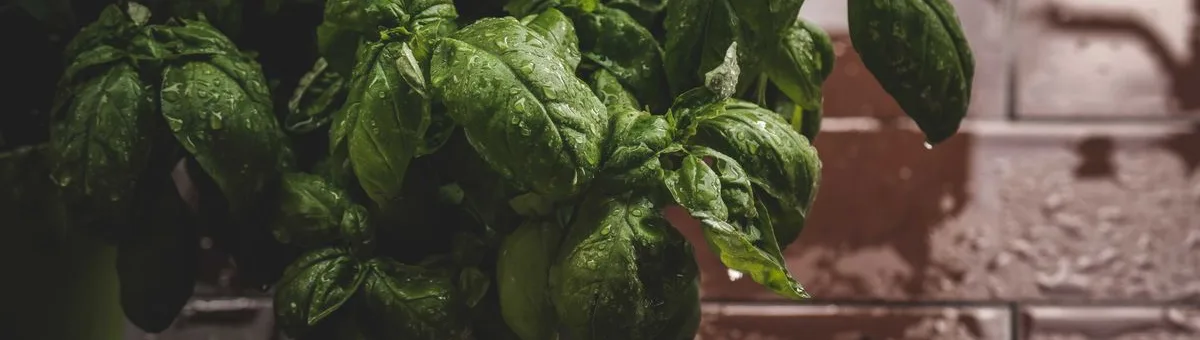
Growing basil in pots is the most popular culinary herb project in container gardening — and for good reason. A single healthy basil plant produces enough fresh leaves for salads, pasta, pesto, and drinks all summer long. The extraordinary flavor of freshly harvested basil versus the wilted supermarket product is one of the most dramatic taste comparisons in all of home food growing. Container basil also offers the convenience of kitchen-door harvesting — take only what you need, moments before using it.
Basil is a warm-season annual that genuinely loves heat. It is the herb for sunny patios, south-facing balconies, and rooftop gardens where other plants struggle. The two keys to successful container basil are sun (at least 6–8 hours daily) and consistent pinching to prevent flowering. Master these two things and you will have more basil than you can use all summer.
Best basil varieties for container growing
While all basil varieties can be grown in containers, some are significantly better suited to pot growing based on plant size, compactness, and production rate.
Best for culinary use (large-leaf varieties): Genovese basil is the undisputed standard for Italian cooking — large, smooth, cupped leaves with the classic intensely sweet basil aroma that defines pesto and caprese salad. It grows vigorously and responds excellently to regular pinching. Italian Large Leaf and Lettuce Leaf basil are similar giant-leaved varieties that produce impressive harvests quickly.
Best for compact container growing: Spicy Globe forms a naturally compact, globe-shaped mound (8–10 inches diameter) that requires minimal pinching to stay tidy. The small leaves have a spicy, concentrated basil flavor. Aristotle is a newer variety selected specifically for compact container growth — very uniform, very productive, and resistant to bolting. Both are excellent for window boxes and small pots where space is limited.
Best specialty varieties: Thai basil (Ocimum basilicum var. thyrsiflora) has a distinct licorice-anise flavor essential in Southeast Asian cooking and is significantly more heat-tolerant than Genovese — perfect for very hot sunny locations. Lemon basil has a delicate citrus note, stays relatively compact, and is excellent with seafood, in salads, and in beverages. Purple/Dark Opal basil is strikingly ornamental (deep purple leaves) and edible, making it an excellent choice for decorative herb gardens.
Container size and growing conditions
A single Genovese basil plant needs a minimum 6-inch pot (approximately 1 gallon); 8–10 inches is ideal for a large, productive plant. For multiple plants or a compact variety like Spicy Globe, a 12-inch wide pot comfortably holds 3–4 plants. Window box planters work well for a row of compact varieties.
Drainage is critical for basil — waterlogged roots are one of the fastest ways to kill a basil plant. Use a well-draining potting mix (add 20% perlite to standard mix) and ensure your container has generous drainage holes. Terracotta pots are excellent for basil because their porous walls allow slight air exchange and prevent overwatering. They do dry out faster than plastic, which means more frequent watering — but for basil, this is actually a safety feature against the root rot that kills plants overwintered in plastic pots with poor drainage.
Temperature is the other critical factor: basil suffers immediate damage at temperatures below 50°F (10°C) and is killed by frost. Never leave containers outdoors overnight when temperatures fall below 50°F. Wait until nighttime temperatures reliably exceed 55°F before moving containers outdoors in spring.
Top products for growing basil in pots
Bonnie Plants Genovese Basil — Live Plant Ready to Pot Up
- ✓ Genovese basil — the gold standard for Italian cooking and pesto
- ✓ Live plant ready to pot up immediately — skip the germination wait
- ✓ Bonnie Plants is the largest US live herb producer — reliable quality
- ✓ Pot up in an 8–10 inch container for maximum leaf production
No verified direct Amazon.com listing is linked for this exact model.
Indoor Herb Garden Kit with Self-Watering Pots — Basil, Thyme, and Mint
- ✓ Complete kit with self-watering pots, soil, and seeds for basil and companion herbs
- ✓ Self-watering design prevents the overwatering that kills most basil plants
- ✓ Perfect for kitchen windowsills and indoor herb gardens
- ✓ Includes growing instructions for beginners
No verified direct Amazon.com listing is linked for this exact model.
Miracle-Gro Indoor Potting Mix — Specifically Formulated for Container Herbs
- ✓ Specially formulated for indoor and container herb growing
- ✓ Excellent drainage while retaining moisture — prevents overwatering basil
- ✓ Contains coir and perlite for air-filled porosity that roots love
- ✓ Less prone to gnats than standard outdoor potting mixes
No verified direct Amazon.com listing is linked for this exact model.
Basil variety comparison table
| Variety | Leaf Size | Flavor Profile | Container Suitability | Best Use |
|---|---|---|---|---|
| Genovese | Large (2–3 in.) | Classic sweet basil | Excellent (8" pot+) | Pesto, caprese, Italian dishes |
| Spicy Globe | Tiny (1/4 in.) | Spicy, concentrated | Best (stays compact) | Window boxes, small pots |
| Thai basil | Medium (1 in.) | Licorice-anise | Excellent | Asian cooking, stir-fries |
| Dark Opal | Medium | Spicy, complex | Very good | Decorative, vinegar infusions |
Step-by-step growing guide
- Start from seed indoors 4–6 weeks before last frost, or buy a live plant from a garden center in late spring. Basil germinates in 5–10 days at temperatures above 65°F. Use a heat mat to accelerate germination if starting early in cool conditions.
- Pot up into an 8–10 inch container with well-draining potting mix. Genovese basil grows quickly and fills a large pot within 4–6 weeks in ideal conditions.
- Place in the sunniest available location — minimum 6 hours of direct sun. If indoors, place directly in front of a south-facing window or use a grow light running 14 hours daily.
- Water when the top inch of soil is dry — basil likes moisture but is very susceptible to root rot from overwatering. Always check before watering. Water at the base, not over the leaves (wet foliage invites fungal disease).
- Begin pinching when the plant has 3–4 pairs of true leaves. Pinch the growing tip back to a set of leaves just above the lowest 2 leaf pairs. This triggers lateral branching and creates a bushy, productive plant instead of a single tall stem.
- Fertilize lightly every 2–3 weeks with a diluted liquid fertilizer (half the recommended rate). Basil does not need heavy feeding — too much nitrogen produces lush plants with reduced aromatic oil concentration and weaker flavor.
- Watch for flower buds and remove them immediately. Check every 2–3 days in summer. Consistent bud removal extends productive leaf harvest by weeks.
Pinching technique for bushy, productive plants
Pinching is the single most impactful technique for container basil productivity. A pinched basil plant produces 3–5 times more harvestable leaves over a season than an unpinched plant that bolts quickly. The technique: find a stem with an emerging flower bud or growing tip. Trace the stem down to the first pair of healthy, fully developed leaves. Pinch the stem cleanly with your fingernails or scissors just above this leaf pair. Two new stems will emerge from the leaf axils at the pinch point — doubling the growing tips. Repeat this process on every stem, every 10–14 days, or whenever a flower bud appears.
After 4–6 weeks of pinching, a single Genovese basil plant becomes a dense, branching mound with dozens of growing tips, each capable of producing a harvest. The pinched stems themselves make excellent fresh basil — each trimmed stem is a usable harvest. This is the opposite of a vicious cycle: the more you pinch, the more you harvest, and the more the plant produces.
Propagating basil from cuttings
Every time you pinch stems from a productive basil plant, you can root the trimmed stems to create new plants for free. Select stems 4–6 inches long with at least 2 sets of leaves. Remove all leaves from the bottom 2 inches of stem. Place in a glass of room-temperature water in a warm, bright (but not direct sun) location. Change water every 2 days. Roots appear in 5–10 days. Once roots reach 1–2 inches, pot the cutting in moist potting mix, tent with a clear plastic bag for 5 days to maintain humidity, then remove the tent and treat as a normal potted basil plant. A single productive summer plant can yield 10–15 rooted cuttings, giving you basil plants to share or use indoors through fall.
Common problems and solutions
Wilting despite moist soil: Root rot from overwatering or poor drainage. Remove plant from pot, trim any dark mushy roots, allow to dry slightly, and repot in fresh mix with better drainage. Yellowing lower leaves: Normal aging (remove them) or overwatering. Check drainage. Pale, leggy growth: Insufficient light — move to a sunnier location or add grow light. Brown spots on leaves: Downy mildew (a fungal disease) — provide better air circulation, avoid wetting leaves, and remove affected leaves. Tiny white flies: Yellow sticky traps and insecticidal soap spray. Basil collapses overnight in fall: Cold damage — bring containers indoors before nighttime temperatures fall below 50°F.
Explore the complete Vegetable Garden hub for more growing guides.