

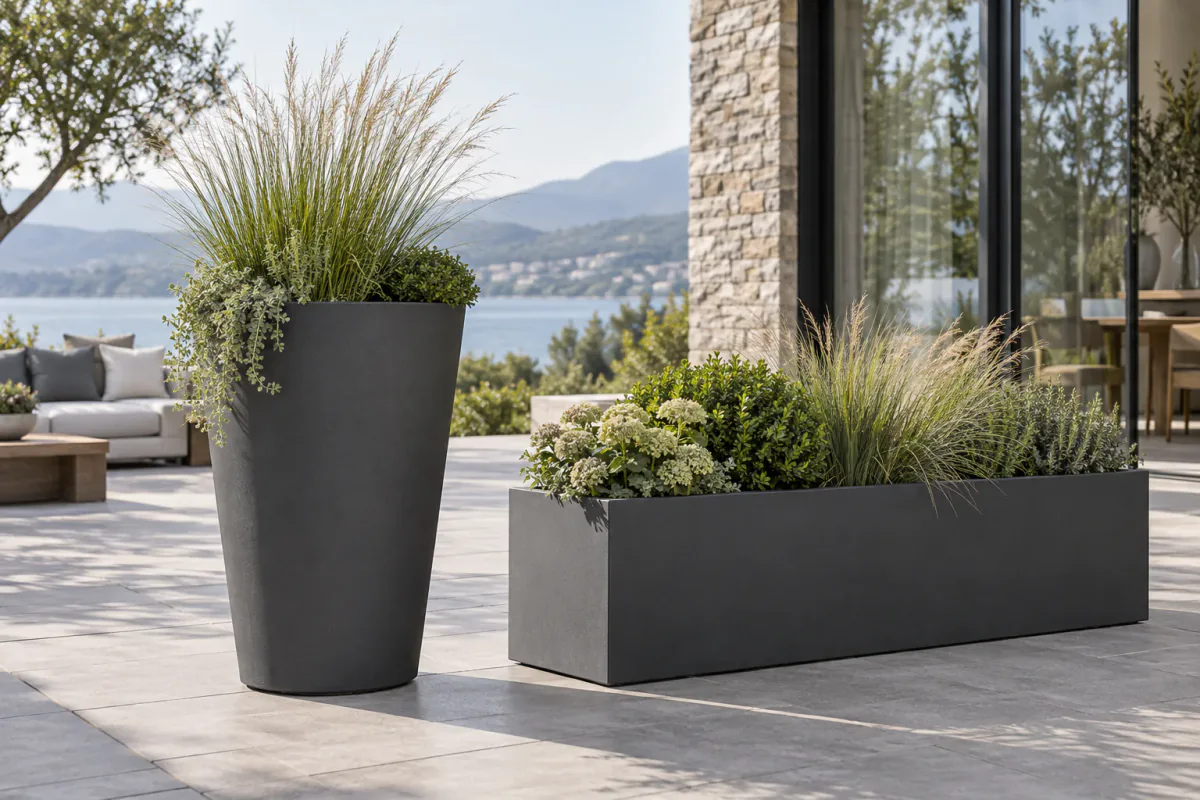
Read the planter specification
Start with the product’s stated material composition and dimensions. Some product listings use broad composite descriptions, so look for a technical sheet or manufacturer care instructions for the exact model. Confirm usable interior width and depth, rim thickness, empty weight and whether the listed measurements refer to the outside.
Do not treat terms such as “all-weather,” “lightweight” or “UV-resistant” as complete specifications. Check what exposure or temperature the claim covers, whether it applies to the finish or the whole planter, and what exclusions appear in the warranty.
Plan for weight and stability
The planter’s empty weight is only one part of the load. Growing medium becomes heavier when wet, and the plant adds weight and wind resistance as it grows. Check the surface or balcony load requirements and consider whether the container could tip or move in the planned position. If the site is exposed, use the manufacturer’s installation guidance and local building advice.
Choose a size that leaves the plant enough room without creating an unnecessarily heavy container. If moving the planter after filling would be difficult, position it first and use an inner pot or liner only when compatible with the drainage design.
Verify outdoor performance claims
For a patio or garden, ask the maker for the stated limits on sun exposure, temperature, frost, wind and cleaning products. These properties vary by product and finish; do not infer them from a photograph or from the word “fiberglass.” If a planter will be exposed to freezing conditions, get written care guidance for that model before leaving it outdoors.
Check whether the color or finish can be repaired and whether the manufacturer recommends a specific cleaning method. Avoid abrasive products or solvents unless the instructions say they are suitable. The University of Illinois Extension overview of container material choices offers general context, but it cannot verify the performance of an individual product.
Check drainage and installation
Confirm that water can drain from the root zone. Check the number, position and size of holes, and ask whether the maker permits drilling if none are present. Do not drill a finished planter without checking the instructions because you could damage the product or affect its warranty. The University of Illinois Extension guide to container drainage explains why an outlet matters.
Plan a catch tray or a location where runoff will not stain or damage a surface. Confirm that the planter can be raised or moved for cleaning and that it does not block a drain, route or access point.
Use a pre-purchase checklist
- What material and construction does the maker specify for this exact model?
- What are the usable interior dimensions and empty weight?
- Are drainage holes included, and can the product be modified?
- What outdoor, UV and temperature limits are documented?
- How should the surface be cleaned and maintained?
- Can the filled planter be supported, watered and moved safely?
Compare these answers with the intended plant and site rather than choosing from appearance alone. For a wider comparison, read the plant pots guide and our guides to ceramic and plastic pots.
Translate broad marketing claims into questions
Marketing words are a starting point for verification, not a substitute for a product specification. If a listing says “lightweight,” ask for the empty weight and compare it with the dimensions. If it says “weather-resistant” or “UV-resistant,” check the stated exposure, temperature range, finish coverage and warranty. A claim may apply to the surface treatment rather than every part of the planter.
Ask what the manufacturer means by fiberglass. Illinois Extension groups molded plastic, resin and fiberglass among container materials, but a general gardening guide cannot establish the composition or performance of a particular model. Look for a product sheet that identifies material layers, care instructions and any limits on drilling, cleaning or outdoor use. If the seller cannot provide that information, treat the property as unverified.
Compare the listed dimensions with your intended plant and space. The outside measurement may not show the interior volume, taper or opening width. Ask for a drawing or usable inside dimensions if a root ball must fit through a narrow rim or the planter must sit inside a fixed recess.
Check the planter against its location
| Location | Questions to answer | Evidence to request |
|---|---|---|
| Indoor floor or shelf | Can the surface take the filled load, and how will runoff be caught? | Empty weight, drainage design, saucer compatibility |
| Sunny patio | What sun and temperature exposure does the maker allow? | Written exposure limits and finish-care instructions |
| Balcony or roof terrace | Can the site support and secure the container when filled and exposed to wind? | Filled-load estimate, installation guidance and site requirements |
| Cold or wet location | What temperature, standing-water and winter limits apply? | Temperature limits, drainage details, storage instructions |
University of Illinois Extension notes that plastic, resin and fiberglass containers can be lighter than many other materials, which may matter for moving them but can also contribute to tipping when a plant is top-heavy. Treat this as a general planning consideration, not a guarantee about a particular fiberglass model. Consider the planter’s base, plant height, wind exposure and any maker-provided securing method.
Set the planter up before adding growing medium
Place the empty planter in its final position before filling it. Confirm that doors, drains, walkways and irrigation access remain clear. If it needs to sit on casters or a platform, check that the base stays stable and that the support is appropriate for the complete wet load. Moving it after planting can damage roots or the finish.
Confirm drainage before planting. Check whether holes are included, where water exits and whether the product instructions permit additional holes. If the maker recommends an inner pot, verify that it can fit through the opening and be removed for watering or repotting. Test the runoff route with a small amount of water before filling the entire container. Illinois Extension’s container drainage options explain why the root zone needs a path for excess water.
Match the medium to the plant and pot; do not assume a large decorative planter needs to be filled to the top with growing mix if the maker offers a compatible insert. Any lightweight fill or liner must be appropriate for the product and must not obstruct drainage or reduce stability.
Keep model and care information together
Save a copy of the product specification, care sheet and warranty with the exact model name and purchase date. If the finish changes or a crack appears, those records help determine whether the condition is covered and which cleaning or repair method the manufacturer permits. Avoid applying paint, solvents, sealants or abrasive cleaners without checking those instructions.
After planting, inspect the planter and its base when you water. Look for movement, pooled runoff, blocked outlets or a new change in the finish. Recheck stability as the plant grows and becomes top-heavy. A plant that needs regular rotation or winter shelter may be easier to manage in a smaller movable pot or a separate inner container.
Fiberglass is one of several broad material labels used for planters. Compare the individual specifications with the general plant pots guide, then consider whether ceramic or plastic better fits your drainage, handling and location requirements.
Inspect the planter when it arrives
Compare the delivered planter with the exact model, dimensions, finish and drainage description on the order. Check for cracks, deep scratches, an uneven base, blocked holes or a rim that prevents the intended inner pot from fitting. Photograph damage before installing or filling it and contact the seller or maker while the purchase record is available.
Do a dry fit in the planned position. Check door and path clearance, whether the base sits level and where runoff will go. If the planter will be fixed, raised or used on a balcony, follow the site and hardware instructions before loading it. Do not drill, cut or seal the container unless the manufacturer permits that modification; it can affect the finish, drainage or warranty.
Once the empty checks are complete, test the drainage route with a small amount of water and let it dry before adding medium. Keep the product sheet and any care notes with your model information. This simple record helps you distinguish product guidance from generic advice about containers.