

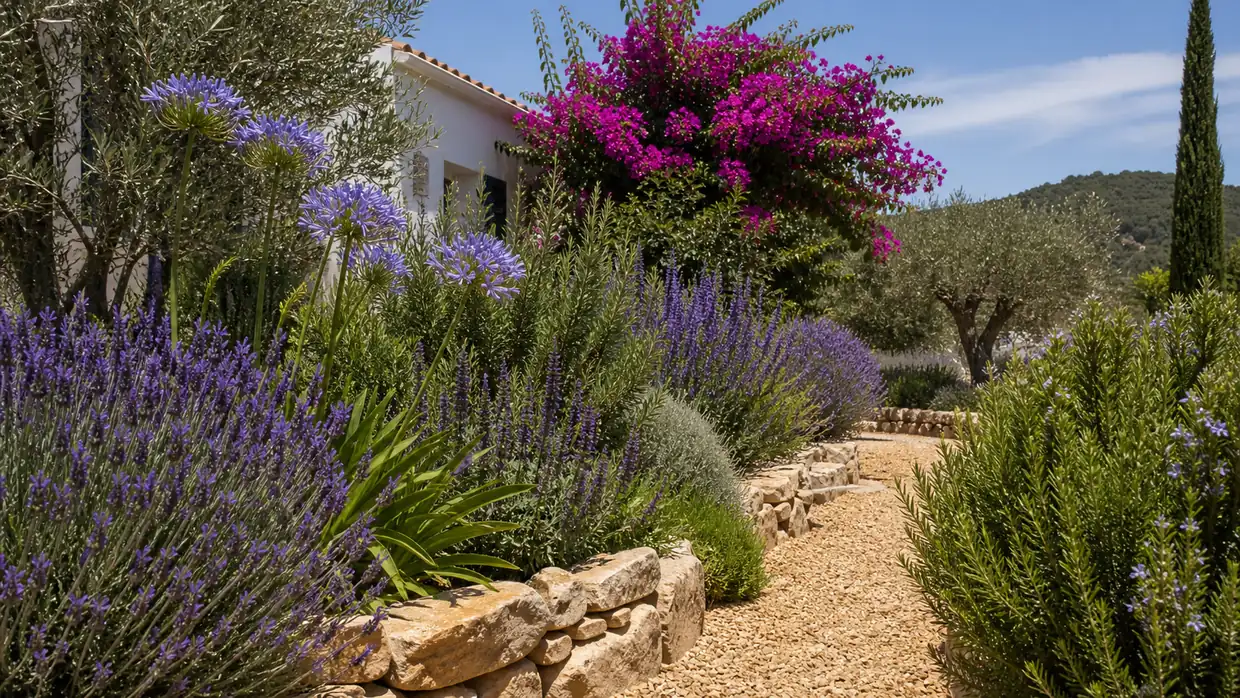
Read the site before choosing outdoor plants
Observe the planting area at different times of day and, if possible, after rain. Note where direct sun falls, where buildings create shade, where wind funnels and where water collects or drains quickly. Hard surfaces can reflect heat, while a wall or fence can create a sheltered pocket. These conditions often change across a small garden, so assess each bed or container location separately.
Check the soil and existing drainage before buying plants. If a location stays wet, choose a species suited to that condition or address the drainage problem rather than planting into it and hoping for the best. For a container, also measure the available depth and check how runoff will be managed.
Match the plant to the space and season
Use a nursery label or trusted regional horticultural source to check mature height and spread, light and water needs, soil preference and likely winter behaviour. Give a shrub or perennial enough room for its adult size; a small pot at the garden centre does not show the space it will need later. If the planting area is exposed, ask whether the plant needs shelter while establishing.
For flowering displays, combine plants with different bloom times and heights without crowding them. For a warm, sunny border, plants such as lavender or bougainvillea may be relevant depending on the local climate, but their needs differ; read the dedicated bougainvillea guide and compare it with your site. Geraniums are another common container and border choice; see our geranium guide for plant-specific advice.
Check whether a species is native, suitable or invasive in your region before planting it. For Spain, MITECO publishes information on invasive alien plants. Consult regional rules and local guidance as well; this Spanish source does not describe status in every country.
Give new plantings a good start
Plant at the time recommended for the species and local climate. Before digging, check underground services and irrigation lines. Prepare a hole appropriate to the root ball, handle roots carefully and water in according to regional instructions. Do not bury a tree or shrub deeper than its nursery guidance recommends. The University of Minnesota Extension guide to planting and transplanting trees and shrubs explains establishment practices for its region; adjust timing and species advice for your own climate.
During establishment, check the root zone rather than watering by a preset schedule. Rainfall may wet the surrounding bed without reaching a root ball, while clay soil can stay wet after the surface looks dry. Recheck after heat, wind or a change in weather and adjust to the plant’s response. Add support only when needed and remove or adjust it according to plant-specific guidance.
Plan outdoor containers and access to water
Choose a pot with suitable drainage and enough root space for the plant’s mature size. Place it where you can water and inspect it without carrying a full container over an unsafe route. In an exposed position, check whether the pot or plant needs securing. Do not use a decorative cover as a planted pot unless it can drain or you can remove standing water.
Containers can dry differently from garden beds because their size, material and exposure affect the medium. Check moisture directly and plan how you will collect runoff. If plants need frequent watering, group pots where a hose or watering can can reach them; do not use one schedule for every container.
Check establishment through the first season
Record the planting date, plant identity, location and watering observations. If growth is weak, first compare actual light, moisture and drainage with the plant’s needs. Look for pest signs and changes after heat, frost or wind before applying a treatment or adding fertilizer.
Replace failed plants only after identifying what the site taught you. A shade issue, poor drainage or limited root space is unlikely to improve by buying the same plant again. For a broader plant selection overview, return to the plants guide; for seasonal colour in beds or pots, see annual flowers.
Make a simple site map before buying plants
A quick sketch prevents the common mistake of buying for a photograph instead of for a garden. Draw beds, walls, paths, paving, fences and water points. Mark where direct sun falls in the morning and afternoon, where wind is strongest and where rainwater collects. Note the width and height available at planting maturity, not only the empty gap you see today.
| Site observation | Why it matters | What to record |
|---|---|---|
| Sun through the day | Plant labels describe light needs; nearby shade changes exposure | Approximate sun window and seasonal shade sources |
| Drainage after rain | Persistent wetness and rapid drying call for different choices | Where water stands and how quickly it drains |
| Wind and reflected heat | Exposed corners and hard surfaces can alter plant stress | Shelter, prevailing wind and nearby paving or walls |
| Water access | A plant must be practical to establish and maintain | Reach of hose or watering can and runoff route |
Repeat observations at different times instead of assuming one sunny afternoon represents the whole season. A wall can cast a long winter shadow, while a deciduous tree can allow spring light and provide summer shade. Small site differences can make two neighboring beds suitable for different plant groups.
Use regional climate guidance, not a generic zone
Planting windows depend on local frost, heat, altitude, rainfall and whether a plant is dormant or actively growing. A climate zone or planting calendar from another country can be useful context but should not replace local instructions. Check a regional extension service, botanical garden, nursery or public authority for the planting time and overwintering advice relevant to your area.
For Spain, check regional information before planting unfamiliar non-native species. MITECO’s inventory covers invasive alien vascular plants in Spain, but status and rules may differ by region and by country. Use the MITECO reference as a starting point and verify local requirements before purchase.
Choose plants for a specific role as well as a site: evergreen structure, seasonal flowers, screening, groundcover or wildlife value. A combination can include different heights and bloom periods, but each plant still needs suitable spacing and access. For seasonal colour in a bed or container, compare our annual flower guide; for a warm sunny site, read the relevant plant-specific bougainvillea or geranium guide.
Use a planting-day checklist
- Confirm the plant identity, mature size and local planting window.
- Check the selected site’s sun, drainage, wind exposure and water access.
- Water the nursery container as instructed and prepare the planting area before removing it.
- Handle the root ball gently and follow species-specific planting depth guidance.
- Backfill with the site soil or an appropriate medium as local guidance directs; do not bury a trunk or crown too deeply.
- Water in and label the plant so you can monitor it through establishment.
- Keep access clear for watering, weeding and inspection.
The University of Minnesota Extension page on planting and transplanting trees and shrubs gives detailed advice for its climate. Follow a local source for timing and species-specific steps where your conditions differ.
Track establishment and adjust by evidence
New plants need observation, not an automatic watering chart. Check moisture in and around the root ball, compare it with nearby soil and account for rainfall. Windy or hot weather may dry the planting faster; heavy soil can remain wet even when the surface looks dry. Adjust based on the root zone and the plant’s response.
During the first growing season, look for new growth, leaf scorch, wilting, pest signs, broken ties and shifting mulch. If a tree or shrub needs support, follow regional guidance and check that ties do not tighten around the stem. Remove supports when no longer required according to the source you are following.
At the end of the season, record what worked and what did not. A plant that fails in a shaded or wet site may not be rescued by more fertilizer. Reassess the site map before replacing it. For broader plant choices, return to the plants guide.