

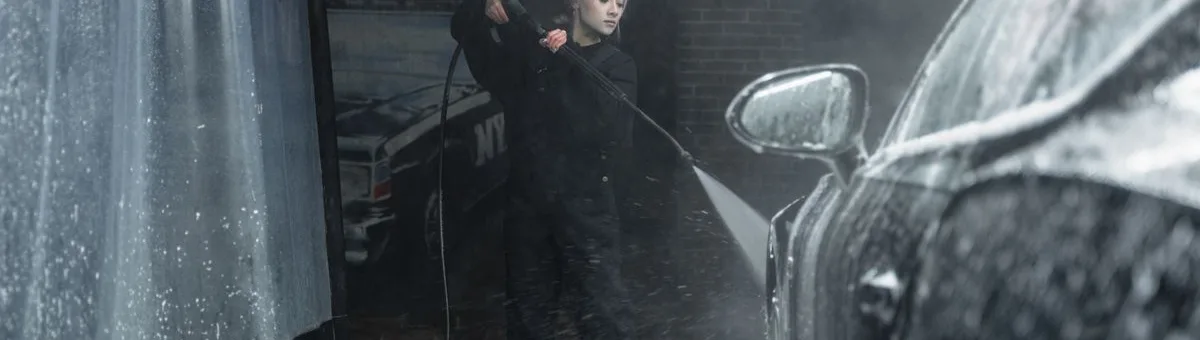
Electric vs Gas Pressure Washers: Which Do You Need?
The electric vs gas choice is the most fundamental decision, and for most homeowners it's straightforward: buy electric unless you have a specific reason not to. Here's why.
Electric Pressure Washers
Electric pressure washers dominate the consumer market because they cover the full range of residential cleaning tasks at a lower price, with near-zero maintenance and instant startup. A quality 13–15 amp electric model (like the Sun Joe SPX3000 at 2,030 PSI / 1.76 GPM) handles driveways, patios, siding, decks, fences, cars, outdoor furniture, and gutters without ever needing to mix oil, pull a cord 12 times, or worry about carburetor gum from sitting over winter.
Electric models weigh 20–30 lbs compared to 60–80 lbs for gas, making them easy to carry up stairs or move around the property. They run at 80–85 dB — noticeably quieter than the 90–95 dB of gas engines. The trade-off is the cord: you're limited to 100 feet from the outlet, though an extension cord plus the built-in hose length (typically 20–25 feet) covers most properties.
Sun Joe SPX3000 Electric Pressure Washer, 2030 PSI 1.76 GPM
- ✓ 2,030 PSI / 1.76 GPM — 3,573 Cleaning Units
- ✓ 14.5 amp motor with two detergent tanks (0.9L each)
- ✓ 5 quick-connect nozzles: 0°, 15°, 25°, 40°, soap
- ✓ 20-foot high-pressure hose + 35-foot power cord
No verified direct Amazon.com listing is linked for this exact model.
Gas Pressure Washers
Gas pressure washers make sense when you need sustained high pressure beyond what electric models offer: stripping paint, cleaning heavily stained concrete driveways, blasting mold off large wooden structures, or professional/semi-professional use over many hours. Consumer gas models typically run 2,500–3,200 PSI at 2.0–2.5 GPM — meaningfully more cleaning power than electric, at the cost of higher weight, regular oil changes, spark plug replacement, and seasonal fuel stabilization.
If your driveway has years of oil stains embedded in porous concrete, or if you're cleaning a 1,000+ square foot deck for repainting, the extra power of a gas washer is productive. For the other 90% of homeowners washing a patio every month or two, electric is the right call.
Buying Guide: PSI, GPM, and Everything That Matters
Pressure washer specs are cluttered with numbers that manufacturers use to maximize the marketing impression. Here's what actually matters.
PSI and GPM: The Two Numbers That Determine Cleaning Power
PSI (pounds per square inch) measures the force of the water stream — how hard it hits the surface. GPM (gallons per minute) measures the volume of water flow — how quickly it rinses away loosened grime. Both matter, and the product of the two — Cleaning Units (PSI × GPM) — is a better single-number proxy for real-world performance than either alone.
Here's a practical reference for residential tasks:
- 1,500–1,800 PSI / 1.2 GPM: Car washing, outdoor furniture, plastic/vinyl surfaces, light mildew on siding. Entry-level machines.
- 1,800–2,100 PSI / 1.4–1.76 GPM: The sweet spot for most homeowners. Handles concrete driveways, wood decks, fences, gutters, and moderately stained surfaces without risk to most materials.
- 2,500+ PSI / 2.0+ GPM: Heavy concrete cleaning, paint stripping, large-area commercial-adjacent jobs. Gas territory.
Avoid being seduced by "max PSI" ratings — these are measured at zero flow (the nozzle fully closed) and don't represent operating pressure. Real working PSI is 10–20% lower. Manufacturers who advertise "2,500 PSI" on an 11-amp motor are stretching the truth; a 13–15 amp motor is the minimum for honest 1,900–2,100 PSI at working pressure.
Nozzle Types Explained
The five color-coded quick-connect nozzles that come with most pressure washers determine the spray angle and effective pressure at the surface:
- Red (0°): Maximum pressure, single point. Use for extremely stubborn rust or concrete stains in a small area. Never use on cars, wood, or siding — will damage the surface.
- Yellow (15°): High-pressure strip, used for concrete and masonry. Keep moving constantly to prevent etching.
- Green (25°): The most versatile nozzle. General cleaning of most surfaces — driveways, decks, vehicles (from appropriate distance), siding.
- White (40°): Gentler, wide-angle spray. Windows, screens, delicate surfaces, vehicles up close.
- Black (soap tip): Low pressure to draw detergent from the tank. Always use the soap tip when applying detergent; high-pressure tips bypass the injector.
Turbo nozzles (sold separately) rotate a 0° stream in a circular pattern at 25° effective coverage — effectively doubling cleaning speed on concrete and brick while using a single 0° point of water. Worth the $20–$30 investment if you do a lot of concrete cleaning.
Portability and Storage
Most electric pressure washers in the 1,700–2,100 PSI range are compact and relatively light (18–32 lbs), easy to carry with one hand and store vertically in a garage corner. Look for onboard storage for nozzles, a hose reel or wrapping hooks, and a cord wrap — these details make a big difference in how pleasant the machine is to use and store. Wheeled cart designs (like the Sun Joe SPX3000) are slightly heavier but significantly easier to move across a large property.
Top Pressure Washer Picks for 2026
For detailed side-by-side reviews, see our dedicated guides:
- Best Electric Pressure Washers 2026 — Sun Joe SPX3000, CRAFTSMAN CMEPW1700, and Ryobi RY141900 compared
- Best Gas Pressure Washers 2026 — High-PSI gas washers for heavy-duty cleaning
CRAFTSMAN CMEPW1700 Electric Pressure Washer, 1700 PSI 1.2 GPM
- ✓ 1,700 PSI / 1.2 GPM — lightweight at 15 lbs
- ✓ 1,700-watt motor — ideal for cars and light surfaces
- ✓ Onboard detergent tank with foam applicator
- ✓ 25-foot hose + 35-foot GFCI power cord
No verified direct Amazon.com listing is linked for this exact model.
Ryobi RY141900 Electric Pressure Washer, 2000 PSI 1.2 GPM
- ✓ 2,000 PSI / 1.2 GPM — 13 amp universal motor
- ✓ Integrated hose reel keeps cord tangle-free
- ✓ 3 quick-connect nozzles + soap applicator
- ✓ Compatible with Ryobi surface cleaner and turbo nozzle accessories
No verified direct Amazon.com listing is linked for this exact model.
What Can You Clean with a Pressure Washer?
The range of surfaces that benefit from pressure washing is wider than most people realize. Here's a practical breakdown by task and what pressure to use:
Concrete and brick (driveways, patios, walkways): Use 1,800–2,500 PSI with a 25° nozzle, holding the wand 6–8 inches from the surface. Work in overlapping passes. For oil stains, apply degreaser first, let it dwell 10 minutes, then pressure wash. A turbo nozzle cuts cleaning time in half on large concrete areas.
Wood decks and fences: Use 1,200–1,500 PSI with a 40° nozzle. Always spray along the grain, not across it. High pressure across the wood grain raises the grain and can splinter soft pine or cedar. For decks you plan to stain or seal, follow with a deck brightener to neutralize the pH after cleaning.
Siding (vinyl, wood, fiber cement): Use 1,000–1,600 PSI with a 40° nozzle held perpendicular to the surface. Never shoot up under the laps — water intrudes behind the siding. Keep the nozzle at least 12 inches away. For high sections, an extension wand reduces the need to use a ladder while pressure washing (a genuinely dangerous combination).
Vehicles: Use 1,200–1,500 PSI with the 40° white nozzle, minimum 12 inches from the surface. Foam cannon attachments (compatible with most electric washers) pre-soak the surface and loosen grime before contact washing, reducing swirl marks. Never pressure wash wheel bearings, door seals, or engine bays.
Outdoor furniture (metal, resin, fabric sling chairs): Use 40° nozzle at low pressure. For fabric sling chairs, pressure washing restores them better than scrubbing and is significantly faster.
How to Use a Pressure Washer Safely
Pressure washers are powerful enough to cut skin. The red 0° nozzle at full pressure can injure exposed skin at several feet of distance. The safety rules are simple but non-negotiable:
Never point the wand at a person or animal, even at low pressure. Always use the trigger safety lock when not actively spraying. Wear closed-toe shoes — bare feet and sandals are not appropriate when using a pressure washer on wet surfaces. Use the 0° and 15° nozzles only on hard, inert surfaces (concrete, masonry) — never on skin, glass, or delicate materials.
Start every session on a test patch in an inconspicuous area — the corner of a patio, the back edge of a fence board — to verify the pressure setting is appropriate for the surface. It takes 30 seconds and can prevent stripping paint from wood or etching soft concrete.
For two-story or elevated work, avoid using a ladder while holding a pressurized wand. The reaction force of the wand (especially at 2,000+ PSI) is enough to destabilize your footing. Extension wands and gutter cleaner attachments allow you to reach from the ground.
Pressure Washer Maintenance
Electric pressure washers need minimal maintenance: flush clean water through the pump for 60 seconds after each use (run the machine with just water, no detergent, before shutting off). This prevents soap residue from crystallizing in the pump head, which is the primary cause of pump failure.
If storing for more than 30 days (especially over winter), run pump protector/antifreeze solution (sold at any hardware store, ~$5) through the pump to prevent internal corrosion and seal damage from freezing. Drain the hose completely and store it loosely coiled to prevent kinks. Store the machine upright or horizontally as specified in the manual — some pumps leak oil if stored incorrectly.
For gas pressure washers: change the oil after the first 5 hours and then every 50 hours of operation or annually. Replace the spark plug annually. Use fuel stabilizer in the tank before any storage over 30 days, and run the machine for 2 minutes to circulate the treated fuel through the carburetor.