

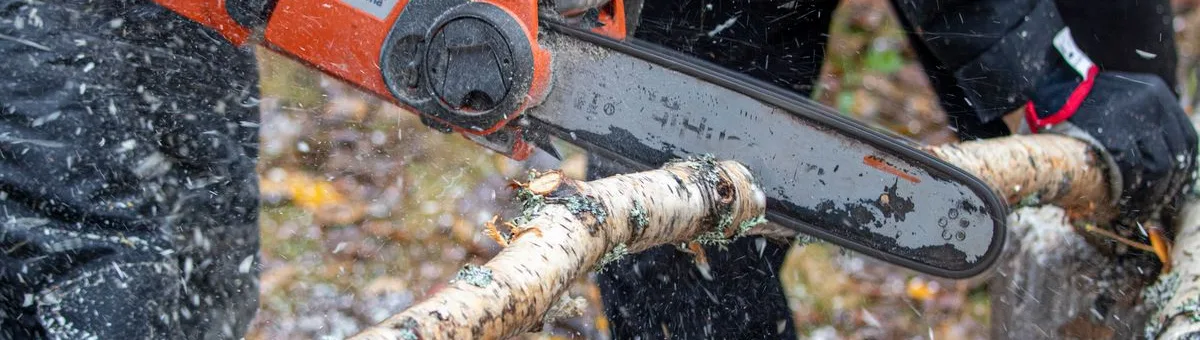
Who Actually Needs a Gas Chainsaw
Before buying a gas chainsaw, it's worth honestly evaluating whether you need one. Most homeowners doing occasional pruning, storm cleanup, or modest firewood cutting are better served by a quality 40V battery saw — with no fuel to manage and no maintenance headaches. Gas chainsaws earn their place when:
You're cutting more than 2 cords of firewood per season. You need to work far from any power source — remote property, deep woods, rural farmland. You regularly fell trees over 14 inches in diameter. You need to work all day without stopping for battery charges. You're doing professional or semi-professional work where maximum power and durability are paramount.
If your use case fits any of those, a 40–55cc gas saw is the right tool. If it doesn't, consider our battery chainsaw guide — you'll likely be happier with the convenience.
Our Top 3 Gas Chainsaws for 2026
We evaluated gas chainsaws on engine displacement, bar length, brand support and parts availability, user feedback, and overall value. These three models represent the best options across premium, budget, and power-value categories.
1. Husqvarna 450 Rancher 20-Inch — Best Overall
The Husqvarna 450 Rancher is the chainsaw that professionals recommend to serious homeowners and that serious homeowners keep recommending to each other. It has earned its reputation through consistent real-world performance, exceptional build quality, and the backing of a brand that has been making professional forestry equipment for over a century.
The 50.2cc X-Torq engine delivers 3.2 HP — enough to handle any homeowner task and well into semi-professional territory. The 20-inch bar manages logs up to 18 inches in diameter. Husqvarna's X-Torq engine technology reduces fuel consumption by up to 20% and emissions by 75% compared to conventional 2-stroke engines, which translates to better fuel economy and slightly less exhaust smell during extended use.
Husqvarna 450 Rancher 20-Inch Gas Chainsaw, 50.2cc X-Torq Engine
- ✓ 50.2cc X-Torq 2-cycle engine — 3.2 HP
- ✓ 20-inch bar — handles logs up to 18 inches diameter
- ✓ Smart Start technology — easy cold starts
- ✓ LowVib anti-vibration system — reduces fatigue
No verified direct Amazon.com listing is linked for this exact model.
Beyond the engine, the Husqvarna 450 Rancher includes Smart Start technology for reliable cold starting (a genuine advantage if you've wrestled with hard-starting gas saws before), an inertia-activated chain brake, and Air Injection centrifugal air cleaning that removes particles before they reach the air filter. The LowVib anti-vibration system reduces handle vibration significantly, which matters during long cutting sessions.
The premium price is real, but so is the quality difference. Husqvarna saws are widely serviced by dealers across the US, parts are readily available, and these saws are known to run reliably for decades with proper maintenance. For buyers who want to buy once and not worry about it, the 450 Rancher justifies the investment.
2. Poulan Pro PR4218 18-Inch — Best Budget Gas Saw
The Poulan Pro PR4218 targets the buyer who needs a genuine gas chainsaw capability at a price well below premium brands. At 42cc with an 18-inch bar, it has enough power and bar length for the majority of homeowner tasks — limbing, storm cleanup, cutting firewood from logs up to 16 inches in diameter, small to medium tree felling.
Poulan Pro is owned by Husqvarna Group, which gives it better engineering DNA than its price point might suggest. The PR4218 is built in the US, includes a case for storage, and comes with a two-year limited warranty. It's not as refined as the 450 Rancher — the vibration is higher, the engine is louder, and the air filter isn't as advanced — but for occasional use it delivers solid performance.
Poulan Pro PR4218, 18-Inch 42cc 2-Cycle Gas Powered Chainsaw, Case Included
- ✓ 42cc 2-cycle full-crank engine
- ✓ 18-inch bar for logs up to 16 inches
- ✓ Carrying case included — easy storage
- ✓ 2-year limited warranty
No verified direct Amazon.com listing is linked for this exact model.
The PR4218's strongest use case is seasonal homeowners who want a capable gas saw for a few weekends per year without the Husqvarna price tag. It starts reasonably well when fuel is fresh, cuts steadily through medium logs, and is available for under $200 at most major retailers. As with all gas saws at this price level, the key to longevity is using fresh fuel, draining the tank before storage, and replacing the air filter and spark plug annually.
3. DYRABREST 58CC 20-Inch — Best Power-for-Price
The DYRABREST 58CC represents a category of higher-displacement chainsaw sold under various brand names on Amazon — typically manufactured in China with specifications that rival mid-range professional saws at a fraction of the cost. The 58cc engine is larger than the Husqvarna 450 Rancher's 50.2cc, and the 20-inch bar is equally capable on paper. Real-world performance is more nuanced.
Where the DYRABREST makes sense: buyers who cut large quantities of wood and want maximum displacement per dollar, users who are mechanically inclined and comfortable adjusting a carburetor or cleaning an air filter, and buyers who understand they're trading brand support and long-term reliability for initial cost savings. It's not a saw for beginners or users who want minimal maintenance.
DYRABREST 58CC 2-Cycle Gas Chainsaw 20-Inch Bar and Chain
- ✓ 58cc 2-cycle engine — more displacement than mid-range branded saws
- ✓ 20-inch bar for heavy cutting tasks
- ✓ Tool-less chain tensioning and automatic oiler
- ✓ Includes bar cover, wrench, and spare parts kit
No verified direct Amazon.com listing is linked for this exact model.
The honest caveat with unbranded or lesser-known gas saws: quality control is less consistent than established brands, parts availability can be limited after a few years, and carburetor tuning may be required out of the box. The spare parts kit included in the package is an acknowledgment of this reality. For buyers who know what they're getting into and value displacement per dollar, it's a reasonable choice. For everyone else, the Poulan Pro or Husqvarna is more predictable.
Gas Chainsaw Comparison Table
| Model | Engine | Bar Length | Price Range | Best For |
|---|---|---|---|---|
| Husqvarna 450 Rancher | 50.2cc | 20 in | $$$ | Serious homeowners, reliability |
| Poulan Pro PR4218 | 42cc | 18 in | $$ | Budget buyers, occasional use |
| DYRABREST 58CC | 58cc | 20 in | $$ | Power per dollar, mechanically savvy |
How to Choose a Gas Chainsaw: Engine Size, Bar Length & Features
Engine displacement (cc) determines power. Light homeowner use (pruning, small firewood, branches up to 10 inches): 30–40cc. Medium homeowner use (firewood, trees up to 14 inches, occasional felling): 40–50cc. Heavy use (large trees, frequent felling, semi-professional work): 50cc+. Most homeowners fall in the 40–50cc range — choosing a 58cc saw for weekend yard work is buying more than you need.
Bar length should match your actual logs. A 16-inch bar handles logs up to 14 inches. An 18-inch bar handles up to 16 inches. A 20-inch bar handles up to 18 inches. Longer bars add weight and reduce maneuverability in tight spaces. Match bar length to your largest realistic cutting diameter — not the theoretical maximum.
Brand support matters for gas saws. Unlike electric tools that simply work or don't, gas saws require carburetor tuning, parts replacement, and occasional professional service. Husqvarna and STIHL have the widest dealer networks in the US, meaning you can get parts and professional service almost anywhere. Poulan Pro (Husqvarna-owned) has reasonable support. Off-brand saws may leave you sourcing parts internationally after a few years.
Anti-vibration systems reduce fatigue. Premium saws like the Husqvarna 450 Rancher include LowVib or equivalent systems that significantly reduce handle vibration. This matters if you cut for more than 30 minutes at a stretch — continuous high vibration causes hand and arm fatigue, and over years, can contribute to vibration-related health issues. Budget saws lack this feature, which is acceptable for occasional use.
Gas Chainsaw Maintenance Essentials
Gas chainsaws require more maintenance than any other type, but the tasks are straightforward once you establish a routine. Before each use: check bar oil level, check chain tension, and inspect the chain for dull teeth or damage. After each use: brush sawdust from the bar groove, air filter cover, and sprocket. Every 10 hours of use: clean the air filter (tap out sawdust; wash in warm soapy water if very dirty). At season end: drain the fuel tank completely or add fuel stabilizer, clean the exterior, and store in a dry location.
Annual service (or every 50 hours): replace the spark plug, clean or replace the air filter, check and adjust the carburetor, sharpen or replace the chain. Many users take their saw to a dealer for annual service — it typically costs $40–$80 and ensures the saw starts reliably next season.
The most common gas chainsaw problems — hard starting, running rough, cutting slowly — almost always trace back to three causes: stale fuel, a dirty air filter, or a dull chain. Addressing these three things first solves the majority of issues without any mechanical knowledge.
Ready to compare all chainsaw types side by side? Visit our complete chainsaw buying guide for a full overview of gas, battery, and corded electric options across all budgets and use cases.
Winterization and Off-Season Storage
Proper winterization is critical for maintaining your gas chainsaw and ensuring it starts reliably when you need it again. Gas chainsaws left untreated over winter often develop clogged carburetors and fuel varnish buildup, making spring startup frustrating and expensive. The key steps include draining or stabilizing fuel, flushing the fuel line, and storing the saw in a dry location protected from moisture and extreme temperatures. Many operators prefer fuel stabilizer over complete draining because it keeps a thin protective coating on internal fuel system components, preventing oxidation and rust during idle months. If you choose to drain the tank, you'll need to run the engine until all fuel is consumed from the carburetor, which typically takes 5–10 minutes of operation after the tank runs empty.
Storage location matters significantly for chainsaw longevity. A climate-controlled garage, shed, or workshop is ideal—somewhere with stable humidity and temperature fluctuations no greater than 40°F (4°C) between seasons. Avoid damp basements, uninsulated sheds, or outdoor storage where moisture and extreme cold can corrode the spark plug, carburetor jets, and cylinder walls. Before storing, drain the oil tank or mark the level and check it monthly to ensure seals aren't weeping. Remove the spark plug and squirt a small amount of two-stroke engine oil directly into the spark plug hole, then pull the starter cord a few times to distribute the oil and prevent rust inside the cylinder. Store the chainsaw with the chain slack and tension adjustment in the middle position—this prevents spring tension stress during months of inactivity. Keep fuel and oil containers sealed and away from the saw itself; vapors can degrade rubber seals and cause corrosion. Plan to do a full service inspection—cleaning the air filter, checking the spark plug, and testing fuel flow—before using the chainsaw again in spring.