

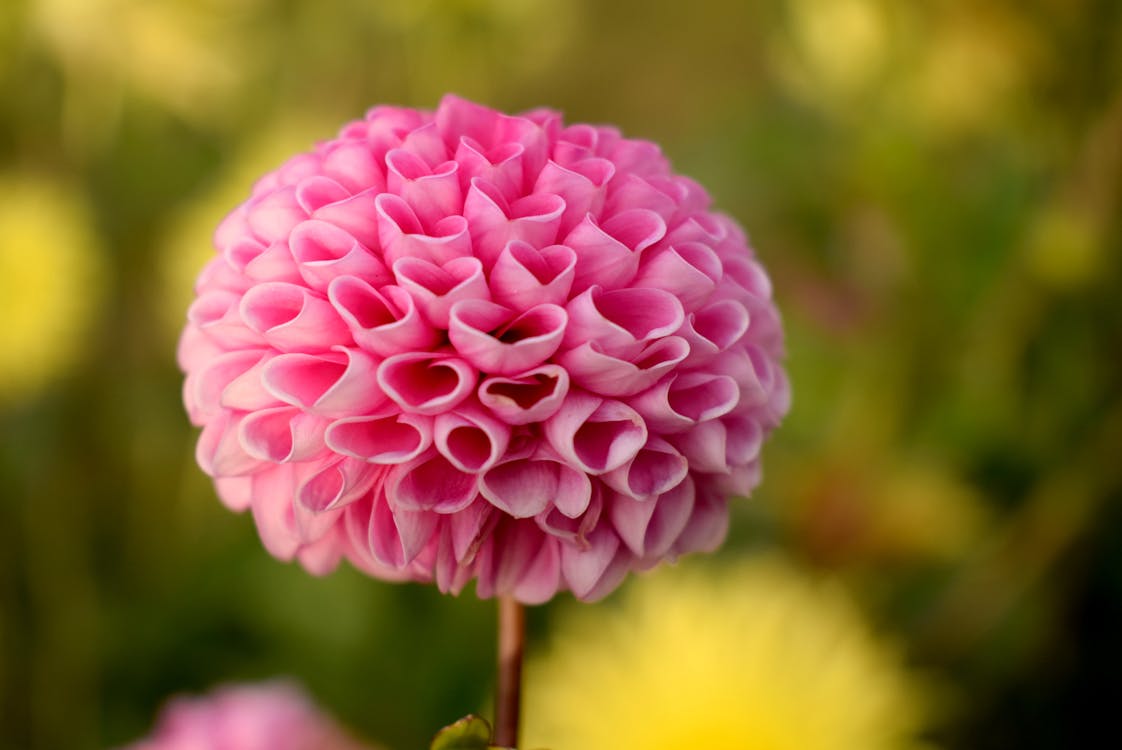
Choose by mature size and flower form
Dahlia groups are classified by flower form and size, but the plant label is the practical source for mature height and spacing. Compact bedding dahlias are easier to manage in pots; taller cultivars often need a stake. The American Dahlia Society’s classification helps compare flower forms, not predict care or performance. Dahlias can attract pollinators, but should not be described as a substitute for regionally appropriate native plants.
Plant and care through the growing season
Wait until frost danger has passed and the soil has warmed before planting. Follow the supplier’s directions for tuber position and depth; avoid overwatering before shoots emerge. Once growth begins, water deeply when the soil starts to dry and adjust for rainfall, heat, and container size. Keep soil moist but not saturated. Stake tall varieties at planting to avoid piercing developing roots later. Remove faded flowers to keep the plant tidy and encourage continued flowering where the cultivar responds.
Do not follow a fixed weekly fertilizer or pesticide schedule. Use a soil test and product label if nutrients are needed. When leaves show spots, distortion, or powdery growth, inspect the plant and growing conditions first; remove dead material and improve spacing and airflow. Identify the problem before choosing treatment.
Decide whether to lift tubers
Dahlia tubers can be injured by hard freezes and can rot in cold, wet soil. Gardeners in colder climates commonly lift them after the growing season and store them frost-free; in milder, well-drained sites, some leave them under mulch. Local extension guidance is more reliable than a single zone cutoff. If lifting, handle clumps gently, let surface moisture dry, and store in a cool place where they will not freeze or remain wet. Check periodically and discard rotting material.
Sources: NC State Extension’s Dahlia profile for growth and regional winter notes, and Penn State Extension’s winter storage guide for a cold-climate example.
Check tubers and divide carefully
Before planting stored tubers, discard any that are soft, moldy, or badly shriveled. A viable division needs an attached section of crown and a growth eye; a tuber by itself may not sprout. Use clean tools and avoid cutting into the crown unnecessarily. Penn State Extension describes its storage process as a regional method, not a guarantee that one temperature or packing material will suit every basement or climate.
Growing dahlias in pots
Choose compact cultivars and a stable pot with drainage; tall plants in lightweight containers can tip over. Container soil warms and dries faster than a garden bed, so check moisture more often while avoiding water that sits in a saucer. A large cultivar may outgrow a small pot or require more support than a balcony can provide. Follow the grower’s spacing and container recommendations.
Match spacing, pinching, and support to the cultivar
Dahlia size ranges from compact border plants to tall varieties with heavy blooms. Check expected mature height and flower size before planting, then use those details to decide where to stake and how much air space to leave. Put a sturdy stake in when planting a tuber so you do not pierce roots later. Tie stems loosely as they grow; tight ties can girdle a stem, while an unsupported tall plant may split in wind or under rain-heavy flowers.
Some gardeners pinch young plants to encourage branching and more stems; others leave them unpinched when they want fewer, longer stems. The best choice depends on the cultivar and whether the goal is a fuller border or cut flowers. Wait until the plant is actively growing and consult the grower’s instructions for the named variety. Do not remove a large amount of healthy growth from a stressed or recently transplanted plant. If you pinch, use clean fingers or sanitized shears and keep a record of the result.
Plan the bed around access. You will need room to tie stems, remove faded flowers, and inspect the undersides of leaves. Avoid placing tall dahlias where they shade shorter sun-loving plants. In a narrow border, a few well-spaced plants are easier to maintain than a dense block; the latter can trap humid air and make it harder to see early pest or disease symptoms.
| Growing goal | Selection and setup | Trade-off to expect |
|---|---|---|
| Low border color | Compact cultivar, open site, spacing from the label | Smaller plants may produce shorter stems and flowers than cutting varieties. |
| Large focal blooms | Named large-flowered cultivar, robust stake, accessible position | More attention to support and spacing may be needed. |
| Cutting garden | Choose for stem length and repeat flowering; leave paths for harvest | Frequent cutting and deadheading are part of the display plan. |
Manage water and nutrients without a rigid schedule
Watering needs change as a tuber sprouts, a plant builds foliage, and flowers open. Before shoots appear, avoid keeping the bed wet; a dormant or newly planted tuber cannot use large amounts of water and may rot. Once growth is established, check the root zone and rainfall. Water deeply when the surrounding soil begins to dry, then let excess drain. Shallow daily watering encourages a surface-rooted plant and is difficult to adjust across changing weather.
In hot or windy conditions, inspect containers more frequently because their mix can dry faster than a garden bed. Water the soil, not the foliage, and empty saucers. A container that stays wet for days may be too large, poorly drained, or filled with a compacted medium. Check the drainage holes before assuming the plant needs extra feed. Keep notes on how long the pot takes to dry; that is more useful than a weekly rule copied from another climate.
Dahlias need a suitable growing medium, but applying fertilizer by calendar can create lush, weak growth or ignore an actual soil imbalance. Start with the site’s soil-test recommendations if available and follow the product label. Avoid adding manure or high-nitrogen feed directly against a tuber. If growth is weak, first check light, drainage, planting timing, and tuber health. Fertilizer cannot correct a rotting tuber or a shaded location.
Harvest dahlia flowers for indoor display
For a vase, choose flowers that are fully open and have firm stems; many dahlias do not continue opening after they are cut. Harvest during the cooler part of the day if possible, use clean sharp shears, and place stems in clean water promptly. Remove leaves that would sit below the waterline. Recut stems and refresh the vase water as needed. The usable vase life differs among cultivars and indoor conditions, so treat it as variable rather than promising a fixed number of days.
Regular cutting can also serve as deadheading: remove the spent flower back to a stem junction where new buds can develop. Distinguish the pointed, compact developing buds from spent flower heads before cutting. If you want seeds for a breeding project, leave selected flowers to mature instead; seedlings may differ from the named parent and are not a reliable way to reproduce a cultivar. Label the flowers in your vase if you want to remember which plants produced the best stems.
Keep harvested flowers away from pets and children who may chew plant material. Do not use pesticide-treated flowers for food or craft uses unless the product label explicitly permits that use. If you are growing dahlias near edible crops, prevent spray drift and follow the label’s application and re-entry directions.
Diagnose pests and flowering problems
Inspect plants at least occasionally during active growth, especially the youngest leaves and flower buds. Start with a whole-plant view, then turn over leaves and look at the stem base. A pattern of damage can help distinguish environmental stress from insects, but visual symptoms are not always enough to identify a disease. Correct cultural conditions first when the evidence points to water, light, or airflow.
| Symptom | Checks before treatment | Response |
|---|---|---|
| Healthy leaves but few buds | Too much shade, cultivar still establishing, excess nitrogen, or late planting | Review light and the label; avoid forcing flowers with extra fertilizer. |
| Lower leaves yellow and soil remains wet | Drainage, irrigation frequency, saucer water, and tuber firmness | Improve drainage and remove standing water; inspect roots if decline continues. |
| New growth distorted or sticky | Look for aphids or other insects on leaf undersides and tips | Identify the pest and consult local extension advice before choosing a control. |
| Leaf spotting or powdery coating | Humidity, crowding, irrigation on leaves, and spread between plants | Remove badly affected leaves, improve spacing, and get a diagnosis if it spreads. |
| Stems bend or break | Stake placement, cultivar height, wind exposure, and flower weight | Add loose support to sound stems; install stakes early for next season. |
Use an extension diagnostic service when a problem is spreading or the tubers are being lost. Share the cultivar name, region, recent weather, watering pattern, and photographs of the whole plant and symptom detail. Avoid broad-spectrum pesticide use “just in case”; it can harm beneficial insects and may not address the cause. Follow any pesticide label exactly, including crop listing, protective equipment, and re-entry interval.
Use a local seasonal checklist
Before planting: check your last-frost guidance, select a sunny well-drained site, inspect stored tubers, and decide how tall plants will be supported. In a wet spring, wait until the soil is workable rather than planting into mud. Record the cultivar and source so you can compare its actual growth with the description.
During establishment: water according to soil moisture, protect young shoots from local cold snaps if needed, and avoid disturbing the crown. Add support while shoots are small. When the plant is actively growing, follow cultivar-specific advice on pinching rather than applying a uniform instruction to every dahlia.
During flowering: remove spent blooms, tie stems loosely, monitor for pests, and harvest flowers with clean tools. Check containers more often during hot spells. If rainfall is frequent, confirm that water leaves pots and beds quickly instead of adding irrigation on a timer.
At the end of the season: follow local frost forecasts and extension recommendations for lifting or protecting tubers. Mark the plant before foliage dies back. If lifting, keep clumps identified by cultivar and inspect them periodically in storage. Write down what worked, including drainage and bloom timing, so next year’s changes solve a specific observed issue.
Check stored dahlia tubers over winter
Storage is a balance: the tubers must stay frost-free and should not remain so damp that they rot or so dry that they shrivel severely. Use a container and packing approach recommended by a local extension source for your climate, and label each clump before storage. Do not place unidentified tubers together if you need to preserve cultivar names. Keep the storage area away from direct heat and check it periodically rather than assuming the temperature is stable.
When you inspect stored clumps, remove any tuber that has become soft or moldy and review whether the storage environment is too humid or too warm. If tubers look shriveled, do not immediately soak them; first confirm that they are still firm enough to plant and consult regional guidance. In spring, divide only sections that include a viable eye attached to the crown. A detached tuber without an eye will not reliably grow into a plant.
Keep notes on how each cultivar stores. Some differences are caused by the cultivar itself, while others reflect how wet the clump was when lifted, how long it dried, and the conditions in storage. That record can help you adjust the next season’s process without changing several factors at once. Follow Penn State Extension’s regional winter-storage guidance as one documented example, while checking local recommendations for your own winters.
Keep stored clumps away from edible produce and label them as ornamental tubers. Discard any material that is clearly rotting rather than placing it back into the garden. Before planting, check that each division includes a growth eye attached to the crown and write down which cultivar is going into each bed.