

Check the plant and root zone first
Start by identifying what is growing and where its roots are. A seed tray, a newly planted shrub, an established border perennial, a lawn and a houseplant do not use water at the same rate. Check plant labels or reliable species guidance for moisture needs, and consider whether the plant is actively growing, dormant, recently transplanted or recovering from stress. This prevents a general garden schedule from overriding the needs of a particular crop.
Check moisture below the surface. For a pot, feel the medium at a depth appropriate to the root ball or lift the container and compare its weight after watering and as it dries. For a bed, use a finger or trowel near the active roots rather than judging by surface color. A crusted surface can sit above moist soil, while a brief shower may wet only the top layer. The RHS recommends checking container compost below the surface and adjusting for pot size, exposure and weather in its container watering guide.
Inspect drainage before watering. Confirm that pot holes are open and that a saucer or cachepot is not holding water for too long. In garden beds, note runoff, puddles and compacted areas. If water runs off before soaking in, slow the application or split it into shorter passes. If the root zone remains wet, investigate the soil, pot size, drainage and irrigation system before adding more.
Decide when to water
Watering frequency depends on soil or mix, plant size, root depth, sun, wind, temperature, rainfall, pot material and growth stage. Warm, dry and windy conditions can increase water use; a cool, shaded site can dry more slowly. Containers generally need closer attention than plants in the ground because they have a smaller root volume. Do not use “once a week” or “every morning” as a rule for every plant.
Check after rainfall rather than assuming rain has reached the roots. A short shower may wet leaves and the surface while leaving the root zone dry, particularly under a tree canopy, beside a wall or beneath an eave. Conversely, a deep soaking rain may be enough for established plants in a bed. Keep a simple record for unfamiliar plants or new irrigation setups, then adjust from actual moisture observations.
New transplants and young plants usually need closer monitoring until roots establish beyond the original root ball. Established trees and perennials may tolerate dry periods better than recently planted specimens, but species and local climate matter. If a plant is stressed, check root-zone moisture and local horticultural guidance before increasing water; more frequent irrigation can worsen saturated soil.
Watering indoor and outdoor pots
Check each container separately. Pot size and depth, drainage, material, plant roots, indoor heating, sun and wind all influence drying. A small pot in a sunny window can dry before a large pot in shade. Unglazed clay can dry differently from plastic, and a hanging basket is exposed to more moving air than a pot against a wall. Grouping plants may make watering easier, but it does not make their needs identical.
Water the mix rather than the foliage when the plant and disease guidance call for it. Apply slowly across the surface so the root ball is wetted evenly, then let excess drain. Empty cachepots and saucers when the plant should not sit in water. If water runs straight through a dry pot, apply it in several passes or rewet the mix carefully; check that roots are not separated from the medium. Avoid using a fixed volume for all pots.
Outdoor pots may need more frequent checks during hot spells and after plants fill the container. Indoor pots can dry slowly in winter, especially where light and growth decline. Do not continue a summer watering routine after moving a plant indoors or into a cooler, shadier location. For more detail, see our guides to irrigation for pots and container drip irrigation.
Watering garden beds and borders
For beds, focus water near the root zone and give it time to soak into the soil. The RHS advises watering slowly enough to moisten soil around roots and checking below the surface; established plants and newly planted ones may need different care. Its watering guide includes different advice for containers, seeds, trees, vegetables, lawns and borders. Use local extension guidance where climate, soil or water restrictions differ.
Soil texture affects how water moves. Sandy soil often drains more quickly than heavier soil, while compacted or crusted surfaces can shed water. Do not infer soil moisture from surface appearance alone. If the water pools or runs downhill, reduce flow and apply in shorter cycles with time for infiltration. Organic mulch can help limit evaporation in suitable beds, but keep it away from stems where local plant guidance advises that.
Prioritize new plantings, shallow-rooted crops and plants showing sustained drought stress. Mature, established plants may not need routine supplemental watering in some climates, but that depends on species, soil and weather. When using a sprinkler, check distribution with several identical straight-sided containers placed across the area. Uneven coverage means one timer schedule can overwater one part while leaving another dry.
Watering seeds, seedlings and transplants
Seeds and newly emerged seedlings need consistent moisture in the seed zone, but they are easy to displace with a strong jet. Use a fine rose, gentle spray or bottom-watering method appropriate to the tray and crop. Check the seed packet or propagation guidance for light and moisture conditions. Avoid leaving trays in standing water for long periods unless the method specifically calls for it.
As roots develop, check that water reaches the full root zone rather than only wetting the surface. Small cells can dry quickly, while covered propagation trays can stay too wet if airflow is limited. Remove excess water from solid trays and look for algae, damping-off or persistently soggy media. A watering can with a rose can help control flow; see our guide to watering cans and rose attachments.
After transplanting, water around the root ball and surrounding soil so there is contact between the two. Monitor more frequently during establishment, hot weather and wind, then taper care according to the plant and local guidance. Do not keep a plant saturated to prevent every sign of wilting; inspect moisture and drainage first.
Choose a watering method
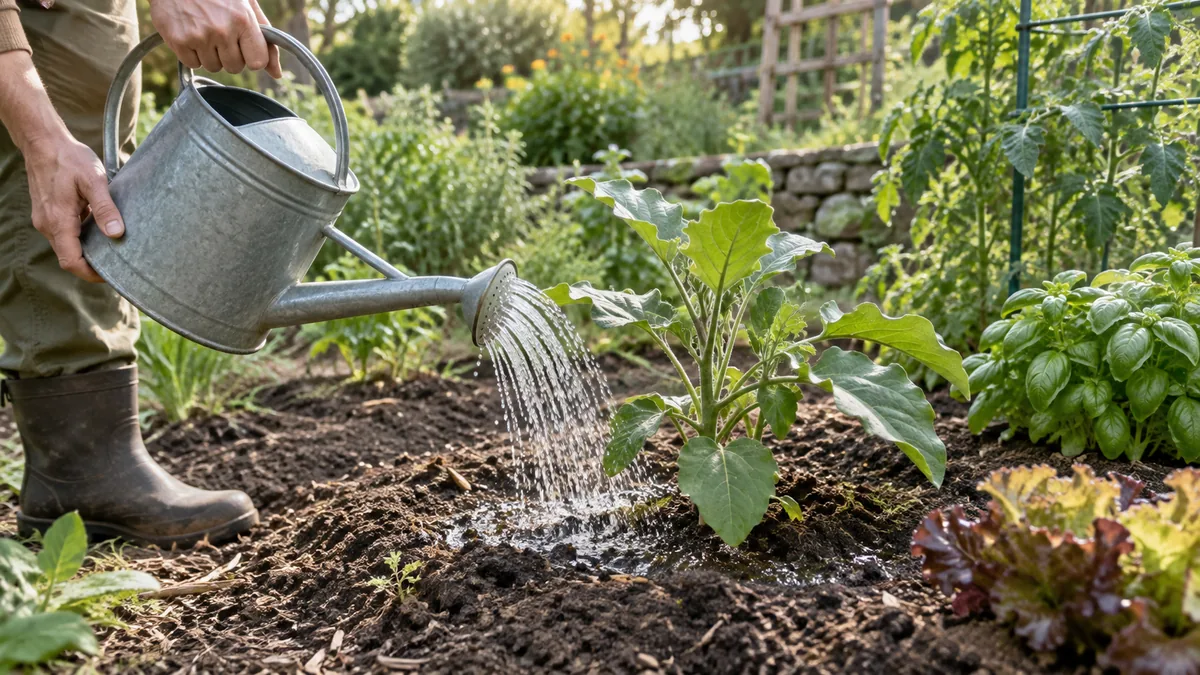
A watering can gives direct control for a few pots, seedlings or individual plants. A hose with a suitable nozzle works for larger areas, but flow can vary and overspray can waste water. Drip irrigation delivers through tubing and emitters near selected plants; it requires compatible pressure control, filtration where specified and regular inspection. Soaker hoses and porous lines are useful in some beds, but their coverage depends on the product, soil and layout.
Sprinklers can cover broad areas but may water paths or foliage as well as roots. Check the pattern and wind drift before setting a long run. Automated timers are convenient, but they follow a schedule rather than sensing the needs of every plant. Rain sensors and soil moisture controls also need suitable placement and calibration. Use the method you can monitor and maintain, not only the one that promises automation.
For any system, follow the exact manufacturer instructions for pressure, flow, filters, tubing, cleaning and winter storage. If you are connecting to a household drinking-water supply, check local backflow requirements. Our garden drip irrigation guide explains planning and testing a bed system before installation.
Water deeply without runoff
Apply water slowly and close to the soil so it can move into the root zone. In containers, wet the medium evenly and stop when it is moist through the root ball and drainage begins; do not leave the pot in a tray of water unless the plant and system are suited to that. In beds, check below the surface after watering. The amount of depth to moisten depends on where the plant’s active roots are and should be guided by crop-specific recommendations.
If the soil is very dry and water beads or runs off, apply in several short passes with pauses between them. If water pools, reduce the flow and check compaction or drainage. A strong stream can wash away seed, expose roots or erode a slope. Use a rose, breaker or drip method to reduce disturbance where needed. Do not leave an unattended hose running on a surface where water can flood a basement, path or neighboring property.
Avoid watering only a few surface centimeters if the plant has deeper roots, but do not apply a deep soaking schedule to seedlings or shallow-rooted plants without considering their needs. Recheck soil after the irrigation has had time to move. Adjust one factor at a time, such as runtime or emitter position, and observe the plant over the next few days.
Choose a time that suits weather and disease risk
Early morning is often a practical time to water outdoor plants because temperatures are lower and plants have water available through the day. Evening watering can be appropriate when that is the feasible time, but prolonged leaf wetness may matter for some diseases. Direct water at the soil where possible and follow species-specific disease advice. Avoid a universal claim that one time is always best for every indoor plant, bed and irrigation method.
Watering in the hottest part of a sunny day may lose more water to evaporation, but a plant in immediate stress should not be left dry while waiting for a preferred hour. Check the root zone and water carefully when needed. Consider local water restrictions and any municipal limits on watering times. For containers, the right frequency matters more than a rigid clock rule.
Read stress symptoms without guessing
Wilting, yellowing, brown leaf edges, leaf drop and slow growth can have more than one cause. A dry plant may wilt, but waterlogged roots can also fail to supply water to foliage. Check root-zone moisture, drainage, light, temperature, pests and recent changes before changing the schedule. If the medium is wet, do not add water only because the leaves look limp.
Look at patterns. Is the problem on new growth or old leaves? Does it affect one plant or several nearby? Is the soil wet at depth? Are roots firm or damaged? Are there insects, spots or stem lesions? These observations help distinguish watering stress from other issues, but they do not replace a disease or pest diagnosis. Ask a local Extension service or qualified horticulturist when symptoms persist or spread.
After correcting the likely cause, wait for new growth to judge recovery; damaged leaves may not return to normal. Avoid applying fertilizer or multiple treatments at once unless a reliable diagnosis supports them. Record the change you made so it is possible to tell what helped.
Choose water and manage quality concerns
Many plants tolerate household tap water, but water quality and species sensitivity vary. If a plant has a known sensitivity, check guidance for its botanical name and ask the water utility for a current report. Do not assume that letting water stand removes every treatment compound, or that distilled water is necessary for all houseplants. A white deposit on a pot may be mineral residue, but it is not by itself proof that water quality caused plant symptoms.
Collected rainwater can supplement irrigation where it is safely harvested and stored. Keep collection equipment covered and clean, and avoid water from roofs or surfaces contaminated by chemicals or animal waste. Follow local public-health and water rules. Greywater use is more complicated: household soaps and cleaning products may affect plants and soil, and regulations vary. Use it only where local guidance and plant suitability permit it.
Save water without stressing plants
Choose plants suited to the site, group containers with similar requirements, mulch appropriate garden beds and repair leaking equipment. A rain gauge or simple record can help distinguish rainfall from irrigation, while checking moisture at depth shows whether water reached roots. Use a watering can for a small number of plants when it gives better control; use a hose or automated system only when you can prevent runoff and check coverage.
Do not reduce water so sharply that plants are chronically stressed, and do not “train” every plant by withholding water. Drought tolerance depends on species, establishment, soil and climate. The RHS recommends matching plants to place, collecting rainwater where feasible and watering according to actual need in its garden water-use guidance. Follow local drought restrictions and prioritize newly planted or vulnerable plants.
Use a simple watering routine
- Identify the plant and check whether it is newly planted, actively growing or dormant.
- Inspect root-zone moisture and drainage rather than relying on the date or leaf appearance alone.
- Consider rainfall, exposure, soil or mix, pot size, wind and recent temperature changes.
- Choose a watering method that reaches roots without washing soil away or wetting places unnecessarily.
- Apply slowly, then verify moisture at depth and remove standing water where appropriate.
- Record unusual conditions and recheck before the next watering.
This routine is a decision aid, not a substitute for crop or species-specific instructions. It helps prevent the most common mistake: repeating a schedule after the weather or growing conditions have changed.
Plan for hot weather and time away
Before a heat wave, check containers, hanging baskets, new plantings and plants exposed to wind more frequently. Move movable pots to a suitable sheltered position if the species tolerates it, and ensure drainage remains open. Do not suddenly move a sun-loving plant into deep shade for a long period without considering its light needs. A mulch or shade structure may help some settings, but follow plant-specific advice.
Before a trip, test any irrigation device for several normal cycles while you are present. Check all emitters, filters, timers, reservoirs and drainage; then arrange a trusted person to inspect plants if they cannot tolerate a system failure. A watering globe or timer does not guarantee a fixed number of days because output changes with pot, plant and weather. Keep the parent garden irrigation guide handy for choosing between hand watering, drip and sprinkler approaches.