

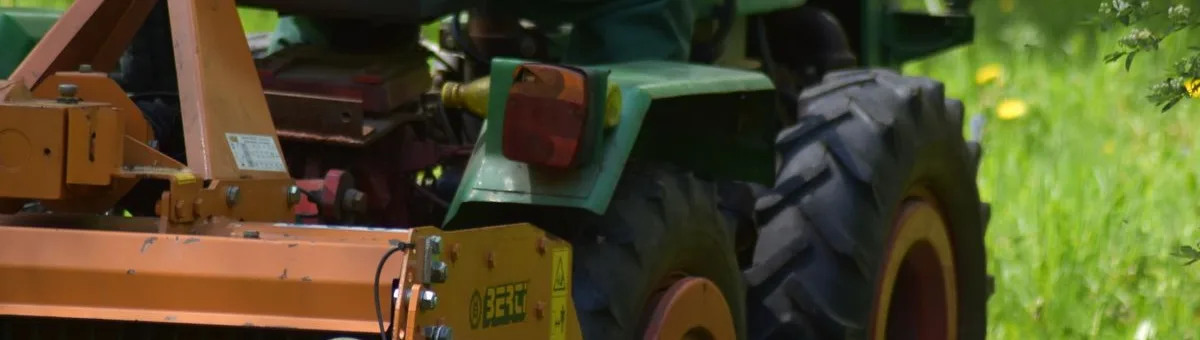
Alpina AT2 66 QA Specifications
| Specification | Value |
|---|---|
| Engine | 4-stroke, 224 cc single cylinder |
| Power Output | Approx. 5.5 HP |
| Cutting Width | 66 cm (26 inches) |
| Cutting Height | Multiple adjustable positions |
| Collection Bag | 150 liters (40 gallons) |
| Transmission | Quick Action (QA) automatic |
| Starting System | Electric with key or manual backup |
| Recommended Area | Up to 1,500 m² (16,000 sq ft) |
| Fuel Tank Capacity | 3.2 liters (0.85 gallons) |
| Weight | Approx. 135 kg (297 lbs) |
224 cc Engine: Efficient Power for Small Lawns
The Alpina AT2 66 is powered by a 224 cc single-cylinder, four-stroke engine that produces approximately 5.5 horsepower. This is the smallest engine of the three mowers compared here, but it's perfectly sized for the machine's 66 cm deck and intended use on smaller residential lawns.
The smaller displacement translates to advantages and limitations:
Advantages: Lower fuel consumption (a full tank can last 90-120 minutes of mowing), quieter operation compared to larger mowers, less vibration transmitted to the operator, and lower purchase and maintenance costs.
Limitations: Less power reserves when grass is thick or wet. The motor works harder in challenging conditions and may struggle if you mow overgrown grass. Best results come from regular maintenance mowing on dry grass.
Electric starting is standard, with a manual pull-cord backup if needed. The ignition is straightforward, and most users report reliable starting across seasons.
66 cm Compact Deck: Maximum Maneuverability
At 66 cm (26 inches) wide, the Alpina deck is the narrowest of the three mowers reviewed. This compact width offers a single, powerful advantage: exceptional maneuverability in tight spaces.
If your lawn features numerous obstacles—trees, shrubs, decorative rock features, raised garden beds, narrow passages between structures—the Alpina navigates these challenges with ease. You can trim edges cleanly, make sharp turns around obstacles, and access areas where larger mowers would struggle.
The trade-off is mowing time. On a 1,500 m² lawn, the compact deck means more passes and longer sessions. If you're mowing a 1,500 m² lawn regularly, plan for 75-90 minutes compared to 50-60 minutes with a wider mower. For lawns under 1,000 m², this time difference is barely noticeable.
The Alpina is not recommended for lawns over 1,500 m². Beyond that size, the time spent mowing becomes impractical, and larger mowers offer better value.
Quick Action (QA) Transmission: Simple and Responsive
The "QA" in the model name stands for Quick Action, which is Alpina's term for their simplified automatic transmission system. It's not a CVT (continuously variable) like the Husqvarna, but rather a faster-shifting, more direct automatic.
The advantage is responsiveness: when you press the pedal, the mower reacts quickly without the slight delay of a CVT system. The disadvantage is less smoothness—the transitions aren't quite as velvety as a true CVT, and there's a bit more gear-shifting feel to the operation.
For residential mowing on smaller lawns, most users find the QA transmission perfectly adequate and responsive enough for comfortable operation. It's lighter and simpler than full CVT systems, which means fewer complex components to potentially fail.
Mulching & Collection System
The Alpina AT2 66 comes equipped with a 150-liter (40-gallon) collection bag—the smallest of the three mowers, but adequate for its intended small-lawn use. On normal grass height (5-8 cm), you can cover roughly 250-300 m² before emptying. For a 1,000 m² lawn, expect to empty the bag 3-4 times per session.
Many Alpina AT2 models include built-in mulching capability or easy-install mulching kit compatibility. Mulching is ideal for this mower's small-lawn application: frequent mowing of properly maintained grass, where mulched clippings contribute to lawn health without accumulating. If your lawn is reasonably well-maintained and you mow weekly, mulching turns this from a bagging mower to a mulching mower with minimal effort.
Key Features & What Makes It Stand Out
Beyond the basic specifications, the Alpina AT2 66 offers several design touches that differentiate it from budget-market competitors. The compact frame design prioritizes weight distribution—at only 135 kg, the mower feels nimble without sacrificing stability on slopes or uneven terrain.
The electric start system is genuinely reliable across temperature ranges. Unlike some budget mowers where the electric starter is an afterthought, Alpina has invested in a proper starter motor with solid backup pull-cord. In cold weather, the electric start significantly reduces the frustration factor compared to mowers that require multiple pulls.
The integrated mulching capability is another standout feature. Many budget mowers offer only bagging or only mulching; the Alpina gives you both options with either a flip-chute or minimal accessory conversion. This flexibility extends the mower's usability across seasons—bag in spring and fall when grass is thick, mulch during regular summer maintenance mowing.
Height adjustment is also straightforward: a single-point lever system adjusts all wheels together rather than the complicated four-point adjustments on some mowers. This simplicity means you'll actually use it to optimize cut quality rather than leaving the mower at one height all season.
The fuel tank, while small at 3.2 liters, is positioned low in the chassis for better balance and easier refueling without tilting the mower. Storage access is unobstructed—no awkward awkward angles when servicing the spark plug or changing oil.
When to Upgrade from Push Mower to Riding
Not everyone needs a riding mower, but there's a clear threshold where upgrading makes financial and practical sense. The Alpina AT2 66 represents that upgrade point for smaller lawn owners who have outgrown push mowers.
Upgrade from a push mower to the Alpina AT2 66 when:
- Your lawn exceeds 800 m² — Push mowing becomes exhausting, taking 60+ minutes every week. A riding mower cuts that to 40-50 minutes, leaving you less fatigued.
- You mow weekly during growing season — Regular mowing on properly maintained grass is where the Alpina shines. If you're mowing weekly to keep grass at 5-8 cm, the Alpina's 224 cc engine is perfectly adequate.
- Health or age makes push mowing difficult — Operator comfort matters. A riding mower eliminates walking, reduces vibration exposure, and distributes effort across a full session rather than concentrating it in your arms and shoulders.
- Your lawn has multiple obstacles — Trees, shrubs, and flower beds that would require push mower repositioning become non-issues with the Alpina's compact width and tight turning radius.
- You have storage and budget for a 135 kg machine — The Alpina's light weight is actually an advantage here. It fits in sheds where larger mowers won't, and at 25-35% the cost of mid-range mowers, the investment is reasonable for 1,000-1,500 m² properties.
Don't upgrade to the Alpina if your lawn is genuinely smaller than 600 m² — maintenance time doesn't justify the storage footprint. Similarly, if your lawn exceeds 1,800 m² and you're mowing every week, you'll quickly tire of the 90+ minute sessions and wish for a wider deck.
Cost-benefit math: A quality push mower costs €200-400. A riding mower ranges €1,800-3,500. The Alpina at the lower end (€1,800-2,200) recoups its investment through time savings and improved health within 2-3 seasons if you're mowing regularly.
Maintenance Requirements & Long-Term Durability
The Alpina AT2 66 is mechanically simple, which has a double benefit: maintenance is straightforward, and there are fewer components to fail. Here's the realistic maintenance schedule:
Oil Changes: Every 100 hours of use or annually (whichever comes first). With 40-60 hours per season, that's every 2-3 seasons. Use SAE 10W-30 four-stroke engine oil. Capacity is 0.8 liters—a quick 5-minute job.
Spark Plug: Inspect annually, replace every 3-5 years. A fresh plug costs €5-8. The simple single-cylinder design means spark plug access is straightforward—no complicated hose routing.
Air Filter: Check every 10-15 hours, clean with compressed air every season, replace annually if you mow in dusty conditions. Budget €10-15 per replacement.
Fuel System: Drain the fuel tank before winter storage (crucial in temperate climates where stale fuel causes starting problems). Use fresh fuel at the start of season. Consider running fuel stabilizer through the last tank of the season.
Blade Sharpening: Inspect every 10-15 hours of use. A sharp blade cuts cleanly and reduces engine strain. Sharpen every season (late fall) or when blade shows visible dullness. Professional sharpening: €15-25. DIY: €0 if you have access to a file or bench grinder.
Expected Lifespan: With proper maintenance, expect 1,500-2,000 operating hours (25-40 years at typical residential use of 40-60 hours annually). The simple four-stroke engine is the reliability cornerstone. Early transmission failures are rare because the Quick Action system has fewer CVT components to fail.
Common Issues & Solutions: Starting problems typically indicate stale fuel rather than engine failure—drain and refuel fixes 90% of cases. Belt wear (if present in your model) shows as slippage during acceleration; replacement is €50-80 and takes 30 minutes. Deck rust is preventable through post-season washing and storage in a dry location.
Budget €150-200 annually for routine maintenance (oil, spark plug, filter, blade sharpening) on a mower that sees regular use. This is substantially less than professional lawn care services.
Pros and Cons of the Alpina AT2 66
✅ Pros
- Most affordable of the three models
- Excellent maneuverability in tight spaces
- Lightweight (135 kg): easier to move and store
- Lower fuel consumption: budget-friendly to operate
- Quieter operation than larger mowers
- Built-in or easily available mulching option
- Quick Action transmission: responsive control
❌ Cons
- Smallest cutting width: slower on larger lawns
- Smallest collection bag: frequent emptying
- Less power in thick or wet grass
- Not recommended for lawns over 1,500 m²
- Manual backup start (less convenient than key-only)
- Limited service network for brand support
Alpina AT2 66 vs MTD 36-Inch vs Husqvarna TC130
These three mowers target completely different customer profiles. Here's the comparison:
| Feature | Alpina AT2 66 | MTD 36-inch | Husqvarna TC130 |
|---|---|---|---|
| Engine | 224 cc | 382 cc | 344 cc |
| Cutting Width | 66 cm (26") | 92 cm (36") | 77 cm (30") |
| Collection Bag | 150 L | 240 L | 200 L |
| Best Lawn Size | Up to 1,500 m² | 2,000-3,500 m² | 1,500-3,000 m² |
| Maneuverability | Excellent | Good | Excellent |
| Premium Features | None | None | Vibration damping, brand support |
| Price Range | Budget | Mid | Premium |
Choose the Alpina AT2 66 if: Your lawn is under 1,500 m², you have many obstacles to navigate, and budget is a primary concern. It's the entry-level riding mower that delivers real convenience without premium pricing.
Choose the MTD 36-inch if: Your lawn is 2,000-3,500 m², relatively open, and you want maximum cutting efficiency at a reasonable price.
Choose the Husqvarna TC130 if: You want long-term durability, comfort features, and premium brand support across all lawn sizes from 1,500-3,000 m².
Who Should Buy the Alpina AT2 66 QA?
The Alpina AT2 66 is perfect for the first-time riding mower buyer with a small lawn (under 1,500 m²). It's ideal if you want to upgrade from pushing a manual mower but don't need—or want to pay for—the power and features of larger machines.
It's also excellent for urban or suburban properties with irregular landscaping. If your lawn is more ornamental than functional—lots of trees, flower beds, curved edges, and tight passages—the compact width and excellent maneuverability make this mower shine.
It's not recommended if your lawn exceeds 1,500 m² regularly, you need mulching as a primary feature (though it's available), or you want premium brand service and support infrastructure.
For the right owner and the right lawn, the Alpina AT2 66 QA delivers surprising value: a capable, easy-to-use riding mower at a price point that doesn't require a premium investment.
🚜 See our full riding mower guide
Explore all 2026 riding mower options with detailed comparisons, maintenance guides, and recommendations for every lawn size.
View complete mower comparison →