

Choose a warm, bright position
Check the cultivar’s expected size and support needs before planting beside a wall or pergola. The Royal Horticultural Society’s bougainvillea growing guide describes the plant as frost-tender under UK conditions and recommends keeping it frost-free in winter. Those details are not a substitute for local climate guidance, but they make clear why gardeners should not assume every bougainvillea can remain outdoors year-round.
Separate normal seasonal change from plant stress
Leaf drop or reduced flowering can follow a seasonal transition, a move, cold exposure, root disturbance or a change in watering. Check whether new growth is healthy, whether the pot drains and whether the plant has recently been pruned. Avoid changing light, fertilizer and water simultaneously; observe one correction at a time so you can see whether the plant responds.
Choose a labeled plant whose habit fits the support
Bougainvillea cultivars can vary in vigor, form and thorniness. Ask the nursery for the cultivar name and expected mature growth, especially if you plan to train it through a narrow pergola or grow it in a container. Do not assume that every nursery plant has the same cold tolerance or pruning response. Save the label for later seasonal care decisions.
Manage containers and moisture
Use a stable container with drainage and a growing medium suited to container plants. Water during active growth when the mix needs it, then check more often during heat; avoid leaving roots in standing water. In a cold climate, plan where the plant will be protected before autumn temperatures fall. Use the nursery’s cultivar information and local extension advice for temperature thresholds.
Clean up fallen material and inspect for pests
Remove dead leaves and damaged stems from around the base, then inspect new growth and leaf undersides for pests. Isolate a plant with a suspected infestation from nearby pots where practical. Identify the cause before using a treatment, and follow the label for ornamental plants, container use and protective measures. Do not assume that a general-purpose garden product is safe for every plant or setting.
Check root health when a container plant declines
If the plant remains weak despite suitable light, inspect the drainage and root zone before increasing feed. A container that stays saturated or has roots circling densely may need a different setup. Repot only when needed and use a stable container with open drainage. Avoid pulling a stressed plant from the pot repeatedly, which can cause additional root damage.
Train and prune with care
Provide a sturdy support and tie young shoots loosely as they develop. Pruning time affects flowers, so follow species or cultivar guidance rather than trimming on a fixed calendar. Wear gloves and use clean tools when handling woody, thorny growth. For other outdoor flowers, see our outdoor plant guide.
Plan access around a trained bougainvillea
A mature plant can make a dramatic display but may obstruct windows, doors or maintenance access if placed too close to a structure. Leave space to tie, inspect and prune it safely. Confirm that the support is stable and that the container can be moved without lifting the plant by its stems. The RHS growing guide provides a useful species overview; pair it with local climate advice.
Understand what creates the bougainvillea display
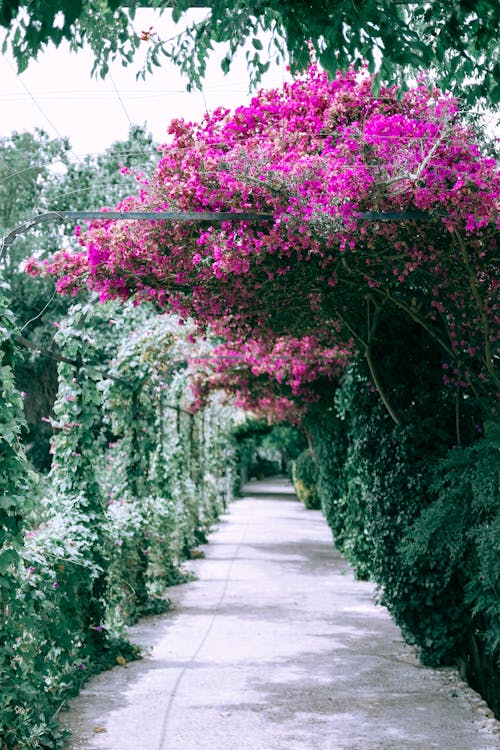
The bright color most people notice comes mainly from bracts around small flowers. The bracts and flowering response vary by cultivar and growing conditions, so a nursery photo is not a guarantee of an identical display. Keep the plant label and compare expected mature size and growth habit before choosing a wall, pergola or container position.
Give bougainvillea a bright, warm position
Choose the brightest suitable site you can provide while accounting for heat, reflected sun and local climate. A plant moved from a sheltered nursery to a hot exposed patio may need gradual acclimation. If growth is weak or flowering is limited, check light, temperature, root health and pruning history before feeding it. The RHS describes bougainvillea as frost-tender under UK conditions and recommends winter protection there.
Observe new growth before changing fertilizer
A bougainvillea that is growing leaves but not producing many bracts may need a different light or seasonal setup, or it may still be establishing. Note the cultivar, pruning and exposure. Avoid feeding more frequently without checking label directions and local guidance; excess fertilizer will not reliably correct a light or temperature mismatch.
Plan frost protection before temperatures fall
Bougainvillea is not equally hardy in every region. Check guidance for the cultivar and your local climate before planting it in the ground. In places with cold winters, a movable container may make protection more practical, but it still needs a suitable bright location and room for its growth habit. A wall or sheltered corner can reduce exposure but cannot guarantee survival in severe cold.
Choose a stable container and support
Use a pot with drainage holes, a suitable container medium and enough weight to remain stable as the plant grows. If the plant is trained up a trellis, make sure the support is secure and does not rely on a loose potting mix for anchoring. Consider whether you can move the container safely for winter and whether the mature canopy will block doors, paths or access to the wall.
Check moisture before watering
Water a container thoroughly when the growing medium needs it and let excess drain. Heat, wind and pot size change how quickly it dries; a plant in active growth may need closer checks than one kept cool for winter. Do not keep roots continuously saturated. A declining plant can reflect root damage, insufficient light, cold or other stress, so inspect several conditions before changing the watering routine.
Use restrained, label-led feeding
Follow the fertilizer label for container ornamentals and the plant’s current growth stage. Avoid applying extra product because flowers are sparse; light, temperature, pruning and root conditions can also affect flowering. Do not mix several feeds or apply a concentrated dose to dry roots. Record the product and date so that repeated applications are deliberate and within label limits.
Train young shoots before they become woody
Install a sturdy support and guide flexible new shoots with loose ties. Check ties as stems thicken and adjust them before they constrict the branch. Keep growth away from roof spaces, gutters and windows that require access. Bougainvillea can develop sharp or thorny growth depending on the plant, so use suitable gloves and eye protection when working close to dense stems.
Prune to fit the plant and preserve healthy growth
Pruning timing can affect the next display, and the correct approach depends on cultivar and local growing cycle. Remove dead or damaged growth with clean tools and shorten stems only after checking species guidance. Avoid severe cuts simply to make an oversized plant fit a small support. If space is limited, choose a more suitable plant or container position before the shrub becomes difficult to manage.
Remove dead growth without stripping healthy stems
Use clean tools to remove dead or broken stems and inspect where branches cross. Keep cuts modest until you know the cultivar’s response and seasonal flowering habit. Avoid removing a large amount of healthy growth just before a desired display. Wear gloves and keep hands away from thorns while supporting branches.
Move a potted plant gradually for winter protection
Before moving a container indoors or under cover, inspect the leaves and stems for pests and remove fallen debris. Choose a protected place that remains as bright as practical and avoids damaging temperature extremes. Reduce watering only in response to slower growth and the mix’s moisture; do not let roots remain saturated. Reacclimate the plant gradually when returning it outdoors.
Avoid a dark, warm winter storage spot
If the plant needs winter protection, choose a bright sheltered place appropriate to its cultivar. A dark storage room can weaken growth, while a hot indoor room may disrupt seasonal conditions. Check the soil before watering and keep the container draining. Use local climate advice for when to move it and when it can return outdoors.
Check growing conditions when flowering is limited
Sparse bracts can result from a mismatch between light, temperature, pruning, water and the plant’s establishment stage. Review recent care and the exact cultivar before changing several factors. Check whether the plant has been pruned at a time that removed developing growth. Avoid assuming that a high-phosphorus fertilizer will solve the problem; first confirm the plant is healthy and situated appropriately.
Place bougainvillea where its mature size is manageable
Consider the support, access and maintenance needed before planting beside a wall or pergola. Leave room to reach windows, gutters and fasteners, and provide a surface that will not be damaged by the plant’s growth. In a container, choose a location where wind will not topple the plant and the pot can be moved. For other outdoor planting choices, see our outdoor plants guide.
Choose a labeled plant whose habit fits the support
Bougainvillea cultivars can vary in vigor, form and thorniness. Ask the nursery for the cultivar name and expected mature growth, especially if you plan to train it through a narrow pergola or grow it in a container. Do not assume that every nursery plant has the same cold tolerance or pruning response. Save the label for later seasonal care decisions.
Separate normal seasonal change from plant stress
Leaf drop or reduced flowering can follow a seasonal transition, a move, cold exposure, root disturbance or a change in watering. Check whether new growth is healthy, whether the pot drains and whether the plant has recently been pruned. Avoid changing light, fertilizer and water simultaneously; observe one correction at a time so you can see whether the plant responds.
Check root health when a container plant declines
If the plant remains weak despite suitable light, inspect the drainage and root zone before increasing feed. A container that stays saturated or has roots circling densely may need a different setup. Repot only when needed and use a stable container with open drainage. Avoid pulling a stressed plant from the pot repeatedly, which can cause additional root damage.
Clean up fallen material and inspect for pests
Remove dead leaves and damaged stems from around the base, then inspect new growth and leaf undersides for pests. Isolate a plant with a suspected infestation from nearby pots where practical. Identify the cause before using a treatment, and follow the label for ornamental plants, container use and protective measures. Do not assume that a general-purpose garden product is safe for every plant or setting.
Plan access around a trained bougainvillea
A mature plant can make a dramatic display but may obstruct windows, doors or maintenance access if placed too close to a structure. Leave space to tie, inspect and prune it safely. Confirm that the support is stable and that the container can be moved without lifting the plant by its stems. The RHS growing guide provides a useful species overview; pair it with local climate advice.
Plan seasonal moves before the plant becomes difficult to handle
If your climate requires winter protection, decide in advance where a container bougainvillea will go and whether it can pass through doors or narrow paths. A pot that is easy to move while the plant is small may become awkward once stems have been trained across a support. Secure the trellis independently where possible, and do not pull long woody shoots free at the last minute. Before moving the plant, inspect it for pests and remove fallen leaves from the container surface. Resume outdoor exposure gradually when conditions improve, protecting tender growth from abrupt changes. The Royal Horticultural Society growing guide covers light, temperature, pruning and container care; use its advice together with the frost pattern at your own site.