

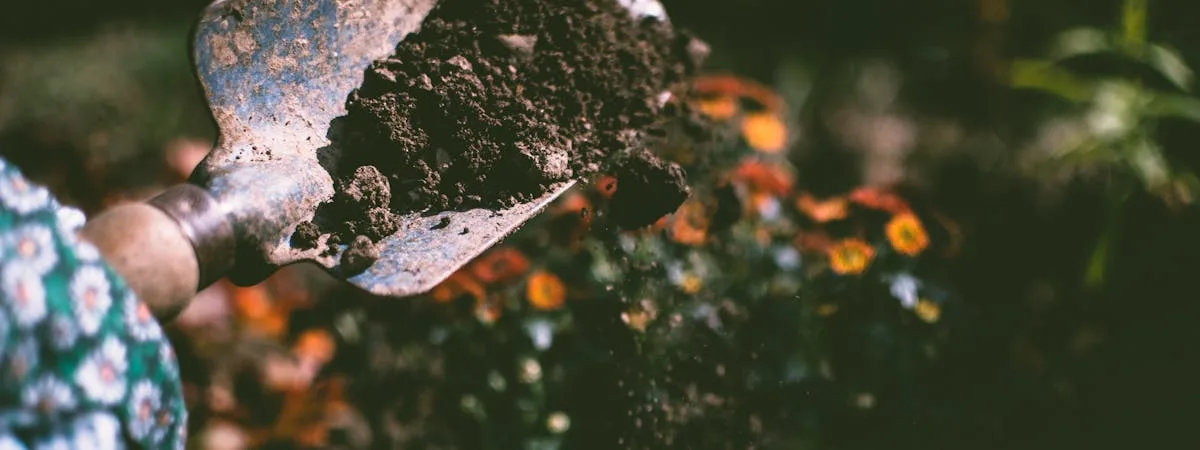
Garden tool categories: digging, cutting, raking & weeding
Garden tools divide into functional categories. Knowing what each does helps you buy wisely and prevents the drawer full of unused tools many gardeners accumulate.
- Digging tools (shovels, spades, hoes): Move and turn soil, dig planting holes, and cultivate beds. Essential for vegetable gardens, raised beds, and general soil prep.
- Cutting tools (pruning shears, loppers, saws): Remove dead wood, shape plants, deadhead flowers, and thin dense growth. Different tools for different branch thicknesses.
- Raking tools (garden rakes, leaf rakes): Collect leaves, smooth prepared beds, break up compacted soil, and level mulch.
- Weeding tools (hand forks, weeding knives, hoes): Remove unwanted plants and roots from beds and containers.
- Carrying tools (wheelbarrows, garden carts): Transport soil, compost, tools, and plants — lifesavers on any property bigger than a balcony.
- Watering & application tools (watering cans, hoses, sprayers): Covered in our irrigation guide; some gardeners group these as separate from hand tools.
Digging and soil preparation tools
The most-used tools in any garden are shovels, spades, and hoes. A quality spade is worth its weight because you'll use it weekly during growing season. The difference between a $15 shovel and a $60 Fiskars shovel is the handle materials, blade temper, and balance — all of which affect how much effort digging requires and how long the tool lasts.
Spades and garden shovels differ slightly: a spade has a flat, squared-off blade ideal for edging and precise digging, while a shovel has a slightly curved blade better for scooping. For most homeowners, a D-handle or flat-handle 46-48 inch spade covers all needs. Round-point shovels excel at scooping loose material like mulch or compost; square-point shovels (spades) are better for turning soil and digging in clay.
Garden hoes come in traditional flat-blade, warren (pointed), and oscillating styles. The flat-blade hoe is most versatile for weeding and breaking up compacted soil. Oscillating hoes reduce effort because they cut on both push and pull strokes. For vegetable gardeners, a long-handled hoe is essential for keeping rows weed-free.
Cutting and pruning tools
Pruning tools range from thumb-sized pruning shears for delicate flowers to two-handed loppers for branches up to 2 inches thick. The key decision is bypass (scissors-like) vs. anvil (blade against flat base) design. Bypass shears make clean cuts that heal well; anvil shears require less force but can crush thin wood. For living plants, bypass is always better.
Quality brands like Felco, Corona, and Fiskars offer lifetime warranties and sell replacement blades and springs, making them repairable investments. Budget pruning shears from import brands often can't be sharpened and must be discarded when they dull.
Raking and cleanup tools
A quality garden rake breaks up soil clods after digging and levels planting beds. A leaf rake (also called a fan rake) collects fallen leaves with minimal effort. Some gardeners swear by bamboo leaf rakes for their gentleness on delicate garden areas; others prefer metal for durability. For most tasks, a steel garden rake and a metal leaf rake cover all needs — around $40 total for quality versions.
Carrying and transport tools
A single trip with a wheelbarrow replaces 5 trips by hand. For any garden bigger than 100 sq ft, a wheelbarrow earns its cost in effort saved. Choose between single-wheel (lighter, more maneuverable) and two-wheel (more stable, carries more). For rough terrain, a pneumatic tire (air-filled) is more comfortable than a solid rubber tire. A quality wheelbarrow handles 30+ years of use; budget models last 3–5 seasons.
Choosing quality garden tools: materials & handles
Blade materials: Stainless steel resists rust and is easiest to maintain but doesn't hold a sharp edge as well as high-carbon steel. High-carbon steel blades hold sharpness longer, rust easily if not maintained, and are preferred by serious gardeners. Many premium tools use a blend: stainless-steel alloy that resists rust better than plain carbon while retaining decent edge-holding.
Handle materials: Wood handles are comfortable and warm in hand but require maintenance (annual oiling) and can split in freezing climates. Ash and hickory are traditional choices for their shock-absorption and strength. Fiberglass-reinforced handles are inexpensive and durable but less comfortable and colder in winter. Premium tools use composite materials combining strength, durability, and comfort.
Fit and balance: A well-fitted tool is a joy to use. Test digging tools by holding them as you'd use them — the weight should feel balanced, not head-heavy. Handles should be the right length for your height (generally 46–50 inches for an average adult). Ergonomic handles with grip zones reduce hand fatigue on repetitive tasks like pruning or weeding.
Best garden tool brands: Fiskars, Felco, Corona & others
Fiskars — The best value for money. Consistent quality, reasonable prices ($15–50), lifetime warranty, and availability everywhere. A Fiskars spade or pruning shear performs 95% as well as premium brands at 60% of the cost. Great for homeowners and beginners.
Felco — The gold standard for pruning shears. Swiss-made, precision-engineered, parts are available for 30+ years, and each tool has a serial number. Costs $40–80 per tool but lasts a lifetime and is passed down to the next gardener. Professional gardeners and serious home gardeners choose Felco.
Corona — Quality pruning and cutting tools at prices between Fiskars and Felco. Excellent durability and sharp blades. Available widely on Amazon.
Spear & Jackson — British brand with heritage in garden tools. Excellent quality shovels, rakes, and hoes. Often found in specialty garden centers.
Ames — American manufacturer of shovels and rakes. Simple, durable, affordable. Widely available.
True Temper — Another American classic. Known for rugged shovels and spades. Premium materials and balance command higher prices but tools last decades.
Radius Garden — Specialist in ergonomic garden tools. Design-forward, comfortable to use, higher prices justified by thoughtful engineering.
Garden tool sets and starter kits for beginners
If you're starting your first garden, a 3–5 piece kit from Fiskars or Radius Garden is a smart choice. You'll get the essential tools at a discount (usually 20–30% off individual prices) and avoid the paralysis of choosing separately. Look for kits that include a spade, hand fork, pruning shears, and gloves — these four do 80% of gardening tasks.
Avoid large "50-piece deluxe kits" sold on Amazon for $50. They include 45 tools you'll never use, mostly cheap versions of basics. A focused 4–6 piece set with quality components beats a drawer full of junk tools.
Garden tool care and maintenance
Cleaning: After each use, especially in clay soil or wet conditions, knock soil off blades and wipe with a dry cloth. Soil left on metal promotes rust. For stubborn soil, use a wire brush.
Sharpening: Dull cutting tools (pruning shears, saws, hoes) should be sharpened annually or more if used heavily. A fine whetstone ($10) and 5 minutes of work keeps blades razor-sharp. Many gardeners use professional sharpening services ($5–10 per tool).
Oiling: Once a season (fall or winter), apply a light coat of machine oil or dedicated garden tool oil to metal blades. This prevents rust during storage.
Handle maintenance: Wooden handles benefit from annual oiling (boiled linseed oil or tung oil). This prevents cracking and extends handle life. If a wooden handle splinters or cracks, you can often replace just the handle head without buying a new tool.
How to store garden tools properly
The biggest killer of garden tools is leaving them outdoors exposed to rain and sun. A simple wall-mounted tool rack in a garage or storage shed keeps tools organized, protected, and easy to grab. Magnetic tool strips work well for metal tools. For long-term storage (winter in cold climates), clean tools thoroughly, apply oil to metal parts, and store in a dry location.
Protective gloves and safety equipment
Quality gardening gloves aren't luxury — they're essential. Thorns, rough soil, and sharp tool edges are daily hazards. Gloves with reinforced palms and thorn-proof leather protect hands from roses, blackberries, and rough digging. Cotton or canvas gloves work for light tasks and soil contact; leather gloves are necessary when pruning thorny plants. Waterproof nitrile gloves keep hands dry when working in wet soil. A good pair of gardening gloves costs $10–20 and lasts an entire season of regular use.
Top-rated garden tools on Amazon 2026
Fiskars 4-Piece Garden Tool Set
- ✓ 4-piece set: spade, cultivator, weeding hoe & trowel
- ✓ FiberComp handles — stronger than wood, no maintenance
- ✓ Rust-proof stainless steel blades
- ✓ Lifetime warranty — Fiskars' standard guarantee
No verified direct Amazon.com listing is linked for this exact model.
Felco F2 Classic Manual Hand Pruner
- ✓ Swiss precision — hardened steel bypass blade
- ✓ Cuts branches up to 1" diameter cleanly
- ✓ Replaceable blades, spring & wire scraper — lasts a lifetime
- ✓ Used by professional gardeners worldwide
No verified direct Amazon.com listing is linked for this exact model.
True Temper 4-Inch D-Handle Round Point Shovel
- ✓ Tempered carbon steel blade — holds edge through rocks
- ✓ 29" overall length — versatile for most adults
- ✓ D-grip handle for maximum leverage when digging
- ✓ American-made quality — designed to last decades
No verified direct Amazon.com listing is linked for this exact model.
* As an Amazon Associate we earn from qualifying purchases. Prices subject to change.
Emergency Tool Repairs and Quick Fixes
Gardening season doesn't pause for tool failures, so knowing simple on-the-spot repairs keeps you working. A loose blade on a shovel or hoe handle — the most common failure — is easily tightened: identify whether the blade is secured by a rivet, bolt, or a socket joint. Bolts tighten with a wrench; rivets can't be undone and must be drilled out, but you can prevent loosening by striking the rivet head gently with a hammer until snug. A spade or shovel handle that creaks or moves in its socket often just needs tightening by turning the internal bolt (usually accessed from the handle's base) with a wrench. For wooden handles that dry and shrink, wrapping the handle base with athletic tape increases grip diameter and often stops the wobble temporarily. A broken wooden handle — a split or crack — can be stabilized by binding tightly with cordage (rope, twine, or electrical tape) just below the crack; this buys time until replacement. Metal handles rarely break but can bend; straightening requires vising and leverage, or replacement if the damage is severe (a tool worth less than $30 often isn't worth the effort of straightening).
Pruning shears that won't close smoothly often have a debris-clogged pivot: remove the bolt holding the two blade halves together, clean the joint thoroughly with a brush, dry, and oil before reassembling. Rusty pivot bolts can be soaked in penetrating oil (like WD-40) overnight to ease removal. A blade that still won't cut despite sharpening may have a bent edge — check by holding the blade tip under light and looking for light glints on the cutting edge; bent blades can't be straightened and must be replaced. For most premium pruning shears (Felco, ARS, Felco), individual blade replacements cost $15–$30 and are worth the investment. Wooden tool handles that develop splinters are smoothed with medium sandpaper (80–120 grit), then sealed with linseed oil or polyurethane to prevent future splintering and weather damage. Keeping simple supplies on hand — a wrench, hammer, cordage, penetrating oil, and a whetstone — turns most tool problems into quick fixes rather than show-stoppers.