

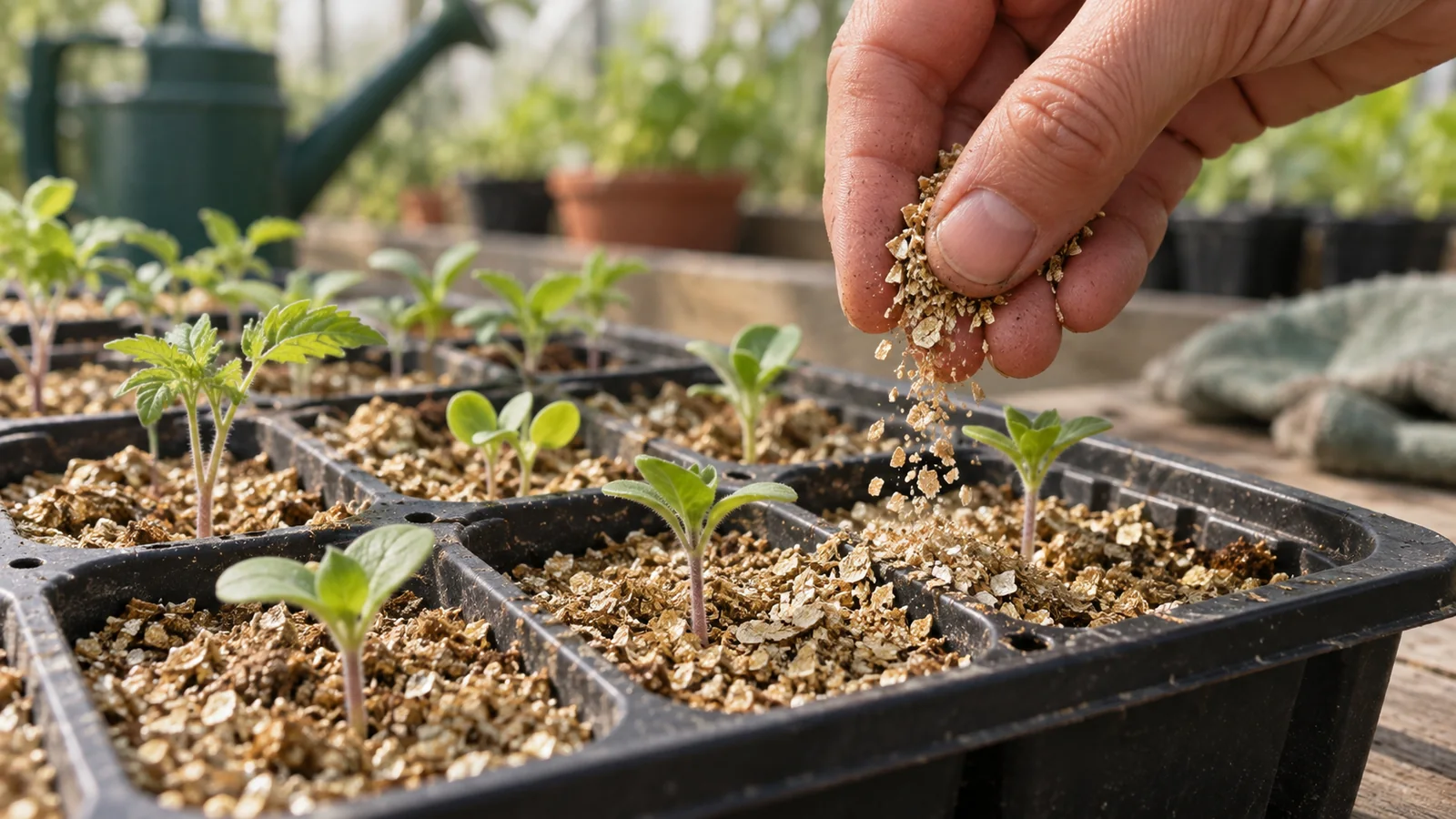
What horticultural vermiculite does
Horticultural vermiculite is an expanded mineral used as a component of growing media. Its light, layered particles can hold moisture and nutrients, which is why it appears in some seed-starting and potting mixes. Oregon State University Extension includes vermiculite as one possible ingredient in seed-starting mixes, alongside other components. That does not mean every seed or houseplant needs it.
Think of vermiculite as an ingredient with a specific moisture-retention role, not as a complete medium. Seedlings still need a suitable balance of moisture, air, nutrition and physical support. For an overview of growing media, visit our soil and substrate hub.
Vermiculite or perlite: which is the right fit?
Choose between them based on the problem you are solving. Vermiculite helps a mix retain moisture; perlite is often used to improve aeration and drainage. Some blends use both, but there is no universal ratio. A moisture-retentive amendment may be counterproductive for plants that prefer a faster-drying root zone or for a pot that already drains poorly.
| Material | Typical role in a mix | Consider it when |
|---|---|---|
| Vermiculite | Helps hold moisture and nutrients | A seed-starting or container recipe needs more moisture retention |
| Perlite | Adds air space and can improve drainage | A mix is dense or needs to dry more freely |
| Potting mix | Provides the base medium and may include several ingredients | You need a complete growing medium suited to the plant |
Compare labels and ingredients before adding amendments. Our guides to perlite and potting mix explain the alternatives in more detail.
When to use vermiculite
Vermiculite may be useful in a seed-starting medium when the chosen recipe calls for a component that retains moisture. It can also be used in some container mixes, depending on the plant and how quickly the existing medium dries. Follow the recipe or product label and make small, measured changes rather than replacing most of a mix by guesswork.
It is not a fertilizer, pesticide, sterilizer or complete potting soil. Do not add it simply because a plant looks unhealthy. First check watering, pot drainage, root condition and light. If the problem is dense, waterlogged media, adding a moisture-retentive ingredient may make the situation worse.
Using vermiculite for seed starting
Seed-starting mixes need to hold enough moisture for germination while still providing air around the seed and young roots. Vermiculite can be one ingredient in a mix designed for that job, but it is not automatically the whole mix. Oregon State University Extension publishes example seed-starting recipes that combine different components; use the recipe that fits the method and materials available to you rather than copying an isolated ingredient ratio.
- Start with clean containers. Use trays or pots with drainage holes and enough depth for the seedling stage.
- Choose a recipe or labeled seed-starting product. Check that the material is horticultural vermiculite and that the final medium suits the crop.
- Moisten the mix evenly before sowing. It should be damp enough to hold together lightly, not dripping wet.
- Sow at the depth on the seed packet. Some seeds need light to germinate and should not be covered; others need a layer of medium.
- Keep moisture and airflow in balance. Check the tray regularly, ventilate any cover and remove standing water from the catch tray.
Vermiculite can also appear as a light covering over some seeds, but whether to cover depends on the species and the seed packet. A layer that is too deep can prevent a small seedling from reaching light. Once seeds germinate, light, temperature and moisture management remain more important than adding extra amendment.
How much should you add?
There is no single percentage that suits every plant, seed-starting method or climate. Oregon State Extension publishes example recipes with different ingredients and proportions; use a tested recipe for the crop or follow the mix manufacturer’s instructions. For a houseplant or outdoor container, consider whether the species prefers evenly moist media or a more freely draining root zone, then adjust only if the current mix has a clear problem.
- Read the seed, plant or potting-mix instructions.
- Use horticultural-grade material intended for gardening.
- Measure the amendment and blend it evenly; avoid a separate layer at the bottom of a pot.
- Water the finished mix and observe how quickly it dries in the actual growing conditions.
Check the container before changing the amendment ratio. Oregon State Extension recommends a pot only slightly larger than the combined root balls and notes that too much unfilled space can retain excess water and encourage root rot. Container size and material also affect watering frequency; UMN Extension notes that hot, dry weather can make some containers need more frequent watering. If a mix stays wet, inspect pot size and drainage before adding more vermiculite. If it dries quickly, check whether the root ball fills the container and whether heat or airflow has changed. These checks help separate a mix issue from a watering or container issue.
It is usually easier to adjust a small batch than to amend every pot at once. Mix a trial amount, water it, and see whether it holds together, drains and dries in a way that fits the plant. If you are refreshing an established plant’s pot, do not add loose amendment only around the surface and expect it to change the whole root zone. When repotting, blend amendments uniformly through the new medium and keep the root ball at a suitable depth.
When vermiculite is not the right fix
- Waterlogged soil: first check drainage, the pot’s outlets, the watering pattern and whether the plant is sitting in a cachepot or saucer full of water. Vermiculite may retain more moisture and is not a drainage repair.
- A plant that prefers a dry root zone: choose a medium and watering routine suited to the species rather than adding a water-retentive ingredient by default.
- Compacted garden soil: a small amount of a light amendment may not change the structure of an entire bed. Use regional soil guidance and improve the soil at the scale appropriate to the problem.
- Low fertility: vermiculite is not a substitute for nutrients. Use soil testing and a fertilizer plan suited to the plant and growing medium.
- Diseased roots: adding a new ingredient will not diagnose or cure root rot. Inspect the roots, correct moisture and drainage problems, and use local plant-disease guidance.
Perlite, bark, coir and compost each serve different purposes in growing media. The right choice depends on water retention, air space, nutrient supply, container size and local conditions. See our perlite guide for a closer look at an amendment often used to improve aeration.
These ingredients are not interchangeable just because they are all lightweight or sold in the same aisle. Vermiculite’s moisture-retention role differs from the aeration role commonly assigned to perlite, while compost can also contribute organic matter and nutrients. Check the ingredient list on a packaged mix and avoid adding a second amendment that duplicates a property the mix already has in excess.
For garden beds, container pots and seed trays, the scale of the problem matters. A handful of vermiculite may change a small seed-starting batch but will not transform a large bed of heavy clay. Use an Extension soil test or local soil-management advice for bed-scale problems and reserve container amendments for a measured, well-mixed batch.
Buying and storing horticultural vermiculite
Choose a product labeled for horticulture or seed starting, and read the package to see whether it is a single ingredient or part of a complete mix. Particle size and product composition can differ, so do not assume that every bag behaves identically. If the package provides a use rate or mixing direction, follow it and keep the label for reference.
Store the bag closed in a dry place where it will not be crushed or mixed up with building insulation or other materials. Keep it in its original package when possible. If the contents become contaminated with soil, pests or an unknown material, do not pour them into a clean seed tray. A clear label and a clean container make it easier to repeat the same growing mix next season.
Test a new mix before changing every pot
When the reason for adding vermiculite is uncertain, use a small trial instead of amending an entire collection. Choose one plant or seed tray with similar conditions to the rest, prepare a measured batch and record what went into it. Water it normally and compare drainage, drying time and plant response over several checks. A single test cannot prove that an ingredient caused a change, but it can show whether the medium behaves as expected in your growing conditions.
Ask these questions while you test:
- Does water soak in evenly, or does it run around the root ball?
- Does excess water drain from the container without leaving the mix saturated?
- How quickly does the medium dry at the top and below the surface?
- Does the plant prefer an evenly moist root zone or a drying period?
- Did you make another change at the same time, such as moving the pot or changing fertilizer?
Keep the plant, location and watering routine as consistent as practical while evaluating the new batch. If you change the mix and move the pot into stronger sun on the same day, it will be difficult to tell why the plant responded differently. Write down the date and ingredient proportions so a successful test can be repeated and an unsuccessful one can be avoided.
Troubleshooting a mix after you amend it
Observe the medium after watering and again as it dries. A suitable mix should be moist where the roots are growing but should not stay saturated. If water runs straight through while the center remains dry, the mix may be difficult to rewet or may not be making even contact with the root ball. If the surface stays wet for a long time, increase airflow and review container drainage before adding more water.
Do not diagnose a problem by looking only at the amendment. Wilting, yellowing and slow growth can have many causes. Check light, roots, pot size, watering frequency and any recent change in conditions. Keep a note of the product and approximate blend used so you can compare results and avoid repeating an unsuccessful change.
If seedlings develop damping-off or collapse at the soil line, examine humidity, airflow, container cleanliness and watering. A mineral amendment is not a disinfectant, and vermiculite does not make a mix sterile. Follow recognized seed-starting sanitation advice rather than relying on claims printed in a product listing.
Handling and safety
Dry vermiculite can create dust. Work outdoors or in a well-ventilated area and avoid breathing dust; lightly dampening the material before mixing can reduce airborne particles. The U.S. Environmental Protection Agency says the risk to consumers using current vermiculite gardening products is minimal, while advising people not to disturb old vermiculite insulation that may contain asbestos. Garden products and old building insulation are different contexts: do not reuse insulation in potting soil.
Keep bags sealed and follow the product label. If you are handling material from an old building or cannot identify its source, do not use it for gardening; consult local environmental or public-health guidance.
For household gardening, EPA distinguishes current vermiculite gardening products from old insulation that may contain asbestos. Avoid disturbing suspect insulation, do not bring it indoors to blend with soil and do not sweep dry dust into the air. When gardening material becomes dusty, work gently, dampen it lightly and wash your hands afterward. Keep it away from children and pets during mixing, and store it in its original labeled bag.
Follow any local disposal instructions for leftover material and packaging. Do not dump loose amendment where it can wash into storm drains or waterways. If you develop persistent respiratory symptoms after exposure to dusty material, stop handling it and seek advice from an appropriate health professional.
Sources and editorial method
This guide explains the material’s role and limits; it does not recommend a brand or claim one fixed mix is best. Product formulations and local growing conditions vary.