

Begin with the plant and the pot
Start by identifying the plant as closely as you can. A barrel cactus or another desert species normally needs a much faster-drying root zone than a holiday cactus such as Schlumbergera, which grows differently and should not be kept as dry. The container matters just as much: a plant in a porous terracotta pot by a sunny window will dry differently from the same plant in glazed ceramic in a cool room.
University of Minnesota Extension recommends growing cacti and succulents in pots with drainage holes because trapped water can quickly lead to rot. Good drainage is not achieved by putting a layer of stones at the bottom of an otherwise unsuitable pot; use a draining mix and a hole that allows excess water to leave.
What good drainage actually means
Drainage is a combination of container, mix and watering behavior. Iowa State Extension advises using well-drained potting soil for succulents and allowing excess water to drain away after a thorough watering. It also notes that frequency changes with light, soil, humidity and container type. That is why a calendar alone cannot tell you when to water.
| Check | Why it matters | Safer response |
|---|---|---|
| Pot has no drainage hole | Water has nowhere reliable to escape. | Use a nursery pot with holes inside the decorative container, or change the container. |
| Mix forms a dense ball when squeezed wet | It may hold more water and less air than a cactus needs. | Use a cactus mix or add coarse material in a small test batch. |
| Water stays in a saucer | Roots can remain wet after the watering event. | Let the pot drain fully and empty the saucer. |
Choose or make a mix without chasing a perfect recipe
A commercial cactus and succulent mix is a sensible starting point, especially for a new grower. If the mix seems too water-retentive for your plant and conditions, add coarse perlite, pumice or coarse sand in a small batch rather than changing every plant at once. Iowa State Extension gives a general succulent starting mix of one part organic material to two parts mineral material; University of Minnesota Extension describes one part potting soil and one part coarse sand as a porous option. These are starting points, not a guarantee for every species or home.
Use horticultural materials, not beach sand or soil taken from the garden. Garden soil can compact in containers, while fine sand can reduce air space when used in the wrong proportion. A practical check from Minnesota Extension is to moisten a sample and squeeze it: a suitable porous mix should fall apart when released rather than staying as a dense clump.
When you are unsure, test a new mix on one healthy plant first. Note the pot material, window exposure and how long the root zone takes to dry after a thorough watering. This avoids turning a collection-wide change into a guess. It also makes the differences between perlite, pumice and coarse sand practical: the right amendment is the one that improves drainage in your particular pot without making routine watering impossible to manage.
Desert cacti are not holiday cacti
Grouping every succulent and cactus under one care routine is a common source of problems. Desert cacti typically benefit from a quickly draining mix and a clear dry period between waterings. Holiday cacti are forest cacti: Iowa State Extension says they can grow in a well-drained all-purpose potting mix and should be kept more evenly moist while budding and flowering. Identify the plant before increasing mineral material or withholding water for long periods.
If a label only says “cactus,” observe the plant’s form and growth cycle, then look for a botanical name from the seller or a local Extension source. When uncertain, changing one variable at a time—such as pot, mix or watering interval—makes it easier to learn what the plant is responding to.
Repot safely and avoid common drainage myths
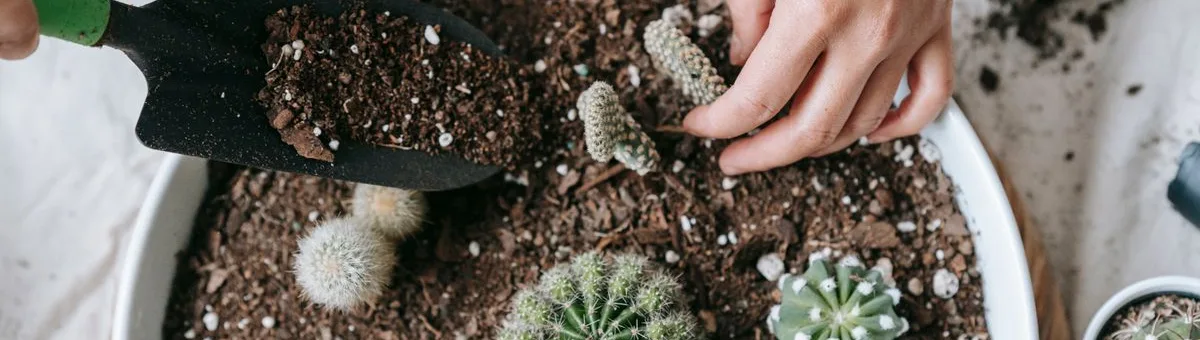
Repot when roots emerge from the holes, the plant becomes unstable, the mix no longer drains properly or the cactus has clearly outgrown its container. University of Florida IFAS Extension notes that cacti often like to be slightly pot-bound, so repotting is not automatically an annual task. Choose a slightly larger pot and keep the plant at its previous soil depth.
- Wear protection appropriate for the plant’s spines and prepare a clean pot with drainage.
- Ease the cactus out and inspect roots for soft, damaged or diseased areas.
- Use a coarse, well-drained mix around the root ball; do not add gravel as a false drainage layer.
- Wait a few days before the first watering so disturbed roots can settle, then water according to the plant and conditions.
After repotting, do not compensate for new mix by watering repeatedly. Confirm that water can leave the container and let the plant’s needs, season and light level set the next check. A container that drains cleanly gives you room to water thoroughly when needed; a container without drainage leaves you trying to correct a structural problem with smaller and smaller amounts of water.
Read the plant before changing the mix
Soft tissue, yellowing, a musty smell or mix that remains wet can indicate too much moisture, but they are not a diagnosis on their own. Inspect the pot, root zone and recent conditions before adding amendments or fertilizer. A shriveling plant can also be receiving too little water; the useful question is whether the roots are healthy and whether the mix is actually dry where they are growing.
Keep a short note of the plant name, pot material, last repotting and watering changes. This turns a generic soil problem into something you can compare over the season and makes it easier to ask a local horticulture service for help when symptoms persist.
Separate a soil issue from a light or temperature issue. A cactus moved from a bright position to a dark room will use water differently even if its mix did not change. Likewise, a healthy root system can decline after repeated small waterings that never wet the full root ball. Change one condition at a time and use the plant’s later response—not the first stressed leaf—as the evidence for your next decision.
Sources and editorial method
This is an evidence-led substrate guide, not a ranking of products. It was revised in September 2026 using university Extension sources. Tu Jardín Pro has not tested every commercial cactus mix or species, so the guide presents conditions and decision checks rather than product claims or universal recipes.
- Cacti and Succulents — University of Minnesota Extension
- Growing Succulents Indoors — Iowa State Extension
- All About Holiday Cacti — Iowa State Extension
- Cactus: repotting and container care — University of Florida IFAS Extension