

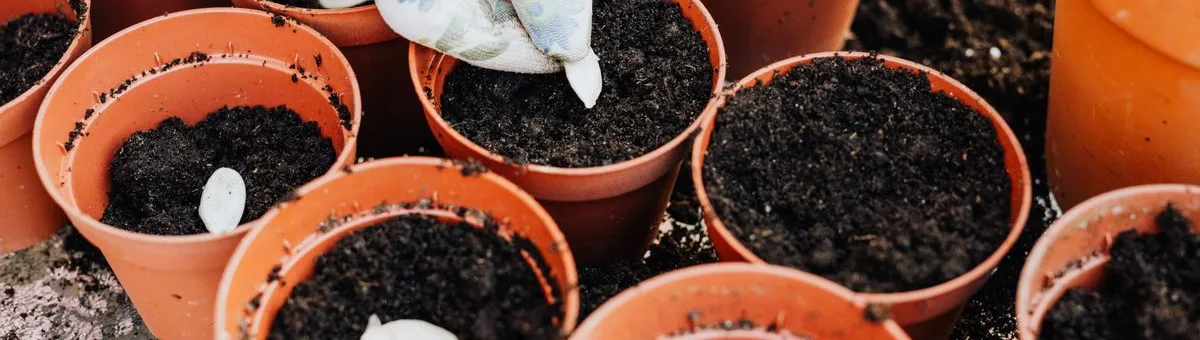
What potting mix is
“Potting soil” is a broad product name. Some products contain mineral soil; others are soilless mixes made from organic materials and lightweight mineral components. Either way, the product should be intended for the container and plant you are growing.
A container medium balances moisture retention, aeration, and drainage. As water moves through the mix, it displaces air from pore spaces. If excess water cannot drain, roots have less access to oxygen. At the same time, a mix that dries too quickly may require more frequent watering. Pot shape and height, weather, wind, and exposure all affect that balance.
Choose a mix for the job
| Use | What to look for | What to avoid |
|---|---|---|
| Houseplants and ornamental container plants | A mix labeled for containers, with a loose structure and ingredients listed | Choosing only by the word “all-purpose” without checking the intended use and texture |
| Cacti and succulents | A mix that drains readily and fits the climate, pot, and watering routine | Assuming every product labeled “cactus” works the same in every setting |
| Epiphytic orchids | A coarse, airy medium, commonly sold specifically for orchids | Using dense soil or fine general-purpose mix as if it were a medium for exposed roots |
| Seed starting | A uniform, fine mix intended for germination or propagation | Large particles that make consistent seed-to-moisture contact difficult |
| Raised beds or large planters | A product formulated for that volume and growing situation | Assuming garden soil, container mix, and raised-bed mix are interchangeable |
Plants within each group can have different needs. If a species has a particular pH, moisture, or aeration requirement, choose a labeled mix for that use or consult a reliable growing guide. For succulents, see our separate guide to cactus soil.
What common ingredients do
Labels may list peat, coir, composted bark, compost, perlite, vermiculite, sand, or other materials. Their proportions and effects vary between products. These descriptions explain general roles; they are not a recipe or a way to infer an exact formula.
- Peat or coir: can help retain water and contribute to a lightweight mix. A mix that dries excessively may become difficult to wet; rehydrate it gradually.
- Bark and coarse materials: contribute structure and larger spaces, which can help air move through mixes that need more aeration.
- Perlite, pumice, and other porous mineral components: can change aeration and drainage; they are not interchangeable in every proportion.
- Compost and starter fertilizer: may contribute nutrients, but products differ in amount and duration. Check the package directions.
Adding a set percentage of perlite or sand to every bag does not guarantee an improvement. If the original mix is already suited to the plant, changing it may make it dry too quickly or hold more water than the roots need.
How to read the label
- Intended use: check whether the product is for containers, seed starting, cacti, orchids, acid-loving plants, or raised beds.
- Ingredients: see which materials are included and whether the package gives composition details.
- Amendments and nutrients: check whether fertilizer has been added and how long the manufacturer says it supports initial growth.
- Directions: follow instructions for wetting, mixing, storage, and product safety.
For a sensitive species or edible crop, confirm that the mix is intended for that use. Do not infer pH, fertilizer content, or how long nutrients last when the label does not say.
Drainage: pot, mix, and watering
Drainage depends on the whole setup: growing medium, pot height and shape, outlet holes, and watering. A suitable mix cannot make up for a container with no way for excess water to leave. Keep drainage holes clear and do not let the pot sit in standing water.
A gravel or broken-pot layer at the bottom does not improve drainage through the mix. Water does not move across an abrupt change from fine to coarse material as expected, and the coarse layer reduces root space. The visual explanation from UC Master Gardeners on container drainage shows why a consistent medium and open drainage holes work better.
After planting, wet the whole mix and let excess water drain. If water runs down the sides without wetting the center, the mix may have become too dry or pulled away from the pot; rewet it gradually and watch how it responds.
When to refresh potting mix
Do not replace it just because a fixed number of months has passed. Look at the mix and plant: a medium that has compacted, drains differently, pulled away from the pot, or no longer wets evenly may need refreshing. Repotting may also be needed when roots have used most of the available space.
If roots are healthy and the pot still has room, it may be enough to remove some of the surface mix and top it up. If roots are soft, there is a bad odor, or damage has spread, investigate the cause before reusing the medium. Avoid reusing mix from a diseased plant until you understand the risk.
A quick check when repotting
- The pot has drainage holes and fits the root system.
- The mix is intended for the plant and container.
- Water wets the root ball and drains without pooling.
- The plant has suitable light and watering after the change.
For the container itself, see our guide to choosing plant pots; pot size and drainage matter as much as the growing medium.
Troubleshoot common potting-mix problems
A plant symptom rarely identifies the mix as the cause by itself. Check the pot, roots, light, temperature, watering history, and species needs before replacing the medium. A sudden change in a plant’s position or care can cause the same symptoms as a poor mix.
| What happens after watering | Possible explanations | What to check next |
|---|---|---|
| Water runs straight through and the center stays dry | Mix has become very dry, shrunk from the pot, or channels have formed | Moisten gradually and confirm the root ball wets evenly; do not assume more fertilizer will solve it |
| Water pools on the surface | Compacted or hydrophobic mix, blocked holes, or a very fine surface layer | Check the drainage outlets and whether the interior mix is still structurally sound |
| Mix stays wet and roots decline | Watering frequency, poor drainage, low light, cool conditions, or a mix too moisture-retentive for the plant | Check root condition, pot outlet, plant needs, and recent weather before changing ingredients |
| White crust on the surface or pot rim | Mineral residue from water or fertilizer can accumulate, depending on conditions | Review water quality and fertilizer directions; distinguish residue from pests or fungal growth |
| Plant wilts even though the medium is damp | Root injury, a saturated root zone, heat stress, or a pest or disease | Inspect roots and the whole plant; changing to a drier mix without diagnosis may add stress |
Record the plant species, pot material and size, mix label, watering pattern, and how quickly water drains. That information is more useful to a nursery or Extension diagnostician than the symptom alone. If a change is needed, correct one issue at a time and observe new growth; damaged leaves will not necessarily recover after conditions improve.
A careful repotting process
- Confirm the reason. Repot when roots have filled the available volume, the mix has broken down, drainage has changed, or the species needs a different medium—not simply because a new pot looks attractive.
- Choose the container and mix together. The new pot needs an outlet and enough space for the root system. Select a labeled medium that matches the plant and growing situation.
- Prepare the plant gently. Watering before repotting may make some root balls easier to handle, but follow the needs of the species. Remove the plant without pulling on stems and inspect roots without tearing healthy tissue.
- Set the original root collar at an appropriate depth. Avoid burying stems that are not meant to be underground. Fill around roots without compressing the medium into a dense mass.
- Water and monitor. Follow species-appropriate watering directions and let excess water leave the pot. Keep the plant in suitable light and watch for recovery rather than immediately applying extra fertilizer.
Some plants, including many cacti and epiphytic orchids, have different repotting needs and may not benefit from the same handling as common foliage plants. Use a species-specific guide or local horticultural advice when roots are delicate, the plant is diseased, or the correct depth is uncertain.
Store and handle potting mix safely
Read the package before opening it. Some mixes contain fertilizer, wetting agents, or other amendments; do not assume all bags are identical or suitable for every plant. Store the product as the manufacturer directs, keep it closed and dry when appropriate, and protect it from contamination by soil, pests, or diseased plant debris. Do not use an old open bag if it is moldy, contaminated, or its contents no longer match the labeled use.
Wear the protective equipment listed on the label, work in a ventilated area, and avoid breathing dust when handling dry media. Keep products away from children and pets, wash hands after use, and follow local disposal instructions. A growing medium is part of plant care, but it is still a packaged horticultural product whose safety directions matter.
Check a new mix before repotting a collection
When trying a new brand or formula, test it on one suitable plant before moving an entire collection. Compare the package’s intended use with the species you grow, then observe how the mix behaves in the actual container. A bag described as “moisture control” or “professional” is not automatically appropriate for every root system.
- Read the full ingredient statement and directions, including any fertilizer, wetting agent, or pH claim the manufacturer provides.
- Moisten a small amount as directed and note whether it wets evenly, holds its structure, and drains through a container with open holes.
- Pot one healthy plant that can tolerate normal repotting. Keep its light and other care conditions stable so the mix is the main change.
- Check drainage after watering and observe the plant’s new growth over time. Do not judge a mix from one watering or from damaged leaves that were already present.
This small trial cannot prove that a medium suits every plant, but it can reveal an obvious mismatch before a collection-wide change. If the plant declines, inspect roots and the rest of its care before blaming the mix alone. For high-value, sensitive, or diseased plants, use species-specific guidance or ask a horticulture professional before repotting.
📚 Sources and references
Authoritative sources consulted to write this guide:
- Growing Media (Potting Soil) for Containers — University of Maryland Extension
- Drainage in Containers — UC Master Gardeners of Santa Clara County
- Growing plants in containers — Royal Horticultural Society