

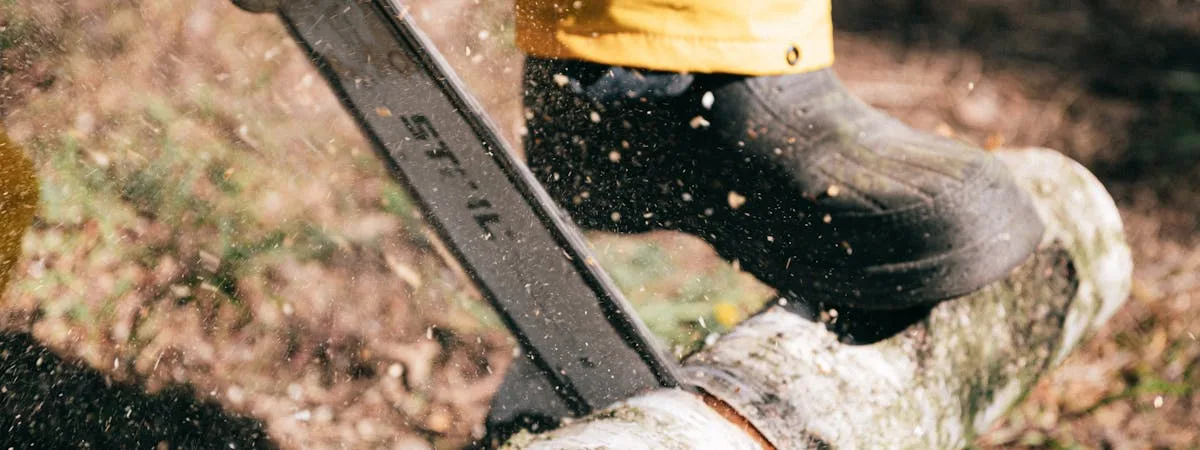
The origins of STIHL and Husqvarna
Understanding where these brands come from helps explain their product philosophy. STIHL was founded in 1926 in Stuttgart, Germany, by Andreas Stihl, who developed the world's first electric chainsaw in 1926 and the first one-man petrol chainsaw in 1950. The company remains family-owned and maintains its headquarters in Waiblingen, Germany. This family independence is reflected in its commercial policy: no Amazon, no DIY superstores — only selected specialist dealers.
Husqvarna has an even longer history: founded in 1689 as an armaments factory in the Swedish city of Huskvarna. Over the centuries it manufactured everything from rifles to bicycles and motorcycles before entering the chainsaw world in the 1950s. Today it is part of the Husqvarna Group, a multinational that also includes the McCulloch and Partner brands. This corporate structure explains why Husqvarna distributes through more conventional channels, including Amazon and specialist DIY retailers.
▷ STIHL vs Husqvarna: quick summary
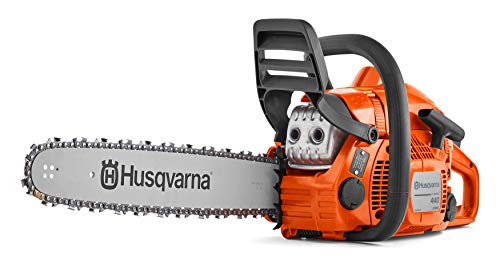
Husqvarna 450R Rancher — Semi-Professional Chainsaw 50.2cc
- ✓ Displacement: 50.2 cc
- ✓ Power: 2.4 kW (3.2 hp)
- ✓ Bar: 20 inches (50 cm)
- ✓ X-Torq low-emission engine
- ✓ LowVib anti-vibration system
- ✓ Inertia chain brake
- ✓ Weight without bar: 5.1 kg
Price from Amazon.com · ships within US

STIHL MSA 60 C-B Battery Chainsaw 36V
- ✓ 36V STIHL battery system
- ✓ 12-inch bar, quiet cutting
- ✓ No cable, zero emissions
- ✓ Perfect for tree pruning and firewood
Price from Amazon.com · ships within US
| Criterion | 🇩🇪 STIHL | 🇸🇪 Husqvarna | Advantage |
|---|---|---|---|
| Where to buy | Authorised dealers only Not on Amazon or DIY chains | Amazon + DIY retailers B&Q, Screwfix, etc. | Husqvarna |
| Semi-pro range power | MS 261: 2.8 kW / 50.2 cc | 450 Rancher: 2.4 kW / 50.2 cc | STIHL |
| Carburettor technology | M-Tronic (electronic management) | AutoTune (automatic adjustment) | Tie |
| Domestic range weight | MS 170: 3.9 kg | 120 Mark II: 4.3 kg | STIHL |
| Discount availability | Fixed dealer pricing Little room to negotiate | 10–15% discounts on Amazon Black Friday, end of season | Husqvarna |
| After-sales service | Excellent in rural areas | Wide urban dealer network | Depends on location |
| Battery range | AP System (36V) | BLi System (36V) | Tie |
| Ideal user profile | User who values raw power and has a nearby dealer | User who prioritises accessibility and competitive pricing | — |
Head-to-head comparison by range
Domestic range: MS 170 vs 120 Mark II
In the domestic range (for the occasional user who cuts firewood or prunes large garden trees), both the STIHL MS 170 and the Husqvarna 120 Mark II are lightweight, safe and easy to use even for the complete beginner. The STIHL MS 170 is lighter (3.9 kg vs 4.3 kg for the Husqvarna 120) and has a gentler starting action thanks to the Ergo-Start kickback-dampening mechanism. The Husqvarna 120 Mark II is more widely available in DIY stores and on Amazon, making purchase and price comparison much simpler. For occasional domestic use with softwood or semi-hardwood (fruit trees, cypress, eucalyptus), the performance difference between the two is practically imperceptible in real-world use.
Semi-professional range: MS 261 vs 450 Rancher
This is where the real battle between the two brands takes place. The STIHL MS 261 delivers more power (2.8 kW vs 2.4 kW for the Husqvarna 450 Rancher) from an identical 50.2 cc displacement, thanks to the M-Tronic electronic engine management system that continuously optimises combustion. The Husqvarna 450 Rancher features AutoTune, which automatically adjusts the carburettor to suit ambient conditions — particularly useful when working at varying altitudes or in large temperature swings. In practical use with medium-diameter timber, both cut with equal effectiveness. The difference comes down to ergonomic details, control placement and the personal preferences that develop through continued use of each machine.
Professional range: MS 461 vs 560 XP
In the professional range, the headline matchup is the STIHL MS 461 against the Husqvarna 560 XP. Both are professional forestry chainsaws designed to withstand full working days in demanding conditions. The MS 461 displaces 76.5 cc and produces 5.4 kW; the 560 XP offers 59.8 cc but with a high-efficiency engine design extracting 4.0 kW. The STIHL has more raw power; the Husqvarna 560 XP is valued for its excellent power-to-weight ratio and the reliability of its low-emission X-Torq engine. For professional foresters and arborists, the choice often comes down to which brand has the best service network in their area.
Key differences between STIHL and Husqvarna
Distribution and price
This is probably the most relevant difference for most buyers. STIHL does not sell on Amazon or in large DIY chains: authorised dealers only. This has advantages (personalised advice, official warranty) and drawbacks (you need to locate a dealer). Husqvarna sells on Amazon and through large retail chains, which makes buying and price comparison far easier. For urban users, Husqvarna's accessibility is a clear plus. On pricing, equivalent models have very similar list prices between the two brands. STIHL tends towards fixed dealer pricing with little room for discounts. Husqvarna on Amazon can be found with 10–15% discounts during events like Black Friday or end-of-season clearances.
Engine technology
STIHL introduces M-Tronic (electronic carburettor management) on its semi-professional models: it eliminates manual carburettor adjustment and automatically optimises the fuel-air mixture in every working condition. Husqvarna responds with AutoTune, which has a similar function but a different approach. Both systems reduce carburettor maintenance and improve cold starting. On operator protection, both brands are at the same level: inertia chain brake, left-hand guard, anti-vibration systems (Husqvarna LowVib technology vs STIHL metal anti-vibration buffers). The difference between equivalent models in the same price band is minimal in terms of active and passive safety features.
Battery chainsaws: STIHL vs Husqvarna
The battery revolution has reached professional chainsaws too, and STIHL and Husqvarna lead this segment. The STIHL AP System and Husqvarna BLi System are the two most advanced battery ecosystems for high-performance chainsaws on the market. The STIHL MSA 300 and Husqvarna 540i XP are the reference models from each brand in the professional battery chainsaw segment. For domestic battery use, both brands also have more affordable 18–36V models that offer more than enough performance for gardens and small plots. The advantage of buying into either brand's battery ecosystem is compatibility with the rest of their tool range: string trimmers, pruners, blowers and hedge trimmers that share the same battery.
Maintenance and spare parts
Maintaining a STIHL or Husqvarna chainsaw requires regular servicing of the air filter, chain oil filter, spark plug and chain tension. Both brands have well-documented maintenance schedules in their manuals and owner training materials. On spare parts availability, both are well served, though with differences: STIHL parts are obtained primarily through the authorised dealer network, while many Husqvarna replacement parts are available on Amazon and from DIY retailers. The most common wear items — filters, spark plugs, chains, bars — are easy to find for both brands. Engine or carburettor components require a visit to the authorised service centre for either brand.
Dealer network and regional availability
One of the most practical differences between STIHL and Husqvarna lies in how accessible each brand is depending on where you live. STIHL's exclusive dealer model means you need to locate an authorised dealer to buy, get advice, or arrange repairs. In rural areas and towns with agricultural activity, STIHL dealers are often easy to find. In city centers and suburbs, STIHL presence can be sparse. This model guarantees that every STIHL dealer is trained, certified, and can provide expert advice — a real advantage for first-time buyers unsure which model suits their needs. However, it also means you may need to travel 30–60 minutes to reach a dealer, and you have no price comparison options online.
Husqvarna's multi-channel distribution includes Amazon, large DIY chains (Lowe's, Home Depot in the US; B&Q, Screwfix in the UK; Leroy Merlin across Europe), garden centres, and specialist retailers. This means you can compare prices online, read customer reviews, and often receive the chainsaw within 1–2 days if you order from Amazon. For city dwellers and online shoppers, Husqvarna's accessibility is a major advantage. For users in remote areas who value in-person expert consultation, STIHL's dealer model may be preferable. Both brands also have authorised service centres beyond the main dealers for warranty repairs and major servicing.
Warranty and long-term value
Both STIHL and Husqvarna chainsaws come with manufacturer warranties typically covering 2 years (or a specific number of operating hours, whichever comes first) for manufacturing defects. Neither brand offers extended warranty options directly, though some retailers (like Amazon) provide accidental damage cover for an additional fee. STIHL's warranty is honoured exclusively through authorised dealers, which means you must contact your dealer for any warranty claim. Husqvarna's warranty can be serviced through a wider network of authorised service centers and some large retailers, making claims slightly more convenient if your local dealer is distant.
On resale value, STIHL chainsaws consistently achieve higher second-hand prices than equivalent Husqvarna models. A 5-year-old STIHL MS 261 in good condition typically sells for 55–65% of its original price, while an equivalent Husqvarna 450 Rancher of the same age fetches 45–55% of its original price. This premium reflects STIHL's reputation for durability and the perception among buyers that STIHL chainsaws hold up better over time. In reality, both brands are similarly durable when properly maintained — the price difference is largely a matter of brand perception and the exclusivity of the STIHL dealer network. If you plan to use a chainsaw for 10+ years and eventually sell it, a STIHL may provide slightly better financial value.
Long-term cost comparison
Comparing the total cost of ownership over 5–10 years requires looking beyond the purchase price. Fuel and oil costs are negligible differences between brands — both recommend the same fuel grades and chain oil viscosities. Maintenance costs are similar: annual servicing (chain sharpening, filter replacement, spark plug change) costs £30–50 regardless of brand. Spare parts and repair costs favour Husqvarna slightly because many common parts are available on Amazon at competitive prices; STIHL spare parts are typically more expensive and require ordering through a dealer.
The main cost variable is chain and bar replacement. A professional-grade safety chain for a 50cc chainsaw costs £25–40, and a replacement bar costs £35–60 for either brand. After 50–100 hours of cutting, even occasional users will need at least one chain sharpening or replacement. Over a decade, expect to spend £200–400 on chains and bars combined. Fuel consumption is virtually identical between equivalent models: a 50cc domestic chainsaw consumes roughly 1 litre of fuel per 20–25 hours of work.
The hidden cost advantage belongs to STIHL in one specific scenario: if you live near an authorised STIHL dealer who offers seasonal tune-ups and preventative maintenance packages. Some rural STIHL dealers bundle annual servicing with purchases, which can save £50–100 over the chainsaw's lifetime. Conversely, if you're an urban buyer who services your own chainsaw (simple maintenance tasks like chain sharpening and filter cleaning), Husqvarna's availability of DIY parts and video tutorials gives it a slight cost edge. For a typical owner with occasional-to-moderate use, the lifetime cost difference between the two brands is negligible — probably less than £100 over 10 years.
Which to choose? Final verdict
Choose STIHL if: you have a good authorised dealer nearby, you value expert advice at the point of purchase, and you want the chainsaw with the most power-per-cc in its class. The STIHL service network is excellent in rural areas and the resale value of second-hand STIHL chainsaws is notably higher than the competition — relevant if you plan to trade up in the future.
Choose Husqvarna if: you prefer buying online or from a large DIY retailer without travelling to a specialist shop, you want the most convenient price comparison, or you need AutoTune for work at different altitudes. The range of Husqvarna accessories on Amazon is very comprehensive, making it easy to expand the chainsaw's capabilities with different-length bars, specialist chains or official maintenance kits.
One final practical consideration: if you already own other garden tools from one brand in the battery ecosystem, it makes strong sense to stay with the same ecosystem to share batteries across tools. Both the STIHL AP and Husqvarna BLi systems are mature ecosystems with a wide range of compatible tools. Visit our complete chainsaw guide 2026 to compare all models from both brands in detail.