

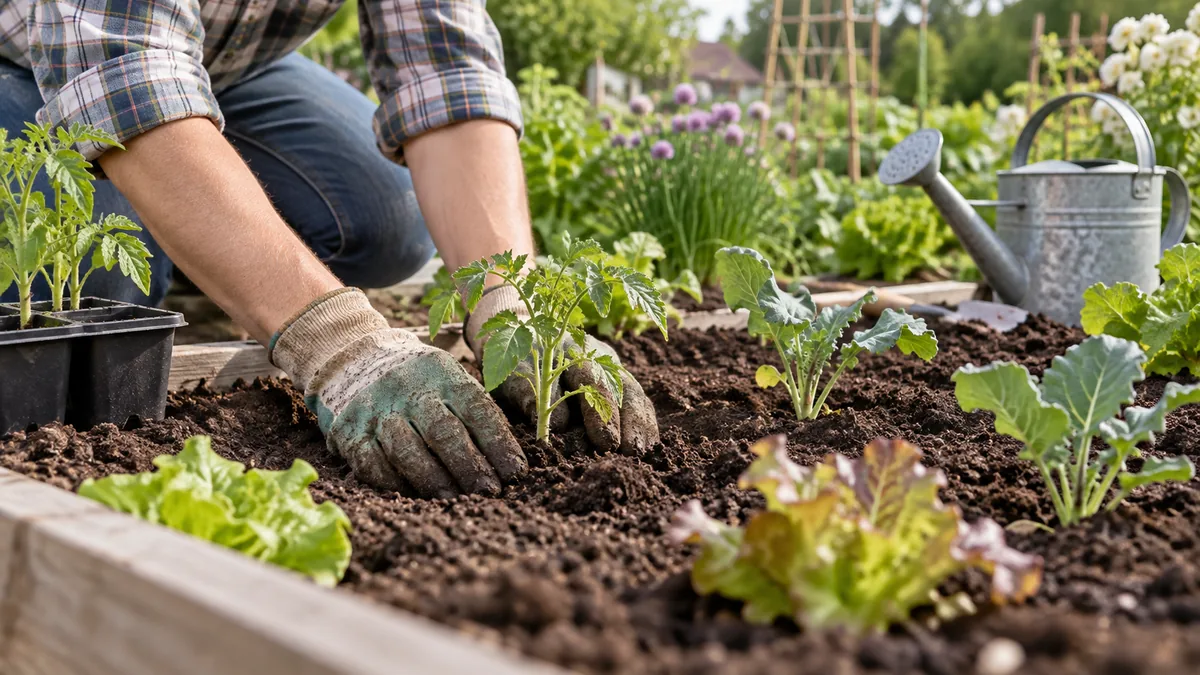
Start with frost, soil and local timing
Before planting, check the forecast, last-frost guidance and soil temperature for the crop. May is not the same growing stage across the United States. Use the county Extension calendar and seed packet to decide what can be planted or harvested.
See UMN Extension’s May checklist for Minnesota-specific tasks.
Plan vegetable tasks by crop and frost risk
Cool-season and warm-season crops have different temperature needs. Follow the packet for sowing depth, spacing and maturity, and harden transplants gradually according to Extension advice. Do not use a fixed May date or spacing rule for every state and cultivar.
Check plant labels and local frost guidance before moving tender crops outdoors.
Use crop tolerance, not a generic last-frost date, as the final check. Peas, lettuce and other cool-season vegetables can be sown under cooler conditions than tomatoes, peppers, squash or basil, but soil still needs to be workable and not saturated. Warm-season transplants can be set out only after local frost risk and night temperatures are suitable for that crop. A raised bed may warm sooner than surrounding ground, while a low hollow or exposed rural site can remain colder than a nearby town.
Read the seed packet for planting depth and thinning, and label rows so young seedlings are not mistaken for weeds. If you direct-sow small seeds, keep the seed zone evenly moist while germination begins; a hard crust or drying surface can prevent emergence. Use succession planting only within the crop’s local temperature window: a second sowing of lettuce may suit a cool spring, but the same timing can fail as heat arrives.
Harden off seedlings before planting outdoors
Plants grown indoors or in a greenhouse need time to adjust to wind, direct sun and outdoor temperature swings. Begin with a sheltered, shaded location for a short period, then increase exposure gradually over several days while monitoring leaves and soil moisture. Bring tender plants in or protect them when cold nights or strong winds are forecast. A sudden move from a bright window to all-day direct sun can scorch leaves even after frost danger has passed.
Before transplanting, water the root ball so it holds together, choose a cool or cloudy part of the day when possible, and follow the crop’s planting-depth instructions. Avoid disturbing roots more than necessary. Water in according to the crop and soil, then check the root zone again rather than watering by a fixed daily rule. Keep row covers only when they fit the crop and local weather, and remove them when heat or pollinator access makes that necessary.
Match lawn tasks to grass and local growth
Grass species, rainfall and local nutrient rules determine whether mowing, seeding or fertilizing is appropriate. Avoid applying fertilizer by calendar alone; use a soil test and local Extension recommendation. Set mowing height according to the grass species and do not scalp the lawn.
Walk the lawn after it begins growing and note bare patches, winter injury, drainage, shade and compaction before choosing a repair. Rake only matted areas where that helps turf; aggressive spring raking can damage healthy grass. If reseeding, check the seed label for grass type and regional suitability, and time the work for that grass’s local establishment window. Do not assume the best repair month for cool-season turf also applies to warm-season turf.
Set the mower at a height appropriate to the species and remove no more than the recommended portion of the blade at one mowing. Leave clippings only when they are small enough to fall into the canopy; clumps can shade grass. If fertilization is permitted and needed, calibrate the spreader, keep granules off sidewalks and follow any local phosphorus restrictions and label directions.
Plant and divide flowers by species
Use local frost guidance for annuals and check each perennial’s planting or division window. Leave healthy stems where they provide habitat unless disease management or access requires removal. Follow species-specific pruning instructions rather than a universal May calendar.
Inspect nursery plants before buying. Look for healthy roots, firm stems and foliage without spreading spots, sticky residue or active pests. Read the mature-size and light requirements on the tag and decide whether the plant fits the bed before planting; crowded spacing creates future pruning and airflow problems. When a perennial is not yet identifiable, wait for more growth before removing it as a weed.
For spring bulbs, remove faded flowers if seed production is not wanted but leave green foliage in place until it yellows naturally. The leaves replenish the bulb for the next season, and tying or braiding them reduces the leaf area available to the plant. When dividing or moving perennials, use a species-specific window and keep roots moist while working. May is not the right month to divide every flower.
Inspect irrigation before changing the timer
Check for leaks, clogged emitters, misdirected spray and runoff before increasing irrigation. Measure output where possible and check soil moisture near roots. Adjust timers for rainfall, soil and crop stage; no fixed run time suits every system or bed.
Follow local water restrictions and manufacturer instructions for the installed equipment.
Run each zone briefly and look for broken heads, low-pressure areas, water spraying windows or pavement, and emitters that miss the root zone. Place catch cups across a sprinkler zone if you need to compare coverage; a controller runtime alone does not show how evenly water reaches a bed. For drip lines, inspect filters and flush ends according to the manufacturer, then confirm that each plant receives water where its roots are growing.
Keep a manual record of rainfall and soil moisture for a few weeks before changing the schedule. Containers, newly planted shrubs and established garden beds dry at different rates. If your area has water restrictions, set timers to permitted days and use rain shutoff features where installed. Repairs made before a heat wave are easier than diagnosing a wilting bed after the timer has been increased several times.
Identify pests before treatment
Inspect young growth and leaf undersides for damage, then identify the pest. Some insects are beneficial or cause little harm. Use physical or cultural methods where suitable; if applying a pesticide, follow the exact product label for crop, pest, safety and pollinator precautions.
Look for a pattern: holes, stippling, webbing, curled tips, sticky honeydew, chewed stems or a sudden collapse point toward different causes. Check the underside of leaves and nearby healthy plants, and photograph the whole plant plus the damage. A single insect on a leaf may be a predator rather than the pest. Remove heavily damaged leaves only when it will not weaken the plant, and check whether a disease can persist in home compost before discarding debris there.
Do not apply a broad-spectrum pesticide because one insect was spotted. Identify the organism, decide whether damage is increasing and preserve natural enemies where possible. If you use a product, verify that the exact label includes the crop, pest and site, and observe pollinator and pre-harvest directions. A month checklist cannot replace a current diagnosis or local regulations.
Prune flowering shrubs by bloom timing
Before pruning, identify whether a shrub flowers on old or new wood and confirm its local pruning window. Cutting at the wrong time can remove buds, but the right timing depends on the species and region. Use a local Extension guide rather than a universal “prune in May” instruction.
Many spring-blooming shrubs are pruned after flowering because they set next year’s flower buds later in the growing season, but there are exceptions. Remove only dead, broken or crossing branches that you can identify, and use clean, sharp tools. Do not shear a shrub into a tight shape unless the species and landscape goal suit that approach; repeated shearing can create dense outer growth and poor light inside.
For shrubs that bloom later in summer, the appropriate pruning window may differ. A plant with unknown identity should not be cut to a generic height. If a branch is large, high, near power lines or structurally unsafe, use a qualified professional rather than treating a seasonal checklist as pruning instruction.
Harvest when crops reach their usable stage
Harvest timing depends on the crop, cultivar and local sowing date. Use the seed packet or Extension guide for maturity expectations, then inspect the plant rather than counting from a national calendar date. Frequent harvesting may suit some crops but not all.
Peas and leafy greens may be ready before warm-season crops in cooler regions, while other gardens may still be waiting for the soil to warm. Harvest at the intended stage and use clean tools, especially where disease is present. If a crop is producing more than the household can use, share or preserve it safely rather than letting overripe fruit attract pests. Record the harvest date and variety to improve next year’s planting plan.
Settle new plants in and protect early growth
After planting, check for wind exposure, frost forecasts, dry seedbeds and newly transplanted roots. Water the root zone when the soil and crop need it, not because a timer was set months ago. Use a temporary cover only when the crop, temperature and forecast make it useful; remove or vent it when conditions become warm. Stake plants only if the species and site require support.
Keep a May checklist flexible: inspect, measure, plant what conditions allow and reassess after weather changes. The UMN Extension May checklist is a Minnesota example and includes frost-sensitive warm-season plants, lawn growth, bulb foliage and other local tasks. Use your own county or state Extension calendar for dates and crop-specific recommendations.
Track transplants and planting conditions through May
Keep a simple planting record for the month: crop or cultivar, sowing or transplant date, bed location, frost protection and any early stress. Check new transplants after planting for loose root balls, leaning stems, broken leaves and dry soil around the roots. Water to settle the root zone when needed, then check moisture before repeating; constant saturation can be as damaging as a dry root ball.
Separate frost preparation from watering and feeding decisions. A forecasted cold night may require a breathable cover or moving a container, while fertilizer will not protect tender growth from frost. Remove covers when temperatures rise according to the covering product’s directions, and check that they have not crushed or overheated plants. Keep seedlings sheltered from strong wind and direct sun while they adjust, then increase outdoor exposure gradually according to the crop and weather.
Recheck spacing as plants grow. A seedling that looked small in the nursery tray may need the mature width listed on its tag or seed packet, and crowded plants can be harder to inspect and water evenly. If a plant fails soon after transplanting, inspect roots and moisture, review the weather and compare nearby plants before replacing it or adding a treatment. The UMN May checklist provides regional timing examples; use your local Extension service for frost dates and crop-specific planting windows.
Choose between May direct sowing and transplanting
Decide whether to direct-sow or transplant by checking the crop’s instructions, local temperatures, soil condition and the time remaining in the growing season. Some crops establish better from seed in place, while others are commonly started indoors or purchased as transplants. Read the seed packet and plant tag for sowing depth, spacing, light and temperature needs; do not treat a neighbor’s date as a universal schedule.
Before direct sowing, prepare a bed that is free of large clods and has moisture appropriate for the seed. Small seeds can be buried too deeply or washed away by heavy irrigation, so follow the packet and water gently. Mark rows with the crop name and sowing date; this makes it easier to distinguish seedlings from weeds and compare emergence when temperatures vary.
For a transplant, check the root ball and plant label before setting it at the recommended depth. A pot-bound root system may need gentle handling according to the plant’s needs, while fragile roots should not be torn unnecessarily. Water the root zone after planting if the soil is dry and support tall or wind-exposed plants only when the species or site requires it. Keep mulch away from stems and avoid compacting wet soil around new roots.
After sowing or transplanting, protect plants from the conditions they have not yet adapted to: cold nights, drying wind, intense sun or heavy rain. Keep a breathable cover ready for frost-sensitive crops and remove it as conditions warm. Check for pests on young growth and replace only plants that fail after you have reviewed moisture, root health and the forecast. A flexible plan and local Extension timing are more reliable than planting everything on a single May weekend.
Frequently Asked Questions
Use frost dates and soil temperature to decide what May means where you live. Cool-season crops can tolerate conditions that tender crops such as tomatoes, peppers and basil cannot. Check the local forecast and your county Extension planting calendar before transplanting; even nearby locations can have different frost risk. See UMN’s May checklist for a regional example and consult your own Extension service for dates.