

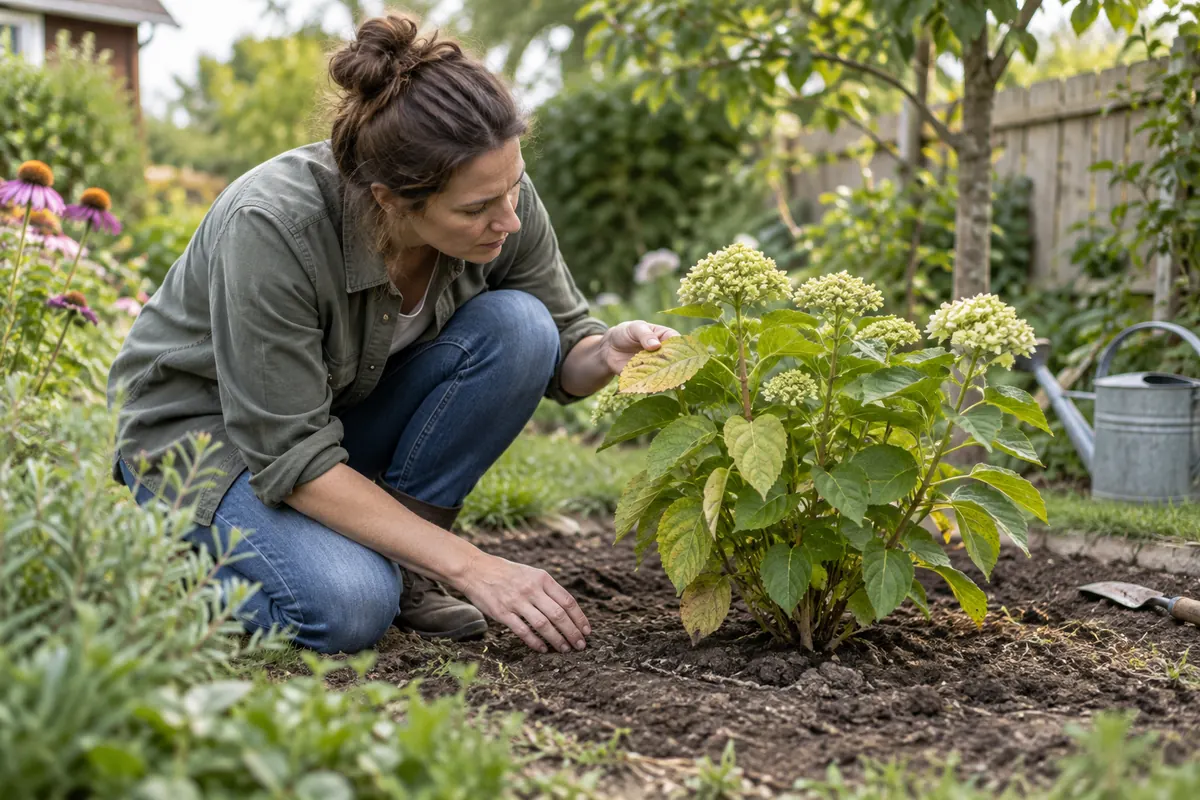
1. Watering by calendar instead of checking moisture
Different plants, containers and soils dry at different rates. Check moisture near the roots, confirm drainage and account for rainfall and weather. Wilting can result from too much or too little water, so inspect before adjusting irrigation.
Check several locations and depths, not just the surface of one bed. A pot that feels light may need water while a pot with saturated mix may be wilting because roots lack oxygen. Look for water standing in the saucer, a root ball pulling away from the pot or soil that remains wet long after irrigation. Adjust one watering at a time, then check how the plant responds before changing the timer again.
For a lawn or large bed, use a rain gauge or irrigation measurement rather than guessing how long the system ran. Water needs shift with plant stage, wind, temperature and soil texture. Follow local restrictions, and water early enough that any wet foliage dries according to the crop’s disease-management guidance.
2. Changing soil without testing it
Texture, structure, pH, nutrients and drainage are separate properties. Use a soil test for pH and nutrient decisions; observe site drainage and avoid working wet soil. Do not add lime, fertilizer or sand by guesswork.
A jar test can offer a rough particle-settling picture, but it cannot report salinity, organic matter or plant-available nutrients. A laboratory test is more useful when choosing lime or fertilizer, while field observation helps reveal compaction, standing water and construction fill. Keep samples from lawn, vegetable beds and different planting areas separate when their histories differ. The garden soil types guide explains why texture is only one part of soil condition.
3. Treating a hardiness zone as a complete climate guide
The USDA Plant Hardiness Zone Map describes average annual extreme minimum winter temperature; it does not capture summer heat, rainfall, humidity, soil or exposure. Use it as one filter, then confirm plant fit with local Extension guidance and the nursery label.
See the USDA map and a regional plant guide.
A zone is useful for comparing a plant’s winter survival rating with a location, but it is not a planting calendar or a measure of how well the plant will handle summer heat. Two yards in the same zone can differ because of elevation, wind, shade, slope, reflected heat and drainage. Before buying, match the plant’s light and moisture needs to the actual site and check a regional source for local pest, soil and climate conditions.
4. Pruning without identifying the plant
Pruning can remove buds, expose sensitive tissue or spread disease if done at the wrong time or with contaminated tools. Identify the species and flowering habit, then follow local pruning advice. Do not use one month-based rule for every shrub or tree.
Spring-blooming shrubs often flower on wood formed the previous year, so pruning before bloom can remove buds. Other plants flower on new growth and may have a different window. Remove dead, broken or crossing branches only when you can identify them; do not top trees or cut large limbs near power lines. Clean tools between plants when a contagious disease is suspected and use a professional arborist for structural work beyond your skill or equipment.
5. Ignoring drainage and root conditions
Waterlogged roots can resemble drought stress. Check drainage, compaction, slope and the growing medium before watering more or adding amendments. A home percolation test can reveal a concern, but no single waiting-time threshold diagnoses every site; ask Extension if water remains standing.
Inspect drainage after a normal rain rather than during an exceptional storm. Look for persistent puddles, runoff paths, a sour smell, moss, root rot or plants that decline in the same low spot. Check whether downspouts or irrigation are sending extra water to that area. Small changes such as redirecting a downspout may help, while a high water table, construction compaction or grading problem may need professional advice. Avoid adding sand or gravel into the bottom of a planting hole as a universal drainage fix.
6. Planting from the current pot size
Use the plant label’s mature size and spacing, not the nursery pot’s footprint. Crowding can reduce airflow and access, but spacing depends on species, cultivar, pruning and garden purpose. Leave enough room to reach and maintain each plant.
Sketch the bed with mature widths before planting, and account for paths, irrigation access, sunlight and the spread of neighboring roots. A small pot may contain a tree or shrub that eventually needs substantial space. Crowding can increase competition and make it harder to see pests or reach the center of plants. If the spacing is already tight, transplant smaller plants while they are suitable for moving rather than repeatedly shearing them to fit.
7. Fertilizing without a measured need
More fertilizer does not guarantee better growth and can damage plants or contribute to runoff. Test soil when appropriate, follow crop guidance and use the exact product label. Do not apply a generic spring and midsummer schedule to every planting.
Leaf color alone cannot identify which nutrient is missing. Water, roots, pH, disease, pests and cold soil can all limit growth or imitate deficiency. Check the product’s analysis and measure the recommended amount rather than pouring by eye. Include compost and manure in the nutrient history, and keep granules away from pavement and drains. For persistent symptoms, use a representative soil or tissue test and the plant nutrient diagnosis guide.
8. Filling containers with dense garden soil
Garden soil can compact in pots and drain poorly, though the right medium depends on the crop and container. Use a container medium suited to the plant, ensure drainage and follow regional Extension guidance for container growing.
Container mixes are engineered to balance pore space, air and water in a confined volume; garden soil changes behavior when compressed inside a pot. Make sure the container has drainage holes and select a mix for seedlings, orchids, succulents or general foliage plants as appropriate. Do not add gravel to the bottom as a substitute for a correctly sized drainage hole or suitable medium. Refresh or replace mix when it has broken down, become water-repellent or developed a recurring pest problem.
9. Repeating crops without checking disease history
Crop rotation can help manage certain soilborne pests and diseases, but the needed rotation interval and plant family depend on the problem and garden size. Keep a planting record and follow local Extension guidance when a disease or pest is identified.
Rotation is not a universal cure: some pathogens persist for several years, spread from nearby hosts or affect plants in more than one family. Group crops by botanical family and record where they grew, but also remove infected residues when recommended and choose resistant varieties where available. In a small raised bed, rotation options may be limited; soil replacement, sanitation or a different crop can be more practical depending on the identified disease.
10. Treating pests before identifying them
Inspect damage and identify the pest before choosing a control. Beneficial insects and harmless species may be present, and broad-spectrum sprays can cause non-target harm. Start with cultural or physical methods where suitable and follow the exact pesticide label if treatment is justified.
Photograph the whole plant and a close-up of the damaged tissue, then look under leaves and along stems for live pests. Record when the issue started and whether new growth is affected. If you cannot identify the organism, contact a local Extension diagnostic service before applying anything. Do not assume every hole, white patch or web is an insect problem, and do not repeat an ineffective treatment at a higher concentration.
A simple way to make better garden decisions
- Identify the plant and the problem.
- Check roots, moisture, light, weather and site conditions.
- Use local Extension guidance or a soil test where appropriate.
- Change one factor at a time and observe the response.
- Follow labels and local rules for products or amendments.
Use a short diagnostic checklist before changing care
When a plant declines, write down what changed before applying a fix. A useful record includes the plant and cultivar, location, watering, recent weather, fertilizer or pesticide use, symptoms and affected leaves. Compare the plant with a healthy one of the same species if possible. If one bed is affected, look for soil, irrigation or exposure patterns; if one branch is affected, check localized injury or disease.
| Signal | Next check | Why it helps |
|---|---|---|
| Many plants wilt after irrigation | Root-zone moisture, drainage and emitter coverage. | More water can worsen oxygen loss if the soil is already saturated. |
| Only plants in one soil area decline | Compaction, fill, pH, salts and representative soil test. | Site differences can mimic a plant-wide nutrient problem. |
| New leaves deform or discolor | Leaf undersides, pests, herbicide drift and recent weather. | Young growth can show injury before older leaves do. |
| Damage follows a recent treatment | Product label, rate, timing and treated area. | Spray or fertilizer injury may resemble disease or deficiency. |
Change one manageable factor and wait for new growth before judging the result. Old leaves may not recover even when the cause is corrected. For symptoms that spread, affect edible crops or threaten a valuable tree, seek a local diagnostic service instead of continuing with trial-and-error applications.
Use a simple garden record to avoid repeat mistakes
When something goes wrong, avoid making several changes at once. Record the plant and cultivar, location, date, recent weather, watering, fertilizer or pesticide use, and what changed first. Photograph the whole plant as well as the damaged leaf or stem. These details make it easier to separate a site-wide problem from one plant’s issue and help an Extension diagnostic service interpret the pattern.
Choose one likely cause that you can check safely, such as a blocked drain hole, dry root zone, crowded spacing or a visible pest. Correct that factor according to plant-specific guidance, then watch new growth and nearby plants before adding another intervention. Damaged leaves may remain damaged after the cause has been fixed, so judge progress by new growth and whether symptoms are spreading. Keep the package label and soil-test report with your notes when either informed the action.
If the symptom spreads, affects many plants or follows a product application, pause before repeating the treatment. Contact local Extension, a diagnostic clinic or a qualified arborist for a persistent disease, suspected herbicide injury or a valuable tree problem. The USDA hardiness map and soil-type guides answer useful planning questions, but neither replaces a diagnosis of what is happening in a specific garden.
Use a diagnostic sequence before changing garden care
When a plant looks unhealthy, work through a short sequence instead of reaching for fertilizer or pesticide:
- Identify the plant. Find its species or cultivar and expected growth habit.
- Describe the pattern. Note the age of affected leaves, where symptoms occur and whether nearby plants share them.
- Check the root zone. Feel soil moisture, look for standing water and inspect drainage or container holes.
- Review recent changes. Record weather, transplanting, pruning, irrigation, feeding and product applications.
- Confirm a likely cause. Use a diagnostic guide, soil test or local Extension service before treating an uncertain problem.
- Change one factor. Follow plant-specific advice and observe new growth before adding another intervention.
This sequence reduces the chance of stacking fixes that interact. Extra fertilizer can worsen a salt or root problem; more water can compound waterlogging; a broad pesticide can remove beneficial insects while leaving the actual cause untouched. If symptoms continue to spread, keep the plant label, soil report and product package available when asking for help.
Use photos from the same angle and lighting when comparing progress. Include the whole plant and close-ups of the affected area. Older damaged leaves may not recover, so note whether new leaves are healthy and whether the problem is moving to additional plants. This small record can turn a vague question into a useful diagnostic request and prevent the same mistake next season.
Frequently Asked Questions
Diagnose the growing condition before changing several things at once. Record the plant, site, watering, weather and symptoms; change one factor, then observe new growth. For fertilizer and soil changes, use a local soil test rather than a visual guess. For planting dates and cold tolerance, use local frost guidance rather than a single nationwide calendar. See UMN’s soil test guidance and its regional timing example.