

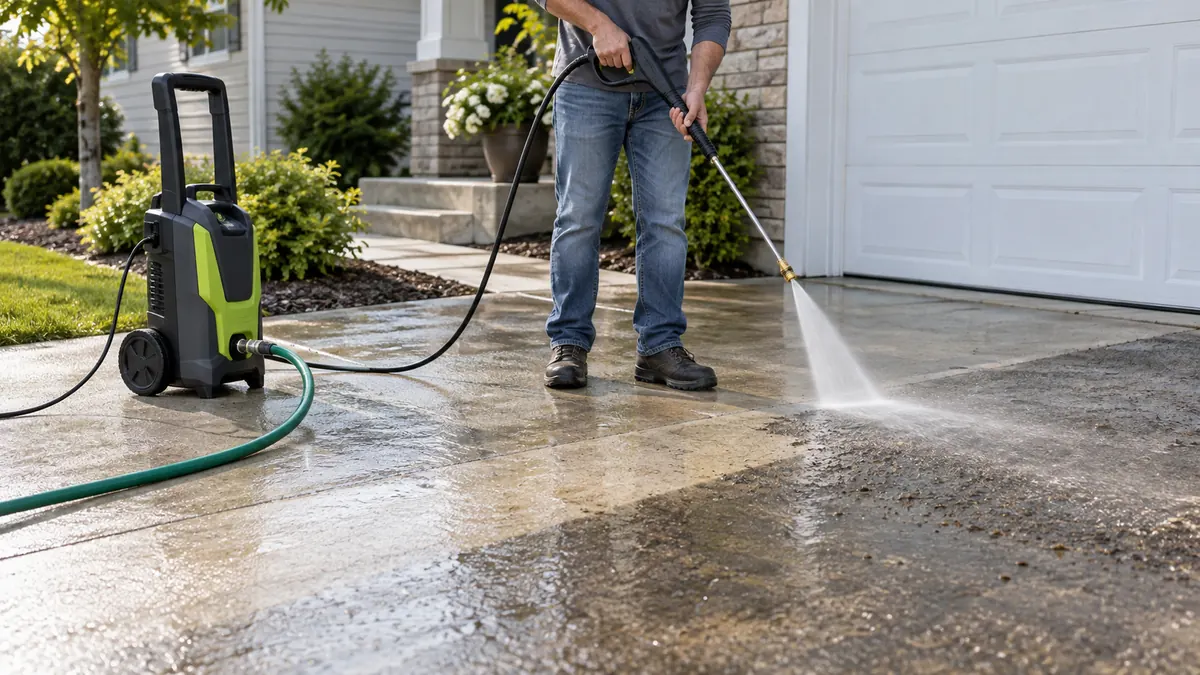
CRAFTSMAN CMEPW1700 published ratings
- CRAFTSMAN CMEPW1700: 1,700 max PSI and 1.2 GPM with 40-degree nozzle; includes 40-degree and turbo nozzles per manufacturer.
- The exact manufacturer page identifies the CMEPW1700 and specifies the nozzle associated with its pressure/flow ratings.
- Older product listings for other washers were unavailable or could not ship to the previously selected destination; they are not presented as current recommendations.
Amazon.com identifies ASIN B085285X4J as the CRAFTSMAN CMEPW1700 and shows more than 10 customer ratings, but the listing snapshot reviewed displayed no featured offer. The Amazon.es page had a separately verified offer during the Spain-side review; this EN page does not send a buyer from a US-focused guide to that regional offer. Confirm the nameplate and local electrical standard before considering any imported unit.
Match the washer to a real cleaning job
Start with the hardest recurring job, not an occasional extreme case. A car, patio furniture and a small path usually call for control, convenient hose handling and an appropriate fan spray. A large paved area benefits from water flow and a surface-cleaner attachment. A painted facade or wooden deck may be damaged by pressure even when the machine is within its rated output.
Check whether the model is intended for intermittent domestic cleaning or longer duty. Look in the manual for cool-down periods, supply requirements, inlet temperature, pump maintenance and maximum session guidance. A higher maximum pressure does not prove that the pump is designed for longer continuous work.
A corded electric washer is often the easiest format to maintain around a home, but the electrical cord creates a route-planning constraint. It can suit recurring jobs near a protected outdoor outlet, such as rinsing a small patio or bicycle. If the cleaning area is far from power, the cord may be awkward; if the work is a whole driveway, flow and hose reach can matter more than extra maximum PSI.
List the surfaces you clean and rank them by frequency. Then decide which are actually suitable for pressure washing. A machine that is adequate for a car and outdoor furniture may be inappropriate for damaged masonry or old paint. For fragile materials, compare a low-pressure cleaner, hand washing or a garden hose rather than buying a larger pump.
If an electric model cannot meet a documented water-flow or duty requirement, compare another format instead of removing a safety guard or using an unapproved nozzle. A gasoline washer has separate ventilation, fuel and service requirements; a battery cleaner has a different pressure class and water supply. The gas washer guide and battery cleaner guide explain those trade-offs.
Compare pressure and flow together
- Compare maximum pressure and water flow together, checking the nozzle and measurement conditions for each rating.
- Review the included spray tips, hose length, detergent system, pump and replacement-part availability.
- Match the washer to the surface and begin with a wider nozzle at a safe distance.
- Use outdoor-rated electrical protection and keep plug connections away from water.
Nozzle, distance and surface material
A spray tip controls the shape and concentration of the water jet. A wider fan is usually easier to control over delicate surfaces; a narrow or turbo nozzle can remove stubborn residue faster but can also strip paint, carve soft wood or damage pointing. Follow the washer's instructions for each nozzle and use the largest safe distance first.
Test an inconspicuous spot, move the wand steadily and avoid holding the jet on one point. For a vehicle, do not aim directly at tires, bearings, electrical connectors, chipped paint or seals. For timber, work with the grain and avoid lifting fibers. For masonry, check the state of mortar and joints. If a surface is cracked, flaking or porous, manual cleaning or a low-pressure rinse may be safer.
A surface cleaner can reduce splash and produce a more even result on a suitable hard floor, but verify connector compatibility, required flow and cleaning path. It does not make every floor safe for high pressure; test a small area and stop if the finish changes.
For siding and exterior walls, inspect paint, seals, joints and electrical penetrations before cleaning. Water can be driven behind a loose joint or into a damaged coating. Follow the cladding or paint manufacturer's cleaning advice; if pressure washing is not permitted, use a softer method. For concrete with moss or embedded soil, pre-treatment and a compatible surface cleaner may be safer than holding a narrow tip close to the slab.
After a test pass, check for raised wood grain, faded paint, loose mortar or water entering gaps. Stop if the surface changes. Work from a stable position, avoid ladders while holding the spray gun, and secure the hose so it cannot pull you off balance. A pressure washer is not a substitute for safely reaching high areas.
Water supply, outlet and hose reach
Before setup, read the inlet water requirements and use a hose that can supply the flow without kinks. Clean the inlet filter and connect the water before starting the pump. Purge air according to the manual. Do not assume an electric pressure washer can draw water from a bucket; self-priming capability depends on the pump and must be documented for the exact model.
Plan the route from outdoor outlet to work area. Use only the electrical protection and extension arrangements allowed by the manual, keep plugs and connectors dry, and route the cord where it cannot be sprayed, pinched or tripped over. Do not use an indoor outlet or a damaged extension cord outdoors. Check GFCI operation as CDC advises.
Hose length affects comfort but also handling and storage. A hose that is too short may pull the machine or snag on corners; an extended hose should meet the washer's pressure rating and connection type. Confirm quick-connect sizes, replacement availability and whether the included lance reaches the ground without bending awkwardly.
Set up in the order required by the manual
- Place the washer on a stable, dry surface with ventilation around its motor and pump.
- Inspect the water inlet filter, hose, wand, nozzle and power cord for damage.
- Connect an adequate water supply and purge air from the system as the manual directs before switching on.
- Use the listed GFCI or other outdoor electrical protection and keep plug connections dry.
- Start with a wide nozzle and test an inconspicuous patch before cleaning the main area.
If the flow pulses, pressure drops or the pump makes an unusual sound, stop and check the water supply, filter, kinks and nozzle using the troubleshooting section of the manual. Do not continue running a pump without its required water feed. Avoid taking apart a high-pressure connection while the system is pressurized.
Use detergent and accessories selectively
Use only detergents approved for the washer and the surface, and apply them through the specified bottle or injection setting. Let the product work for the time given on its label; do not let it dry on paint or glass. Rinse with a suitable nozzle and follow local rules for runoff, especially around storm drains and garden beds.
A turbo nozzle concentrates energy and should be kept away from delicate materials. A surface cleaner can reduce splash on a compatible flat floor, but its connector and required flow need to match the washer. Neither accessory changes the machine's rated pressure or makes a damaged surface safe to wash.
Listing identity is not a test result
Manufacturer ratings describe a named model under the maker's conditions. They do not prove that it cleans faster or lasts longer than another washer. No hands-on comparison or ranking is claimed here. The CRAFTSMAN ASIN was checked as an exact model, but the Amazon.com snapshot reviewed showed no featured offer; the separately verified Amazon.es offer is not represented as a US offer. Recheck local availability and voltage before buying.
GFCI, injection injury and cord safety
CDC advises testing the GFCI, grounding the washer, keeping cord connections away from water, never aiming at people and keeping children away. High-pressure injection injuries can look minor; seek medical attention immediately.
Wear eye protection and closed footwear, and keep bystanders away from the work zone. Do not clean clothing or skin while wearing it. Release pressure before changing a nozzle or disconnecting a hose. For any high-pressure puncture, seek urgent medical care rather than waiting for symptoms to worsen.
After use, switch off the machine, disconnect the water and follow the manual to release trapped pressure. Store the washer dry and protect the pump from freezing according to manufacturer directions. Inspect hoses and fittings before the next session; replace damaged parts with pressure-rated components.
Keep the manual, purchase record and model label information together. When ordering a replacement nozzle, hose or pump part, verify the model and fitting size rather than matching only by brand. A pressure washer can have several revisions under a similar name, and a part that fits loosely can leak or fail under pressure.