

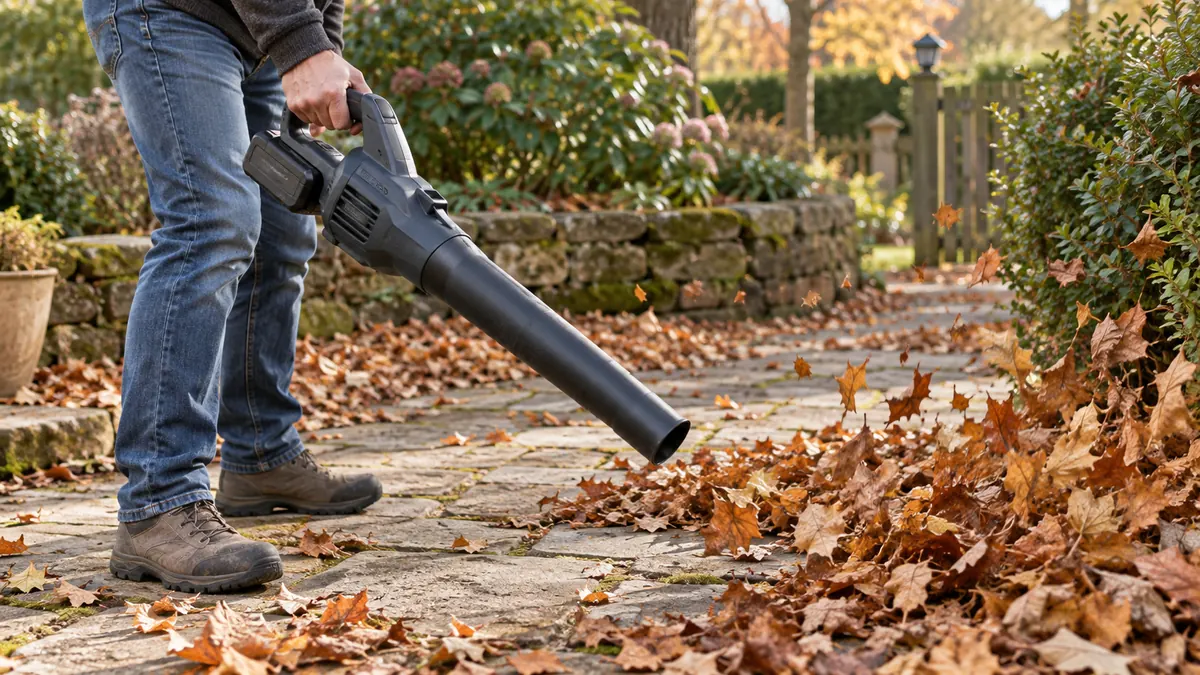
WORX WG584E.9 model and tool-only package
- WORX Russia identifies WG584E.9 as a cordless blower that runs on two 20V Power Share batteries (40V max) and lists the `.9` package without batteries or charger.
- The WORX user manual names both WG584E and WG584E.9; the product-page package list distinguishes the tool-only `.9` version.
- WORX North America documents a WG584 model separately. Similar base numbers do not prove that a US model has the same package, regional specification or warranty as WG584E.9.
- The manufacturer's regional page gives a 145 km/h maximum air-speed figure; its air-volume statement is inconsistent across sections.
The difference between a model number and a package suffix matters. Retailers can list a blower body, a kit with batteries and a charger, or a regional model under similar names. Before comparing a price, read the full code on the listing and check the included-items list rather than inferring the kit from the product photo.
Check the two-battery setup and included items
Compare the full model code and suffix on the label, battery and charger package, and regional warranty. The `.9` package is described as tool-only on the WORX Russia page; do not assume another seller includes the two batteries or charger. Use the model-specific manual and nozzle setting when comparing air speed or volume.
Match the model and included batteries
- Confirm whether the listing is WG584E.9 or the distinct WG584 model shown on the North American support page.
- Confirm whether two compatible Power Share batteries and a charger are included; the `.9` package is listed without them.
- Check the supplied tube/nozzle, speed controls, trigger behavior, noise data and operating instructions in the regional manual.
- Consider the debris type, one-hand balance, storage and service needs for the exact model.
If you already own Power Share batteries, check the exact compatibility list and battery condition. The `.9` suffix can make the bare tool less expensive for an existing user, but it is not a complete working kit. If you need two batteries and a charger, include those parts in the total cost and confirm that the charger can support your intended rotation between sessions.
How to interpret the airflow specifications
WORX's regional product page lists 145 km/h as maximum air speed. Its product description gives one air-volume figure, while the technical table gives another. Because those values conflict, this guide does not select one as definitive or use the model to claim a performance advantage. Check the current manual or ask WORX to clarify the rating for the unit sold in your market.
Even when two products publish the same units, the numbers may come from different test conditions, nozzle shapes or battery modes. Air speed describes the velocity at a measurement point; air volume describes how much air moves. For yard work, the nozzle and debris matter too. A narrow jet may loosen a compact patch but require more passes to move leaves across a broad path; high speed can scatter gravel and mulch.
For a useful comparison, record the same points for each model: full model code, included nozzle, speed setting, battery configuration, published air speed and volume, and the manual's sound rating. If the documentation does not state how a figure was measured, treat it as a manufacturer specification rather than an independent test.
Match the blower to the yard task
A cordless blower is most useful when the route is short enough for the battery plan and the material can be moved safely. On a small paved area, start with a low setting and move the leaves toward a collection point. Along a gravel border, keep the nozzle at a low angle and use a short test pass so the airflow does not displace stones. Around beds, direct debris away from seedlings, mulch and open soil.
Do not assume that the WG584E.9 is a leaf vacuum or shredder. WORX's manual describes a blower/sweeper and does not list a collection bag or vacuum conversion for this model. If collecting leaves is the main job, choose a dedicated vacuum/shredder whose manual identifies the relevant conversion kit and bag. If the yard contains wet mats or a large volume of heavy debris, a rake, broom or a more powerful tool may be more appropriate than prolonged turbo use.
Assess comfort and runtime without guessing
Ask how long you hold the tool, whether you can carry two batteries without strain, and whether the grip and nozzle let you sweep without bending the wrist. The manufacturer page gives a tool weight, but the working weight also includes two batteries. A comparison should use that full configuration, not a bare-tool figure beside another model's kit weight.
No runtime promise is made here. Battery duration changes with battery capacity, temperature, debris, speed and how often turbo is used. A practical estimate starts with a measured session on a representative surface, using the complete battery pair. Keep a note of the battery size and setting so a later test is comparable.
Plan the work area before switching on
Move lightweight pots, toys and outdoor cushions first; a blower can move them along with leaves. Close nearby doors and windows and decide where the material will end up. Work from the far edge toward a collection point so you do not blow leaves back across a clean path. If leaves are mixed with twigs, pick out larger branches by hand rather than forcing them through the airflow or into the intake.
For a narrow path, shorter passes at a moderate setting often give more control than holding the trigger fully open. Near mulch, gravel or delicate plantings, test a patch and adjust the angle. Stop if dust begins to obscure visibility or debris travels toward people or property. The user manual describes the intended operation; a blower is not a substitute for sweeping in confined or dusty areas.
Wet leaves can cling to pavement or grass, so a blower may not remove them efficiently without repeated high-power passes. That does not prove a defect: moisture and surface friction change the job. Wait for a drier period, loosen the pile with a rake, or use a broom before trying again. The WG584E.9 page does not claim a tested wet-leaf capacity or a measured clearing rate.
Compare the complete ownership setup
Make a simple total-cost list: tool, two compatible batteries, charger, spare battery pair if needed, and any replacement tube or other part the manual identifies. Then compare it with a complete kit and with a model from a platform you already own. Do not assume the cheapest bare-tool listing is the lowest-cost choice for a first-time buyer.
Also check return terms and local support. A regional model may use a familiar family name yet have different documentation, warranty or service arrangements. Keep the product label, manual and proof of purchase together so a future request for parts or support uses the exact model suffix.
Operating, charging and storage checks
Assemble the tube fully and verify that it locks before switching on. Keep hands away from the air intake and maintain the distances in the manual. Wear eye protection, keep bystanders away from flying debris, and do not aim the airflow at people, animals, road users or open windows. Use hearing protection appropriate to the stated sound data and exposure time.
Remove both battery packs before inspection, cleaning or clearing an obstruction. Use only compatible packs and chargers, follow the charging instructions, and do not expose the battery or blower to rain unless the manual says that the model is rated for it. Store batteries in the conditions specified by WORX and check for damage before charging. The current manual remains the authority for the precise operating and storage procedure.
What to confirm before ordering
- Read the full code: WG584E.9 is not automatically interchangeable with a similarly named US or other regional model.
- Check whether the package is tool-only or includes two batteries and a charger.
- Confirm the seller's warranty, returns, delivery destination and local service support.
- Open the current product manual and compare the speed/air-volume values with the offer's model code.
- Compare the total system cost with a blower platform you already own.
No active Amazon.com offer for the exact WG584E.9 regional model was verified for this US-facing page, so it contains no Amazon purchase card. A different listing for WG584 is not linked as a substitute. For a broader comparison of battery and gas formats, return to the complete leaf blower guide.
For a smaller lawn, use the low or medium setting for dry leaves and reserve maximum airflow for heavier patches. The speed number is not a promise of yard coverage: leaf moisture, surface, tube and travel path matter. Keep the intake clear of clothing and loose leaves, and do not use the blower to move gravel or debris that could become a projectile.
The WG584E.9 suffix is material to the purchase. The manufacturer’s cited US configuration is a bare tool and requires two compatible 20 V packs plus their charger. The Amazon.es listing checked for this exact model was a different regional market offer; do not assume that the US kit description, voltage label, warranty or included parts match that listing. Verify the product label and package before checkout.