

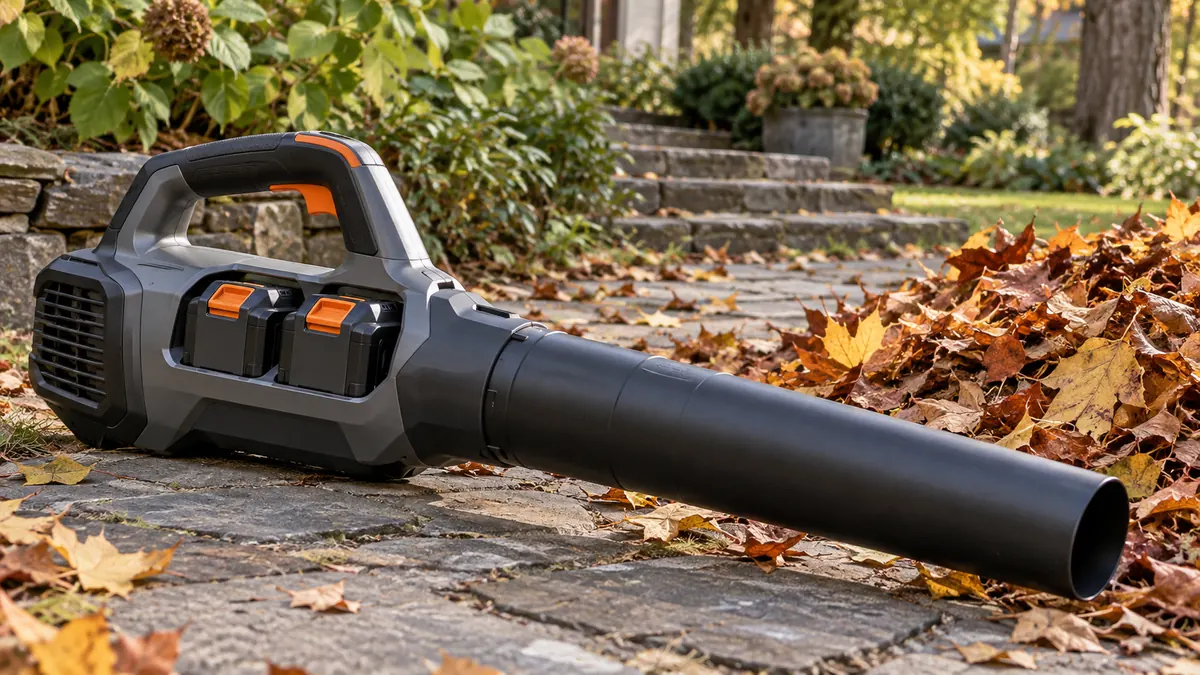
Published Makita DUB362Z configuration
- DUB362Z requires two compatible 18V LXT batteries; verify the exact manual and battery compatibility before using it.
- Makita Canada lists 473 CFM maximum air volume, 120 mph maximum air speed, 79.1 dB(A) sound pressure, and 6.0 lb net weight for its catalog version.
- Makita Slovakia lists 14.4 N maximum blow force and a maximum blow time of 11.4 minutes with two BL1850B batteries; this is a manufacturer configuration-specific figure, not an estimate for every pack or setting.
- The previous page's 252 km/h performance claim was not tied to a manufacturer source and has been removed.
Airflow, control and weight
Makita's regional technical sheets list a variable air volume of about 6.9–13.4 m³/min and a speed range of roughly 27–54 m/s. The exact published top values differ slightly between regional documents; treat them as the maker's ratings, not a guarantee of how quickly the tool will clear a yard. A longer narrow tube, nozzle, debris density and operator technique all affect the useful stream.
The tool has a variable trigger and a six-step dial. Use the lowest setting that moves the debris: this improves control around pots, gravel and mulch, and avoids spending battery on full throttle when a lighter stream will do. For a broad lawn, a higher setting may move a larger volume, but it also increases noise and drains two packs more quickly. The trigger lock is useful for continuous work only when the manual permits that position and you can stop quickly.
Weight figures are not interchangeable across brochures. Makita Canada gives 6.0 lb net weight, while other regional sources publish the assembled tool at approximately 3.5 kg under a different test convention. Neither number includes the mass of two batteries. Check the exact manual's weight definition and then hold the complete setup before committing to longer sessions.
Check blower settings, batteries and workload
Check the exact suffix and included accessories, then compare the manufacturer's airflow by nozzle and battery configuration. Runtime depends on both battery capacities and trigger setting; do not treat a full-speed figure as expected continuous runtime. If you own only one 18V battery, include a second compatible pack in the package comparison. The machine requires two installed batteries to operate, so charging only one pack does not make it a one-battery blower.
Choose the airflow by surface and debris, not by the top number on a specification sheet. The force rating, air speed and volume describe different properties; none measures area cleared per minute. A useful comparison asks whether the maker used the same nozzle, battery pair and test method, then considers whether you need a focused stream or broad coverage.
| Task | Starting approach | What can change the result |
|---|---|---|
| Leaves on gravel or mulch | Use the lowest controllable setting and a careful nozzle angle | Loose stones, bark and light mulch can move with dry leaves |
| Dry leaves on a paved path | Work in short overlapping passes toward one collection point | Wind and nozzle width alter how far the pile scatters |
| Leaves on lawn | Use a measured stream and keep the tube above the turf | Wet or matted leaves may need a rake before blowing |
| Long sessions | Plan around two matched packs and charging intervals | Battery age, temperature and trigger setting affect useful time |
Confirm the model and manual
- Compare air volume and air speed together, checking the nozzle and measurement condition used by the manufacturer.
- Confirm whether compatible batteries and charger are included and how the model fits your existing platform.
- Check the supplied nozzle, variable-speed control, trigger lock, harness and operating restrictions.
- Consider the debris type, noise, storage and service needs for the exact model.
Estimate work time from the task, not one number
Makita Slovakia publishes up to 11.4 minutes of blow time with two 5.0 Ah BL1850B packs. Do not carry that figure over to smaller batteries, another battery age, a colder storage condition or a different test protocol. Nor should it be multiplied into an area-per-charge estimate without a comparable test surface and debris load.
A practical check is to define the job in short zones. Clear a small section at the intended setting, note whether the blower moves the material cleanly, and decide whether the chosen battery pair is sufficient for that session. A spare matched pair can reduce downtime, but it adds purchase cost and charging time. If the garden requires long continuous clearing, compare a backpack blower or a corded option as alternatives rather than assuming the handheld battery tool will cover the whole job.
For mixed leaf and lawn work, start with dry leaves on a hard surface. Wet leaves and matted grass take more effort and may require a rake. Avoid promising a fixed runtime from a battery's amp-hour label alone: airflow setting, duty cycle, battery condition and debris resistance are all material variables.
Set the tube and airflow for the surface
Makita's product descriptions include a nozzle and telescopic tube sections, but regional package contents may vary. Fit the correct tube section securely and do not add an extension that is not approved for this blower. Use the lowest dial position that moves dry leaves, especially near gravel, mulch, pots and young plants. A high setting can scatter a pile or lift loose material rather than help collect it.
On a long paved path, direct leaves toward one collection point with short overlapping passes. For dry leaves on grass, work with the wind and avoid pressing the nozzle into the turf. If debris is wet, matted or mixed with twigs, rake it into a smaller pile or use a tool designed for collection. Air speed is not a measure of bag capacity or time to finish; the blower is not a vacuum or shredder.
Noise specifications need context. Makita Canada lists 79.1 dB(A) sound pressure for its version, while other brochures may state sound power. These are different measurements and should not be compared as though one were a single “noise” number. Use hearing protection and observe local quiet-hour rules even with a battery blower.
Inspect the tube, intake and battery contacts
Before use, fit the correct nozzle fully and check that the tube has no cracks, internal obstruction or loose joints. Keep the air intake clear of leaves and dust. After use, remove both battery packs before cleaning or storage; wipe dirt from the contacts with a dry method authorized by the manual and do not introduce metal objects or liquid into the battery bay.
Store packs in the temperature and charge condition the battery manual specifies. Do not leave batteries on the tool for long-term storage, charge them when wet or damaged, or mix incompatible 18V LXT versions. A pack that becomes unusually hot, swollen or damaged should be taken out of service in accordance with Makita's safety guidance. For blower repairs, use the DUB362 parts diagram because the assembly code and replacement tube can vary from other Makita blowers.
What the catalog does not verify
The page reports the model identity and package class, not an independently measured review. Regional product pages support the specifications, but do not establish warranty terms, accessory contents or local stock in the US. Confirm those details using the serial plate, local manual and authorized service channel before buying or importing. For an alternative sold locally, compare the full cost of two compatible LXT packs and a charger with the tool-only price; a single battery or similar-looking 18V pack will not run this two-battery model.
When comparing a listing, record the complete DUB362Z code, included tube and nozzle, battery count, charger and return terms. Ask for a photograph of the actual label if the listing combines several suffixes or bundles. A compatible platform can reduce the cost for an existing LXT owner, while a new buyer should include the batteries and charger in the total before comparing this blower with a complete kit from another system.
Battery, noise and debris safety
Obtain the manual for the DUB362 version sold in your region before operation or maintenance. Keep the air stream away from people, wear suitable eye and hearing protection, and remove both batteries before cleaning or servicing.
Keep the intake away from clothing and loose leaves. Makita Canada publishes a sound-pressure figure for its version; do not compare that directly with a sound-power value from another brand. Wear hearing protection and follow local quiet-hour rules even though this model has no combustion engine.
If the tool unexpectedly cuts out, check that both required packs are seated and cool, and consult the manual for the battery-protection indication. Do not bridge contacts or open a pack. Charge compatible batteries on a dry, stable surface within the maker's temperature range; do not charge a swollen, cracked or wet battery. Disconnect both packs before clearing material from the tube or cleaning the blower.