

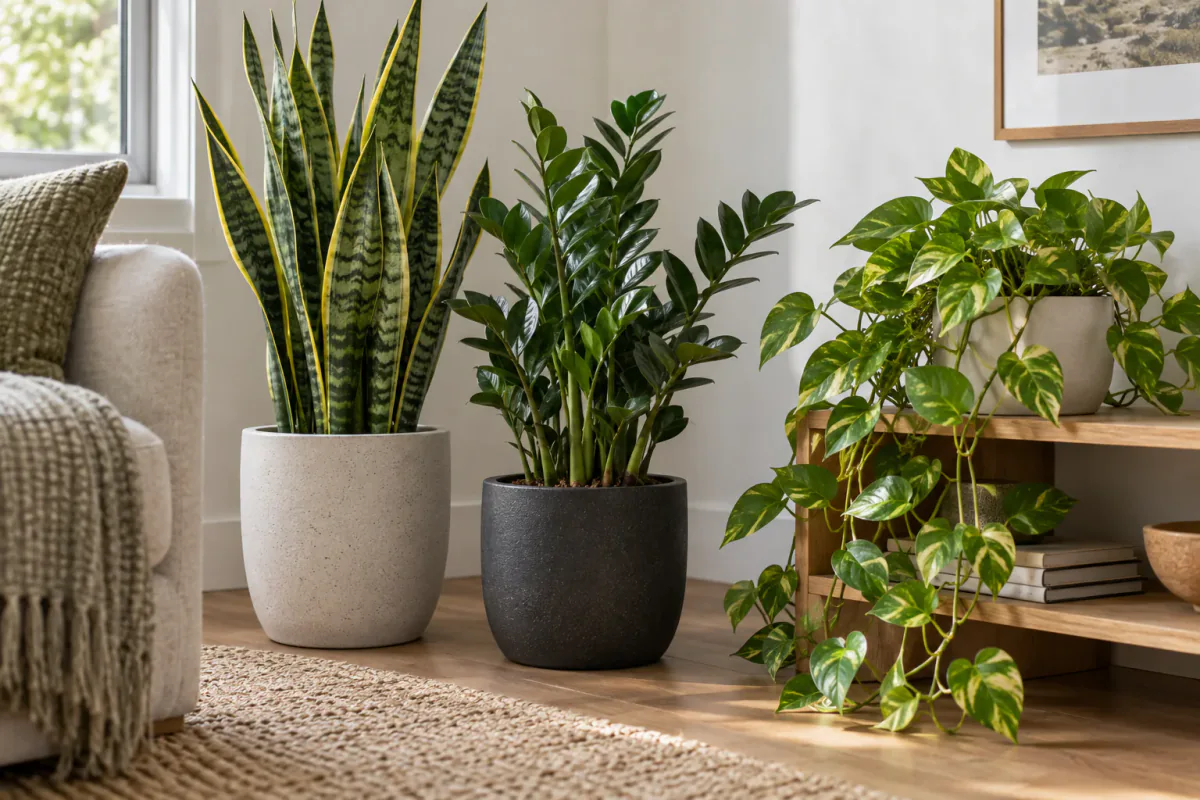
What “resilient” means for a houseplant
An easy-care plant can tolerate some variation in routine, but it still needs adequate light, a draining pot and checks for pests or stress. A plant described as low maintenance may still decline in a dark corner, a constantly wet mix or a container without drainage. Start by looking at the light available through the day and deciding how often you can check the pot.
This guide focuses on care flexibility. It is different from a low-light list: light tolerance is only one factor, and no indoor plant grows in complete darkness. If the room receives little daylight, compare our dedicated low-light indoor plants guide before choosing.
Match light and watering to your routine
Place the plant where the species can receive the light stated by a reliable label or growing guide. Distance from a window, orientation, glazing, curtains and nearby buildings change the light a plant receives. University of Minnesota Extension explains how to assess indoor plant lighting. Move a plant gradually if you change its exposure.
For watering, check the growing medium rather than following a fixed weekly schedule. Pot material, size, root growth, temperature and season affect how quickly it dries. Use a pot with drainage and empty the saucer after watering. When a plant has outgrown its container or the medium no longer drains well, review the signs before repotting; Penn State Extension’s repotting guide is a useful reference.
Compare resilient indoor plants
| Plant | A useful fit when… | Check first |
|---|---|---|
| Snake plant (Dracaena trifasciata) | You want an upright plant and can let the mix dry between checks | Light, drainage and pet-safety information; see the snake plant guide |
| ZZ plant (Zamioculcas zamiifolia) | You prefer a slower-growing foliage plant | Light and moisture needs; see the ZZ plant guide |
| Pothos (Epipremnum aureum) | You can provide room for trailing growth and periodic trimming | Light, vine clearance and toxicity if chewed |
| Spider plant (Chlorophytum comosum) | You have space for arching leaves and developing plantlets | Mature width, pot size and pet-access plan |
The table is a starting shortlist, not a ranking. Cultivars and growing conditions differ. Match the specific plant label to your room and check its care needs before purchase.
Check pet safety before choosing
Some popular houseplants can be harmful if chewed. Identify the plant by its botanical name and search the ASPCA toxic and non-toxic plant database. Do not rely on a common name or assume that a plant is safe because it is widely sold. Keep plants that are unsuitable for your household out of reach; if a pet may have ingested one, contact a veterinarian or poison-control service.
Troubleshoot before changing the care routine
When leaves yellow or growth stalls, check the medium, drainage, light and recent changes first. Wilting can follow either dry roots or waterlogged roots, so feel the medium before watering again. Look under leaves for pests and check whether a pot is sitting in water. Change one factor at a time and observe the response; repeated repotting or feeding can add stress without addressing the cause.
Choose a plant you can inspect and reach. If its leaves or roots outgrow the space, follow the species’ care guidance and repot only when needed. For other room-by-room choices, return to the indoor plants guide.
What to expect from four resilient houseplants
“Easy care” is relative. These plants differ in growth habit and watering tolerance, so choose by the kind of care you can provide rather than by a blanket ranking.
| Plant | Useful trait | Care point to plan for |
|---|---|---|
| Snake plant (Dracaena trifasciata) | Upright form with a relatively simple watering routine | Use a pot that drains and avoid keeping the medium constantly wet |
| ZZ plant (Zamioculcas zamiifolia) | Slow-growing foliage and tolerance of some variation in care | It still needs usable light and well-drained medium; watch for pests |
| Pothos (Epipremnum aureum) | Trailing growth that can be trimmed or trained | Allow room for vines and check pet safety; see the pothos guide |
| Spider plant (Chlorophytum comosum) | Arching leaves and plantlets that can be observed and managed | Leave room for its mature spread and verify pet-safety information |
University of Illinois Extension notes that ZZ plants tolerate lower light but grow best in bright indirect light and do not tolerate sustained wet soil. Penn State Extension’s low-light houseplant guide describes snake plant as a low-light option, while its pothos guide explains that low light can reduce a cultivar’s attractive variegation and that watering should follow the medium’s moisture. These examples show why a “resilient” plant still has conditions that matter.
Use the species-specific pages for snake plant and ZZ plant when you need detail. The broader shortlist here helps you decide what kind of shape and routine suits the room.
Build a care check that fits a busy week
A short inspection is more useful than watering every plant on the same day. Check the medium below the surface, look at leaves and stems, and notice whether the plant has changed since the previous check. A small pot near a warm window can dry differently from a large pot in a cooler corner. Make a note if you are still learning the plant’s pattern.
Keep the pot stable and make sure excess water can escape. If a plant is in a decorative cover pot, lift the inner pot after watering and empty water that has collected in the outer vessel. Do not add fertilizer automatically; check whether the growing medium already includes nutrients and follow the label for any plant food.
Rotate plants only if the species and location benefit from it, and make gradual changes when moving a plant closer to a window. Sudden changes in light, temperature or watering can make it harder to identify the cause of stress.
Read symptoms before changing the routine
| Observation | Possible checks | Avoid |
|---|---|---|
| Long gaps between leaves or leaning stems | Light level and direction | Adding fertilizer before assessing light |
| Yellow or soft leaves | Moisture below the surface, open drainage and recent watering | Watering again without checking the mix |
| Dry edges or sudden drooping | Root-zone moisture, temperature changes and airflow | Changing several care factors at once |
| Speckling, webbing or sticky residue | Pests on leaf undersides and nearby plants | Applying a pesticide before identifying the problem |
These signs are prompts for inspection, not diagnoses. Isolate a plant if you suspect a pest is spreading, identify the species and follow a reliable horticultural source before applying treatment.
Choose a healthy plant and suitable pot
At the nursery, compare several plants of the same type. Look for intact stems, reasonably even growth and leaves without widespread spotting, pests or sticky residue. Inspect the undersides of leaves and the surface of the growing medium. Avoid buying a plant whose label is missing if you need to assess pet safety or species-specific care.
Check whether roots are coming through drainage holes or circling densely at the pot edge. A crowded root ball may need attention soon, but repotting is not an automatic first-day task; Penn State Extension’s repotting guide can help assess timing. Choose a container with drainage and enough room for current roots, not a much larger decorative pot. For plants that may be chewed, look up the botanical name in the ASPCA database before bringing it home.
Choose by the care problem you want to solve
If you sometimes forget to water, choose a species and pot that suit a less frequent routine, then make a moisture check part of another regular task. A plant that tolerates some drying still needs to be checked, especially after a move, repotting or heat spell. A small pot in a warm room may need attention sooner than a larger one in a cooler place.
If the room is dim, do not select solely by a “low-light” tag. Compare actual window light, season and the plant’s growth; low-light tolerance does not mean that darkness is suitable. A resilient plant can be a poor choice when its only available location falls below its needs. Use supplemental light only when the plant’s requirements and the equipment instructions support it.
If you have limited floor space, choose an upright plant or a shelf location that still allows watering and inspection. If you have pets, treat safety as a separate filter rather than assuming easy-care means pet-safe. These practical constraints narrow the options more usefully than a universal ranking.