

Light and acclimation
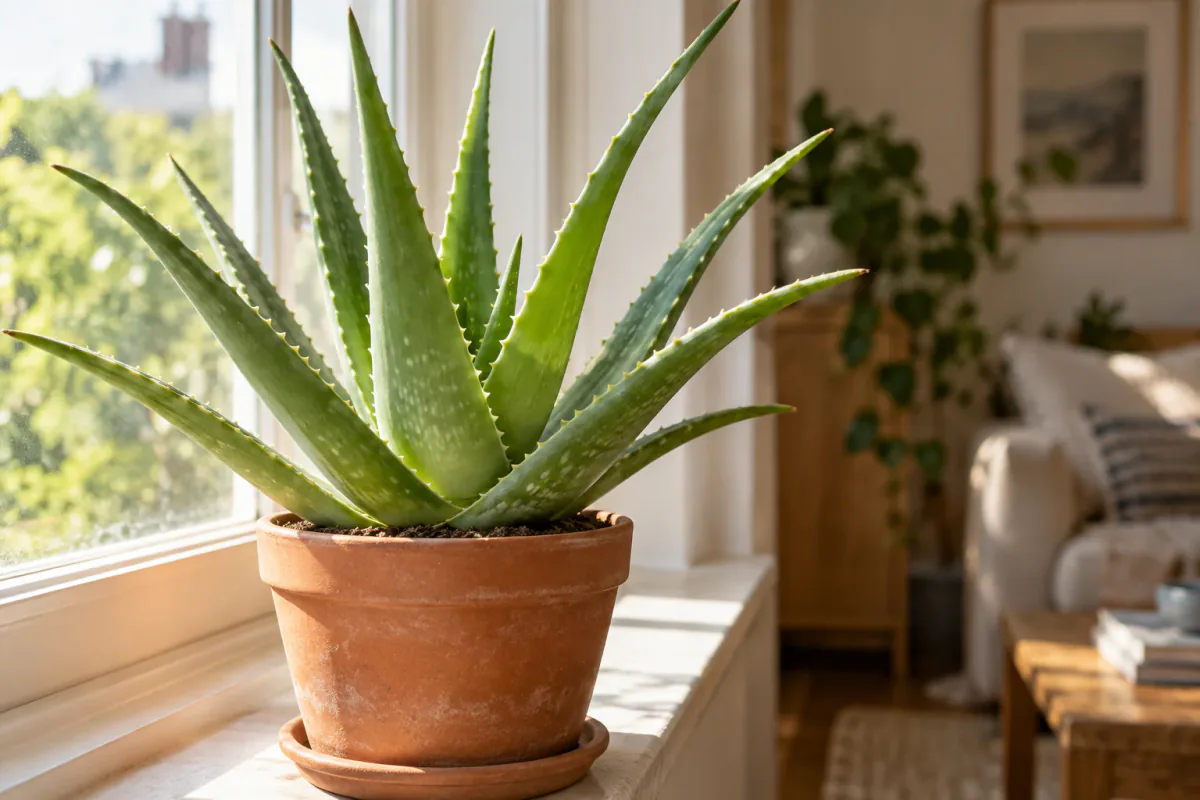
Give aloe a bright location, ideally near a sunny window. If it has been grown indoors in lower light, move it outdoors gradually rather than putting it straight into strong sun, which can scorch leaves. In warm climates it may grow outdoors, but it is frost-sensitive in most of the United States. NC State Extension’s Aloe vera profile lists it as an outdoor perennial only in warm zones and recommends very well-drained soil.
Water by soil condition
Use a pot with several drainage holes and a succulent mix. Let the mix dry between thorough waterings, then empty the saucer. Reduce watering during cool, low-light periods. A fixed weekly schedule is unreliable because pot size, window exposure, temperature, and season change how quickly the root zone dries.
Repot and propagate from offsets
Repot when roots fill the container or the mix has broken down. Choose a pot only slightly larger than the root mass, and keep the leaf rosette above the soil line. Aloe commonly forms offsets at its base. When an offset has its own roots, separate it with a clean tool, allow damaged surfaces to dry, and pot it in a small draining container. Do not water heavily until it has settled.
Diagnose common problems
Soft, translucent leaves or a sour-smelling mix can indicate excess moisture; wrinkled leaves can follow a long dry spell, but check the roots before adding water. Brown patches may reflect sun exposure or physical damage. Look at the full plant and its recent changes before deciding what happened. Aloe can irritate or harm pets if eaten; keep it out of reach and check a current veterinary poison-control source if an animal chews it.
Reference: NC State Extension Plant Toolbox: Aloe vera.
Choose a pot and succulent growing mix
Use a stable container with several drainage holes. Terracotta can dry more quickly than glazed ceramic or plastic, but the material alone does not prevent overwatering. Choose a pot only a little wider than the root mass; an oversized volume of mix can stay damp for longer than the plant can use. If you reuse a container, wash away old soil and inspect the drainage openings before planting.
A commercial cactus or succulent mix is a starting point for an indoor aloe. The best medium is porous enough to release excess water, while still holding some moisture for roots. Dense garden soil or a decorative layer that blocks drainage can keep the root zone wet. After repotting, keep the rosette above the soil line and brush mix away from the leaf bases; buried leaves can soften and rot.
When a plant is top-heavy, select a pot that balances its weight without burying the stem. Use a heavier outer pot only if the inner nursery pot can drain freely and can be removed for watering. Empty any cachepot after the water has finished draining. If the mix repeatedly remains wet, check the pot size, room temperature, light, and drainage before adding perlite or watering less by guesswork.
Repot when roots fill the container, offsets crowd the edge, or the mix has broken down. A little root crowding is not automatically an emergency. If you are dividing offsets, do it during active growth and avoid damaging the main rosette. Replace only the amount of old mix needed to restore a loose, draining medium; unnecessary root disturbance can delay recovery.
Adjust aloe care through the year
Indoor light changes with the seasons. A plant that grew well in a bright window through summer may receive much less light in winter when days are shorter or curtains are closed. Turn the pot periodically for even exposure, but keep it in a stable position. If growth slows, let the mix dry for longer before watering rather than continuing a summer routine.
When moving aloe outdoors in warm weather, acclimate it over several days by gradually increasing its exposure. A plant raised indoors can scorch when placed immediately in strong direct sun. Choose a sheltered location with drainage, and bring it inside before temperatures fall below the level recommended for the species in your region. Do not leave a container out through a forecast cold snap simply because the daytime temperature was warm.
During active growth, check the mix and water thoroughly when it has dried. In cool or low-light conditions, water less often because the pot may take longer to dry. Do not mist the rosette as a substitute for watering the roots. Avoid standing water in the crown, especially in a cool room where foliage dries slowly.
Use fertilizer sparingly and only according to a product label intended for container plants or succulents. A weak-looking plant may be root-stressed, light-starved, or affected by cold; adding fertilizer before identifying the cause can make matters worse. If you keep care notes, record approximate watering and light changes rather than trying to remember a fixed number of days.
Separate and establish aloe offsets
Offsets appear as small rosettes at the base of a mature aloe. Wait until an offset is large enough to handle and, ideally, has begun to form its own roots. Take the plant out of its pot if necessary and loosen soil carefully so you can see where the offset joins the parent. Use a clean sharp blade to separate it without crushing either crown.
Set the offset aside briefly if the cut surface needs to dry, then place it in a small draining pot with succulent mix. Keep the rosette upright and do not bury the leaves. A pot that is too large may retain moisture around a small new root system. Label the cultivar if known, particularly when several aloe types are being propagated together.
Do not water heavily immediately after a fresh cut. Let the plant settle, then water modestly once the mix is dry and observe how it responds. New roots and leaves take time; avoid pulling the offset up repeatedly to check progress. Keep it in bright light out of harsh direct sun while it establishes, then increase exposure gradually if the species and season allow.
Propagation from a leaf is less reliable for Aloe vera than separating a rooted offset. A leaf placed in wet medium may rot before forming a new plant. If you try it, use a sound leaf, allow the cut end to dry, and keep conditions airy; do not treat a failed leaf cutting as evidence that the parent plant is unhealthy.
Use leaf symptoms to check the root zone
| What you see | First things to inspect | Careful next step |
|---|---|---|
| Soft, translucent, or collapsing leaves | Wet mix, drainage holes, and whether the stem or roots are soft | Stop watering until assessed; remove standing water and inspect the root system. |
| Wrinkled or thinner leaves | How long the mix has been dry and whether roots are still firm | If roots are sound and mix is dry, water thoroughly and let excess drain. |
| Brown or pale patches on the sun-facing side | Recent move into stronger light or reflected heat | Return to bright indirect light and acclimate gradually to sun. |
| Slow growth and stretched leaves | Window exposure, seasonal day length, and cold drafts | Move to brighter suitable light and keep the plant warm without heating vents. |
| Dark base or sour odor | Persistent wetness, buried leaf bases, or decayed roots | Remove rotted material with clean tools and repot only if healthy tissue remains. |
Symptoms overlap, so compare the entire plant and the conditions over the past few weeks. A drooping aloe does not always need more water: damaged roots can prevent it from using moisture in the pot. If rot reaches the crown or the plant continues collapsing after drainage is corrected, seek local horticultural advice or replace the plant. Do not save a badly decomposed rosette by keeping it in the same wet medium.
Keep ornamental aloe care separate from remedy claims
This guide is about growing an ornamental houseplant. It does not recommend applying aloe gel to skin, ingesting leaves, or using the plant to treat an illness. Aloe products and plant parts are not interchangeable, and this horticultural page does not establish human safety or medical benefit. The ASPCA lists Aloe vera as toxic to dogs, cats, and horses; keep the plant out of reach and contact a qualified medical or veterinary professional after an exposure rather than using an internet recipe.
When buying aloe, confirm the species on the label and consider whether its location is safe for household members who may touch or chew it. Remove fallen leaves promptly, use gloves if you are sensitive to plant sap, and wash tools after pruning. For botanical growing details, use NC State Extension’s profile; medical questions need current health guidance from an appropriate professional source.
Recover a stressed aloe one cause at a time
If an aloe is soft or collapsing, do not start by adding water. Remove it from the outer cachepot and check whether the inner pot drains. If the mix is wet and the base feels soft, inspect the roots and rhizome. Cut away only tissue that is clearly rotten with a clean blade, let the remaining healthy surfaces dry, and repot in fresh draining medium. If rot has reached the growing point, recovery may not be possible.
For a wrinkled plant, first confirm that roots remain firm and that the potting mix has actually dried. If the roots are healthy, water thoroughly and let excess run out. If there are few functioning roots, extra water will not immediately restore the leaves and may create more rot. Keep the plant in bright indirect light while it recovers, and wait for new growth before applying fertilizer or moving it outdoors.
Brown or pale patches after a sunny move can be sun injury. Move the pot back to bright indirect light and let it stabilize; damaged tissue will not turn green again. When reintroducing direct sun, increase exposure gradually and avoid the hottest part of the day at first. Check the leaf surface and surrounding window for reflected heat, since a bright location can be hotter than expected.
If the rosette has stretched toward a window, improve the light gradually and rotate the pot occasionally. Older stretched growth will not become compact again, so judge recovery by the new leaves. A plant can still be healthy even if its older leaves have an imperfect shape. Do not cut off all unusual leaves unless they are dead, damaged, or diseased; retained foliage continues to support the plant.
When several stress factors are present, change one at a time and keep a short record. Note the date you changed location, repotted, watered, or separated an offset. That record helps distinguish a delayed response from a new problem and prevents a cycle of repeated moves and watering changes. If the plant continues declining, share the species label and photos of the roots with a local horticulture service.
Choose an aloe plant for your indoor conditions
Before buying, check the botanical label, the size of the rosette, and whether the plant has healthy roots. A large rosette needs a stable bright place and enough room for leaves to spread; a small offset is easier to accommodate but may need closer establishment checks. Avoid plants with a soft dark base, widespread collapsed leaves, or standing water in the nursery sleeve.
Ask how the plant was grown and whether it was recently moved from greenhouse conditions. A plant accustomed to filtered light can scorch if placed immediately in direct afternoon sun. Select a position first, then acclimate the aloe to brighter exposure over time. If there are pets or small children in the home, plan a location where leaves cannot be chewed or knocked from a shelf.
Keep the original label or photograph it before discarding. That confirms whether the plant is Aloe vera or another aloe and makes it easier to find care information that applies. Use an authoritative horticultural profile for the named species instead of assuming that all rosette succulents have identical cold tolerance or watering needs.