

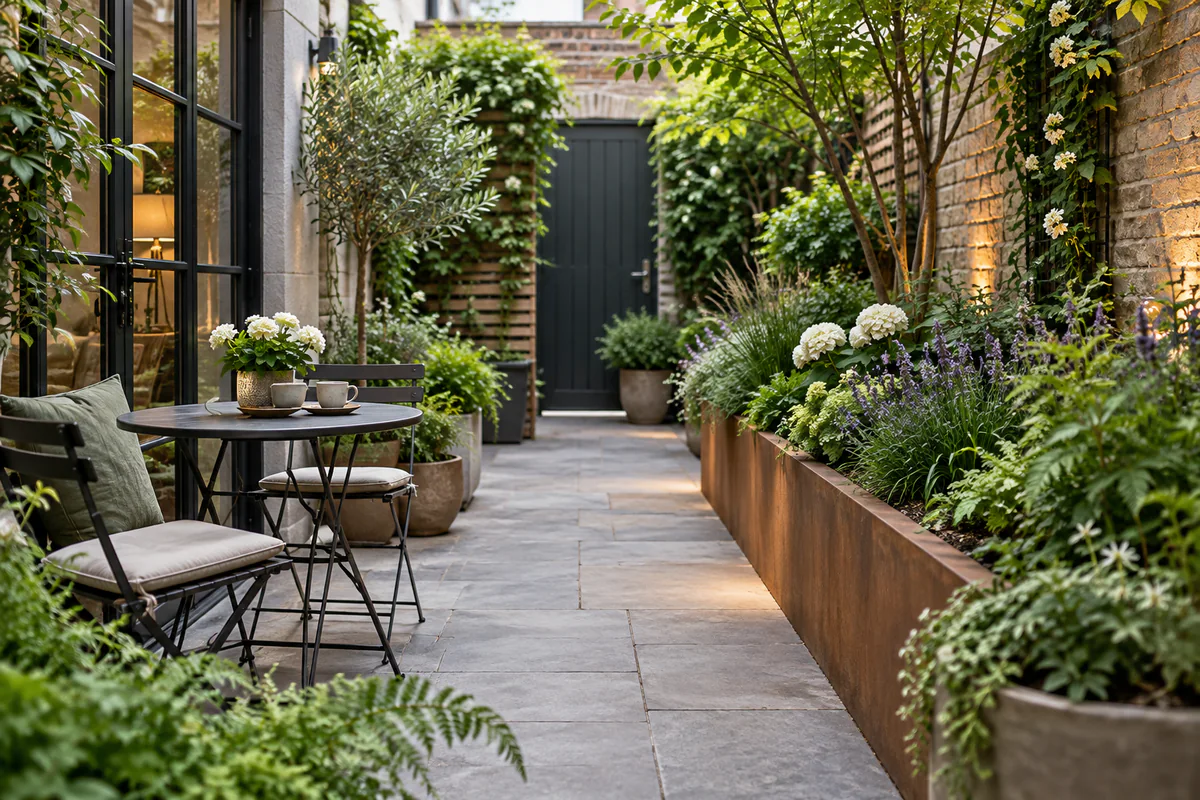
Use vertical space only where it fits
Before adding a trellis or wall planter, check whether the structure can carry the wet weight, whether it can be fixed safely, and where runoff will go. Match supports to the mature crop: climbing beans and cucumbers need different support from compact herbs. Keep access for harvest, pruning and repair.
Vertical growing does not create extra sunlight or remove watering needs. Observe shade cast on nearby beds and secure containers against wind; check building or balcony rules before drilling or loading a railing.
Choose containers around the crop and the site
Use a container with drainage, enough root volume for the named crop, a stable position and a safe filled weight. A container dries at a different rate from garden soil, so monitor moisture and drainage rather than using a fixed watering interval. Use a growing medium intended for containers unless Extension guidance for the crop says otherwise.
Illinois Extension’s container vegetable guide gives crop-specific container examples. Treat its dimensions as regional guidance and check the seed or nursery label for the exact cultivar.
Compare small-space growing methods
| Method | Best fit | Check before choosing |
|---|---|---|
| Containers | Paved patios, balconies, crops needing movable placement | Drainage, filled weight, water access and crop volume |
| Raised bed | Permanent growing area with accessible soil | Ground access, width you can reach, safe materials and fill volume |
| Trellis | Vining crops or narrow borders | Support strength, sunlight, wind and crop access |
There is no single highest-yield method for every small site. Choose after measuring sun, circulation, water access and the load limits of any elevated surface.
Plan a raised bed around reach and root depth
USU Extension describes shallow framed beds around 6–12 inches deep when roots can continue into native soil. A bed over pavement or compacted fill needs enough depth and drainage for the intended crops. Keep the width within a comfortable reach from both sides, and locate the bed where it receives suitable light and water.
Check the existing soil, local material guidance, and the bed’s weight when filled. See USU Extension’s raised-bed guide before choosing dimensions.
Make each feature serve a real need
In a compact garden, combine functions only when maintenance remains practical: a trellis can screen a view and support a crop; a bench can include storage if it stays dry and accessible. Keep paths wide enough to move tools and avoid blocking doors, drains, utilities or emergency access.
For balconies and roof terraces, verify the building’s load limit and wind exposure before adding planters or furniture. Do not assume that lightweight empty containers remain light once filled with wet medium and water.
Choose compact plants from a local list
Choose plants by mature size, light, drainage and seasonal role. For a confined site, prefer a named compact cultivar only when its mature dimensions are documented by the nursery or regional Extension source. Avoid species that spread beyond the space unless you can contain and maintain them.
Measure the planting area and reserve room for mature foliage, roots and access. Use local Extension or botanical-garden plant lists to verify climate suitability; a plant marketed as “dwarf” can still outgrow its container or site.
Improve the sense of space without fixed ratios
Draw the site to scale and mark doors, utilities, drainage, existing shade, desired seating and the route for carrying water or compost. Place the most frequently used features close to access, then add planting where light and root volume support it. A clear focal point can help organize a view, but no paving-to-planting ratio is right for every garden.
Test the layout with pots or temporary markers before installing permanent hardscape. Keep maintenance access and mature plant size on the plan.
Avoid layout mistakes that reduce usable space
- Choosing plants by current pot size instead of mature spread.
- Adding a tall feature without checking shade on neighboring crops.
- Using a balcony or wall without confirming safe load and fixings.
- Installing containers with no drainage plan or access to water.
- Creating a layout that leaves no room to prune, harvest or move a bin.
Measure first, check local restrictions and use regionally appropriate plant lists. Small-space gardening is a constraint-planning exercise, not a contest to fit the maximum number of pots.
A measurement checklist for a small garden
Before buying planters or building a bed, make a simple drawing with dimensions. Include fixed features and the space you need to move around them; the planting area is only one part of a usable garden.
- Measure sunlight in more than one season. Record the direct-sun periods and note shadows from walls, fences, trees, and neighboring buildings. A bright winter corner may be shaded after trees leaf out.
- Mark the service route. Show how you will carry water, soil, tools, and harvests, and how you will access drains, meters, doors, and storage.
- Check the support and load. For a balcony or roof, obtain the building’s limits before adding wet containers or people-accessible structures. For a wall trellis, confirm safe fixings and protect the building from water damage.
- Plot mature plant dimensions. Use the nursery label or a regional Extension source rather than the size of a small plant at purchase. Leave room to reach it for watering and harvest.
Use temporary pots or chalk marks to test the layout through a few days of normal use. If reaching a back container means stepping over a bed, or a chair blocks the only route to water, revise the plan before making permanent changes.
Plan sunlight and repeat planting
For edible gardens, choose crops after measuring light because a narrow site may have large differences between its front and back. Match each crop to its light requirement using seed-packet and local Extension guidance. A trellis can save ground area, but it may shade plants behind it; place taller crops where that shadow will not reduce the light available to lower-growing crops.
When harvesting opens space, consider a second crop only if the remaining growing season, temperature, and local planting window fit it. Keep notes on sowing dates and results rather than assuming a universal succession schedule. In ornamental spaces, stagger plant heights and bloom periods so a single flowering week does not determine whether the whole garden feels finished.
Small gardens benefit from planning for access and changing light as much as from compact varieties. Our garden design guide has broader layout principles; the water-wise design guide covers plant grouping and irrigation planning.
Measure before choosing a growing system. Note the usable growing area, direct-sun hours, the route for carrying water and compost, and the clear path needed to reach each pot or bed. Raised beds and containers solve different problems: a raised bed open to the ground can connect roots with native soil, while a container needs its own drainage and potting mix. Compare the USU raised-bed dimensions and access guidance with UMN’s small-space container advice before buying.