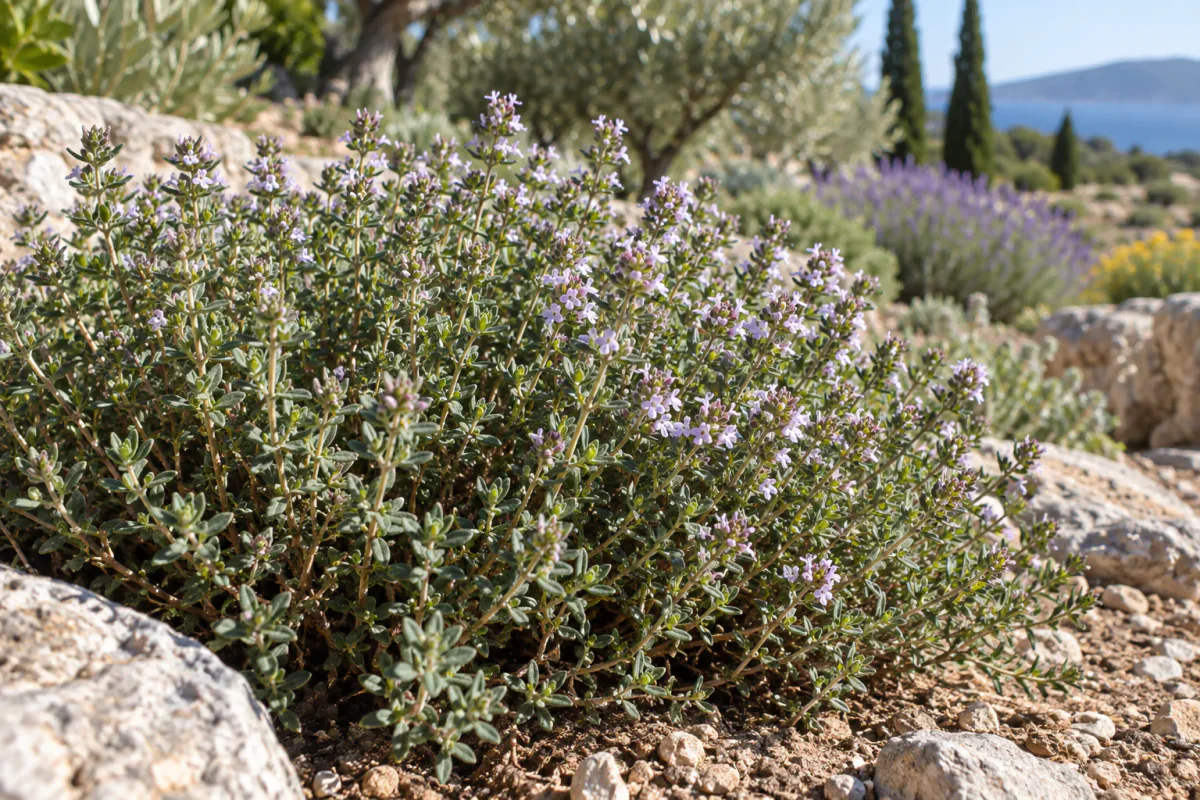
▷ Best Mediterranean plants for US gardens 2026
American Plant Exchange Rosemary Officinalis — Live Herb Plant
- ✓ Rosmarinus officinalis (Common Rosemary)
- ✓ Fragrant herb and ornamental plant
- ✓ Mature height: 2–4 feet
- ✓ Full sun, drought-tolerant when established
- ✓ USDA zones 8–10 (in cooler zones, grow in containers)
- ✓ Edible leaves for cooking
Price from Amazon.com · ships within US
Mediterranean Fan Palm (Chamaerops humilis) — 5-Gallon Live Plant
- ✓ Chamaerops humilis (Mediterranean Fan Palm)
- ✓ Architectural accent plant for warm regions
- ✓ Mature height: 4–10 feet (shrub form)
- ✓ Full sun to partial shade
- ✓ USDA zones 8–11 (protect from cold winds)
- ✓ Drought-tolerant, salt-tolerant
Price from Amazon.com · ships within US
English Lavender (Lavandula angustifolia) — Live Plant
- ✓ Lavandula angustifolia (English Lavender)
- ✓ Purple flower spikes, fragrant foliage
- ✓ Mature height: 18–24 inches
- ✓ Full sun requirement (6+ hours daily)
- ✓ USDA zones 5–9 (most cold-hardy lavender)
- ✓ Drought-tolerant, attractive to pollinators
Price from Amazon.com · ships within US
Design principles: layout and materials
Informal layout: Mediterranean gardens reject geometric precision. Plant in loose, flowing groups of the same species rather than single specimens scattered randomly. Three to five lavender plants grouped together create impact; scattered singles look sparse.
Earth-tone palette: Use terracotta pots, warm-toned gravel (tan, buff, russet), limestone or warm-colored stone paving. Accent with white walls or trim if building structures. Avoid cool-toned materials (blue-gray pavers, black edging) that clash with the warm aesthetic.
Focal points: A mature olive tree, stone bench, fountain, or terracotta urn anchors the garden and draws the eye. Mediterranean gardens feel more intentional with at least one strong focal point visible from the house.
Vertical elements: Use climbing plants (clematis, jasmine) on walls or arbors to add height and softness. Climbing plants on an arbor create shaded seating areas — essential in hot climates.
Color palette: warm earth tones
Mediterranean gardens succeed with a restricted color palette: dominant green (foliage of rosemary, olive, pittosporum) with accent colors from blooms. Primary flowers: soft purple (lavender), soft pink (cistus, rock roses), white (oleander), and yellow (verbascum). Avoid bright primary colors (hot pink, electric blue) — they fight the natural warmth. Foliage color (silver sage, golden euonymus) provides interest during non-bloom seasons.
Plant combinations for continuous color
The key to a Mediterranean garden that looks good year-round is layering bloom times. Spring bloomers (April–May in most zones): cistus, creeping phlox, alliums. Summer bloomers (June–August): lavender, catmint (Nepeta), santolina, verbascum, salvias. Late-summer into fall: Russian sage (Perovskia), globe thistles, phlomis. Winter interest comes from structural plants: ornamental grasses (blue fescue, Stipa tenuissima), evergreen dwarf conifers, and the silvery foliage of artemisia and dusty miller that glows in winter light.
Soil preparation: drainage first
Mediterranean plants demand well-drained soil. If your garden has clay or loamy soil that holds moisture, amend before planting. Mix into the top 12–18 inches: coarse sand or perlite (30–50% by volume) and gravel (10–20%). This changes soil structure so water moves through rather than pooling. Raised beds (12–18 inches high) are an alternative if amending in-place seems daunting.
Never enrich Mediterranean planting beds with compost or fertilizer. These plants evolved in poor, lean soils. Rich soil pushes soft growth vulnerable to disease and pests.
Creating a Mediterranean garden in non-Mediterranean climates
If you live in a humid, cool, or wet climate — the Pacific Northwest, Midwest, Northeast, or upper South — you can still create a beautiful Mediterranean-style garden. The challenge is not the visual style but rather selecting plants that tolerate moisture and choosing microclimates in your yard with the best drainage. Here's how:
Site selection: Choose the highest, most well-draining spot in your yard. South-facing slopes are ideal. Avoid low-lying areas where water pools. If your yard is flat, build raised beds 12–18 inches high to improve drainage. Plant selection: In humid climates, hardier lavender varieties like Lavandula angustifolia (English Lavender) are more reliable than tender Mediterranean fan palms. Stick to rosemary varieties bred for cooler zones (Hill Hardy, Tuscan Blue). Incorporate non-Mediterranean plants that share the warm-toned, low-maintenance aesthetic: ornamental grasses (Mexican feather grass, blue oat grass), sedums, sempervivums, and silver-foliaged plants like artemisia. Spacing and air circulation: Space plants further apart than in a true Mediterranean climate to maximize air movement and reduce fungal disease risk. A rosemary plant spaced 3 feet from its neighbors will dry faster after rain than one touching other plants. Winter protection: In USDA zones 5–6, tender plants like tender cistus and tender lavenders need protection. Grow them in containers that can be moved to an unheated garage in winter, or abandon them and replant seasonally. This is a viable strategy — a 2-foot rosemary in a 20-gallon pot costs $20–40 and provides a full season of abundance.
Mediterranean plants for cool and wet climates
These Mediterranean-style plants have proven reliability in humid, cool climates:
| Plant | Water Needs | Sun | Height | Hardiness | Role in Garden |
|---|---|---|---|---|---|
| Lavender (Lavandula angustifolia) | Dry | Full sun (6+ hrs) | 18–24" | USDA 5–9 | Bloom focal point, fragrance |
| Rosemary (Salvia rosmarinus) | Dry to moderate | Full sun | 2–4' | Zones 8–10 (container in cooler zones) | Evergreen structure, herb |
| Thyme (Thymus vulgaris) | Dry | Full sun | 12–18" | USDA 5–9 | Groundcover, edible herb |
| Sage (Salvia officinalis) | Dry to moderate | Full sun to part shade | 18–24" | USDA 5–8 | Foliage color, culinary use |
| Catmint (Nepeta x faassenii) | Dry to moderate | Full sun | 24–36" | USDA 3–8 | Blue flowers, pollinator magnet |
| Russian Sage (Perovskia atriplicifolia) | Dry to moderate | Full sun | 3–4' | USDA 4–9 | Late-summer purple haze |
| Santolina (Cotton Lavender) | Dry | Full sun | 18–24" | USDA 6–9 (marginal in 5) | Silver foliage, yellow pompom blooms |
Watering: establishment vs. mature garden
Year one (establishment): Water newly planted specimens 1–2 times per week during the growing season (spring and early fall), tapering off as days shorten and temps drop. By late fall, established root systems should support plants on natural rainfall alone. Lavender and rosemary in clay soil are vulnerable to root rot from overwatering — err toward dry.
Mature garden: Once established (year 2 onward), Mediterranean plants in most US climates thrive on natural rainfall. Only water during extended droughts (4+ weeks without rain). A 2–3 inch layer of gravel mulch under plants reduces evaporation and keeps foliage dry, preventing fungal disease.
Essential plants for Mediterranean gardens
The core of every Mediterranean garden relies on a handful of key plants that define the aesthetic and deliver reliable performance. These species thrive on minimal water, prefer lean soil, and evolve into sculptural focal points over years. Understanding the primary plant families and their characteristics helps you build a layered, sophisticated garden rather than simply collecting individual specimens.
Lavender (Lavandula angustifolia) serves as the emotional anchor of Mediterranean gardens. Its purple-blue spikes bloom for 6–8 weeks in summer, and the fragrance is instantly recognizable. 'Hidcote' and 'Munstead' are the most cold-hardy cultivars, thriving to USDA zone 5. Prune hard after bloom (by one-third) to maintain a compact mound; unpruned lavender becomes woody and sparse in the center. Lavender abhors winter wet — always plant on a slope or raised bed with excellent drainage. In humid climates, space plants widely to promote air circulation and reduce fungal disease risk.
Rosemary (Salvia rosmarinus) provides year-round structure and edible foliage. While tender in cold zones (mature plants survive to zone 8–9 outdoors), 'Hill Hardy' and 'Tuscan Blue' extend hardiness to zone 7. Upright forms create vertical accents (2–4 feet), while trailing cultivars like 'Huntington Carpet' cascade from slopes or containers. Rosemary tolerates partial shade, unlike lavender, and accepts moderate soil moisture. Harvest leaves anytime for cooking; their flavor peaks in spring and early summer.
Cistus (rock rose) offers large, papery flowers (pink, white, or magenta) that bloom for a single day but appear in profusion over weeks. Species like C. x pulverulentus and C. x hybridus are among the most drought-tolerant shrubs available. Hardiness varies: C. x hybridus reaches zone 6 in sheltered microclimates, though zone 8–9 is typical. Cistus prefers infertile soil; overfed plants produce foliage at the expense of flowers. Never prune hard — just remove deadwood after winter.
Phlomis (Jerusalem sage) contributes architectural foliage and yellow flower spikes. P. fruticosa is evergreen, bold, and nearly indestructible in zones 8–10. P. italica offers softer pink blooms and adapts to zone 7 with protection. Both attract bees and butterflies. Their silvered, textured leaves stand out year-round, making them valuable even outside the bloom season. Prune only to remove winter damage.
Euphorbia (Mediterranean spurge) provides neon lime-green bracts that persist for months. E. characias and E. wulfenii thrive in poor, dry soil and reach 3–4 feet tall. Hardiness is marginal in cold zones (zone 7–8), but their architectural form justifies including them where possible. The sap irritates skin — wear gloves when pruning. Remove old stems after bloom to encourage fresh growth.
Agapanthus (blue lily of the Nile) brings bold sphere-shaped blue or white flower heads and strap-like foliage. Deciduous types (A. africanus hybrids) are hardier, surviving zone 6 with winter mulch. Evergreen types need zone 8+. Agapanthus prefers slightly rich soil and moderate moisture compared to other Mediterranean plants — place it in a semi-shaded location if your climate is hot and dry. Blooms persist for 6–8 weeks and work beautifully in cut flower arrangements.
Oleander (Nerium oleander) delivers constant color (pink, red, yellow, white) across a long summer season. Deciduous in cool zones and evergreen where hardy (zone 8–10), oleander tolerates salt spray, heat, and poor soil. It accepts pruning well and develops character over years. All parts are toxic — handle with care and keep away from pets and children. In frost-prone areas, grow in large containers and bring indoors for winter.
For groundcover and edging, combine creeping thyme species (T. vulgaris, T. pseudolanuginosus) with compact santolina (Santolina chamaecyparissus, cotton lavender) and germander (Teucrium chamaedrys). These trio creates layered texture, fills gaps between shrubs, and softens hardscape edges. All root-rot from poor drainage — ensure slopes and gravel base beneath them.
Hardscaping and design structure
Mediterranean gardens succeed or fail based on hardscape decisions. The right framework lifts a planting scheme from "plants in gravel" to a cohesive, intentional design. Hardscape establishes circulation, creates focal points, and defines spaces — the living elements (plants) then harmonize with that structure.
Gravel forms the foundation. A 2–3 inch depth of coarse (pea gravel or river rock) suppresses weeds, retains moisture, reduces evaporation, and keeps plant foliage dry (preventing fungal disease). Avoid fine silts and sands — they compact and reduce drainage. For a Mediterranean aesthetic, choose warm tones: caramel, honey, cream. Gray granite works too but feels cooler. Budget approximately 2–3 tons per 100 square feet at 2–3 inch depth. Refresh gravel every 3–5 years as it compacts and breaks down.
Terracing and retaining walls organize slopes and define zones. Stone (local slate, limestone, or granite) is authentic; railway sleepers or concrete blocks are more budget-friendly. A 1–2 foot height allows plants to spill over and soften the edge. Terraced beds improve drainage on clay soils and create raised planting zones. Each terrace step acts as a transition point for a planting layer: shrubs on the upper terrace, herbaceous perennials on the lower.
Pergolas and trellises shade seating areas and support Mediterranean vines: grape vines, clematis, or climbing roses. An open lattice allows dappled light and air circulation, essential in humid climates. Pergolas work best positioned to cast shade during peak afternoon hours (west-facing). The skeletal structure in winter becomes an architectural feature, not a liability.
Water features — small fountains, birdbaths, or pools — echo Mediterranean courtyards. A simple recirculating fountain provides the sound and visual appeal without excessive water use. Position it as a focal point visible from seating areas. Running water creates a cooling effect (psychologically and slightly physically), making summer afternoons more comfortable.
Edging defines beds and paths. Low Mediterranean stone (blue slate, limestone, or river rock) laid dry or mortared creates clean edges without appearing fussy. Avoid industrial-looking metal or plastic edging — Mediterranean style favors natural materials. Pathways of crushed stone or stepping stones establish rhythm and guide movement through the garden.
Color palette for hardscape: warm neutrals (honey, cream, warm gray, terracotta) harmonize with the silvered foliage and blue, purple, and yellow blooms of Mediterranean plants. Avoid bright white stone or dark charcoal — they read as too contemporary and jar the aesthetic. Terracotta pots (for containerized specimens in colder climates) pick up the earth-tone theme.
Adapting Mediterranean style to cooler climates
Mediterranean design principles translate beautifully to cool, wet regions — with smart plant swaps and site preparation. The aesthetic remains: drought-tolerant perennials, gravel, stone, and minimalist planting. But the species list shifts toward hardy alternatives that capture the look without demanding Tuscan heat.
In USDA zones 5–7 (northern US, UK, northern Europe), success hinges on three factors: exceptional drainage, site selection, and hardy cultivar choice. The primary enemy is winter wet, not cold. Mediterranean plants rot at 20°F in soggy clay; the same plants survive -10°F in well-drained loam. Build raised beds or mounds (minimum 12–18 inches high) and amend the base with coarse sand and gravel.
South-facing slopes with afternoon shade work better than northern exposures. Morning sun dries frost-laden foliage, preventing ice-burn. Afternoon shade (especially in hot climates) reduces drought stress. East-facing sites are ideal in cool regions: early sun dries dew, while afternoon shade prevents heat stress on borderline-hardy plants.
Hardy lavender substitutes abound. English lavender (Lavandula angustifolia) reaches zone 5 in cultivars like 'Hidcote' and 'Munstead'. French and Spanish lavenders (L. stoechas, L. dentata) are zone 8+ but stunning in containers. For zones 3–5, consider catmint (Nepeta x faassenii), Russian sage (Perovskia atriplicifolia), or blue fescue grass — they lack lavender's fragrance but deliver similar color and texture year-round.
Rosemary survives to zone 7 outdoors ('Hill Hardy', 'Tuscan Blue') and zone 5 as a deciduous perennial that re-sprouts from the base. Winter hardiness improves when plants are sited on slopes with excellent air drainage and grown in lean soil (avoid nitrogen-rich amendments). In zone 6 and colder, rosemary thrives as a container plant: bring pots indoors for winter, return them outside after the last frost.
Thyme species and cultivars range from zone 3–11. Common thyme (Thymus vulgaris) reaches zone 5; silver thyme (T. pseudolanuginosus) adapts to zone 4. Woolly thyme (T. lanuginosus) is evergreen and ultra-hardy. All prefer sand and gravel mix with zero amendments. Their tiny leaves and low stature fill groundcover roles that lavender cannot in cold zones.
Substitute hardy herbaceous perennials for tender shrubs. In place of tender phlomis, use hardier relatives: Phlomis russeliana (zone 5), Monarda (bee balm, zone 3–9, full sun, lavender-pink flowers), or Liatris (blazing star, zone 3–9, tall spikes, deer-resistant). Catmint and Russian sage provide the airy, blue-purple aesthetic of Mediterranean plantings and reach zones 4 and 5 respectively. Both bloom midsummer through fall and attract pollinators.
For year-round structure, lean on evergreen conifers: dwarf junipers, blue fescue grass, and compact yews offer fine texture and silvered tones. These create hardscape-like permanence in winter when herbaceous plants fade. Avoid dense, rounded evergreens (boxwood, privet) — choose species with airy or fine texture (columnar junipers, feathery fescues) to preserve the Mediterranean lightness.
In zones 5–6, amend soil annually with gritty sand and mulch with gravel (no organic bark mulch). The goal is to mimic the poor, lean, well-drained soils of the Mediterranean — the opposite of traditional UK/Northern European gardening practice (rich compost, acidic conditions). Every year your Mediterranean garden receives more rainfall than the real Mediterranean; increase drainage year-round to offset this excess moisture.