

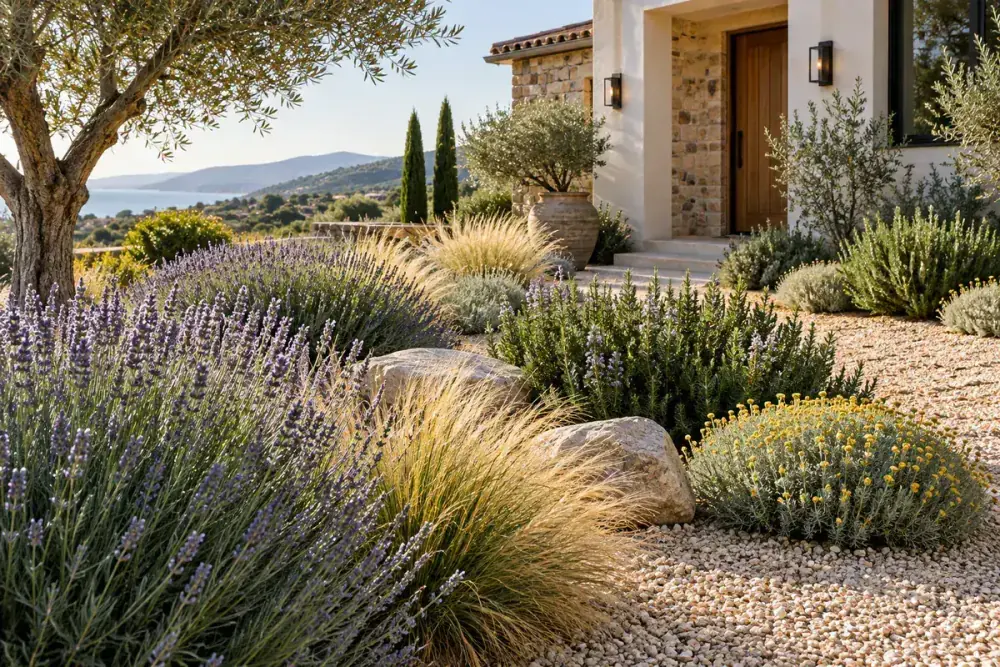
Core principles of drought-resistant garden design
Start with a site map rather than a plant list. Record sun exposure, slope, soil drainage, existing trees, water access, local restrictions and the areas people use. Those observations determine which parts of the garden can share irrigation and which need different plants or care.
- Match plants to the site: check regional suitability, mature size, sun, drainage and winter conditions.
- Group by water demand: keep lawn, food crops and newly planted beds separate from established low-water areas where practical.
- Protect the soil: choose mulch for the planting and local fire or moisture conditions; keep it away from stems and crowns.
- Water by observation: check the root zone and adjust for rainfall, soil, heat and wind instead of relying on a universal timer.
- Plan for establishment: new plants may need supplemental water until roots establish; the period varies by species and site.
These steps follow Colorado State Extension’s water-wise landscape design sequence. It emphasizes site assessment, hydrozones and plant choice rather than a fixed recipe.
Choose drought-tolerant plants for your region
There is no national list of “best” drought-tolerant plants. Hardiness zone alone does not describe summer heat, rainfall, humidity, soil or exposure. Make a shortlist from a local Extension service, native-plant program or water utility, then verify mature size, sun, drainage, winter tolerance and establishment needs for each species.
Perennials and grasses
Compare candidate perennials by local adaptation, mature spread and bloom period. Where possible, choose species recommended for your county or ecoregion and check whether they need supplemental water during establishment.
Shrubs for structure
Use shrubs only where their mature size fits the site and their hardiness and moisture needs match local conditions. Do not treat a plant as drought adapted merely because it is Mediterranean, native or sold as “low water.”
Colorado State Extension’s water-wise design steps and Oregon State’s regional planting guide show why plant choice must be regional.
Prepare soil and use mulch thoughtfully
Do not amend the whole site with a fixed sand, compost or gravel recipe. First assess drainage, existing texture, slope and the plants you intend to grow; use a soil test where nutrient or pH changes are being considered. Avoid working wet soil.
Mulch can reduce exposed soil and help conserve moisture, but material and depth should suit the planting, climate and fire risk. Keep mulch clear of crowns, trunks and stems. CSU Extension treats mulch as one part of water-wise design, alongside site planning and plant selection, rather than a substitute for them.
Irrigate according to establishment and soil moisture
New plantings need closer monitoring than established plants, but there is no universal interval or run time. Water the root ball and surrounding soil when moisture checks and conditions indicate a need; adjust for plant size, soil, rainfall, heat and wind. Reduce supplemental irrigation only as roots establish and local weather permits.
Group plants with similar water needs, inspect emitters and sprinklers for leaks or overspray, and revise timer settings after rain or seasonal changes. Follow water-use restrictions from your local utility. Oregon State notes that some native plants need supplemental water during establishment, which can take multiple seasons; see its water-wise landscape guidance.
Monitor new plants as they establish
Check the root zone rather than relying on a calendar. The required frequency changes with root-ball size, soil texture, exposure, temperature and rainfall. A plant may need supplemental water through more than one growing season; local Extension guidance is more useful than a fixed “year one” schedule.
After watering, confirm moisture reached the root ball without leaving the site saturated. Record rainfall, observations and plant response so you can adjust the system gradually. If a plant repeatedly wilts despite adequate moisture, investigate drainage, heat stress, pests or transplant damage rather than adding water automatically.
Build a local plant shortlist
Use this comparison worksheet before buying: common and botanical name; regional source; mature height and spread; sun exposure; drainage; winter hardiness; bloom season; pollinator value where documented; establishment-water requirement; and any invasive-plant warning. Verify each entry with a local Extension or conservation source.
For state and regional options, begin with the Colorado State Extension design guide or the applicable Oregon State native-plant guidance. Do not transfer a species table from one region to another without checking suitability.
Work through a drought-resistant garden design
A staged design prevents a plant list from driving the layout before you understand the site. Use this sequence and revise it after observing how the garden responds:
- Map use and exposure: mark doors, paths, seating, utility lines, existing trees, sun, shade, slope and prevailing wind. Note any area where water collects or runs off.
- Check local constraints: review water restrictions, fire-risk guidance, utility access and any rules for removing lawn or attaching irrigation to a shared supply.
- Group by water needs: draw hydrozones for lawn or food beds, newly planted areas and established low-water beds. Keep plants with different needs separate where possible.
- Choose plants regionally: shortlist by botanical name, mature size, hardiness, light, soil and establishment requirement. Verify that a plant is not invasive or restricted.
- Plan the soil surface: decide whether the bed needs mulch or groundcover and choose a material suited to the plants, moisture and local fire guidance.
- Set up irrigation for access: place emitters where water reaches the root zone and can be inspected. Keep the system adjustable while new plants establish.
- Review after weather changes: check runoff, dry patches, plant stress and leaks after rain or heat waves, then adjust one zone at a time.
Use a small test area before converting a large lawn or border. A pilot bed lets you observe drainage, plant response and maintenance time over a season. Keep notes on the date planted, species, rainfall, supplemental watering and any replacements. If a plant repeatedly needs more water than the rest of its zone, move it to a better-matched area or choose another species rather than increasing irrigation across the entire garden.
Water-wise design is not a fixed plant palette. A list for Colorado or the Pacific Northwest may not suit a Mediterranean coast, humid region or cold inland site. Use the regional sources linked above, local native-plant resources and your water utility’s current advice to build the final planting list. See our xeriscaping guide for related layout considerations.
Use water zones and local irrigation advice
Map areas by how often they need water: lawn, a vegetable bed, newly planted shrubs and established drought-adapted plants may require different schedules. Where practical, put plants with similar needs on the same line or valve and keep high-demand areas separate. A hydrozone is a planning tool, not a promise that every plant in it will use the same amount of water.
Use drip or another suitable method only after checking local water restrictions, the soil’s infiltration rate and the emitter placement. Runoff on a slope can mean water is applied faster than the soil can absorb it. Shorter cycles with pauses may be more suitable in some settings, but follow local Extension or water-utility advice rather than applying a universal timer rule. Check below the mulch to see whether moisture reaches the root zone.
During establishment, newly planted species may need more frequent attention than mature plants. Gradually adjust irrigation as roots grow and rainfall changes. Avoid watering the foliage when a method can direct moisture to the soil without increasing waste or creating other site problems.
Review the garden after a dry season
At the end of a hot or dry period, note which areas stayed healthy, which plants needed supplemental water and where runoff occurred. A plant that survived one summer may still need establishment support or care during a different heat event. Record the species, planting date, soil, irrigation pattern and any restrictions in force so you can improve the layout instead of replacing plants at random.
Check for compacted soil, blocked emitters, leaks and mulch that has shifted away from roots. Repair the system before the next dry spell and adjust plant groupings if their needs proved incompatible. If a plant repeatedly struggles, consult a regional source for a locally suitable replacement; importing a species list from Colorado or Oregon does not establish that it suits a Mediterranean climate.
Water-wise gardening can still include shade, flowers, edible crops and usable lawn. The design choice is how much space each use receives and how its water demand fits local conditions. Keep paths, seating and maintenance access in the plan so the garden remains functional as plants mature.
Adapt soil and irrigation to slope
On a slope, water can run off before it reaches plant roots, while a low point can remain wetter than the rest of the garden. Observe the site during irrigation and after rain. If water channels across the surface, reconsider emitter rate and placement, use a locally appropriate erosion-control method, and keep paths clear of runoff.
Do not amend the whole garden based on one patch of compacted soil. A soil test or local assessment can help determine whether structure, pH or nutrients need attention. Organic matter may improve some soils, but the correct approach depends on native soil and the plant community. Use mulch only where it is compatible with local fire guidance, plant crowns and drainage.
In a water-wise garden, the root zone matters more than how wet the surface looks. Check moisture below the mulch at a depth appropriate for the plants, and adjust irrigation as roots establish. Colorado State Extension’s design steps encourage planning the site and water needs before choosing plants.
Frequently asked questions
Make the layout water-wise in measurable steps. Sketch the site, mark sun and drainage, group plants with similar water needs, and keep a separate establishment plan for new plantings. Drought-tolerant does not mean water-free: Oregon State Extension notes some native plants need supplemental watering during establishment, which can take two to three years. Colorado State Extension recommends hydrozoning and mulch as parts of a broader design. See OSU’s water-wise planting guidance and CSU’s design steps; choose species lists for your own region.
Audit water use after the first dry period
After a dry spell, compare the garden’s condition with the plan rather than assuming that all stress signals call for more irrigation. Check soil moisture at root depth in each water zone, inspect emitters for blockages and look for leaks or runoff. A wet surface can hide a dry root zone, while water pooling at the surface may point to compaction or poor infiltration. Record which plants wilted, recovered overnight or showed lasting damage.
Use those observations to revise the layout. Group plants with similar water requirements so one irrigation schedule does not overwater one area while leaving another dry. Newly planted specimens usually need closer monitoring while roots establish than established plants, even if both are described as drought tolerant. Keep an establishment note for each planting date and do not reduce irrigation solely because a plant is native or adapted to a dry climate.
Review the non-plant surfaces too. Paths, roofs and compacted areas affect where rain runs and where it can soak in. Where practical and lawful, direct runoff toward planted areas that can accept it, while keeping water away from building foundations and avoiding erosion. On slopes, break long flows with suitable design measures and seek local advice for significant grading or drainage work.
Finally, check your regional water rules and restrictions before changing irrigation or installing rainwater features. Colorado and Oregon Extension materials linked above illustrate water-wise planning for their own regions; their species lists and rainfall assumptions are not universal. Use your municipality, local watershed authority, regional botanical garden or Extension office for guidance that fits your climate and site.
For a broader context, continue with the garden design hub and our outdoor plants guide to compare species by local site conditions.