

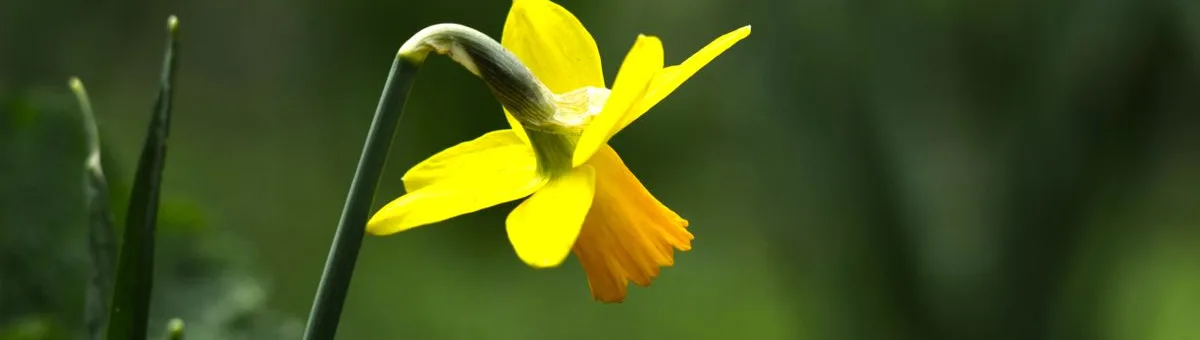
Choose by flower form and climate
Narcissus cultivars are grouped by flower form, including trumpet, large-cupped, jonquilla, and tazetta types. Use those labels to compare appearance and fragrance, but do not assume every group has the same cold requirement or bloom date. A local nursery or extension service can help match a named cultivar to your winter conditions. Daffodils are toxic if eaten; keep bulbs away from children and pets and do not mistake them for edible onions.
Plant bulbs in autumn
Pick a site with sun during the growing season and good drainage. Plant at the depth and spacing on the bulb label; a broad guide is about two to three times the bulb diameter, adjusted for soil and bulb type. Place the pointed end up, cover, and water once to settle it. In cold regions, plant early enough for roots to establish before the ground freezes. See University of Minnesota Extension’s bulb planting guide.
Care after flowering
Deadhead spent flowers if you do not want seed to form, but keep leaves intact until they yellow. The foliage replenishes the bulb for the next season. Do not braid or tie it. If a clump becomes crowded or flowering declines, divide it after the foliage has died back and replant the bulbs promptly.
Yellowing before bloom, soft bulbs, or poor flowering may point to waterlogged soil, premature foliage removal, or a cultivar that does not suit the site. Check drainage and planting depth first. Avoid fertilizer prescriptions without a soil test. For species details, see NC State Extension’s Narcissus profile.
Plan the planting around sunlight and drainage
Daffodils can be placed under deciduous trees because they often flower before the canopy fills in, but they still need light during active growth. Avoid low areas where water stands. In containers, select a frost-resistant pot for outdoor winter conditions, provide drainage, and follow bulb-specific depth directions. Grouping bulbs in irregular drifts usually looks more natural than placing single bulbs at equal distances.
Why a daffodil clump may stop flowering
If leaves appear but flowers do not, check whether foliage was cut or tied while still green, whether the site has become shaded, and whether the clump is crowded. Correct the cause before adding fertilizer. If division is needed, wait until leaves die back, lift the clump carefully, and replant firm bulbs. NC State Extension notes that bulbs can remain undisturbed for years and be divided when bloom quantity or quality declines.
Compare daffodil groups before ordering
“Daffodil” covers many Narcissus cultivars. Their flower shape, height, fragrance, bloom window, and suitability for naturalizing differ. Use the group names to narrow the look you want, then confirm the cultivar’s local performance rather than using the group as a guarantee. A seller’s photo may show one flowering stem, but the bulb size, planting instructions, and expected mature height are better decision details.
| Group to explore | What to compare | Planning note |
|---|---|---|
| Trumpet and large-cupped | Flower proportion, mature height, and bloom period | Useful for a visible spring focal point; allow space for leaves after the flowers fade. |
| Small-cupped and double | Flower form, stem strength, and whether the planting is exposed to wind | Plant in groups for impact, but do not crowd bulbs in a container. |
| Jonquilla and tazetta types | Fragrance, climate suitability, and local winter conditions | Check regional guidance; not every cultivar has the same cold tolerance. |
| Species or naturalizing selections | Whether the supplier recommends repeat flowering in your region | Leave foliage undisturbed and select a site that remains suitable during dormancy. |
For a long display, choose named varieties with different expected bloom times, but regard “early,” “mid,” and “late” as relative descriptions. A warm winter or unusually cool spring can shift flowering. Keep labels or a bed map so you can tell whether a missing bloom reflects the cultivar, a planting error, or a change in the site. NC State Extension’s Narcissus profile is a useful identity reference; the bulb supplier is the appropriate source for its own depth and spacing directions.
Plant a new daffodil bed step by step
1. Check the site after rain. If water remains pooled where you intend to plant, choose another area or improve drainage across the bed. A gravel layer in the bottom of an individual hole does not correct a saturated soil profile. Daffodils need a period of active growth and a suitable resting period; consistently waterlogged ground can undermine both.
2. Inspect each bulb. Choose firm bulbs without extensive soft patches, mold, or damage. Plant them soon after purchase and store any short delay in a cool, ventilated place according to supplier instructions. Do not seal damp bulbs in plastic. If a bulb is badly compromised, discard it rather than placing it among healthy stock.
3. Place and orient the bulbs. Use the package depth and spacing, which account for cultivar and bulb size. Point the growing tip upward; if orientation is unclear, set the bulb on its side rather than forcing it. Backfill with soil, water to settle it, and mark the planting area. Resist the temptation to tamp heavily, which can compact the bed and slow drainage.
4. Record what you planted. Note variety, count, date, and site. A simple sketch lets you distinguish a cultivar that has not yet emerged from an empty gap and helps prevent accidental digging through the bulbs. Photograph the original packaging if you discard it. In a mixed border, place bulbs where later foliage can remain until it yellows rather than directly in front of a path edge that will be cut for tidiness.
Care for daffodils through the year
Autumn: plant hardy bulbs while the soil is workable and before the ground freezes in cold regions. Water once after planting if the soil is dry, then let seasonal rainfall guide further watering. In mild climates, check the supplier’s recommended planting window; a blanket northern calendar may not suit a warm-winter site.
Winter: avoid digging or walking over the marked planting area when soil is saturated. A light mulch can moderate temperature swings in some climates, but keep it loose enough for shoots to emerge and follow local advice. Bulbs planted in outdoor pots face greater temperature fluctuation than bulbs in the ground, so use containers designed for outdoor conditions and protect them regionally as needed.
Spring: allow shoots and leaves to grow; water during prolonged dry weather while plants are actively growing. Deadhead spent blooms if you want to limit seed production, but do not remove healthy leaves. If you need a tidy bed, plant daffodils among later perennials that can cover the yellowing leaves without requiring you to cut them early.
After foliage dies back: remove dry leaves and note any gaps or thin flowering areas. Do not rush to divide every clump. Bulbs can often remain in place for years; lift and divide only when crowding or poor flowering makes it useful. Replant sound bulbs promptly at the recommended depth rather than leaving them exposed on a bench.
Diagnose weak growth and bulb loss
| Observation | Possible site or care issue | What to check next |
|---|---|---|
| Leaves emerge but no flowers | Leaves removed early, shade increased, crowded bulbs, or a cultivar unsuited to the site | Review last year’s foliage care, sun exposure during growth, and the bulb label before feeding. |
| Few or small flowers across an old clump | Overcrowding or changing light and drainage | Wait until foliage dies back, then inspect the bulbs and divide only firm, healthy ones. |
| Yellowing or collapse before bloom | Waterlogged soil, damaged bulb, or other stress | Check drainage and bulb firmness; avoid treating for disease without a local diagnosis. |
| Bulbs disappear or are chewed | Wildlife or physical disturbance | Look for digging evidence and ask local extension about exclusion options suited to the animal. |
Do not confuse natural leaf yellowing after flowering with premature decline. If a whole bed performs poorly, compare the affected area with nearby soil and note where water pools. Keep in mind that daffodil bulbs and plant parts are toxic if eaten; do not store them beside onions or other edible bulbs, and keep them away from pets and children. When a suspected pest or disease causes continuing loss, bring photos and a bulb sample to a local diagnostic service instead of applying an unverified remedy.
Naturalize daffodils in lawns and mixed borders
Daffodils can work in a lawn or beneath deciduous trees when the site receives enough light during active growth and the leaves can remain until they yellow. Choose a section that can be left unmown after flowering. If you cut the grass immediately when flowers fade, the foliage will also be removed before the bulb has replenished itself. A simple boundary or small sign can help household members remember the delayed mowing window.
Planting in a lawn requires a plan for soil disturbance. Lift a neat section of turf, place bulbs at the supplier’s depth, and replace the turf without burying the shoots too deeply. Avoid planting where regular aeration or utility work will cut through the bulbs. In a woodland-style bed, repeat groups along paths and under trees, but check spring sun before assuming that summer shade is suitable.
In containers, use a frost-resistant pot with clear drainage and follow the package depth for each cultivar. Bulbs in a pot experience more temperature swings than those planted in the ground. If you layer different bulb species, only do so when their depth and moisture needs are compatible. A shallow decorative bowl may not have enough depth for daffodils; choose a deeper container or plant them in the garden.
Naturalizing is not the same as leaving every bulb untouched forever. Monitor how the clump flowers over several seasons. If it becomes crowded or flowering decreases, wait until foliage dies, lift the bulbs, and replant firm ones at appropriate spacing. Do not divide after flowering while leaves are green. Replace soft, damaged, or diseased bulbs and ask local extension for help if loss continues across a large area.
Daffodil bulbs are toxic if eaten. Store unopened bulbs in a clearly labeled container away from food bulbs, and wash hands after handling. Keep plants, bulbs, and vase water away from pets and children who may chew them. If ingestion is suspected, contact a veterinarian or poison-control service promptly; do not wait for symptoms. A garden layout that keeps bulbs out of an edible bed reduces accidental confusion at harvest time.
Care for potted daffodils after a gift display
Florist or nursery daffodils sold in bloom are often a temporary indoor display. Place the pot in a bright, cool room away from direct heat and water only when the mix begins to dry. Keep the foliage attached after flowers fade. Do not cut green leaves just because the pot no longer looks decorative; the bulb uses them to replenish reserves.
Some bulbs can be planted outdoors after flowering, but success depends on the cultivar, whether it was forced, and the local climate. Wait until the leaves have yellowed naturally, then check the supplier’s instructions. If the bulbs are healthy and suitable for your region, plant them at the recommended depth in a well-drained site. A forced bulb may not flower the following spring, so treat it as a trial rather than a guarantee.
Do not place gift daffodils beside an edible onion or garlic harvest. The bulb and plant are toxic if eaten, and a decorative pot can be accessible to pets. Remove fallen flowers and plant pieces promptly. If the pot has no drainage hole, avoid flooding the root ball and discard standing water carefully. A healthy bulb is easier to establish outdoors when it has received light and the foliage has completed its growth cycle.
Do not plant bulbs that have become soft while in the gift pot. Keep the remaining foliage in bright light and let it fade on its own before lifting the bulb. Save the cultivar label if it is available, since that can help you decide whether the bulb suits your garden.