

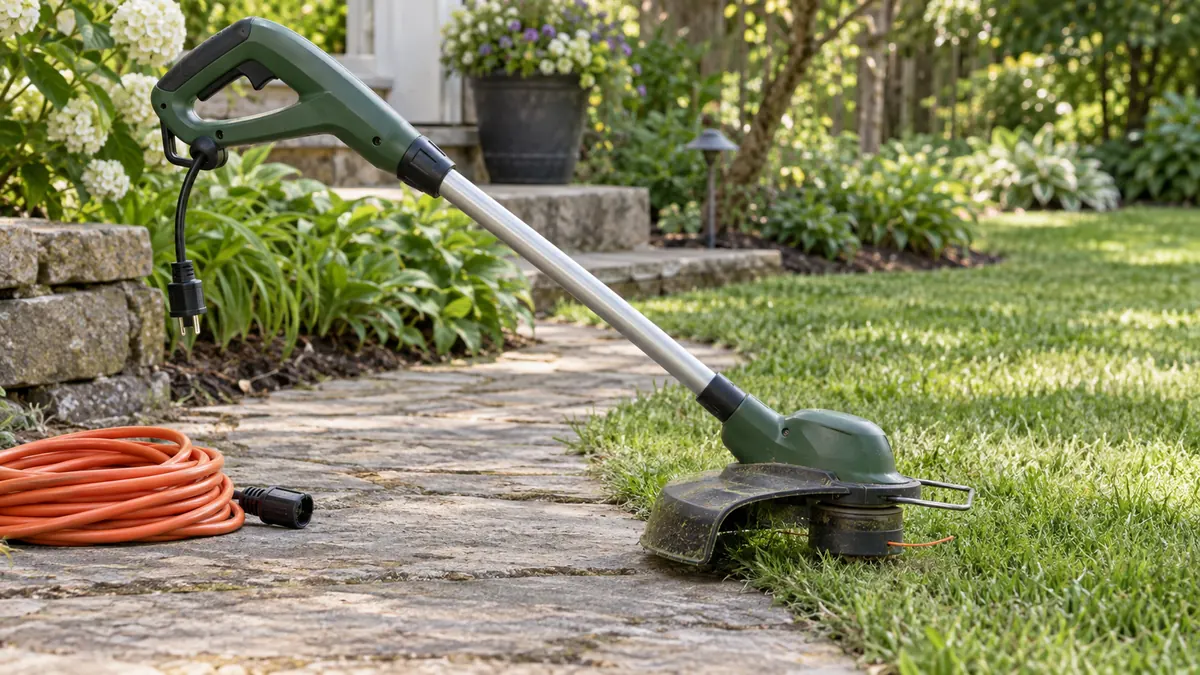
ST8600 specifications from BLACK+DECKER
- BLACK+DECKER lists the ST8600 as corded, 5.0 A, with a 13-inch swath and 6.6 lb product weight.
- The official page describes automatic feed, cord retention, adjustable handles and conversion between trimming and edging.
- The package page lists a spool, guard and auxiliary handle; check the actual revision and manual before ordering replacement parts.
| Published detail | ST8600 | Buying/use check |
|---|---|---|
| Motor | 5.0 A corded | Use a compatible outdoor-rated extension cord as the manual directs |
| Cutting swath | 13 in | Suitable for edging and smaller trimming passes |
| Line feed | AFS automatic feed spool | Confirm AF-100 spool and model revision before replacement |
| Listed weight | 6.6 lb | Check the balance with guard and handle installed |
| Package | AF-100 spool, guard, auxiliary handle | Do not assume accessories from a different bundle are included |
Where the corded 13-inch setup fits
The ST8600 suits a small to medium trimming area where an outlet is reachable and the user wants to switch between trimming grass and edging a hard boundary. The corded design avoids charging and fuel but makes cord routing part of each pass. It is less practical where the work area is separated from the house, crosses wet ground or requires frequent movement around trees and beds.
A 13-inch swath creates a narrower working path than many larger cordless models. That can make it easier to control along a bed or fence, but it may take more overlapping passes on long perimeter edges. The maker lists a 5 A motor and PowerDrive transmission; those published features are not an independent test of how quickly it cuts through dense woody weeds. For thick brush or large areas, choose a tool designed for that vegetation rather than pushing this trimmer beyond its documented use.
Check line and parts before ordering
If you own an ST8600, read the data plate and obtain its manual before ordering a spool, line or guard. Confirm voltage, cord type, line feed and replacement part number. If buying a used unit, check cord condition, trigger lock, guard and available parts; do not substitute parts based only on brand or similar housing.
Match the model and replacement parts
- Compare cutting swath, line diameter, head type and line-feed method from the exact model documentation.
- Check motor amperage, extension-cord requirements and secure cord-retention features in the manual.
- Confirm guard, handle and edging configuration against the exact package contents.
- Plan cord routing away from the cutting line and use suitable outdoor power protection.
Use the trimmer and edger positions
BLACK+DECKER describes the ST8600 as a 2-in-1 unit that converts between string trimming and edging. The adjustable handle and pivoting positions help set the tool for those two orientations, while the edge guide helps follow a hard boundary. Before switching modes, unplug the tool, let the head stop and follow the manual's procedure. Do not twist the shaft or force the adjustment latch.
For trimming, sweep in a controlled arc and keep the head level enough to avoid scalping. For edging, position the line head as the manual shows and guide the edge wheel or guide along the path; do not lean the rotating line against masonry. The edge guide is a reference, not a substitute for keeping people and glass outside the cutting zone.
Inspect the head, guard and power cord
Check the guard for cracks and secure attachment, the auxiliary handle for movement, the cord-retention feature for correct routing and the spool cover for damage. The ST8600 product page says the AF-100 spool is included; match its code or the manual's approved bulk line before replacing it. Incorrect diameter or winding can prevent feed, overload the head or cause the line to break unevenly.
Unplug before removing grass wrapped around the spindle, winding line or inspecting the spool. Keep cooling vents clear and store the extension cord separately without tight kinks or cuts. If the switch, plug, cord or guard is damaged, stop using the trimmer until repaired by an authorized service provider. The manufacturer's product page lists dimensions and weight, but service availability and warranty terms depend on the market and date of purchase.
Published details, no offer confirmed
The exact manufacturer model is documented, but the former Amazon ASINs did not verify a current offer for this product. The page does not claim comparative tests or imply that another trimmer’s performance applies to ST8600.
Cord, guard and service precautions
Use the matching manual for cord routing, line replacement and approved extension cord. Disconnect from power before servicing, wear eye protection and keep the cutting zone clear of people and breakable objects.
The 13-inch swath is about 33 cm and describes the nominal cutting width, not a safe working distance from plants, vehicles or people. Use the wheel and convertible head as intended for edging, keeping the guard in place. The automatic feed advances line according to the manufacturer’s design; if too much line emerges, the guard-mounted blade should trim it. Do not remove that blade to widen the swath.
The ST8600 is a 5 A corded tool in BLACK+DECKER’s US specification. The source does not establish that a US-marked unit can be connected safely to a 230 V outlet. Check the label, frequency, plug, manual and service availability before considering an imported unit. A plug adapter cannot change voltage. This page is a model reference for owners, not a purchase guide for an unverified regional package.
Before ordering an AF-100 spool or replacement guard, match the part number and model suffix with the manual. A spool that looks similar can wind in the wrong direction or fail to advance. Disconnect the trimmer before opening the head, clearing wrapped grass or inspecting the line cutter. Avoid metal line or a larger diameter than approved for the head.
Inspect the complete cord before each use, including the strain relief and plug. Stop if the insulation is cut, the cable becomes hot or the motor emits an electrical odor. Keep connections dry, route the lead behind the operator and stop if it crosses the cutting area. Clear debris and keep people and pets outside the projection zone. Do not use the trimmer in rain or on wet ground unless the specific manual expressly permits the conditions.
The manufacturer’s package lists a spool, guard and auxiliary handle, but retail bundles may differ. No Amazon.com offer passed the exact-model, review-count and active-offer checks for this review. If a future listing appears, verify the item label, voltage and accessory contents before linking it.
Before ordering a used ST8600, verify the model plate and confirm the power lead has not been repaired with tape or an unapproved splice. Test the safety switch only according to the manual. A missing guard, cracked housing, loose auxiliary handle or worn line cutter is a reason to stop. Do not dismantle the motor or replace electrical components without the required qualification.
For a clean edge, position the wheel against the path and keep the head vertical in the edging configuration. For trimming, return the head to the normal position and follow the manual’s adjustment steps. Make short passes around obstacles rather than holding the head against masonry. The nominal 13-inch swath does not mean the spool should remain at full width next to people, plants or glass.
There is no verified active Amazon.com offer with the exact ST8600 model and sufficient reviews in this review. A future listing would need to be checked for the model number, 5 A rating, voltage, included AF-100 spool and seller package. An offer for an ST-series trimmer with a similar photograph is not enough to establish product identity.
The exact package and electrical configuration matter more than a broad ST-series title. The manufacturer source identifies a 5 A, 13-inch tool, while an online seller may use stock photos from several trimmer generations. Request a clear image of the label, model suffix, plug and included parts. If the seller cannot establish the voltage and model, do not treat the listing as the documented ST8600.
During operation, keep the head below waist height and avoid cutting near gravel, glass or people. The trimmer line can throw small objects even when the guard is present. Use a face shield or safety glasses and hearing protection, and stop if the tool vibrates or the cutting head is loose. Never lift the running tool over a fence or use it to reach from an unstable platform.
For owners troubleshooting feed problems, begin with the unplugged tool and the manual’s spool-loading diagram. Check that the line is wound in the correct direction, exits through the guide holes and has not fused from heat. Replace the spool if the line is brittle or the casing is cracked. Do not wind extra line beyond the specified capacity, because it can tangle inside the head.