

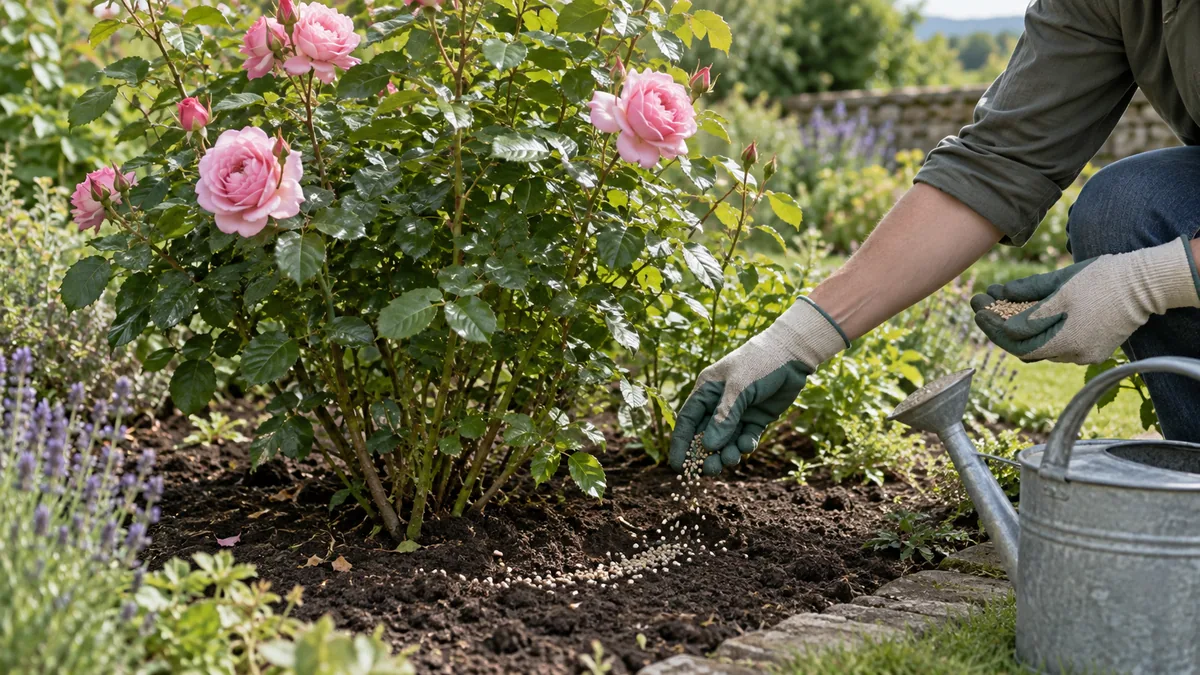
Check whether fertilizer is needed
Look at the whole plant and growing conditions before treating yellow leaves or weak blooms as a nutrient problem. Soil testing can help identify pH or nutrient issues, while a label describes which plants and application rates a product is intended for. Avoid adding several products at once; excess fertilizer can damage plants and contribute nutrients to runoff.
Look for a pattern across the plant
Compare old and new leaves, the top and bottom of the shrub, and plants in similar conditions. A nutrient issue may produce a pattern, but drought, root damage, pests and disease can cause overlapping symptoms. Photograph the plant and note recent weather and treatments. Do not diagnose a deficiency from one yellow leaf or apply micronutrients without evidence.
Use soil results as context, not a standalone prescription
A soil report should be read alongside the rose type, local growing conditions and the lab’s own recommendations. Nutrient levels and pH can affect availability, but a high or low number does not mean that every bed needs an amendment. Ask the testing service or local extension office to explain results you do not understand before applying lime, sulfur or fertilizer.
Choose and apply a product carefully
Use a fertilizer labeled for roses or the relevant garden use, and follow its directions for the plant, amount and timing. Do not assume a higher phosphorus number guarantees more flowers or that every rose needs a “bloom booster.” The University of Minnesota Extension’s rose growing guidance is specific to Minnesota conditions and recommends feeding according to its local seasonal care; other regions may need different timing.
Store and handle fertilizer safely
Keep fertilizer in its original labeled container, close the lid and store it dry and inaccessible to children and animals. Use gloves or other protective equipment required by the label and wash hands after application. Sweep spills from paths and hard surfaces so they are not washed into drains. Follow disposal directions for unused product and packaging.
Keep labels and note every application
Write down the product analysis, label rate, measured amount and date, then keep the label or a photo of it. This helps prevent accidental double feeding and lets you compare what was applied with the plant’s response. It is also useful if you contact a local extension service about leaf symptoms or soil results.
Support growth with basic care
Give roses a site suited to the type, maintain even moisture without waterlogging and remove dead or damaged stems using clean tools. Stop and review conditions if leaves show burning after feeding. Keep records of product, rate and date so future changes are based on what was applied. For broader nutrient basics, see our plant fertilizer guide.
Reassess rather than repeating a dose
If growth does not improve after a correctly labeled application, pause before feeding again. Check soil moisture, drainage, sunlight, root health and pest pressure, and review whether the soil test supports more nutrients. Repeated applications can increase excess salts or runoff without solving the cause. Seek local diagnostic help when the plant continues to decline.
Check soil and plant health before buying rose fertilizer
Weak growth, pale leaves or few flowers do not automatically prove a nutrient deficiency. Review the amount of light, root-zone moisture, drainage, recent weather and visible pest or disease symptoms. A soil test can provide information about pH and nutrients that appearance alone cannot. Follow your local extension service’s sampling instructions and use its results to guide amendments rather than applying several products at once.
Read the fertilizer label before comparing products
Compare products by their labeled analysis, intended use and instructions, not by marketing terms such as “bloom booster.” The three numbers on an N-P-K analysis indicate the proportions of nitrogen, phosphate and potash by weight; they do not describe the plant’s full nutrient requirement or promise a specific flowering result. Choose a product labeled for the crop or garden use and follow its rate and timing.
Choose a product type that fits the site
Fertilizers may supply nutrients from different sources, but source does not make overapplication harmless. A product marketed as organic still needs to be used according to its label, while a mineral fertilizer also requires careful measurement. Consider how quickly nutrients are released, whether the product is suitable for the soil and whether runoff could reach a drain or waterway. Do not select a product solely by the word “natural” or “complete.”
Time feeding to rose growth and local conditions
Rose growth and feeding seasons vary by climate, rose type and planting conditions. The University of Minnesota Extension’s rose guidance is tailored to Minnesota and should not be copied as a calendar for every region. Use local extension advice and the product label to decide whether and when feeding is appropriate. Avoid late or excessive applications that conflict with regional recommendations or the plant’s seasonal growth cycle.
Recheck the plant before every planned application
A feeding calendar is only useful when it fits the rose, local season and product label. Before each application, review soil-test results, plant growth, weather and any previous dose. Skip a feed if the rose is stressed or the local guidance advises against it. The Minnesota Extension advice is regional; gardeners elsewhere should use local recommendations.
Apply fertilizer evenly and keep it off dry roots
Measure the labeled amount rather than estimating by handful. Apply it to the soil in the area specified by the product directions, keep granules away from stems and follow any watering instructions. Do not concentrate fertilizer in the planting hole or apply a strong solution to dry soil unless the label directs it. Store the product securely and clean up spills so children, pets and runoff are protected.
Water roses consistently without saturating the root zone
Even moisture supports healthy growth, but a fertilizer cannot correct drought stress or waterlogged roots. Check the soil below the surface and consider rainfall before irrigating. Water at the base when practical, and avoid creating runoff that carries nutrients away. Container roses dry faster and may need more frequent checks than in-ground plants; use the plant’s location and pot drainage to guide the routine.
Adjust the plan for new, potted and established roses
A newly planted rose, a mature shrub rose and a rose in a container do not necessarily need the same fertilizer approach. Follow instructions for the plant type and growing medium, and avoid feeding damaged roots heavily. Container mixes may lose nutrients more quickly, but product rates still apply. Ask the nursery or local extension service about a named variety when its needs are unclear.
Do not diagnose nutrient problems from one leaf
Yellowing can be linked to age, water stress, root conditions, pests, disease or nutrient availability. Look at whether symptoms affect old or new leaves, whether the pattern is uniform, and whether the soil remains wet or dry. Compare the plant with reliable diagnostic resources before choosing an amendment. If symptoms persist, submit a soil test or seek local extension help rather than increasing fertilizer blindly.
Use photographs to track symptoms over time
Take a photo of affected leaves and the whole shrub, then note whether the symptoms spread, improved or appeared on new growth. Record watering, rainfall and products used. A pattern over time can help distinguish nutrient concerns from root, pest or weather stress and gives an extension service better information for diagnosis.
Prevent excess fertilizer from reaching drains and water
Nutrients washed from a garden can contribute to water pollution. Keep fertilizer on the intended planting area, avoid application before heavy rain and sweep granules from hard surfaces back onto the labeled site when safe and permitted. Never exceed the label rate or apply near water contrary to instructions. Store unused product in its original container, dry and secured from children and animals.
Keep a simple feeding and observation record
Record the product name, analysis, amount, date and reason for each application. Add notes about rain, watering, leaf symptoms and flowering so you can tell whether the plant changed after feeding. This prevents duplicate applications and helps separate nutrient effects from seasonal variation. If a rose improves, do not assume the fertilizer was the only cause; light, water and weather may have changed too.
Use a whole-plant care plan for better roses
Choose a site suited to the rose, maintain drainage, water the root zone and monitor pests and disease. Feed only when soil information, plant growth and regional guidance support it. A recurring problem may need a different correction than fertilizer. For the wider topic of plant nutrients and application, see our plant fertilizer guide.
Take a representative soil sample
Use the sampling depth and collection method recommended by your local soil-testing service. A sample from one small spot may not represent the whole rose bed, and sampling directly beside a compost pile or fertilizer granule can distort the result. Keep beds with visibly different conditions as separate samples when the testing service advises it. Use the report’s recommendations rather than interpreting pH or nutrient numbers without context.
Understand what an N-P-K analysis can and cannot tell you
Nitrogen, phosphate and potash numbers describe the labeled nutrient analysis, but they do not diagnose your soil or predict a particular bloom count. A higher middle number is not automatically better for flowers. Check the crop directions, application rate and any other nutrients listed, then compare them with a soil test and regional rose guidance. Do not combine products to create a target ratio unless a qualified recommendation supports it.
Adjust for roses grown in containers
Container roses have less soil volume and can lose nutrients as water drains through, but the fertilizer label still controls the rate. Use a growing medium intended for containers, keep drain openings clear and check moisture more often than for a garden bed. Avoid feeding a wilted plant until you know whether the cause is dry mix, saturated roots or another stress.
Recognize when excess fertilizer may be harming a rose
Overapplication can damage roots or produce excess growth, and salts may accumulate in containers. If leaf edges brown soon after feeding, review the amount used, watering and product directions. Do not add another product to counteract a suspected excess. Follow local advice about flushing a container or managing the bed, and keep runoff away from drains and waterways.
Use observation and records to refine the plan
Note the rose type, soil-test date, fertilizer product, application amount and weather. Track growth, leaf symptoms and flowering over several weeks rather than judging the result immediately. If the plant does not respond, revisit site, root health, disease and pest conditions before applying more. For broader nutrient basics, use our plant fertilizer guide and local extension recommendations.
Wait for a response before changing the feeding plan
After correcting a soil or care issue, allow time for new growth to show whether the change helped. Older yellow or scorched leaves may remain damaged, so judge the plant by fresh leaves, stem growth and flowering rather than expecting every mark to disappear. Keep the product label and record the date, amount and application area; this prevents accidental repeat applications and makes seasonal comparisons useful. If decline continues, reassess drainage, light, pests and root condition before applying another nutrient product. A soil test can answer questions that visual symptoms cannot. The University of Minnesota’s rose-growing overview provides broader context for cultivar and site suitability, while fertilizer rates and protective directions should come from the specific product label and locally appropriate soil advice.